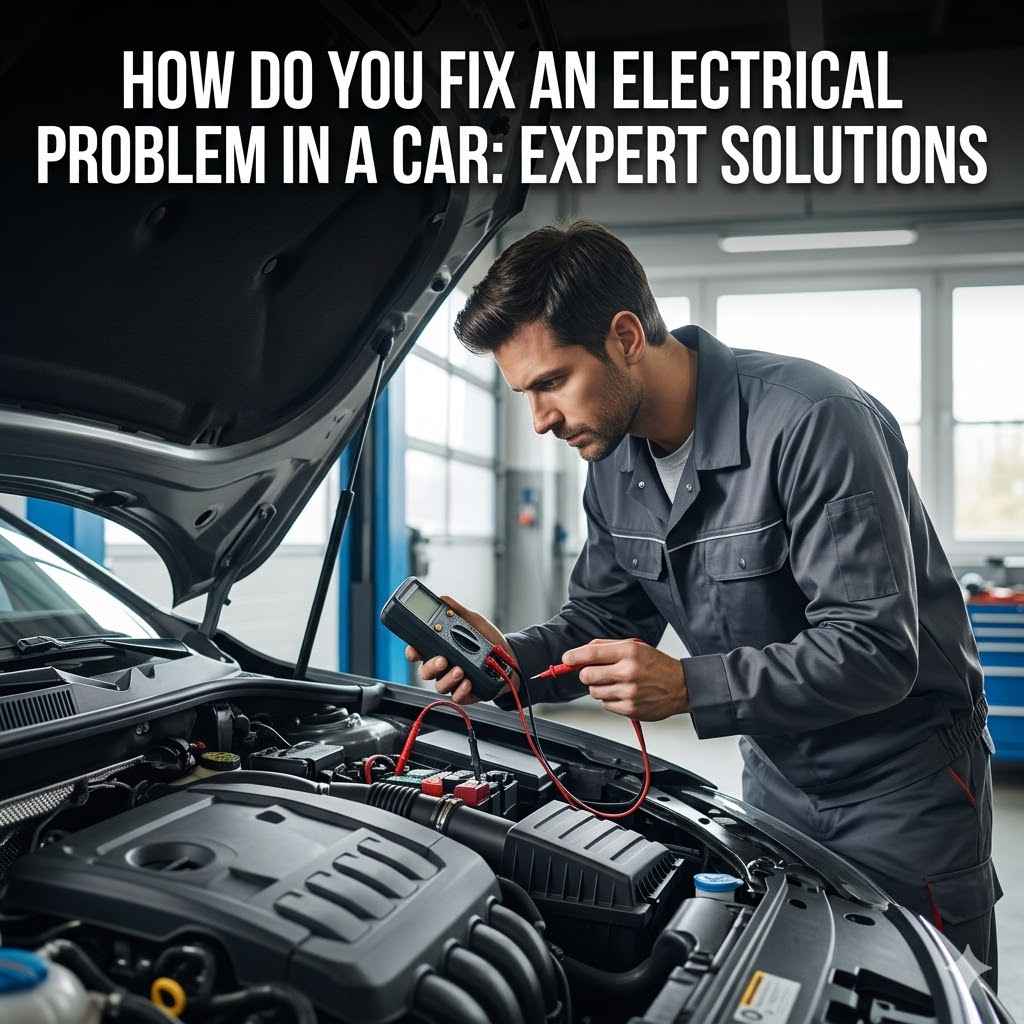
How Do You Fix an Electrical Problem in a Car: Expert Solutions
Every modern car depends on a healthy electrical system. From starting your engine to powering the headlights, air conditioning, and radio, electricity is everywhere in your vehicle. When something goes wrong, it can feel confusing and even a bit scary, especially if you don’t have much experience with cars.
But you don’t always need to be a trained mechanic to solve common electrical problems. With some patience, the right tools, and a step-by-step approach, you can often identify and fix the issue yourself.
Understanding how to fix an electrical problem in a car is a valuable skill. It can save you time and money, and sometimes even get you out of a dangerous situation. In this guide, you’ll learn how to safely diagnose, trace, and repair electrical problems in your vehicle, even if you’re not an expert.
Understanding Car Electrical Systems
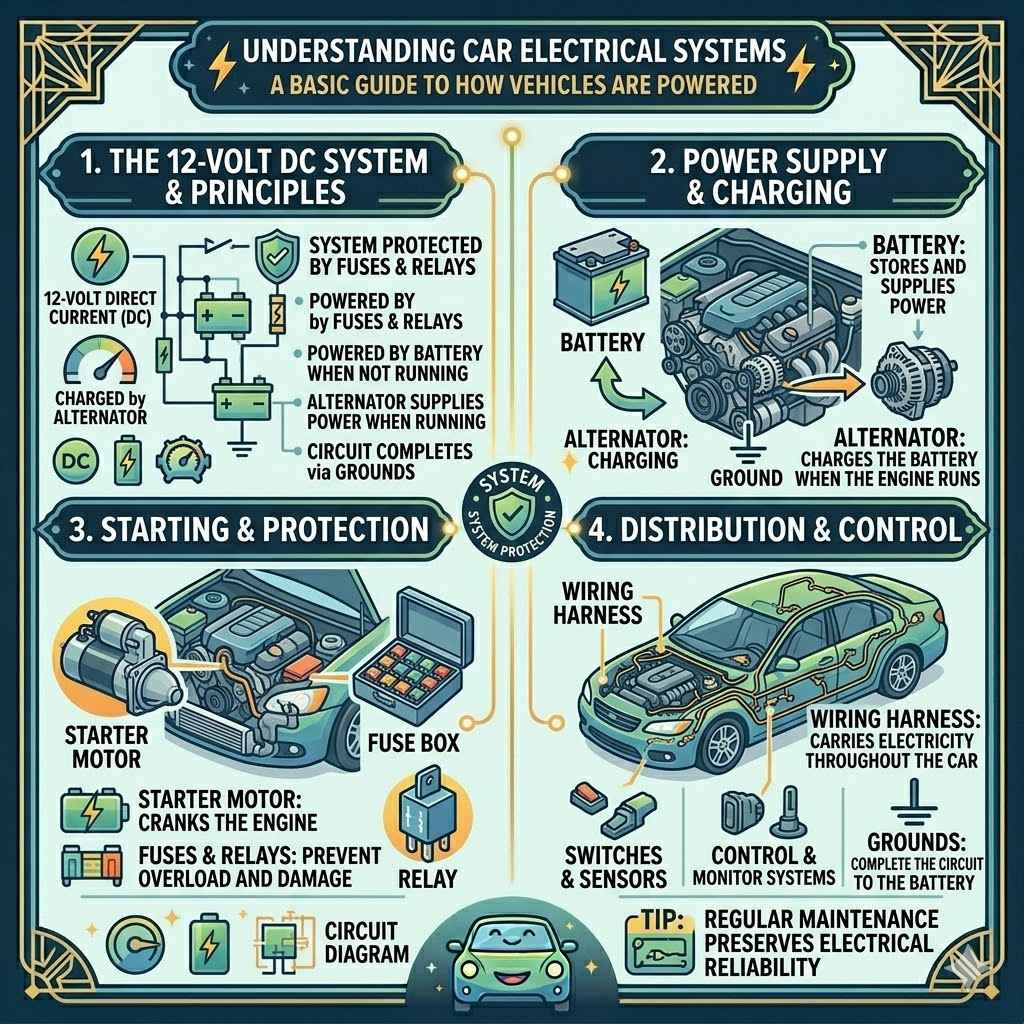
Before you start fixing, you need a basic understanding of how car electrical systems work. Most vehicles have a 12-volt direct current (DC) system. This system is powered by the battery, charged by the alternator, and protected by fuses and relays. The wiring connects everything: starter, lights, sensors, ignition, and accessories.

As an Amazon Associate I earn from qualifying purchases.
A typical car electrical system includes:
- Battery: Stores and supplies power.
- Alternator: Charges the battery while the engine runs.
- Starter motor: Cranks the engine.
- Fuses and relays: Prevent overload and damage.
- Wiring harness: Carries electricity throughout the car.
- Switches and sensors: Control and monitor systems.
- Grounds: Complete the circuit back to the battery.
Knowing these basics helps you understand where problems might begin.
Common Electrical Problems In Cars
Electrical problems show up in many ways. Some are obvious; others are hidden. Here are the most common issues drivers face:
- Dead battery
- Blown fuses
- Faulty alternator
- Broken or corroded wiring
- Bad starter motor
- Malfunctioning switches
- Burnt-out bulbs
- Loose or dirty battery terminals
- Grounding problems
- Failed relays
Each problem has its own symptoms, which can help you pinpoint the cause.
Safety First: Working With Car Electricity
Car electrical systems are generally low voltage, but safety is always important. Here’s how to stay safe:
- Always turn off the ignition and remove the key.
- Disconnect the negative battery cable before working on wiring.
- Wear insulated gloves and eye protection.
- Avoid wearing metal jewelry or watches.
- Keep water and flammable materials away from the work area.
- If you’re unsure, ask a professional for help.
Tools You Need For Electrical Diagnosis
To troubleshoot and repair electrical problems, you need some basic tools. Here’s a list:
- Multimeter (measures voltage, resistance, and current)
- Test light
- Wire stripper and crimper
- Screwdrivers (flat and Phillips)
- Socket set
- Electrical tape
- Replacement fuses
- Wiring diagrams for your car model
- Flashlight
- Protective gloves
A quality digital multimeter is the most important tool. It helps you quickly check for voltage, continuity, and resistance.
Step-by-step: How To Diagnose An Electrical Problem
Let’s walk through a clear process to find and fix electrical issues in your car.
1. Identify The Symptoms
Start by observing what’s wrong. Ask yourself:
- Does the car fail to start?
- Are the lights dim or not working?
- Does a device work only sometimes?
- Are warning lights on the dashboard?
Write down what you notice. This will guide your search.
2. Inspect The Battery
A weak or dead battery is the most common cause of electrical issues.
- Check for loose or corroded terminals.
- Measure the battery voltage with a multimeter. A healthy battery should read 12.6 volts or more with the engine off.
- If voltage is low, try charging or jump-starting the battery.
- If the battery won’t hold a charge, it may need replacing.
3. Check The Fuses
Fuses protect your car’s electrical circuits. If something suddenly stops working, a blown fuse could be the reason.
- Locate your fuse box (usually under the dashboard or in the engine bay).
- Use the cover diagram or your car manual to find the right fuse.
- Pull the fuse and inspect the metal strip. If it’s broken or burnt, replace it with one of the same rating.
4. Inspect Wiring And Connections
Loose, damaged, or corroded wires can cause all sorts of problems.
- Look for frayed, cut, or melted wires.
- Check connectors for tightness and cleanliness.
- Clean corroded terminals with a wire brush and apply dielectric grease.
5. Test With A Multimeter
Use a multimeter to check for voltage and continuity.
- Set the meter to DC volts. Test voltage at the battery, fuses, and various points along the suspected circuit.
- Use the continuity setting to check if a wire or switch is working (a beep means the circuit is complete).
6. Inspect Grounds
A poor ground connection can cause strange electrical issues.
- Find ground wires (usually black or brown) connected to the car body or engine.
- Clean the contact points and tighten the bolts.
7. Check Switches And Relays
Malfunctioning switches or relays may prevent power from reaching parts of the car.
- Listen for clicks when you activate a relay-controlled device (like the fuel pump).
- Swap the suspected relay with a similar one from another circuit if possible.
8. Test The Alternator
If the battery keeps dying, the alternator may not be charging it.
- With the engine running, measure battery voltage. It should be 13.5 to 14.5 volts.
- If it’s lower, the alternator or its wiring may be faulty.
9. Replace Faulty Components
If you find a bad part (like a switch, relay, or bulb), replace it with the correct type. Always double-check the part number and fit.
10. Reset And Re-test
After repairs, reconnect the battery, start the car, and test all systems. Make sure everything works as expected.
Practical Example: Fixing A Dead Headlight
Let’s look at how you might fix a common issue—one headlight not working.
- Check the bulb: Swap the dead bulb with the working one to confirm if it’s the bulb or wiring.
- Inspect the fuse: Find the headlight fuse and check if it’s blown.
- Test the socket: Use a test light or multimeter to see if power is reaching the bulb socket.
- Check ground wire: Make sure the ground connection is clean and tight.
- Replace parts as needed: If the bulb, fuse, or wiring is faulty, replace it.
This step-by-step logic works for most simple electrical issues.
Symptoms And Solutions: Quick Reference
Here’s a quick guide to common electrical symptoms and likely causes:
| Symptom | Possible Cause | Solution |
|---|---|---|
| No start, no lights | Dead battery, loose terminal | Charge/replace battery, tighten terminals |
| Blown fuses repeatedly | Short circuit, wrong fuse size | Find and repair short, use correct fuse |
| Dim headlights | Poor ground, weak battery, bad alternator | Clean ground, check battery/alternator |
| One device doesn’t work | Faulty switch, relay, or wiring | Test/replace part, fix wiring |
| Radio resets, clock loses time | Loose battery connection | Tighten battery terminals |
Advanced Troubleshooting Tips
Sometimes, electrical problems are tricky and don’t follow simple patterns. Here are some advanced strategies:
Use Wiring Diagrams
Wiring diagrams show how circuits are connected. They help you trace power and ground paths, find connectors, and understand where to test.
You can often find wiring diagrams in your car’s repair manual, online forums, or manufacturer websites.
Test Under Load
Sometimes, a circuit tests fine with no load, but fails when a device is connected. Use the actual device or a test light to see if the circuit works under normal conditions.
Check For Parasitic Draw
If your battery dies overnight, something may be draining power when the car is off. Use a multimeter to measure current draw at the battery with everything turned off. More than 50 milliamps could mean a problem.
Inspect For Water Intrusion
Moisture can cause corrosion and shorts, especially in older cars. Check for damp carpets, trunk leaks, or signs of water near electrical connectors.
Look For Hidden Damage
Rodents sometimes chew wires, especially in cars parked outside. Look under the hood and inside the cabin for chewed insulation or droppings.
Table: Common Fuse Ratings And Uses
Understanding fuse ratings helps you choose the right replacement.
| Fuse Rating (Amps) | Typical Application |
|---|---|
| 5A | Dashboard electronics, sensors |
| 10A | Lighting circuits, radio |
| 15A | Cigarette lighter, power outlet |
| 20A | Headlights, wipers |
| 30A | Heater blower, power seats |
Table: Multimeter Settings And Uses
A multimeter is your best friend for electrical diagnosis. Here’s how to use its main settings:
| Setting | Symbol | Use |
|---|---|---|
| DC Voltage | V⎓ | Measure battery and circuit voltage |
| Continuity | •))) | Check if a wire or switch is complete |
| Resistance | Ω | Test for broken wires or connections |
| Current (Amps) | A⎓ | Find parasitic battery drain |
Preventing Electrical Problems
Prevention is better than repair. Here are steps to keep your car’s electrical system healthy:
- Clean battery terminals at least twice a year.
- Replace old batteries before they fail (usually every 3-5 years).
- Use dielectric grease on electrical connections to prevent corrosion.
- Check and replace worn or cracked wiring.
- Don’t overload circuits with aftermarket accessories.
- Protect wiring from water and rodents.
- Inspect fuses and relays during regular maintenance.
Non-obvious Insights Most Beginners Miss
- Grounds Are Critical: Many beginners focus only on the positive wires, forgetting that a bad ground can cause just as many problems. Always check and clean ground connections.
- Intermittent Problems Need Patience: If an electrical problem comes and goes, it’s often due to a loose connection or a failing component that only misbehaves under certain conditions (like heat or vibration). Try to recreate the situation when the problem appears.
- Fuse Ratings Matter: Never use a higher-rated fuse “just to get home.” It could cause a fire if there’s a real short circuit.
- Battery Health Affects Everything: Even if your car starts, a weak battery can cause weird problems in computers, sensors, and accessories. Always start diagnosis with the battery.
When To Call A Professional
Some electrical problems are too complex or dangerous for a DIY approach. If you experience:
- Burning smells, smoke, or melted wires
- Repeated fuse blowing without clear reason
- No start and no power anywhere
- Airbag or ABS warning lights
- Electrical issues after flooding or accident
It’s best to consult a professional mechanic or auto electrician. Modern cars have computers and safety systems that require special tools and knowledge.
Real-world Example: Diagnosing A Parasitic Battery Drain
Imagine your car’s battery keeps dying overnight. You’ve tested the battery and alternator; both are good. Here’s how you might find the culprit:
- Disconnect the negative battery cable.
- Set your multimeter to measure amps and connect it between the battery terminal and cable.
- Wait for the car to “go to sleep” (computers turn off, usually after 10-30 minutes).
- Check the reading. More than 50 milliamps means something is drawing power.
- Pull fuses one by one until the reading drops. The circuit you pull is causing the drain.
- Trace that circuit to find the faulty device (like a stuck glove box light or bad relay).
This method often uncovers hidden problems that are easy to fix once identified.
Useful Resources
For more details, wiring diagrams, and repair tips, check your car’s service manual or trustworthy online sources like Haynes Manuals.
Frequently Asked Questions
What Are The Most Common Electrical Problems In Cars?
The most common are dead batteries, blown fuses, corroded wiring, and failed alternators. Other issues include faulty switches, bad grounds, and burned-out bulbs. Most problems can be traced with basic tools and patience.
How Can I Tell If My Alternator Is Bad?
If your battery keeps dying, headlights dim when the engine idles, or you see a battery warning light on the dashboard, the alternator may be bad. Check the voltage at the battery with the engine running; it should read 13.5 to 14.5 volts.
Is It Safe To Replace A Blown Fuse Myself?
Yes, as long as you use the same amperage rating as the original. Never use a higher-rated fuse. If fuses keep blowing, there may be a short circuit that needs professional repair.
Why Do Car Electrical Problems Happen After Rain?
Moisture can enter wiring connectors or fuse boxes, causing corrosion or short circuits. Always check for water leaks and dry out wet areas before repairing.
What If I Can’t Find The Cause Of The Problem?
If you have tried the steps above and still can’t solve the issue, contact a professional mechanic or auto electrician. Modern cars have complex electronics that sometimes need special diagnostic tools.
Fixing an electrical problem in a car can be challenging, but with a careful approach, the right tools, and a bit of knowledge, many issues are within reach for the home mechanic. Always remember safety comes first, and don’t hesitate to seek expert help for difficult or dangerous problems.
Related pick: Check today's price on Amazon