Best Car Interior Cleaner for Everyday Use: A Buyer’s Guide
The best car interior cleaner for everyday use is a pH-neutral, water-based interior cleaner with no added gloss; choose a dedicated leather cleaner only for frequent leather seats, and a screen-safe cleaner for touchscreens. Using the wrong product can leave streaks, residue, dried trim, or slippery steering wheels. This guide compares the best daily-use cleaners by surface, finish, and cabin material.
This guide is part of our Car cleaning and restoration series.
Best car interior cleaner for everyday use


The best everyday cleaner is the one that fits the cabin material and how often you touch it. In mixed interiors, I start with a low-residue all-surface cleaner because it handles plastic, vinyl, and many leather surfaces without leaving a heavy film. Brand names matter less than that behavior.
What makes an everyday cleaner different from a deep-clean product
Daily-use cleaners handle light grime, finger marks, dust, and fresh spills. Deep-clean products hit harder, take longer to wipe, and work better for extraction or heavy buildup. For routine use, the cleaner should dry fast, leave little residue, and avoid a glossy film that pulls in dust.
Who this guide is for
This is for commuters who want a fast weekly wipe, families dealing with fingerprints and snack dust, rideshare drivers who need a presentable cabin between fares, and enthusiasts who care about a clean finish without greasy trim. The right product changes with use pattern.
Top everyday pick by use case
- Best all-around pick: all-surface interior cleaner for mixed cabins and frequent wipe-downs.
- Best for quick wipe-downs: interior wipes for grab-and-go cleanup and travel.
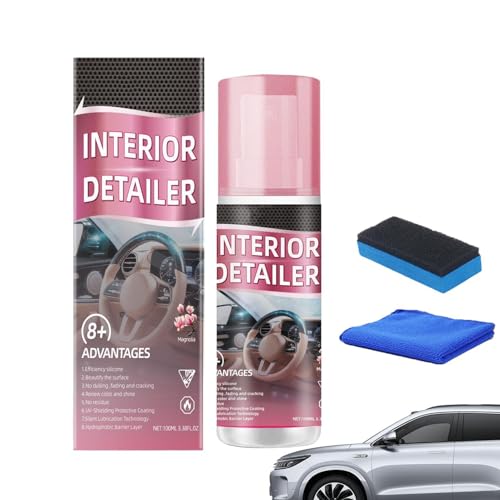
- Best for dust control: interior detailer with a light anti-dust finish when you want a dressed look.
- Best for fabric and upholstery: fabric cleaner for carpets, mats, and cloth seats.
Car and Driver updated its best car interior cleaners article in January 2026, names Chemical Guys Total Interior Cleaner & Protectant as Best Overall, and lists Meguiar’s Quik Interior Detailer Cleaner as Best Value. A review named one interior detailer as a top overall pick and another as a good value choice. (caranddriver.com)
According to Winter Can Ruin Your Car Interior. These Cleaners Will Clean It Right Back Up — Car and Driver updated its best car interior cleaners article in January 2026. (source)
Quick picks by use case
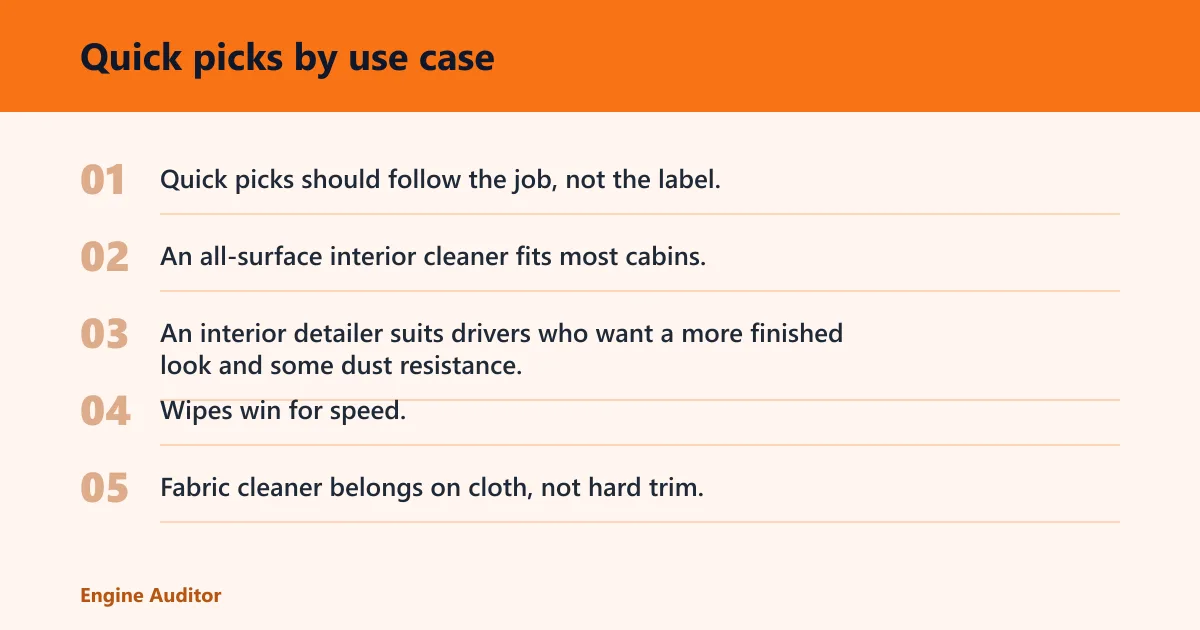
Quick picks should follow the job, not the label. An all-surface interior cleaner fits most cabins. An interior detailer suits drivers who want a more finished look and some dust resistance. Wipes win for speed. Fabric cleaner belongs on cloth, not hard trim.
| Use case | Best format | Why it fits daily use | Tradeoff |
|---|---|---|---|
| Mixed leather, vinyl, and plastic | All-surface spray | Low residue, broad compatibility, quick wipe-down | May not add visible protection |
| Commute cleanup and travel | Interior wipes | Portable, one-step convenience, fast turnaround | Higher cost per use than refills |
| Dust control and a dressed look | Interior detailer | Leaves a light film that can repel dust | Can look too glossy on some trims |
| Fabric seats and carpets | Fabric cleaner | Targets fibers, dries faster than general-purpose products | Not a substitute for hard-surface cleaning |
Best all-around pick for mixed-material cabins
An all-surface interior cleaner is the best default for most cars. The Rag Company lists Xpress Interior Cleaner at $10.64, says it is safe for leather, vinyl, and plastic, and describes it as leaving no residue or streaking. That is the kind of behavior daily maintenance needs.
Best for quick wipe-downs between deep cleans
Interior wipes are the fastest option when the goal is to remove fresh smudges, dust, and cupholder debris in one pass. They are useful in door pockets, glove boxes, and rideshare cars. Their weakness is economy: convenience is high, but each wipe costs more than a spray-and-cloth routine.
Best for a dust-repelling finish
An interior detailer is the better choice when the cabin needs a slightly dressed appearance and more dust control. The Drive says one cleaner helps clean and repel dust better than most, but also notes one offers no UV protection. That matters if the buyer expects more than appearance.
Best for fabric and upholstery spot cleaning
Fabric cleaner is the right tool for carpets, mats, and cloth seats. ValetPRO says Classic Carpet Cleaner is available ready-to-use 500ml or as 1L and 5L concentrate, and that it is suitable for carpets, mats and fabric seats. Fabric should be treated as a separate job from dashboards and touchscreens.
What should you buy for your cabin material?
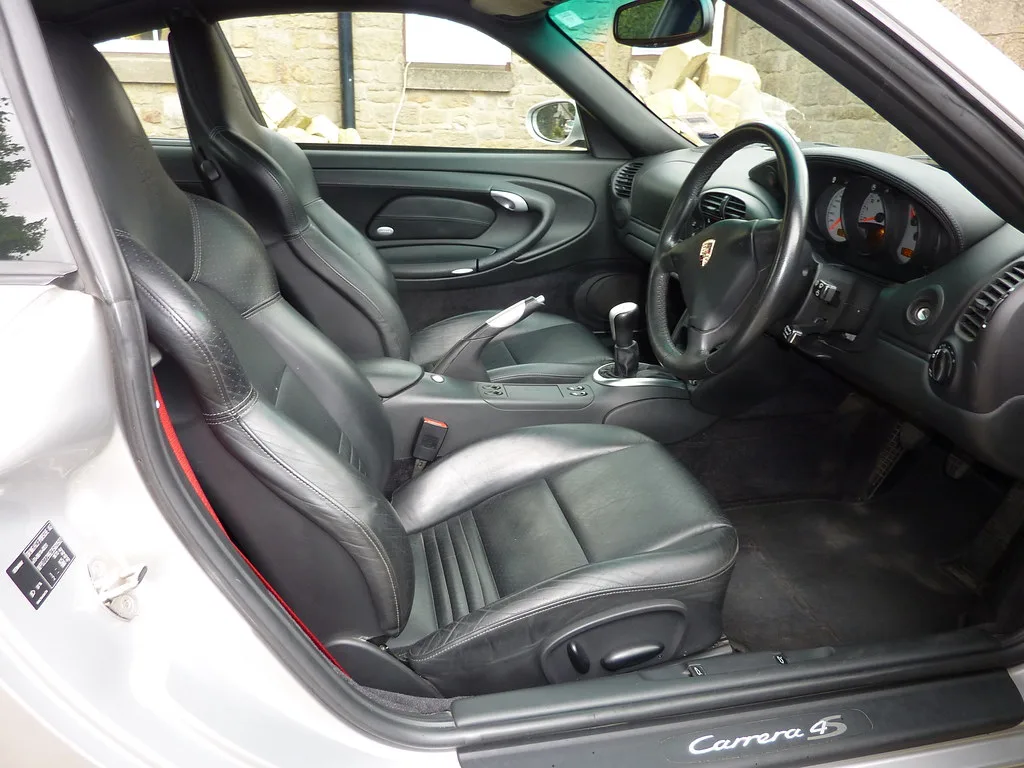
Buy for the material first. Leather, vinyl, plastic, touchscreens, piano black trim, and fabric do not all want the same finish or residue level. The best car interior cleaner for everyday use is the one that stays safe on the surfaces you touch most often.
Leather, vinyl, and plastic: when an all-surface cleaner is enough
For most leather seats, vinyl door cards, and plastic dashboards, an all-surface interior cleaner is enough for routine care. The key is low residue and a matte or low-sheen finish. Use a dedicated leather cleaner only when the seats are used hard and need more conditioning attention.
Touchscreens and piano black trim: where low residue matters most
Touchscreens and piano black trim punish sloppy cleaning. A cleaner that looks fine on dashboard plastic can haze a screen or leave swipe marks on glossy trim. Use the least wet application possible, spray the cloth instead of the panel, and stop at a clean, dry finish.
Fabric seats and carpets: when you need a dedicated fabric cleaner
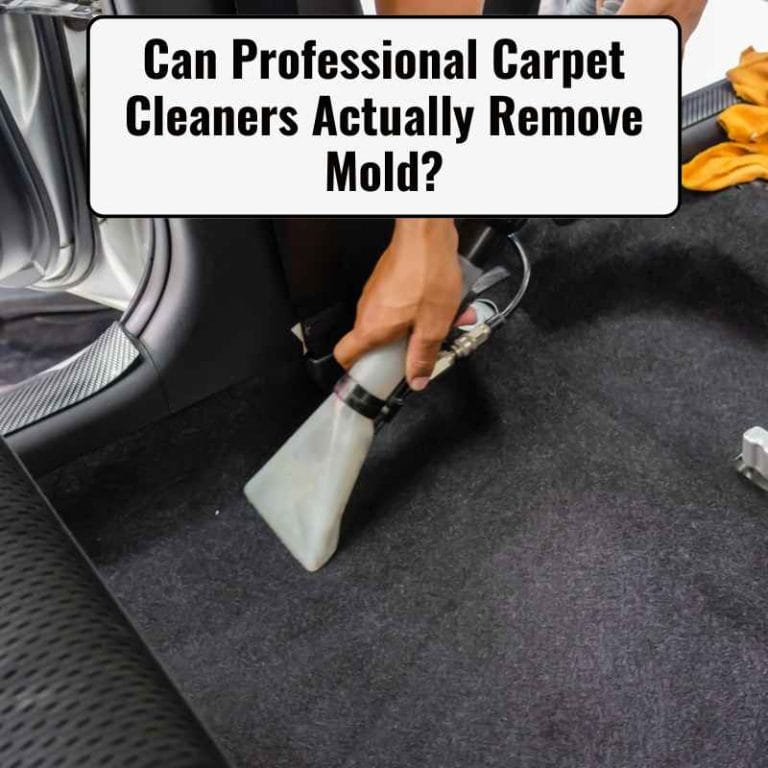
Fabric holds soil in the fibers. That is why a hard-surface cleaner usually falls short on cloth. A dedicated fabric product is better for spot treatment, followed by wiping or extraction depending on soil load. Fast drying matters here more than a dressed appearance.
Which format works best for daily use?
Format matters as much as chemistry. A spray-and-microfiber setup gives the best balance of control and economy. Wipes are fastest. Concentrates lower the cost per use if the cleaner gets used often enough to justify mixing and refill storage.
Spray-and-microfiber setup: best balance of control and economy
A spray-and-microfiber setup is the cleanest everyday method for most owners. Spray the towel, not the panel, then wipe in straight passes and follow with a dry side of the cloth. That reduces overspray, streaking, and towel lint on glossy trim.
Interior wipes: fastest option for small messes and travel
Wipes are ideal for steering wheels, cupholders, and quick dust removal. They also make sense in a glove box or travel bag. The downside is finish control. If the wipe is too wet, it can leave a slick feel on high-touch areas.
Concentrates and refill systems: when they lower cost per use
Concentrates are the economical choice for frequent users. ValetPRO says Classic Carpet Cleaner comes as 1L and 5L concentrate, and can dilute up to 1:80 in machines. That kind of dilution makes sense for shops or owners who clean several vehicles.
| Format | Best use | Cost behavior | Daily-use note |
|---|---|---|---|
| Spray bottle | General wipe-downs | Moderate refill cost | Best control for mixed surfaces |
| Wipes | Small messes, travel, steering wheel | Highest cost per use | Fastest, least flexible |
| Concentrate | Frequent maintenance, multiple cars | Lowest cost per use | Requires mixing discipline |
How much finish do you actually want?
Finish is a choice, and the wrong one makes a cabin harder to maintain. Low-sheen cleaners suit daily use because they show less dust and do not change the feel of steering wheels or armrests. Heavier dressings look cleaner at first, then start attracting dirt.
Low-sheen versus dressed-up appearance
A low-sheen finish looks closest to a factory cabin. A dressed-up finish can make trim pop, but it often reads as oily if overapplied. For everyday use, most drivers want the surface to look clean, not coated.
When a dust-repelling finish helps
A dust-repelling finish helps when the cabin sees frequent sun, dry air, or lots of static-prone trim. The Drive’s dust-resistance test matters here because dust control is a real maintenance factor. A thin film is enough; a thick film becomes a collector.
When too much film becomes a problem
Too much film causes greasy residue, towel drag, and a greasy steering wheel. It also builds up around buttons and seams. The cleaner can start to look worse after repeated use, especially on piano black trim and around screen edges.
How do you clean high-touch areas safely?
High-touch areas need their own rule set. Steering wheels, shifters, door pulls, and armrests get oils from hands, so grip feel matters more than shine. A cleaner that leaves a slippery residue is wrong there, even if it looks good on the dashboard.
Steering wheel cleaning and grip feel
Steering wheel cleaning should focus on grease removal and a dry finish. Use a lightly damp microfiber, then follow with a second dry towel. Avoid products that leave a protective sheen on the rim, because the wheel needs consistent grip more than visual gloss.
Shifter, door pulls, and armrests
Shifters and door pulls collect hand oils quickly. These areas clean best with a small amount of product and a tight microfiber. On armrests, work in short sections so the cleaner does not settle into seams or leave white residue in stitching.
Avoiding slick residue on frequently handled surfaces
Slick residue is more than a nuisance. It changes feel. If the towel drags after one pass, or the surface feels polished rather than clean, there is too much product left behind. That is the point to stop and dry the area with a clean cloth.
Use the decision matrix before you buy
This is the practical buying rule. Match the surface, match the frequency, and match the finish. Once those are set, format and refill economics become easy to compare. That is the simplest way to choose the best car interior cleaner for everyday use.
| Cabin surface | Cleaning frequency | Desired finish | Best format | Why |
|---|---|---|---|---|
| Leather, vinyl, plastic | Weekly | Low sheen | All-surface spray | Broad safety and low residue |
| Dashboard and door panels | Every few days | Factory-clean look | Spray-and-microfiber | Control over overspray and streaks |
| Steering wheel and shifter | Frequent | No slippery residue | Wipes or lightly misted cloth | Fast grease removal, grip stays consistent |
| Fabric seats and carpets | As needed | Dry, clean fibers | Fabric cleaner | Targets textile soil, dries properly |
| Mixed cabin with dust issues | Weekly | Light dust-repelling finish | Interior detailer | Some anti-dust performance, cleaner appearance |
- Identify the main surface group in the cabin.
- Choose the lowest-residue product that is safe for that group.
- Pick the format that matches how often the car is cleaned.
- Use more control, not more product, on screens and piano black trim.
- Reserve fabric cleaner for textiles and concentrate for high-frequency use.
Do you need a separate protectant after cleaning?
Many drivers do not. If the cleaner already leaves the cabin looking clean and dry, adding a second protectant can create more buildup than benefit. Use a separate protectant only when the vehicle sits in harsh sun, the trim dries out, or the product itself leaves no meaningful protection.
When a cleaner already leaves enough protection for daily upkeep
Daily-use cleaners often clean well but provide only limited protection. That is fine for weekly upkeep in parked or garaged cars. If the surface already looks clean, matte, and even, adding another layer may change the finish in a way the owner did not want.
When adding protectant helps
Add protectant when the cabin needs extra UV defense or when a dedicated protectant is part of a maintenance plan between deeper cleanings. Some detailers add a light protective film, which can help the cabin stay cleaner longer, but the coating should stay thin.
When extra layers create buildup or streaking
Extra layers create problems when they stack on textured plastic, steering wheels, and glossy trim. The result can be haze, streaks, or a sticky feel. If dust starts sticking harder after repeated applications, the maintenance plan has gone too far.
Frequently asked questions
What is the best car interior cleaner for everyday use?
The best car interior cleaner for everyday use is a low-residue, water-based all-surface cleaner that is safe on common cabin materials and dries without a shiny film. For mixed cabins, that is usually better than a dressed interior detailer because it keeps dust control and grip feel more predictable.
Can I use one cleaner on dashboard, seats, and door panels?
Yes, one all-surface cleaner can usually handle dashboards, seats, and door panels if those surfaces are leather, vinyl, or plastic. The exceptions are touchscreens, piano black trim, and fabric, which need more careful application or a dedicated product to avoid haze, streaks, or soaking.
What car interior cleaner leaves no residue or streaks?
A cleaner that is explicitly low residue and quick to flash off is the best bet for a streak-free result. Spray onto a microfiber cloth, wipe lightly, and dry with a second towel. The Rag Company describes Xpress Interior Cleaner as leaving no residue or streaking.
Is an all-purpose interior cleaner safe on leather and plastic?
Often yes, if it is made for interior use and the label supports leather, vinyl, and plastic. The safest approach is to test a hidden spot first and avoid soaking the surface. For heavy leather conditioning or porous fabric, a dedicated product is still the better match.
Do I need a separate product for protection after cleaning?
Not always. For routine maintenance, a cleaner that leaves the cabin clean and low sheen may be enough. Add a protectant only when you want extra UV defense or a slightly dressed look. Too many layers can create buildup, streaking, and a slick steering wheel.
How often should I clean my car interior for maintenance?
For most daily drivers, a light wipe every week or two keeps dust and oils under control. High-touch areas like the steering wheel may need attention more often. If kids, pets, rideshare use, or dusty roads are part of the routine, shorten the interval.
Products related to this article
Sponsored / affiliate links. As an Amazon Associate I earn from qualifying purchases. I may earn additional commission from eligible campaigns.