What Car Cleaning Products Actually Work Best by Job
The products that work are the ones matched to the mess: pH-balanced car wash for paint, APC for grime, tar remover for road film, glass cleaner for streaks, wheel cleaner for brake dust, and interior cleaner for plastics and fabric. Use the wrong one and you waste money, leave residue, or damage trim and clear coat. I sort products by the dirt they remove, so you can buy fewer items and clean faster.
This guide is part of our Car cleaning and restoration series.
What car cleaning products actually work best for each job?
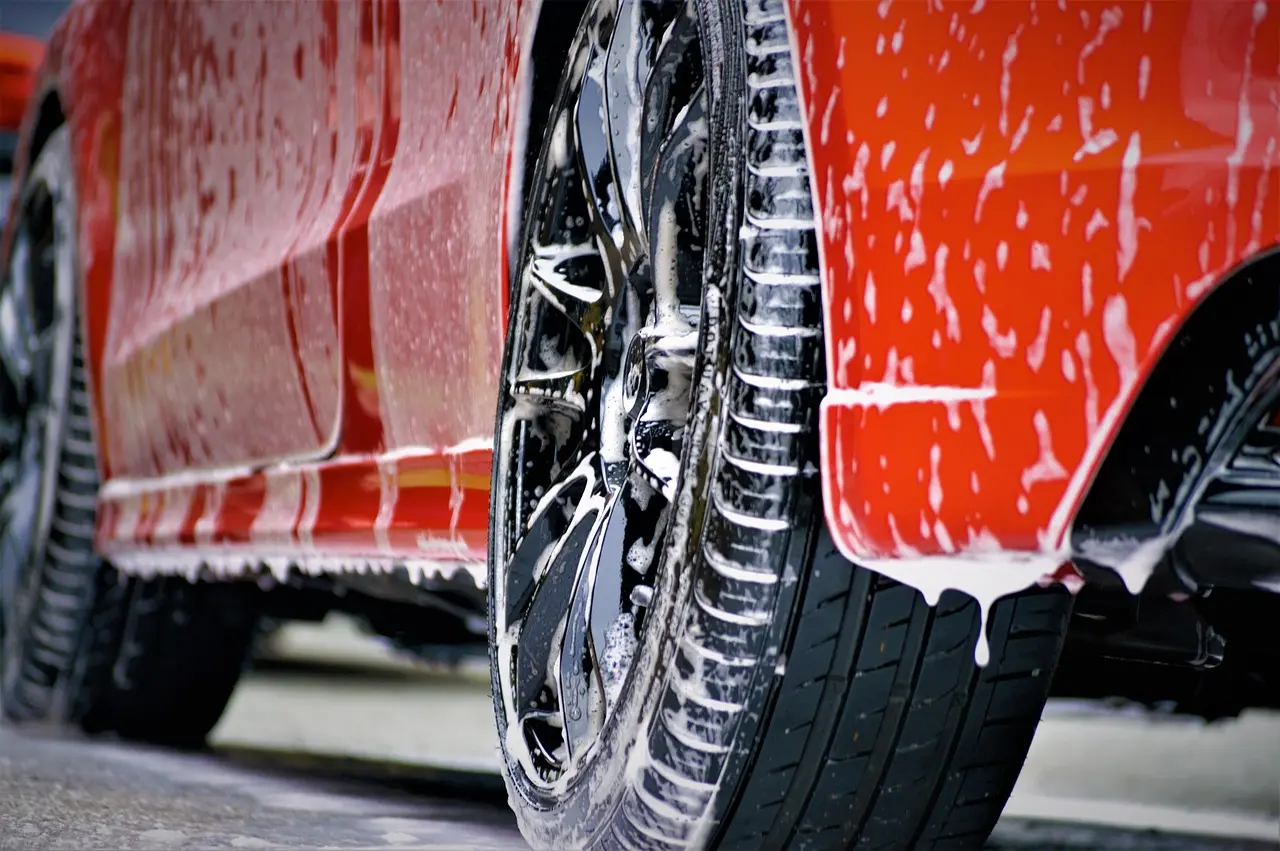
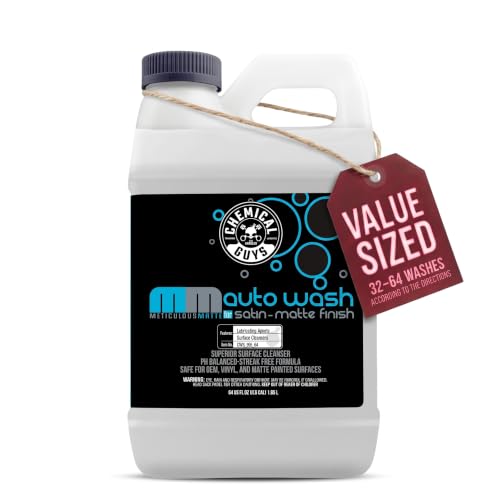


The right product depends on the surface and the contamination. For most DIY owners, I would start with a pH-neutral car wash soap for paint, a dedicated wheel cleaner for brake dust, a pre-wash cleaner for heavy grime, an interior detailer for dashboards and trim, a glass cleaner for visibility, microfiber towels for drying, and wax or sealant for clear coat protection.
Top pick by mess type and surface
There is no one cleaner that should touch everything. Paint wants a pH-neutral soap and a wash mitt. Wheels need a product built for brake dust and road film. Glass wants a streak-free cleaner. Interior plastics need a quick wipe-down product that leaves no greasy film. Heavy contamination wants pre-wash before contact.
What to buy first if you are building a basic kit
If you are starting from zero, buy the core kit first: specialized car wash soap, a wash mitt, bucket, microfiber towels, wheel-specific cleaner, interior cleaner, glass cleaner, and wax or sealant. That matches the basic kit list most experienced detailers use, and it keeps you from buying duplicate products that solve the wrong problem.
Quick picks: the starter kit and the add-ons
For most DIY owners, I would start with soap, mitt, bucket, microfiber towels, wheel cleaner, interior detailer, glass cleaner, and a wax or sealant. Add pre-wash and a stronger wheel brush only when the car carries heavy road film, bug splatter, or neglected brake dust.
Starter kit for most DIY owners
- Meguiar’s Gold Class Car Wash for paint-safe routine washing.
- Meguiar’s Hybrid Wash Mitt for contact washing.
- Chemical Guys Microfiber Cloths for drying and finishing.
- Meguiar’s Quik Interior Detailer for quick wipe-downs.
- Rain-X 2-in-1 Glass Cleaner + Rain Repellent for clear glass and easier wet-weather visibility.
- Black Magic Intense Foam Wheel & Tire Cleaner for wheels.
- Collinite 845 Insulator for paint protection.
Add-ons for heavy contamination or neglected cars
Use a pre-wash cleaner when the car is caked with bugs, bird droppings, or tree sap. Use a dedicated wheel brush when the barrels and lug areas are packed with dust. A paint decontamination mitt or exfoliating wash mitt helps when the finish feels rough after routine washing.
Budget versus premium buy decisions
Budget buying should favor fewer products that do more work safely. A good soap, one wheel cleaner, one interior cleaner, and one glass cleaner will cover most jobs. Premium spend belongs on towels, mitts, and wax, because poor tools create streaks, marring, and wasted product even when the liquid itself is good.

Which car wash soap is safest for regular use?
A pH-neutral car wash soap is often a good default for regular use because it lifts dirt and grime without being especially harsh on paint protection. It works best with a wash mitt and bucket, rinses clean, and is the right choice when the goal is routine maintenance rather than deep decontamination.
Why pH-neutral soap is the default choice
Car wash soap is made for painted panels, clear coat, and trim. The pH-neutral option fits routine washing best because it removes loose contamination while leaving wax or sealant in place. That matters if the car already has protection and the goal is simply to reset the surface.
How soap works with a mitt and bucket
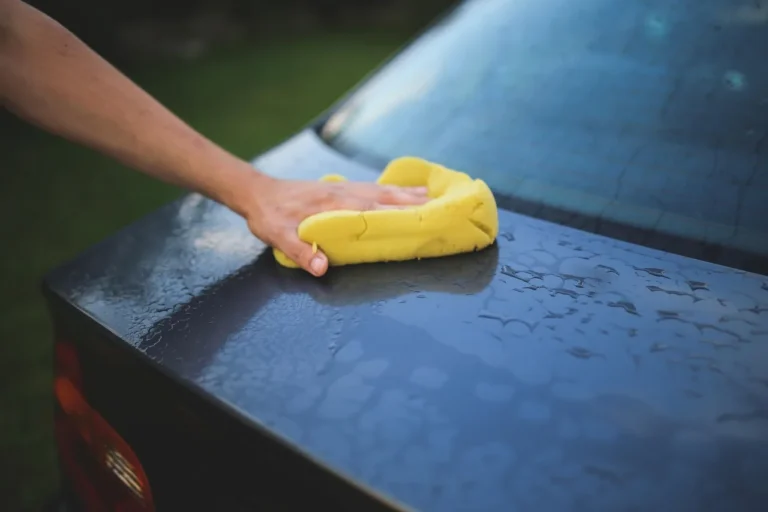
The soap does its best work when paired with a wash mitt and bucket, not a sponge. The mitt lifts dirt away from the surface, and the bucket keeps grit from being dragged across the paint. Used correctly, the soap cuts friction and lets the rinse do most of the clearing.
When soap fails and you need pre-wash first
Soap can struggle when heavy road film or bug residue is already bonded to the paint. In that case, a pre-wash cleaner should go on before contact washing. That keeps dirt moving off the panel before the mitt touches it, which lowers wash-marring risk on neglected cars.
Which products clean wheels, brake dust, and road grime?
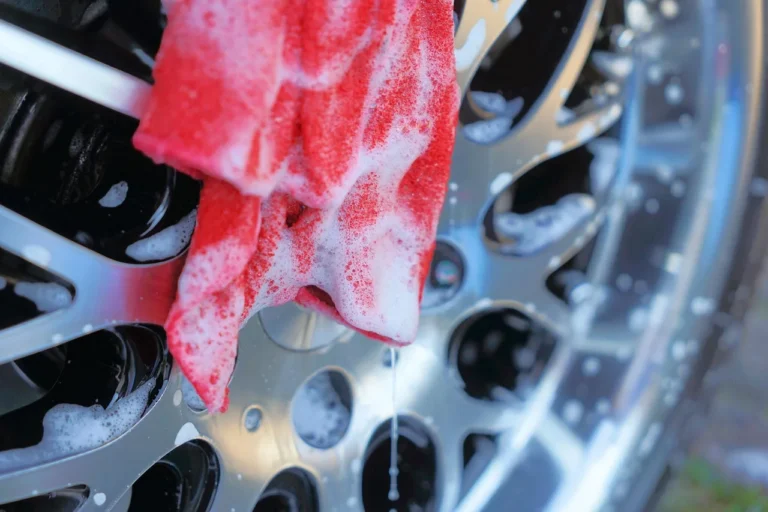
Wheel cleaner is the right product for brake dust, road grime, and traffic film because it targets the contamination that normal car soap leaves behind. Reactive formulas work well on embedded dust, while foaming formulas cling longer and help on heavily coated wheels before a brush or mitt touches the surface.
Reactive wheel cleaners versus foaming formulas
Reactive wheel cleaners are usually the stronger option when dust is baked onto the wheel face. Foaming formulas are easier to see and can cling to vertical surfaces longer, which helps with grime on spokes and barrels. The best choice depends on how dirty the wheel is and how much dwell time the product gets.
Why wheel cleaner goes on before contact washing
Autofinesse says wheels should be cleaned first because they take the worst of the road. That order makes sense. If brake dust and tar are left until after the paint is washed, the same mitts and water can spread wheel grime back onto cleaner panels.
What to do if brake dust stays behind
If the first wheel cleaner leaves dust behind, repeat the application and agitate with a wheel brush. If the wheel still feels gritty, the contamination is probably beyond a quick wash. At that point, move to a stronger wheel-focused product rather than trying to force the issue with paint soap.
Which cleaner handles bugs, bird droppings, and tree sap?
A pre-wash cleaner is the best first step for bugs, bird droppings, tree sap, and stubborn contamination because it loosens heavy dirt before any mitt touches the paint. That reduces wash-marring risk and makes the rest of the wash easier, especially on daily drivers that pick up road film fast.
Pre-wash cleaner for heavy dirt and contamination
Autofinesse says pre-wash is designed to make the wash easier by loosening heavy dirt and road film. That is exactly why it belongs on cars that have sat outside or done long highway runs. Autofinesse’s Citrus Power Pre-Wash is described as targeting bugs, bird droppings, tree sap, and stubborn contamination.
How it lowers wash-marring risk
When heavy grime is softened first, the wash mitt does less dragging across the clear coat. That matters on dark paint and soft finishes, where small particles can leave visible marks. Pre-wash is not about shine. It is about getting the worst contamination off before the contact stage.
When a spot cleaner or repeat application is needed
Some spots need a second pass. Tree sap and baked bug residue can cling after one round of pre-wash. If that happens, repeat the dwell and rinse cycle, then use a dedicated spot treatment for the stubborn patch instead of scrubbing harder with the mitt.
What should you use for interiors and glass?
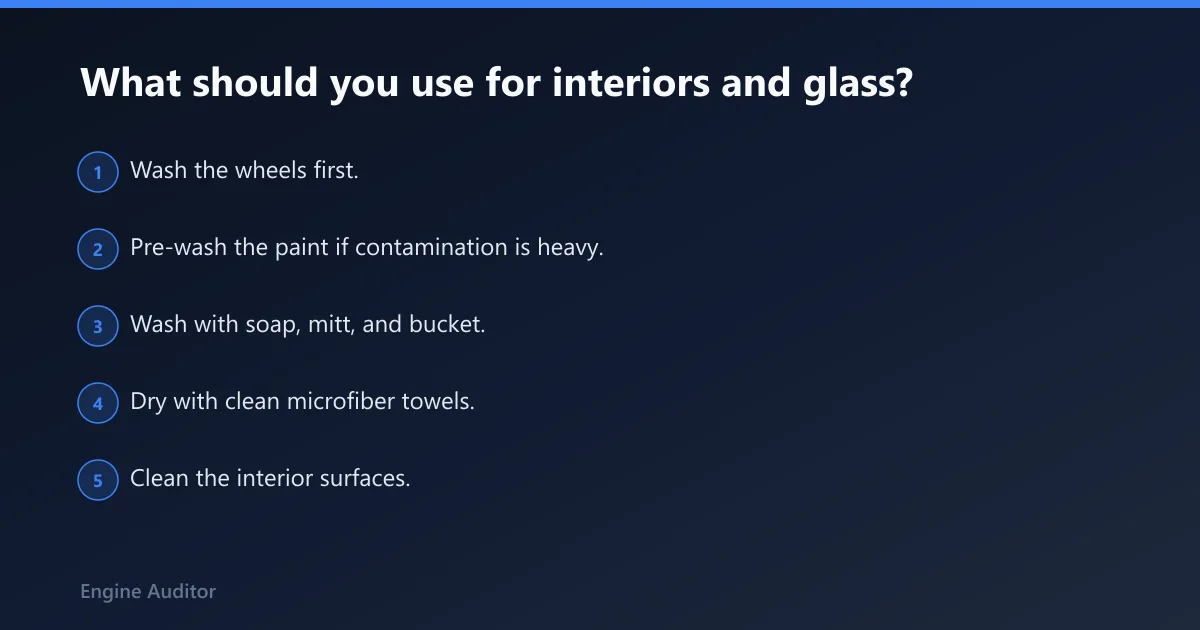
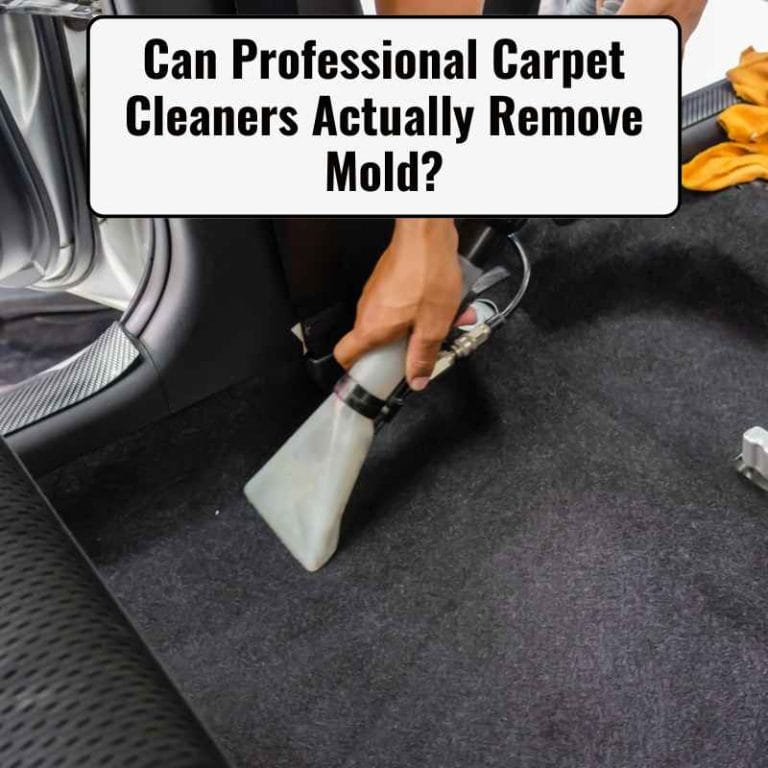
For interiors, use a quick wipe-down detailer that is safe for dashboards and hard surfaces and does not leave residue. For glass, use a cleaner last so overspray does not land on freshly cleaned trim. Microfiber towels should be separate for paint, glass, and interiors to avoid haze and lint transfer.
Interior detailer for dashboards and trim
Meguiar’s Quik Interior Detailer is the cleanest fit for fast interior work because it is made for dashboards and hard interior surfaces. A good interior detailer should wipe away dust and fingerprints without leaving a greasy sheen or streaky film on touch points.
Glass cleaner for streak-free visibility
Rain-X 2-in-1 Glass Cleaner + Rain Repellent fits the last step because it improves visibility and helps keep glass clearer in wet weather. Glass cleaner should go on after the messy work is done, since overspray onto plastic or fresh dressing can create haze that takes extra wiping to remove.
Microfiber towel choices for paint, glass, and interiors
Microfiber towels matter as much as the liquid. They are used for drying and finishing, and they should be kept separate for paint, glass, and interiors. A towel that touched wheel dust or interior dressing can leave smears on glass and lint on paint.
- Wash the wheels first.
- Pre-wash the paint if contamination is heavy.
- Wash with soap, mitt, and bucket.
- Dry with clean microfiber towels.
- Clean the interior surfaces.
- Finish with glass cleaner last.
- Apply wax or sealant after the car is clean and dry.
Product-to-problem matrix: what works, what fails, and what to try next
This matrix is the buying filter that most product roundups skip. Match the mess first, then choose the chemistry. If the first cleaner misses, the failure mode usually tells you whether you need more dwell time, more agitation, or a different product category entirely.
| Mess type | Best product category | Why it works | Common failure mode | What to do if the first product fails |
|---|---|---|---|---|
| Routine paint dirt | pH-neutral car wash soap | Lifts dirt and grime without stripping protection | Still leaves film after wash | Pre-wash first, then wash again |
| Brake dust | Wheel cleaner | Targets the contamination normal soap misses | Dust clings in spokes and barrels | Use a wheel brush and repeat the cleaner |
| Road grime and traffic film | Foaming or reactive wheel cleaner | Clings or reacts to break down buildup | Haze remains on heavily coated wheels | Increase dwell time, then agitate |
| Bug splatter, bird droppings, tree sap | Pre-wash cleaner | Loosens heavy contamination before touch washing | Spot remains bonded after rinse | Repeat application or use a spot treatment |
| Dashboard dust and fingerprints | Interior detailer | Quick wipe-down for hard interior surfaces | Residue or gloss on trim | Buff with a dry microfiber towel |
| Streaky glass | Glass cleaner | Improves visibility and clears film | Streaks from dirty towels | Switch to a clean glass towel and reclean |
| Clean paint needing protection | Wax or sealant | Protects clear coat and helps maintain gloss | Smearing from thick application | Apply thinner and buff with a clean towel |
How often should I wash and wax a car?
For most daily drivers, washing every two to four weeks is a sensible routine, with waxing every three to six months. A neglected car may need a full reset first, then a shorter interval until the finish and glass stay cleaner between washes. Dirt level should decide the pace.
Daily drivers versus neglected cars
A daily driver that sees regular road use can stay on a two-to-four-week wash rhythm. A neglected car usually needs an initial deep clean with pre-wash, wheel cleaner, and careful drying before it can move to maintenance intervals. The point is to reduce buildup before it becomes harder to remove.
Wax or sealant timing
Waxing every three to six months is a practical target for keeping the clear coat protected. Collinite 845 Insulator is listed as the best wax, and that kind of protection helps maintain gloss and resale value when the rest of the wash routine is kept consistent.
Where protection fits in the routine
Protection goes on after the car is fully clean and dry. Autodetailing order matters: wash, rinse, dry, then protect. If the surface still carries grime or water spots, wax will not bond as well and the finish will not look as even.
Frequently asked questions
What car cleaning products actually work best for paint, glass, wheels, and interiors?
The best setup is surface-specific: pH-neutral car wash soap for paint, wheel cleaner for brake dust, glass cleaner for visibility, and interior detailer for dashboards and hard trim. Each one is built for a different kind of dirt, which keeps residue, haze, and streaking under control.
Which car wash soap is safest for regular use?
A pH-neutral car wash soap is the safest regular-use option because it cleans paint without stripping existing protection. It works best with a wash mitt and bucket, and it is the right choice when the goal is routine dirt removal rather than heavy contamination removal.
What should I buy first if I’m starting a basic car cleaning kit?
Start with soap, a wash mitt, a bucket, microfiber towels, wheel cleaner, interior detailer, glass cleaner, and wax or sealant. That gives you the full routine without buying specialty items too early. Add pre-wash and a wheel brush when contamination becomes more stubborn.
Do I need different products for wheels, glass, and interior surfaces?
Yes. Wheels carry brake dust and road grime, glass needs streak-free cleaning, and interiors need residue-free wipe-downs on plastics and trim. One all-purpose cleaner usually does each job poorly, which is how haze, film, and poor visibility start.
Which products help with bird droppings, tree sap, and stubborn contamination?
A pre-wash cleaner is the first product to reach for because it loosens heavy dirt before touch washing. For isolated stubborn spots, repeat the application and let it dwell longer. If the spot stays put, use a dedicated spot treatment rather than scrubbing harder.
How often should I wash and wax a car?
Wash every two to four weeks depending on dirt level, and wax every three to six months. A car that is driven daily and parked outside may need closer attention than a garage-kept vehicle. The main goal is to stop contamination from building up.
What’s the best interior cleaner for quick wipe-downs and spills?
Meguiar’s Quik Interior Detailer is a strong choice for quick wipe-downs because it is made for dashboards and hard interior surfaces. For spills, blot first, then clean the area with a microfiber towel so the product does not leave a shiny patch or streaks.
Which products are best for removing brake dust and road grime from wheels?
Use a dedicated wheel cleaner first, then a wheel brush if dust remains in tight areas. Black Magic Intense Foam Wheel & Tire Cleaner is listed as the best for shiny wheels, and it fits the job because wheel grime needs a product made for that surface, not paint soap.
Products related to this article
Sponsored / affiliate links. As an Amazon Associate I earn from qualifying purchases. I may earn additional commission from eligible campaigns.