How to Remove Tree Sap From Car Paint Without Scratching
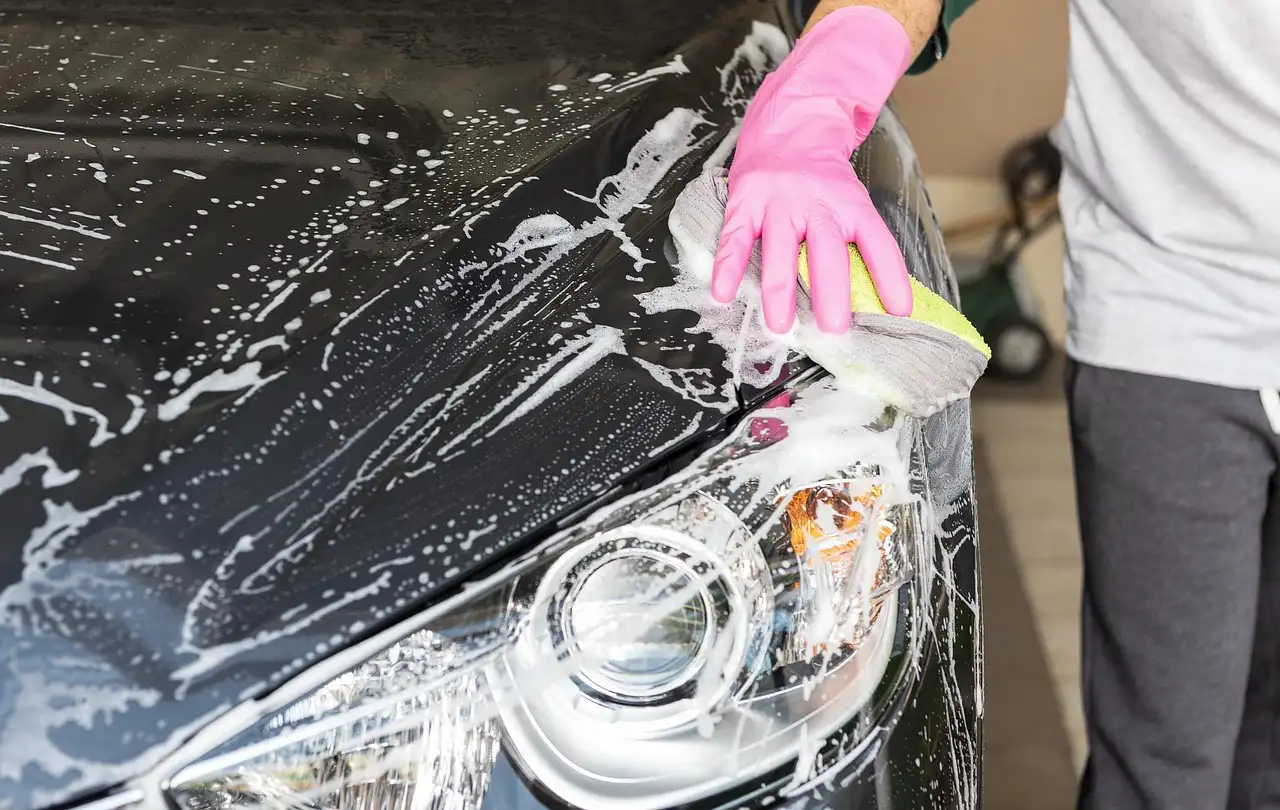
Remove fresh sap with a pH-neutral car shampoo and microfiber first; if it has hardened, use a citrus-based bug and tar remover or 70% isopropyl alcohol on a cool panel, then wash and wax. Leave it alone and you can end up with scratches, dull spots, or etching that remain after the sap is gone. This guide gives you a paint-safe decision tree for fresh, hardened, and etched sap on paint and glass.
How tree sap harms clear coat
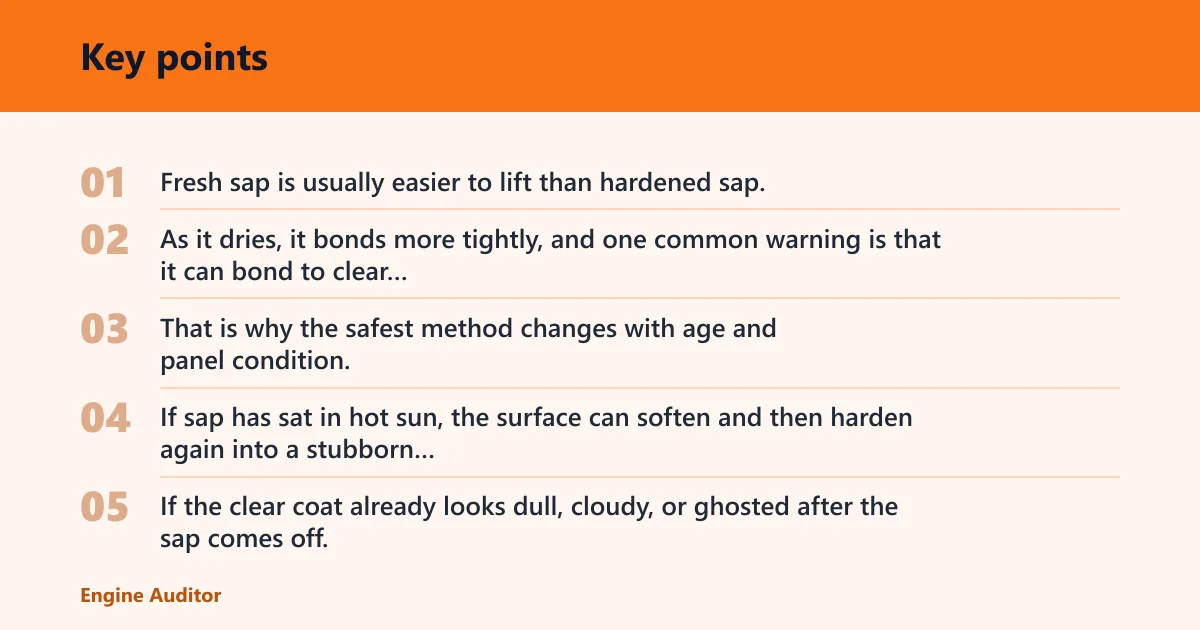


Fresh sap is usually easier to lift than hardened sap. As it dries, it bonds more tightly, and one common warning is that it can bond to clear coat. That is why the safest method changes with age and panel condition.
If sap has sat in hot sun, the surface can soften and then harden again into a stubborn spot. If the clear coat already looks dull, cloudy, or ghosted after the sap comes off, the damage may no longer be only on the surface. At that point, cleaning alone may not fully fix it.
Fresh sap
Fresh sap is the easiest case. A clean rinse or a gentle wipe can remove loose grit before any cleaner touches the panel. If the spot is still tacky, use a mild cleaner and very light pressure so you do not force debris across the clear coat.
Hardened sap
Hardened sap needs more dwell time or added softening. It may smear before it releases, which is a sign to pause and let the product work instead of rubbing harder. A repeated light pass is better than one aggressive pass.
Etched sap
Etched sap means the stain or dull mark remains after the sap is gone. Cleaning can remove the contamination, but it cannot always reverse the mark. If the spot remains after gentle removal, the next step may be polishing or professional correction.
What you’ll need
- Two or more clean microfiber towels
- A clean wash mitt for the initial wash
- Car shampoo or waterless car wash for prep when a hose is not available
- 70 percent isopropyl alcohol mixed 1:1 with water
- Bug and tar remover
- White vinegar mixed 1:1 with water as a fallback household option
- Spray bottle, cotton ball, or soft applicator pad
- Hair dryer
- Wax or paint protection for the final reset
Which sap-removal method to use?
| Sap age | Paint temperature | Available tools | Safest method | Dwell time | Wipe pressure | When to stop and escalate |
|---|---|---|---|---|---|---|
| Fresh sap | Cool panel | Microfiber, car shampoo, waterless car wash | Wash or pre-wipe first, then use a microfiber towel with light cleaner | None to brief | Light, straight-line passes | Stop if grit remains, or if the sap smears instead of lifting |
| Hardened sap | Cool to mildly warm | Bug and tar remover or 70 percent isopropyl alcohol mixed 1:1 with water | Let the product soften the spot, then wipe with clean microfiber | About five minutes for remover, shorter for alcohol | Light to moderate only | Stop if repeated passes leave residue or the paint starts to haze |
| Old sap with ghosting or etching | Cool panel only | Cleaner plus polishing or professional correction | Remove the sap first, then evaluate the mark | Use only as directed on the product | No pressure beyond residue removal | Stop if the mark is still visible after cleaning |
| Paint | Cool panel | Microfiber, alcohol mix, bug and tar remover | Use paint-safe products only | Brief to about five minutes, depending on product | Light | Stop before rubbing hard into clear coat |
| Glass | Cool glass | Razor blade, alcohol mix, microfiber | Razor blade only on glass, never on paint | Brief | Very light edge contact if used on glass | Stop if the surface is painted, tinted, or coated |
Remove fresh sap first
- Rinse the panel or use waterless car wash if a hose is not available.
- Lift loose dust with a clean microfiber towel before touching the sap.
- Apply your chosen cleaner to the towel or spot, not across the whole panel.
- Wipe in short, straight passes with minimal pressure.
- Recheck after each pass and stop if the sap starts to smear or drag grit.
A common first-timer mistake is pressing harder when the spot resists. That can turn a surface cleaning job into a scratch repair job. If the sap does not release cleanly, move to a remover with dwell time instead of increasing force.
Can you use alcohol on car paint?
Yes, but only with caution. A 1-to-1 mix of 70 percent isopropyl alcohol and water is a common sap-removal option, and it can be applied with a microfiber towel or cotton ball to the sap spot. Repeated use can be harsh on clear coat, so keep the contact limited and follow with protection.
Spray the mix onto the applicator, not the panel, then wipe lightly. Do not keep rewetting the same area over and over. If the spot still resists after a few passes, switch to a dedicated bug and tar remover instead of escalating pressure.
How do you remove hardened sap?
For hardened sap, start with a bug and tar remover or the 70 percent alcohol mix on a cool panel. The remover needs dwell time before wiping, so follow the dwell time listed on the product label. If the panel is warm, wait for it to cool first or the product may flash too quickly. (Thedrive)
- Apply the remover to the sap only.
- Wait for the dwell time listed on the product label.
- Wipe with a clean microfiber towel using light pressure.
- Repeat once if needed, then stop if the spot stays bonded.
- Use low or medium heat only if the residue still will not lift.
If you use heat, keep a hair dryer with steady heat for 1 to 2 minutes. Do not park the nozzle in one place. Use only enough heat to soften the residue and stop if the panel feels too hot to the touch.
Can a hair dryer remove tree sap from car paint?
Yes, a hair dryer can soften sap enough to help it release. It is the gentler option compared with more aggressive heat, but it still needs careful spacing and movement. Keep the airflow steady and stop as soon as the sap softens. Overheating the same point can damage clear coat.
Use the dryer only long enough to loosen the sap, then wipe with microfiber. If the spot needs repeated heating to move, that is a sign to switch to a remover instead of staying with heat. Heat should assist removal, not replace the cleaner.
What should I do if tree sap is old and hardened on my car?
Old sap needs a slower approach. Start with a cool panel, remove loose dirt, and use a dedicated bug and tar remover first. If it still clings, add low or medium heat from a safe distance. If the spot leaves a ghost or dull patch, the remaining mark may need polishing after the sap itself is gone.
Say your hood has a hardened sap dot that has sat through a hot afternoon. One light remover pass may not be enough, but the next step is still another dwell-and-wipe cycle, not a scrub. If the clear coat starts to haze, stop and escalate to correction rather than continuing.
Common mistakes
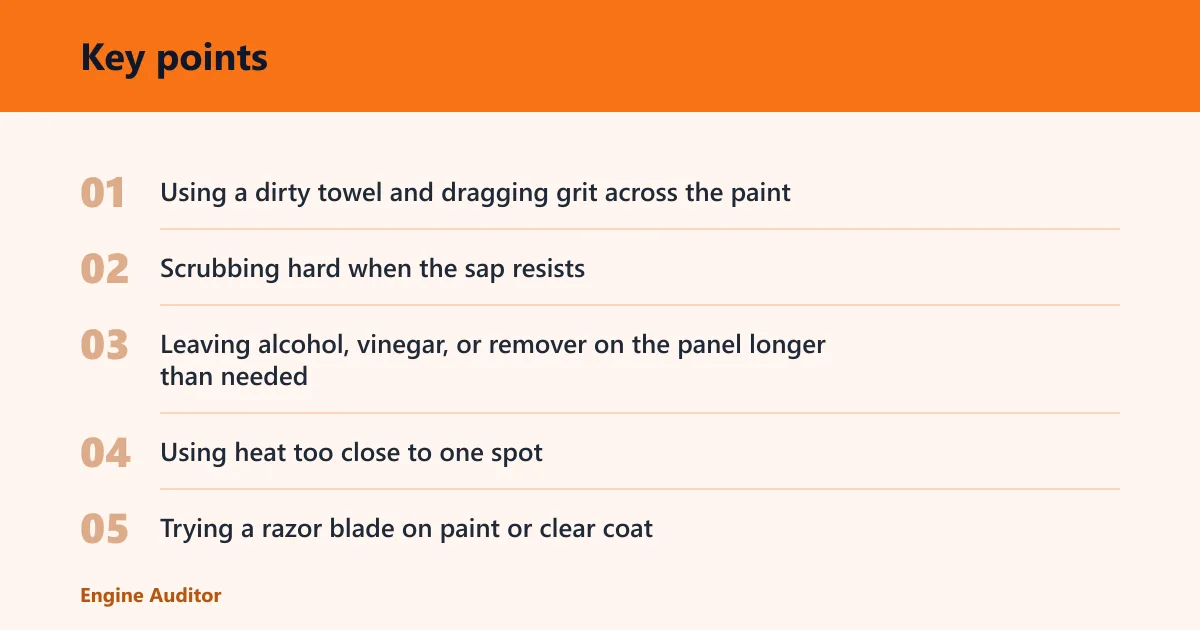
- Using a dirty towel and dragging grit across the paint
- Scrubbing hard when the sap resists
- Leaving alcohol, vinegar, or remover on the panel longer than needed
- Using heat too close to one spot
- Trying a razor blade on paint or clear coat
- Stopping after the sap lifts but skipping wax or protection
White vinegar mixed 1:1 with water is a fallback household option, but it is acidic and should be used more carefully than dedicated products. Avoid it on fresh wax, sealant, or other protected finishes because it can reduce protection. WD-40 is sometimes mentioned for sap, but it is not usually the first choice for paint-safe removal because it can leave residue and is not a dedicated cleaner.
Frequently asked questions
What is the safest way to remove sap without rubbing grit into the paint?
Wash or pre-wipe the area first, then use a clean microfiber towel with a remover chosen for the sap’s age. Work in short, straight passes with light pressure. If the surface is dirty, use waterless car wash and a fresh towel rather than pushing dry dirt across the clear coat.
Can I use a razor blade on sap on car windows but not paint?
A razor blade is generally used on glass only, not on paint. Glass can tolerate a blade for bonded residue when used carefully, but clear coat can scratch or cut quickly. Keep the blade away from painted edges, tinted film, and any coated glass where the risk is higher.
Is WD-40 safe for removing tree sap from a car?
It is not the preferred first choice for paint-safe removal. Dedicated bug and tar remover or the 70 percent alcohol mix is more direct for sap, and both are easier to control with microfiber. If WD-40 is used at all, it should be treated as a follow-up cleanup step, not the main method.
Will tree sap damage clear coat if it sits too long?
Yes. Sap can bond to clear coat, and if it sits long enough it can etch or dull the finish. The longer it stays in heat and sunlight, the higher the chance that cleaning will remove the sap but leave a ghost mark behind. That is why quick removal matters.
Do I need to wax my car after removing tree sap?
Alcohol and repeated cleaning can strip some protection from the panel, so reapply wax or paint protection after the area is clean and dry. That final step restores the protective layer the cleaner may have removed and helps the panel resist future contamination.
Products related to this article
Sponsored / affiliate links. As an Amazon Associate I earn from qualifying purchases. I may earn additional commission from eligible campaigns.