How to Remove Smoke Smell from a Car for Good, Fast
Remove all ash and washable residue first, then clean every soft surface and replace the cabin air filter. If the smell comes back after a full clean and a day or two of airing out, the odor is likely embedded and may need ozone, steam, or professional treatment. Leaving it alone lets odor cling to cloth, foam, and HVAC parts, which can hurt resale value and keep the car unusable. This guide gives a severity-based decision tree for what to clean first, when DIY is enough, and when the smell is too deep for surface work.
What you’ll need before you start


- Carpet and upholstery vacuum attachment
- Vacuum with a hose and crevice tool
- Interior surface cleaner
- Car upholstery cleaner that is fabric-safe or neutral-pH
- Microfiber towels
- Soft brush for fabric and vents
- Odor neutralizer made to eliminate smoke smells
- Baking soda
- Activated charcoal
- Gloves
- Fresh cabin air filter if the old one smells smoky
How bad is the smell? Use this triage checklist
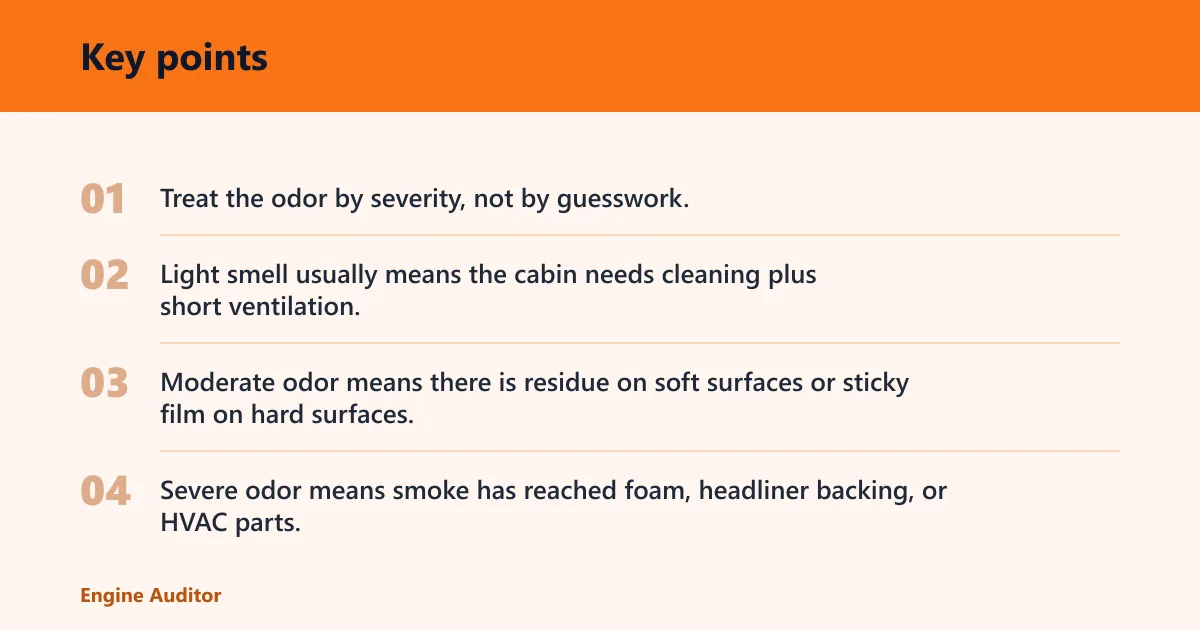
Treat the odor by severity, not by guesswork. Light smell usually means the cabin needs cleaning plus short ventilation. Moderate odor means there is residue on soft surfaces or sticky film on hard surfaces. Severe odor means smoke has reached foam, headliner backing, or HVAC parts, and DIY surface cleaning may not finish the job.
| Tier | Symptoms | Cleaning sequence | Estimated time | Escalation threshold | Safety warning |
|---|---|---|---|---|---|
| Light | No visible ash film; odor fades with doors open; cabin smells stale, not sour | Vacuum, wipe hard surfaces, clean glass, ventilate, then use odor neutralizer or charcoal | 1–2 hours plus airing | If smell returns after 24–48 hours, move up a tier | Do not use heavy wetting on headliners or electronics |
| Moderate | Sticky film on trim, ash in seams, odor in seats or carpet, smell returns after driving | Vacuum, clean hard surfaces, clean fabric, treat vents, then neutralize after drying | 3–5 hours plus drying | If vents still smell or the odor returns after drying, move to Tier 3 | Ventilate well; do not keep HVAC on recirculation |
| Severe | Heavy smoking history, odor in headliner and HVAC, visible residue, repeated return after cleaning | Deep clean all surfaces, replace cabin air filter, then ozone or chlorine dioxide with strict safety controls | Half day to several days | If odor persists after deep cleaning and airing, use professional remediation | Do not occupy the car during ozone or chlorine dioxide treatment |
How do you remove smoke smell from a car for good?
Remove the source, then clean the surfaces that hold residue longest: upholstery, headliners, vents, and plastics. Smoke odor residue can cling to porous materials and stay after a surface wipe, so the sequence matters. The fastest durable fix is vacuuming first, cleaning second, and neutralizing after everything is dry.
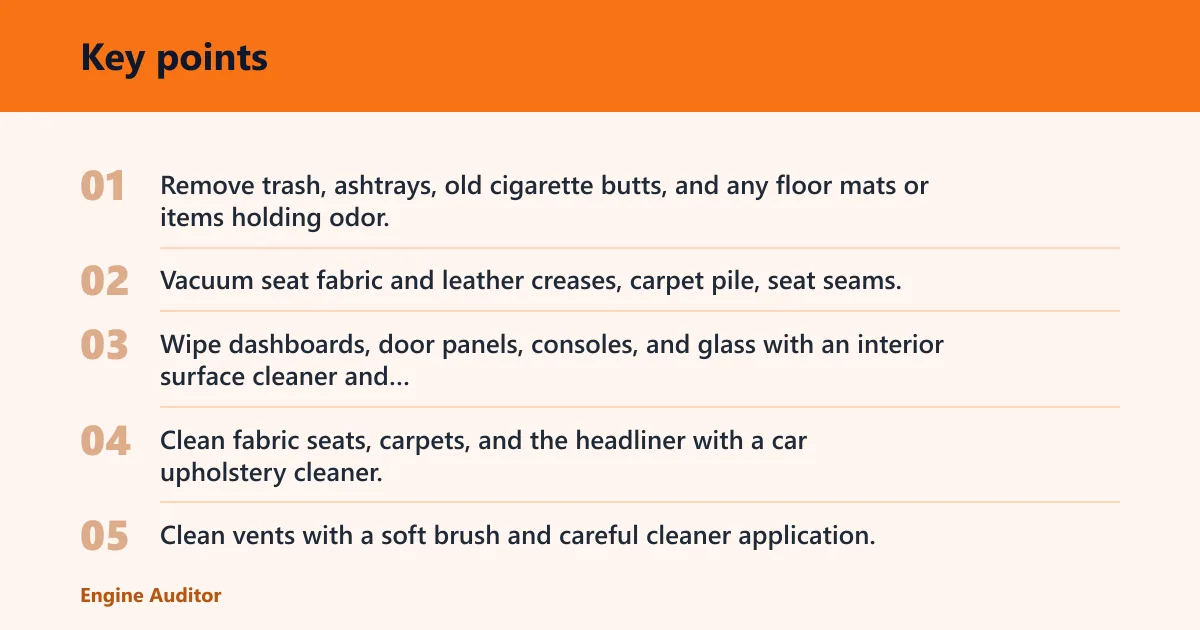
- Remove trash, ashtrays, old cigarette butts, and any floor mats or items holding odor.
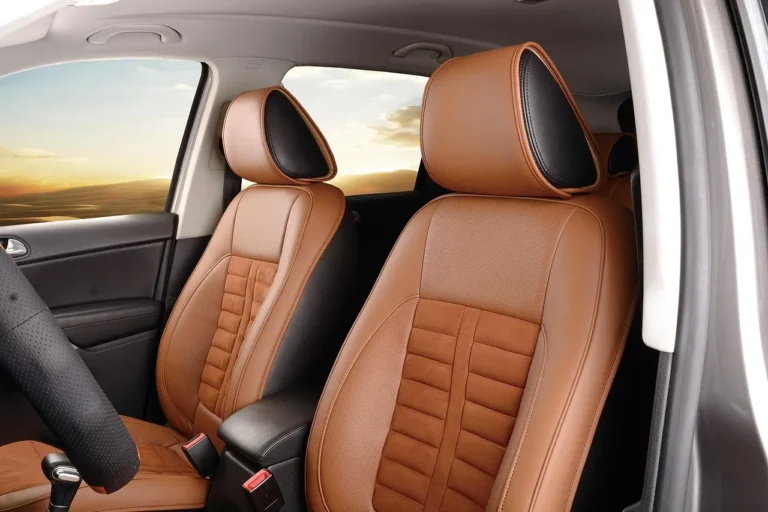
- Vacuum seat fabric and leather creases, carpet pile, seat seams, and under-seat areas with a carpet and upholstery vacuum attachment.
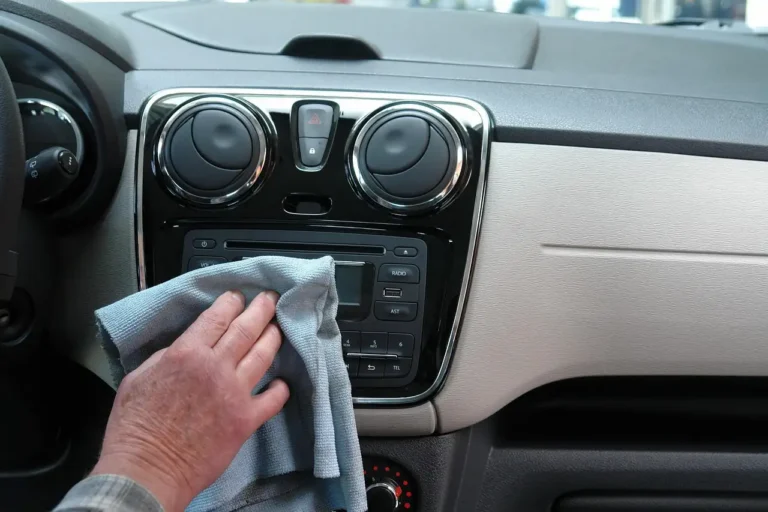
- Wipe dashboards, door panels, consoles, and glass with an interior surface cleaner and microfiber towel.
- Clean fabric seats, carpets, and the headliner with a car upholstery cleaner; use light agitation and limited moisture.
- Clean vents with a soft brush and careful cleaner application, then replace the cabin air filter if it smells smoky.
- After the cabin is dry, use an odor neutralizer; add baking soda or activated charcoal only as support for light or leftover odor.
If that didn’t work, try this next
Say your compact sedan still smells smoky after a full wipe-down and overnight drying. That usually means residue remains in vents, under the seats, or in the headliner. Repeat vacuuming, then clean the HVAC intake area and replace the cabin filter before moving to ozone or chlorine dioxide.
How do you get smoke smell out of car seats and carpets?
Use a fabric-safe or neutral-pH car upholstery cleaner on seats and carpet, then let it sit briefly before brushing and lifting residue with a clean towel. Do not soak foam, and do not rush drying. Smoke smell embedded in soft trim often survives a fast wipe because residue sits below the visible surface.
- Vacuum first, including seams, seat rails, and carpet edges.
- Spray upholstery cleaner lightly on a small section.
- Let it dwell briefly, then agitate with a soft brush.
- Blot with a microfiber towel until transfer slows.
- Repeat in small sections and allow full drying before adding odor neutralizer.
Leather needs less liquid and a cleaner rated safe for leather trim. Suede and delicate materials need the least moisture of all. Headliners need the lightest touch; excess liquid can loosen adhesive or leave rings that are harder to fix than the smoke odor itself.
How do you clean air vents so the smell does not come back?
Vent cleaning matters because HVAC systems can hold smoke particles and feed odor back into the cabin after the rest of the interior looks clean. If the smell returns when the fan turns on, vents or the cabin air path are likely part of the problem. Fresh-air mode helps; recirculation can trap the odor inside.
- Set HVAC to fresh air, not recirculation.
- Turn the fan to low and inspect vent slats and intake areas.
- Use a soft brush to loosen residue from vent slats, dash slots, and intake grilles.
- Wipe reachable surfaces with a microfiber towel and a small amount of cleaner.
- Replace the cabin air filter if it holds odor.
- Run short ventilation cycles with windows open for 5–10 minutes, then repeat for three to four cycles.
For deeper odor, ventilation should continue over several hours on a dry, breezy day. Cargetup recommends short burst ventilation for 5–10 minutes and repeated cycles, and says recirculation should not be used while ventilating.
What products neutralize smoke smell instead of just masking it?
Use an odor neutralizer made to eliminate smoke smells, not a fragrance that only covers them. Baking soda and activated charcoal can help with light or leftover odor after cleaning, but they are support methods. They work best in a dry cabin with the source already removed.
- Odor neutralizer: Best after cleaning and drying; use on the cabin surfaces it is designed for.
- Baking soda: Sprinkle lightly on carpets or cloth after cleaning, then vacuum it off later; useful for light odor only.
- Activated charcoal: Place in the cabin to absorb leftover odor in the closed interior.
These methods help when the smell is mild or fading. They do not replace deep cleaning, and they usually fail when smoke has reached foam, vents, or the headliner backing.
When do you need ozone treatment for smoke smell in a car?
Use ozone treatment only for smoke odor that is still strong after full cleaning, drying, and ventilation. Cargetup lists ozone, thermal fog, or chlorine dioxide for severe smoke odors. These methods are safety-sensitive and should be treated as last-step remediation, not as a shortcut for skipping vacuuming or upholstery cleaning.
- Finish all cleaning and replace the cabin air filter.
- Dry the car fully and remove every person and pet.
- Follow the unit directions exactly and keep the cabin unoccupied.
- Air the car out thoroughly after treatment before driving it.
Do not use ozone or chlorine dioxide in a car with people inside, and avoid using a heavy chemical process when the problem seems limited to surface residue. If the odor returns after this level of treatment, the contamination is usually deeper than DIY cleanup can reach.
Why does smoke smell come back after cleaning a car?
In many cases, the smell returns because cleaning missed a hidden reservoir such as vents, seat foam, carpet backing, the headliner, or the cabin filter. Surface cleaning can remove the visible film and still leave odor in porous materials. When the HVAC system runs, it can push trapped smoke particles back into the cabin.
Common first-timer mistake: cleaning the dashboard and seats, then stopping before the vents, filter, and under-seat areas are addressed. A second common failure is leaving damp upholstery closed up overnight, which lets odor settle back in before the car dries.
Can you remove smoke smell from a car interior without damaging fabric?
Yes, if you use fabric-safe cleaner, low moisture, soft brushes, and limited dwell time. Headliners, suede, and delicate plastics need the most caution. The safest path is small sections, light agitation, and fast drying. Heavy soaking and hard scrubbing cause more damage than smoke residue on many interiors.
Common mistakes that make smoke odor return
- Skipping hidden residue in vents, seams, and under seats
- Using too much liquid on headliners or electronics
- Ignoring the cabin air filter and HVAC intake path
- Relying on air fresheners instead of removal
- Stopping before the car is fully dry
Prevention is simple: keep the cabin dry, replace the cabin air filter when it carries odor, and vacuum ash-prone areas before residue spreads. A clean interior stays easier to maintain than a smoky one that has been left to build up for months.
Frequently asked questions
How do you get smoke smell out of a car for good?
Remove ash, vacuum every seam, clean hard and soft surfaces, treat vents, then air the car out until fully dry. If the odor returns after 24–48 hours, the smell is embedded and needs stronger remediation such as ozone or chlorine dioxide.
What removes cigarette smoke smell from a car the fastest?
The fastest real fix is a full vacuum, surface wipe, upholstery cleaning, and cabin filter replacement in one pass. Short burst ventilation for 5–10 minutes helps, but it works best after residue is removed rather than before.
Does baking soda really remove smoke smell from a car?
Baking soda can help absorb light leftover odor on carpets or seats after cleaning, but it does not remove embedded smoke residue. Use it only as a supporting step, then vacuum it away after it has sat in the cabin.
How do you clean air vents to remove smoke smell?
Use fresh-air mode, a soft brush, and careful cleaner application on reachable vent slats and intake areas. Replace the cabin air filter if it smells smoky. If the odor returns when the fan runs, the HVAC path still holds residue.
How long should you air out a smoky car?
Use short bursts of 5–10 minutes, repeated in three to four cycles, then extend airing over several hours on a dry, breezy day. Keep recirculation off during ventilation so the odor is not pulled back through the cabin.
Products related to this article
Sponsored / affiliate links. As an Amazon Associate I earn from qualifying purchases. I may earn additional commission from eligible campaigns.