What to Do When You Buy a Used Car with No Records
Start by confirming the title, recalls, and fluid levels, then get a baseline inspection and replace unknown-age wear items within 30 days. Skip that triage and you can inherit lien trouble, missed safety defects, and a service history you cannot trust. This guide covers the first checks, the documents to rebuild, and the service records to start keeping immediately.
First-hour triage

Confirm the VIN on the car and paperwork
Check the VIN on the dashboard plate, door jamb label, title, registration, insurance card, and dealer paperwork before you treat the car as yours. The VIN ties the vehicle to history reports, title research, recall lookup, and theft screening. If one digit is off, stop and verify it before you drive far.
Stop if the title, VIN, or ownership details do not match
A mismatch is not a small clerical issue. It can point to a paperwork error, a swapped body shell, a title problem, or ownership risk tied to a loan or theft report. If the title does not match the car or the seller cannot explain the gap with documents, do not treat the vehicle as cleared.
Set aside the documents and photos you already have
Save the sales contract, title, temporary tag, registration, insurance proof, odometer statement, key count, and all photos from pickup day. Those files are the base of your own record file. A clean folder now makes it easier to spot later gaps in mileage, title status, or service entries.
📊 The FTC rule applies to dealers who sell more than five used vehicles in 12 months. Source: FTC.
What a missing paper trail can hide
Missing records can be harmless, but some gaps point to real risk. The hard part is separating “paperwork was lost” from “the car may have title, finance, mileage, or theft issues.” Use the VIN and official records first, then rebuild service proof after the ownership questions are settled.
Title brands, salvage history, and flood or fire flags
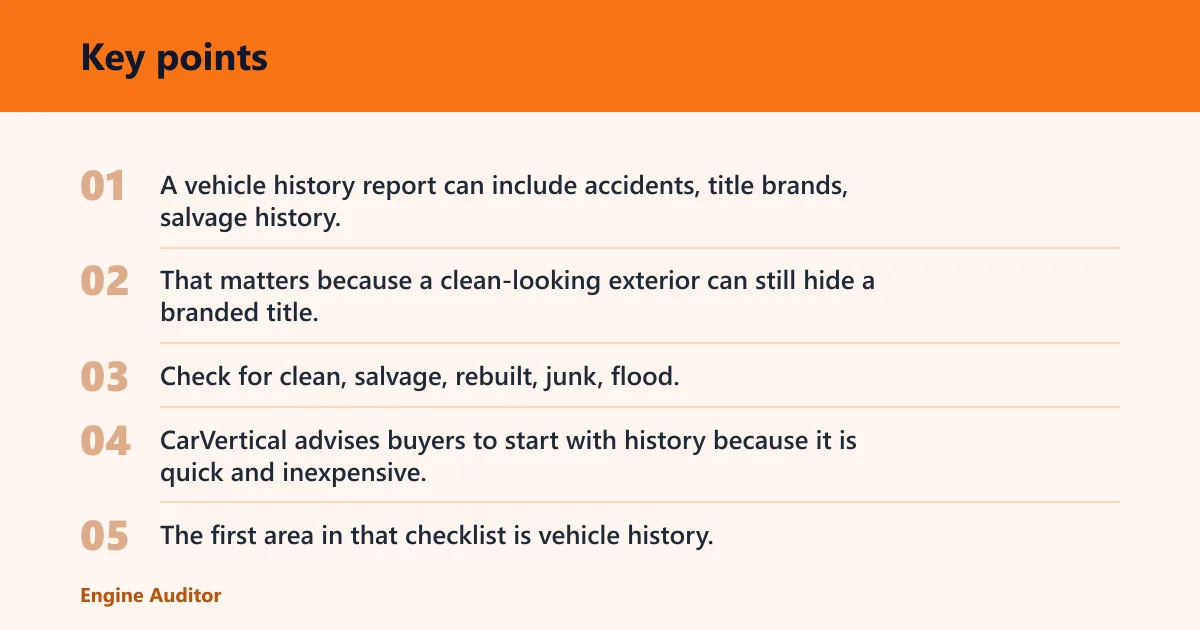
A vehicle history report can include accidents, title brands, salvage history, theft records, auction history, and open recalls. That matters because a clean-looking exterior can still hide a branded title. Check for clean, salvage, rebuilt, junk, flood, and fire status before you assume the car is ordinary.
CarVertical advises buyers to start with history because it is quick and inexpensive, and it organizes checks into five areas. The first area in that checklist is vehicle history. That order makes sense here too: paperwork gaps are easier to read once you know whether the car has a brand, write-off, or auction trail.
Outstanding finance, repossession risk, and ownership disputes
Missing records can hide secured-loan problems. If there is outstanding finance, a repossession risk, or a missing loan settlement letter, ownership may not be fully settled even after you paid the seller. Ask for proof that any loan, PCP, or HP agreement was cleared before you treat the title as final.
Mileage gaps and possible odometer rollback
Service gaps alone do not prove tampering, but mileage should still move forward in a believable way. Cross-check odometer readings against inspections, registrations, emissions records, and prior service entries. A jump backward, a long unexplained gap, or a mileage figure that never appears in any official record is a red flag.
Say the sedan shows 82,400 miles on the dash, but the last inspection record lists about 91,200 miles from eight months earlier. That is not a normal gap. It needs a title, inspection, and odometer review before you rely on the car’s stated mileage.
How do you check the car’s history now?
Run a VIN-based vehicle history report first, then compare it with official records and the paperwork in hand. That report can flag accidents, title brands, salvage history, theft records, auction history, open recalls, and mileage patterns. It will not tell you whether the engine is healthy, so treat it as a filter, not a diagnosis.
Run a VIN-based vehicle history report
Use the VIN for the report, not just the make and model. Some services also support license plate searches, but the VIN should still be the main key because it follows the car across title changes and state lines. Detailed Vehicle History says its reports cover ownership records and can help identify hidden damages before purchase.
If the report shows accident records, title brands, auction movement, or theft flags, compare those entries with the seller’s explanation and any repair invoices. A gap between the report and the story matters more than either one alone.
Cross-check mileage with inspections, registrations, and emissions records
Check whether mileage appears on inspection stickers, registration renewals, emissions files, dealer invoices, and service slips. CarVertical’s guide notes that a free MOT history check can show mileage recorded at every test back to 2005. That kind of chain makes rollback harder to hide and easier to spot.
Look up open recalls and repair completion status
Confirm recall status through the manufacturer or NHTSA and check whether repairs are still open. A recall is not the same as a repair completed. If the report lists open recalls, save the notice and book the fix before you assume the vehicle is fully up to date.
Where can you rebuild the service record?
Rebuild service history from every source that may have touched the car: the selling dealer, prior repair shops, the manufacturer network, inspection files, and the previous owner’s paperwork. The goal is not a perfect backfile. The goal is enough proof to build a trustworthy maintenance baseline from this point forward.
Ask the selling dealer and repair shops for invoices
Ask for itemized invoices, dealer stamps, and any service summaries tied to the VIN. Many shops can reprint past work if the car is in their system. Even a small stack of invoices can reveal timing belt history, brake work, fluid service, or repeated problems that deserve attention now.
Request digital service history from the manufacturer or dealer network
Some manufacturers keep digital records in their dealer systems. Ask whether a VIN lookup can pull warranty work, scheduled maintenance, or campaign repairs. If that history exists, it can fill in large gaps that paper records missed and help you spot missing intervals in the schedule.
Search prior owner paperwork, inspection sheets, and claim records
Look for inspection sheets, emissions tests, registration renewals, and insurance claim records in whatever documents came with the car. Prior owners sometimes leave a trail in glove-box paperwork or transfer packets. Those files can show body repairs, odometer readings, or dates when the vehicle sat unused after a claim.
What should I do when I buy a used car with no records?
Begin with ownership and safety triage: match the VIN, check title status, confirm recalls, and inspect fluids and obvious defects. Then rebuild your own file with photos, scans, mileage, and receipts. If the title, VIN, or finance status is unclear, stop driving until the issue is resolved.
Build a baseline maintenance file
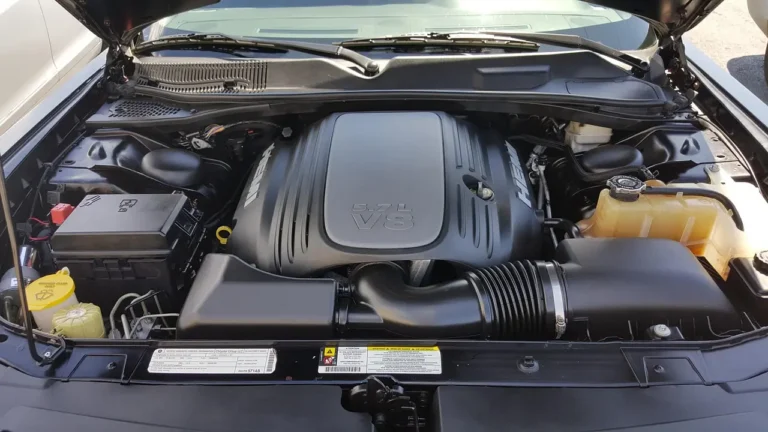
Document current mileage, tire wear, fluid levels, warning lamps, belt and hose condition, and visible leaks. Photograph the dashboard, odometer, engine bay, tires, underbody, and interior. Save every receipt from the first round of work so later service can be compared against a known starting point.
Record the date, mileage, and exactly what was changed. If you replace oil, filters, brake fluid, tires, or battery, keep the old part numbers or service notes where possible. That record becomes the new starting line for the vehicle.
Should you get an inspection now?
Yes. A pre-purchase inspection is best before money changes hands, but an immediate post-purchase inspection still matters because it can catch defects you now own. Focus on engine, transmission, suspension, brakes, leaks, fluids, steering, and any obvious damage that might affect whether the car should be driven.
Use a mechanic for engine, transmission, suspension, brakes, and leaks
Ask for a full check, not a quick glance. You want a report on fluid leaks, brake condition, suspension play, transmission behavior, and signs of prior collision or flood damage. The inspection should also help set a maintenance starting point, especially when service history is unknown.
Treat major defects as a reason to stop driving
If the inspection finds brake failure risk, severe fluid loss, overheating signs, or structural damage, stop driving until the fault is checked. A clean history report does not prove the car is mechanically sound. The inspection is the layer that history reports cannot provide.
Use the inspection to set your first service list
Common first items include oil and filter, engine air filter, cabin filter, brake fluid, coolant condition, wiper blades, tires, and any overdue belts or hoses. The exact list should come from the inspection, the manufacturer schedule, and whatever age or mileage is unknown. A common first-timer mistake is assuming “no records” means “nothing needs doing.”
Record recovery worksheet
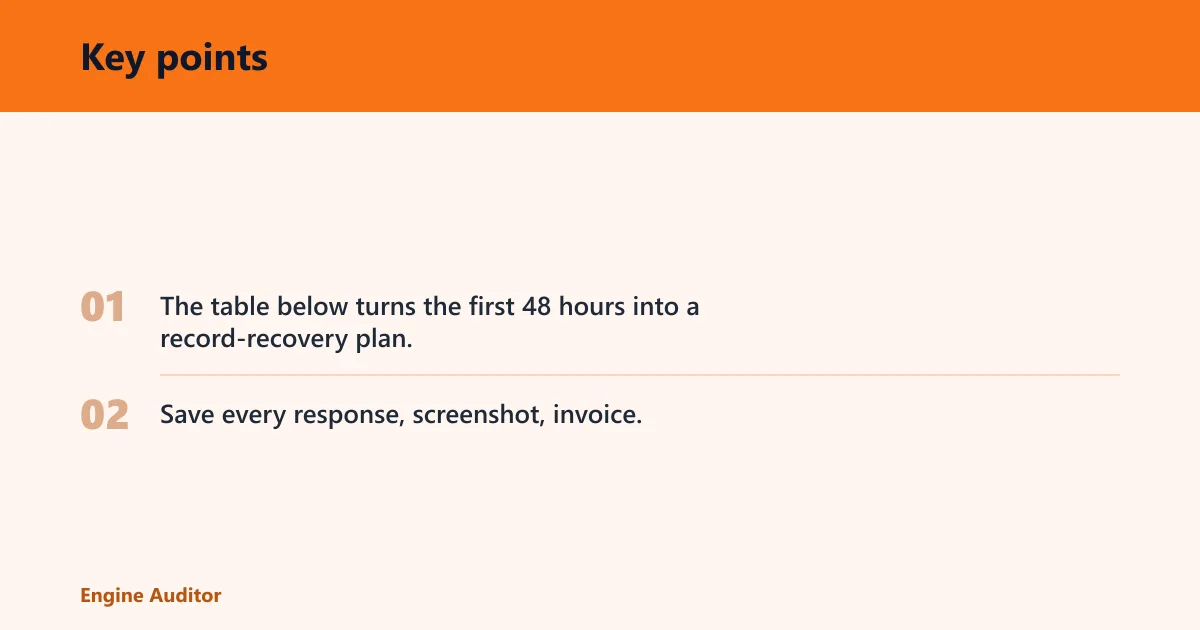
The table below turns the first 48 hours into a record-recovery plan. Work down the list in order. Save every response, screenshot, invoice, and scan in one folder so the vehicle’s ownership file becomes usable from day one.
| Action | Source to contact | What proof to save | Red-flag decision |
|---|---|---|---|
| Verify title and VIN match on car, title, registration, and insurance | DMV records, title paperwork, insurer, seller documents | Photo of VIN plate, title copy, registration, insurance card | Stop driving if VIN or title does not match |
| Request prior service history | Selling dealer, repair shops, manufacturer dealer network | Invoices, dealer stamps, digital service printouts | Proceed normally if gaps are only missing papers |
| Check insurance claim history | Insurer, prior owner records, history report | Claim summaries, repair estimates, body shop invoices | Inspect immediately if there are collision or flood claims |
| Check emissions and inspection history | State inspection database, emissions station, registration records | Mileage at each test, pass/fail dates, defect notes | Inspect immediately if mileage jumps backward or gaps appear |
| Check recall status and repair completion | Manufacturer lookup, NHTSA lookup, dealer service department | Recall notice, repair order, completion confirmation | Proceed after open recalls are scheduled or closed |
| Build a baseline maintenance log | Your own file, inspection shop, parts receipts | Current mileage, photos, service list, receipts, inspection results | Proceed normally after the baseline is documented |
| Check for stolen-vehicle risk | Police database check where available, title office, insurer | VIN verification, engine number record, ownership proof | Stop driving if the vehicle is flagged or identity is unclear |
| Review outstanding finance or repossession risk | Seller, lender, title office | Loan settlement letter, lien release, payoff confirmation | Stop driving if lien release is missing or disputed |
Frequently asked questions
How do I check a used car history without service records?
Use the VIN to pull a vehicle history report, then compare the mileage and title trail against inspection, registration, and emissions records. That mix can reveal accidents, brands, salvage history, theft records, auction movement, and open recalls even when the service book is empty.
What paperwork should I rebuild after buying a used car?
Rebuild title and registration copies, insurance proof, VIN photos, recall notices, inspection reports, emissions records, service invoices, and your own maintenance log. Keep receipts for every new part or fluid change. The aim is a clear ownership file that starts on the day you bought the car.
How do I tell if a used car with no records was maintained?
Look for maintenance clues in the mechanical condition, not the seller’s description. Fresh fluids, even tire wear, normal brake thickness, and consistent inspection mileage help. A mechanic can also spot overdue belts, oil leaks, worn suspension parts, or neglected fluids that paper records never mention.
How can I check mileage if the seller has no records?
Cross-check the odometer against inspection stickers, emissions tests, registration renewals, dealer invoices, and any prior service slips. Mileage should move forward in a logical pattern. If you find a backward jump or a long unexplained gap, treat it as a possible rollback or identity issue.
How do I record purchase of a vehicle for my own files?
Keep the bill of sale, title, registration, odometer statement, insurance proof, key count, and photos of the car and VIN. Add the purchase date, mileage, and purchase price in your own log. This is vehicle ownership recordkeeping, not tax advice or accounting guidance.
Should I get a pre-purchase inspection after buying a used car?
Yes, if you did not get one before payment or if the car’s condition is still uncertain. Ask for a full inspection focused on engine, transmission, suspension, brakes, leaks, and underbody damage. Use the result to decide what to repair, monitor, or stop driving over.
Products related to this article
Sponsored / affiliate links. As an Amazon Associate I earn from qualifying purchases. I may earn additional commission from eligible campaigns.