How to Choose a Car Interior Cleaner for Cloth vs Leather
Match the cleaner to the surface: use a low-residue fabric cleaner for cloth and Alcantara, a pH-balanced leather cleaner for real leather, and a mild all-surface interior cleaner only for faux leather and mixed hard trims. The wrong chemistry can stain cloth, dry out leather, and leave faux leather sticky or cloudy. This guide shows how to identify each material and pick the right cleaner without guesswork.
| Decision factor | How to choose a car interior cleaner for cloth | Leather | Winner |
|---|---|---|---|
| Best soil type | Ground-in dirt, drink spills, salt, pet hair, and fabric stains | Body oils, transfer marks, light grime, and dye transfer on sealed surfaces | tie |
| Residue tolerance | Needs very low residue to avoid re-soiling and stiffening fibers | Needs low residue too, but a slight conditioning film can be acceptable on the right finish | Leather |
| Over-wetting risk | Higher; liquid can soak through padding and leave rings or odor | Lower on sealed leather, but saturation can still reach seams and stitching | Leather |
| Format flexibility | Spray, foam, or targeted wipe work depending on stain load | Spray or wipe is usually safer; heavy foam is less useful on delicate finishes | Cloth |
| Finish sensitivity | Less sensitive to sheen changes, more sensitive to moisture and scrubbing | Highly sensitive on aniline, semi-aniline, and some coated leathers | Cloth |
| Best-fit use case | Seats with visible soil, odor, or mixed fabric texture | Daily wipe-downs, coated leather, and surfaces that should stay soft and matte | tie |
How do you choose the right interior cleaner?
Start with the surface, not the bottle. Cloth, real leather, faux leather, and Alcantara each need different chemistry, and the safest cleaner matches the finish and soil level while leaving the least residue.
Match the cleaner to soil level and residue tolerance
Light dust only needs a mild spray or wipe. Heavy grime, old coffee, and pet stains usually need more dwell time, more targeted agitation, or a cleaner made for fabric instead of a general interior spray.
Residue matters because cloth can trap cleaner in fibers, while leather can show streaks, slickness, or a greasy film. A cleaner that leaves almost nothing behind is usually the safer default when you are unsure.
Use product labels to screen out mismatched formulas
Read the label for the target material first. Griot’s Garage Interior Cleaner is described as suitable for vinyl, cloth, headliner, and leather, which makes it a rare broad-use option; even then, broad use is not the same as best use for every finish.
Check the finish claim too. “Safe for leather” should not be treated as a blanket approval for aniline leather, Alcantara, or uncoated surfaces, and “all-purpose” should not be treated as a promise that one formula fits every seat.
Start with the surface, then narrow the format
Sprays spread well and are easier to control on seats. Foams can sit on the surface a bit longer, which helps lift soil on fabric, while wipes are quick for maintenance but usually too light for set-in stains.
2-in-1 products save time, but they can leave more residue than a dedicated cleaner. That tradeoff is often acceptable on coated leather with light soil, and less attractive on cloth where leftover cleaner can attract dirt.
Picture a 2-row SUV with cloth front seats and leather rear bolsters. A single “safe for all interiors” product may clean the dash and the leather, but a fabric-specific cleaner is still the better call for the seat centers because the cloth needs more stain lift and less shine.
📊 Chemical Guys sells a leather cleaner for $10.99. Source: Best Leather Cleaner For Cars.
Which cleaner works best for cloth seats?
Cloth seats do best with a fabric cleaner that lifts soil without soaking the padding. Spray, foam, or a light wipe can all work, but the right format depends on how deep the stain is and how much liquid the seat can handle.
When spray, foam, or wipe formats make sense
Spray is the most flexible format for cloth because you can target a stain and control coverage. Foam helps on larger dirty areas because it clings to the face of the fabric, while wipes are best for fresh marks and routine touch-ups rather than deep cleaning.
For heavy soil, a dedicated upholstery or carpet cleaner is usually a better match than a leather product. Popular Mechanics tested Turtle Wax Power Out Carpet & Mats Cleaner on carpets and mats, which points to fabric-first chemistry.
Why over-wetting matters on cloth upholstery
Cloth absorbs liquid fast. Too much cleaner can push dirt deeper, leave water marks, or keep the foam backing damp long enough to create odor later.
Use only enough liquid to dampen the fibers, not saturate them. If the seat darkens deeply or feels wet at the seams, stop and blot before applying more.
How to use brushing without pushing stains deeper
A soft brush or interior scrubbing pad helps lift embedded dirt from the weave. Use short, light strokes and work the cleaner into the top layer only.
Heavy scrubbing can grind soil farther into the fibers and fuzz the fabric. Family Handyman suggests spot-testing upholstery fabric for colorfastness before using stain remover, and that step matters even more when you plan to agitate.
What should you avoid when cleaning cloth car upholstery?
Avoid soaking cloth, over-brushing one spot, and using a formula that leaves a slick film. Those mistakes can flatten the pile, leave rings, or make the seat feel sticky after it dries.
For pet hair that vacuuming misses, Family Handyman suggests a rubber-dipped glove. That is a practical backup for fabric seats because it lifts hair without adding more moisture.

What cleaner is safe for leather seats?

For real leather, the safer default is a pH-balanced cleaner made for automotive interiors. It should clean without stripping oils, drying the surface, or leaving a greasy film that changes the finish.
Real leather vs leatherette vs synthetic leather
Real leather comes from animal hide and needs gentler chemistry. Leatherette and synthetic leather are coated or man-made surfaces, so they tolerate more routine wipe-down cleaning but can cloud, streak, or feel sticky if you use a harsh formula.
Surface coating matters as much as the base material. Pigmented leather is the most resistant to wear and tear, according to Chemical Guys, which is why it is usually less fussy than aniline or semi-aniline leather.
Why pH-balanced formulas are the safer default
A pH-balanced cleaner is usually the better starting point for leather because it is designed to clean without pushing the hide toward dryness. That lowers the chance of cracking, dulling, or a stiff feel after drying.
Use the mildest formula that removes the dirt you actually have. If the seat only needs dust and hand oils removed, a gentle spray or wipe is preferable to a stronger cleaner-and-conditioner combo.
When a cleaner-and-conditioner product fits, and when it does not
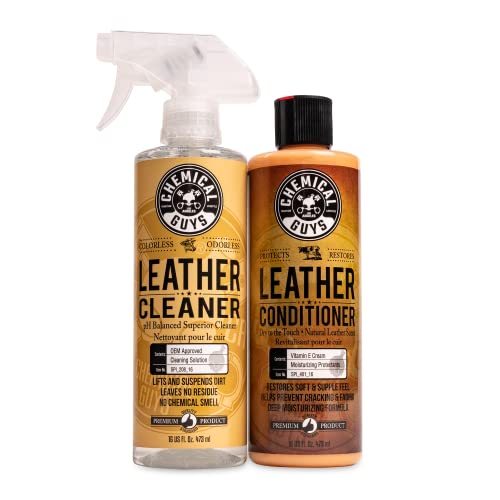
A cleaner-and-conditioner can be useful on coated leather that looks dull or dry after routine care. Chemical Guys offers a sprayable leather cleaner and conditioner in one for $19.99, and Chemical Guys lists a leather care kit priced at $59.99.
That kind of product is less ideal for heavily soiled leather, because the conditioning step can leave residue behind before the contamination is fully removed. It is also a poor fit for faux leather if the finish already feels slick.
Should you use a pH-balanced cleaner on car leather?
Yes, in most cases. A pH-balanced cleaner is the safer default for car leather because it is gentler on the finish and less likely to dry the material or leave a harsh feel after wiping.
That said, “pH-balanced” is not a magic label. You still need to match the product to aniline, semi-aniline, pigmented leather, or coated faux leather, then spot-test before full use.
How do you tell leather, leatherette, and Alcantara apart?
Texture, edge treatment, and the owner manual usually give the answer. Real leather tends to show natural grain variation, leatherette often looks uniform, and Alcantara feels like a soft microfiber suede rather than a smooth hide.
Clues from texture, grain, and edge treatment
Real leather usually has subtle grain changes and a softer, warmer hand feel. Leatherette and synthetic leather often have a more even grain pattern and a slightly plastic-looking edge where the material is wrapped or stitched.
Alcantara is different from both. It has a suede-like nap, and that nap can mat down or spot if you use the wrong cleaner or too much moisture.
What labels and owner manuals usually say
Check the trim list, window sticker, or owner manual before buying a cleaner. Manufacturers often identify seats as leather, leatherette, synthetic leather, or Alcantara, and that wording is more reliable than guessing from appearance alone.
If the manual names a coated finish, treat it as surface-sensitive until proven otherwise. A cleaner that is safe for sealed leather can still leave a sheen shift on a delicate material.
Why Alcantara needs its own approach
Alcantara behaves more like a delicate fabric than leather. It needs low moisture, minimal residue, and light agitation, with a cleaner meant for microfiber or suede-like interiors rather than a leather dressing.
Use it carefully. A formula that is perfect for pigmented leather can flatten the nap, darken the surface, or leave a ring on Alcantara.
Suppose a compact car has Alcantara inserts on the bolsters and leather on the center sections. One bottle may clean the leather well and still be wrong for the Alcantara, so the safer approach is to treat the two materials separately.
Use this decision table before you buy
This table turns label reading into a fast filter. Match the seat material, finish type, and contamination level first, then choose the least aggressive cleaner that can handle the job.
| Material | Finish type | Contamination level | Safest cleaner format | Red flags to reject |
|---|---|---|---|---|
| Cloth upholstery | Fabric weave, knit, or upholstery cloth | Light dust or fresh marks | Low-residue spray or wipe | Oily residue, heavy gloss, or “protectant” film |
| Cloth upholstery | Fabric weave, knit, or upholstery cloth | Heavy soil or set-in stains | Foam or targeted upholstery cleaner with soft brush | Strong solvent smell, over-wet application, no fabric rating |
| Real leather | Pigmented or sealed leather | Light oils or daily grime | pH-balanced leather spray or wipe | Harsh degreaser, sticky dressing, heavy shine |
| Real leather | Aniline or semi-aniline | Any visible soil | Very mild leather cleaner, minimal moisture | Strong cleaner, conditioner-heavy formula, colored residue |
| Leatherette / synthetic leather | Coated, smooth, or uniform grain | Light to moderate soil | Mild all-surface interior cleaner or leather-safe spray | Anything that leaves slickness or cloudy film |
| Alcantara | Suede-like microfiber nap | Light dust or spot soil | Low-moisture fabric cleaner or Alcantara-safe cleaner | Soaking wet foam, leather dressing, hard brushing |
| Mixed interior | Leather, cloth, vinyl, and trim together | Light maintenance cleaning | Mild all-surface cleaner with low residue | One formula with no material limits listed |
One-bottle cleaners are useful, but only in the right lane
A single interior cleaner makes sense when the cabin is mostly vinyl, coated leather, and hard trim. It is less convincing when cloth, Alcantara, or uncoated leather are part of the same job, because each one responds differently to moisture and residue.
Griot’s Garage Interior Cleaner is described as suitable for vinyl, cloth, headliner, and leather, which makes it a practical broad-use option. The drawback is that broad-use products still need careful spot-testing, and they are rarely the best answer for delicate Alcantara or highly absorbent fabric.
Our picks by need

Best for cloth seats with heavy soil: Turtle Wax Power Out Carpet & Mats Cleaner
For cloth seats, a fabric-focused cleaner is the better match when soil is heavy or embedded. Popular Mechanics tested Turtle Wax Power Out Carpet & Mats Cleaner on carpets and mats, which fits the same absorbent behavior that makes cloth seats tricky.
The drawback is direct: this is built for fabric-type surfaces, not leather care. Use it on cloth, not on real leather, if you want to avoid drying or finish change.
Best for coated leather and daily wipe-downs: Lexol Leather Cleaner & Conditioner Kit

This two-step kit is aimed at leather owners who want a cleaner plus conditioner workflow in one kit. It includes two application sponges and is described as wiping away without leaving tacky residue, which is useful for coated leather and routine maintenance.
The drawback is that a two-step leather kit takes more time than a simple spray-and-wipe product. It is also not the best fit for cloth seats, where the conditioning side adds nothing and can leave unnecessary residue.
Best one-bottle choice for mixed interiors: Chemical Guys Total Interior Cleaner & Protectant
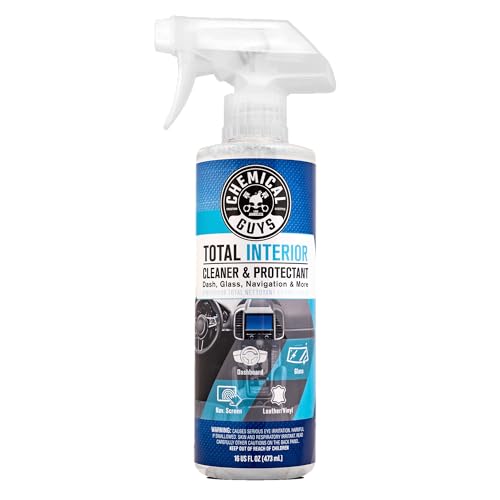
This is the cleaner to consider when your cabin mixes leather, vinyl, dashboards, and trim and you want one bottle for quick upkeep. Chemical Guys says it cleans and protects dashboards, seats, and trim, and the price is $11.97.
The drawback is the same reason it is convenient: one bottle cannot be ideal for every surface. For heavy cloth staining or delicate Alcantara, a dedicated fabric cleaner is still the safer pick.
Best for Alcantara and other delicate fabrics: Griot’s Garage Interior Cleaner

Griot’s Garage Interior Cleaner is described as suitable for vinyl, cloth, headliner, and leather, so it sits in the broad-use category that can help on mixed interiors. That makes it a reasonable starting point for light cleaning on delicate fabric-adjacent surfaces, provided the label and a spot test support the use.
The drawback is that broad compatibility does not equal ideal performance on every delicate material. Alcantara still needs the lightest hand, the lowest moisture, and a hidden-area test before full use.
What mistakes should you avoid?

The biggest mistakes are simple: skip the spot test, use too much liquid on cloth, and leave a film on leather. Those errors cause the failures people notice later, such as streaking, stiffness, discoloration, and a greasy feel.
Skipping the hidden-spot test
Test in an inconspicuous area before using any cleaner on the full seat. Family Handyman advises spot-testing upholstery fabric for colorfastness, and the same caution applies to leather, faux leather, and Alcantara because finish change can show up fast.
Check for discoloration, sheen change, tackiness, or residue after the area dries. If any of those appear, stop and switch to a milder formula.
Using too much liquid on cloth
Cloth seats fail differently from leather. Too much moisture can push dirt deeper, make the padding stay damp, and leave a water line where the cleaner stopped.
Use short passes and blot after cleaning. If the stain is old, repeat with patience instead of flooding the area once.
Leaving sheen, slickness, or residue on leather
Leather should feel clean, not greasy. A shiny film means the product is too heavy for the finish or too much was applied.
That problem is more serious on matte or coated leather, where shine can make the seat look uneven. It can also make the surface collect dust faster.
Applying the wrong formula to coated or faux leather
Leatherette and synthetic leather are not the same as bare hide. They can tolerate routine cleaning, but a strong cleaner or oily dressing can cloud the coating or make it feel sticky.
If the label does not clearly list the material, do not assume it is safe. The safest move is to choose a mild interior cleaner with a low-residue finish and test it first.
Hidden-spot test checklist
- Pick an out-of-sight area, such as under a seat edge or rear bolster seam.
- Apply a small amount of cleaner to a microfiber cloth or applicator, not directly to the surface unless the label says to do so.
- Clean a patch about the size of a coin and let it dry fully.
- Check for color change, sheen change, stiffness, tackiness, or visible residue.
- Repeat only if the surface looks and feels unchanged after drying.
Verdict: How to choose a car interior cleaner for cloth or leather?
Choose How to choose a car interior cleaner for cloth if your seats have visible soil, drink spills, salt, pet hair, or fabric stains and you need a low-residue fabric cleaner that won’t soak the padding or stiffen the fibers.
Choose leather if you’re cleaning real leather seats with body oils, transfer marks, light grime, or dye transfer and want a pH-balanced leather cleaner that keeps the surface soft and matte without drying it out.
Frequently asked questions
What cleaner should I use on cloth car seats?
Use a low-residue fabric or upholstery cleaner made for cloth. It should lift dirt without soaking the padding, and it should be paired with a soft brush only when the stain needs agitation. Avoid dressings and shiny protectants, because cloth holds residue and can re-soil quickly.
What cleaner is safe for leather car seats?
A pH-balanced leather cleaner is the safer default for real leather car seats. It is usually gentler on the finish and less likely to dry the surface or leave a greasy film. For coated leather, choose a mild formula and spot-test first.
Can I use one interior cleaner on both cloth and leather?
Yes, but only if the label clearly lists both materials and the formula is low residue. That kind of cleaner is best for mixed interiors with leather, vinyl, and trim. It is still a compromise, so it is not the best choice for heavy cloth stains or delicate Alcantara.
How do I know if my seats are vinyl, leatherette, or real leather?
Check the owner manual, trim label, or build sheet first. Real leather usually has more natural grain variation, while leatherette and vinyl look more uniform and can feel slightly more plastic. If the surface is suede-like, it may be Alcantara instead of leather.
Should I use a pH-balanced cleaner on car leather?
Usually yes. A pH-balanced cleaner is a sensible first choice for automotive leather because it is gentler and less likely to cause drying or finish change. That said, the finish still matters, so aniline, semi-aniline, and pigmented leather should not be treated the same way.
Do I need a conditioner after cleaning leather seats?
Not always. Conditioner makes sense when the leather is dry, dull, or part of a finish that benefits from added softness, but it is not mandatory after every cleaning. For coated or faux leather, a conditioner can be unnecessary or even leave the surface too slick.
What should I avoid when cleaning cloth car upholstery?
Avoid over-wetting, harsh solvent formulas, and aggressive scrubbing in one spot. Cloth can absorb too much cleaner and hold it in the backing, which can leave rings, odor, or a stiff feel after drying. Always spot-test for colorfastness first.
How do I test a cleaner before using it on car seats?
Choose an inconspicuous area, apply a small amount, and let it dry fully. Then check for discoloration, sheen change, residue, or surface stiffening. If the test spot looks different after drying, do not use that cleaner on the rest of the seat.
Are leather wipes or spray cleaners better for car interiors?
Sprays usually offer better control and lighter residue, which makes them a stronger pick for mixed interiors and larger panels. Wipes are convenient for quick maintenance and small touch-ups, but they are often too mild for heavy grime and can leave behind more product on the surface.
Products related to this article
Sponsored / affiliate links. As an Amazon Associate I earn from qualifying purchases. I may earn additional commission from eligible campaigns.