How to Remove Mold From Car Seats and Carpets Safely
Remove mold from car seats and carpets by fixing the moisture source first, then cleaning only surface mold on non-porous trim and light contamination on fabric; if mold has soaked through padding or returned after drying once, replace the affected material. Leave hidden dampness in place, and spores keep growing, the cabin keeps smelling damp, and a small cleanup can turn into torn upholstery or an HVAC problem. This guide gives a safe step-by-step method, by material, plus the point where DIY stops making sense.
Safety and prep before you clean


Before you disturb anything, put on a properly fitted N95 respirator, nitrile gloves, and sealed eye protection. Open the car doors and work outdoors or in a well-ventilated bay. Mold cleanup is a dust-control job first; once spores start moving, the rest of the cabin can be affected fast.
Ventilate the cabin and isolate the mess
Move loose items out of the car so they do not trap contamination. Keep the affected seat or carpet section as isolated as possible, and leave the doors open so air can move through the work area. If a panel or seat can be removed safely, that usually gives better access and less spreading.
Do not mix cleaners. Never combine bleach with ammonia or acids during mold cleanup. Bleach is not the answer here, and it can create a dangerous reaction if paired with the wrong chemical.
Vacuum loose mold before wet cleaning
A HEPA vacuum is commonly recommended for loose spores and debris before any wet cleaning. That beats an ordinary shop vacuum for final cleanup because it helps reduce cross-contamination before you add moisture. Vacuum slowly, especially around seams, seat rails, and carpet edges where debris settles.
If the surface is dusty with visible growth, vacuum first, then wipe or scrub. Jumping straight to liquid can smear contamination deeper into texture and stitching.
Can this be cleaned or must it be replaced?
Use a simple rule: clean what is surface-level and structurally dry, then stop when moisture has reached padding, foam, or flood-exposed layers. If the carpet padding is wet, surface cleaning alone will not stop regrowth. A smell returning after cleaning usually means hidden moisture remains.
Surface mold versus soaked foam
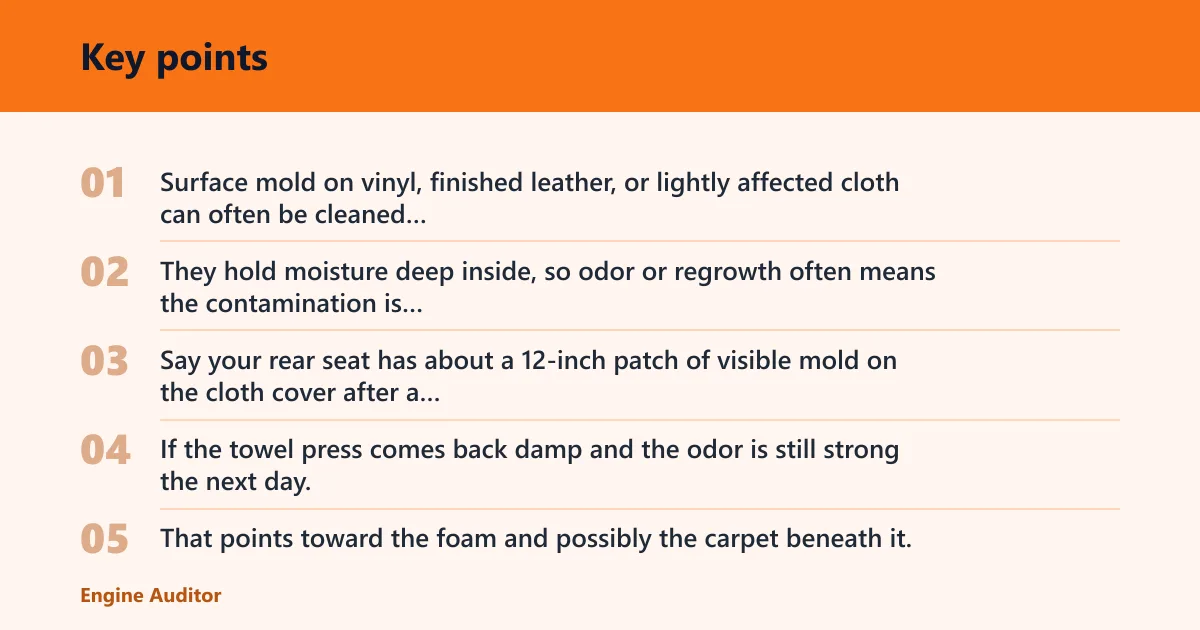
Surface mold on vinyl, finished leather, or lightly affected cloth can often be cleaned if the material dries fully afterward. Foam and cushion cores are different. They hold moisture deep inside, so odor or regrowth often means the contamination is below the visible layer and no longer worth treating as a simple wipe-down.
Say your rear seat has about a 12-inch patch of visible mold on the cloth cover after a spilled drink. If the towel press comes back damp and the odor is still strong the next day, the problem is no longer just on the surface. That points toward the foam and possibly the carpet beneath it.
Signs the padding is holding moisture
Competitor guidance says to press a dry towel into carpet to check for wicking. That test matters because moisture can travel back up after the top looks clean. If a dry towel pulls up dampness, the carpet underlay is still active, and drying must continue or the carpet may need lifting.
Competitor guidance also recommends removing floor mats, carpets, and padding for thorough drying. That is the right move when the underlay stays damp, because carpet padding is a common failure point for mold regrowth.
When floodwater contamination changes the call
Floodwater changes the decision fast. Once contaminated water reaches carpet, padding, or foam, replacement becomes more likely because the material can trap debris and moisture that cleaning will not fully remove. If the water was dirty enough to leave sediment, treat the interior as a restoration job, not a spot-cleaning task.
Carpet and upholstery removal steps
Work in small sections so the car does not stay wet for long periods. Use a wet/dry vacuum or extractor to remove dirty water from carpet and fabric, because it helps minimize oversaturation and lets each section dry faster. The goal is controlled removal, not soaking the cabin and hoping it dries out later.
Lift loose debris and dry soil first
Vacuum all loose debris from the seat tracks, carpet pile, and seams before adding liquid. This reduces the amount of sludge you have to pull back out later. If the area is gritty, a soft brush can loosen embedded material from fabrics and foam, while microfiber works better on leather or vinyl.
Clean in small sections
Use a pH-neutral fabric cleaner or automotive upholstery cleaner on textiles, following the label directions exactly. Spot-test on a hidden area first. Cloth is more porous than leather or vinyl, so it tolerates less saturation and needs more control. Avoid harsh scrubbing that can push contamination deeper into the fibers.
Suppose the front passenger carpet has about a 2-foot by 2-foot affected area, but the seat is still dry. Clean that patch in halves, extract after each pass, and move on only when the towel no longer pulls dirty moisture. That reduces spread and makes hidden dampness easier to spot.
Extract dirty water and speed drying
After cleaning, extract the dirty liquid in sections. Do not over-wet the upholstery or carpet. Fans or a dehumidifier should come in only after the mold has been removed, not before. Drying equipment can move moisture around if you start it while spores and residue are still active.
Mold cleaning by material
Do not treat every surface the same. Finished leather, vinyl, cloth upholstery, carpet, and foam each have different limits. The cleaner that is acceptable on one material can damage another, or leave moisture trapped where it should not be.
Cloth seats and carpet
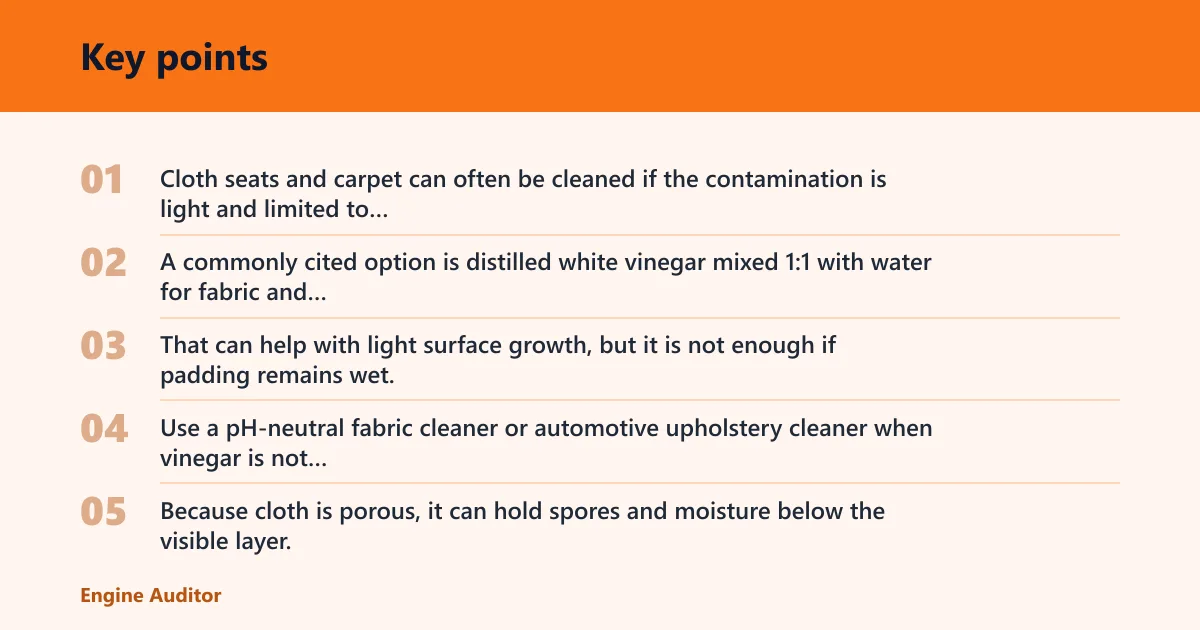
Cloth seats and carpet can often be cleaned if the contamination is light and limited to the visible surface. A commonly cited option is distilled white vinegar mixed 1:1 with water for fabric and carpet, then left in place for 15 minutes before blotting. That can help with light surface growth, but it is not enough if padding remains wet.
Use a pH-neutral fabric cleaner or automotive upholstery cleaner when vinegar is not enough, and follow the label exactly. Because cloth is porous, it can hold spores and moisture below the visible layer. If odor returns or the towel press still wicks moisture, stop treating it as a surface-only problem.
Leather seats
Finished leather needs gentler care. Use a pH-neutral leather cleaner or mild soap solution that is safe for finished leather, then wipe dry. Do not soak the hide. Too much liquid can reach stitching and backing, where mold may persist even if the surface looks clean.
Use a microfiber cloth rather than a stiff brush. If color transfers to the cloth, or the finish looks cloudy after cleaning, stop and reassess. Leather that has mold in seams or backing may need professional restoration rather than repeated scrubbing.
Vinyl seats
Vinyl is less porous than cloth, so surface mold is often easier to remove. Clean it with a mild upholstery cleaner or a soap solution that is safe for finished vinyl. Wipe promptly and dry fully. Do not assume the seam is dry just because the flat panel is clean.
Vinyl often fails at the seams and under trim edges, not on the broad surface. If mold keeps reappearing at stitching or the seat base, the problem may be hidden in the cushion or the mounting area rather than on the visible skin.
Foam and cushion cores
Mold-affected foam or cushion cores are the hardest cases. Foam is porous, so a surface wipe may leave contamination behind. Persistent smell or regrowth is a strong sign that deeper contamination is present, and visible mold in cushioning means replacement time according to competitor guidance.
At that point, cleaning the cover alone is not enough. A deep odor, repeated spotting, or a damp cushion after drying points toward replacement or professional assessment. That is especially true when the source has not been fixed or the interior saw floodwater.
Can vinegar clean mold on car seats?
White vinegar can help with light mold on fabric and carpet, but it is a limited option. Common competitor advice mixes distilled white vinegar 1:1 with water and leaves it on for 15 minutes before blotting. It may help with surface residue, but it will not solve wet padding or soaked foam.
Where white vinegar may fit
Use vinegar only on fabric and carpet where the contamination is light and the material can dry fully afterward. It can help break up odor and surface residue. Test it first on a hidden area, because not every textile or dye reacts the same way.
Where vinegar is not enough
If the carpet padding is wet, vinegar is not enough. If mold is in foam, a cushion core, or underlay, the water source and hidden moisture still need to be addressed. Vinegar also does not remove the need for extraction and full drying.
Why drying still matters more than scent
Do not mistake a vinegar smell for a dry interior. A smell returning after cleaning usually means hidden moisture remains. That is why extraction, airflow, and dehumidification matter more than masking odor with a cleaner.
Drying, leak checks, and hidden sources
A car interior is fully dry only when the carpet, padding, seat foam, and seam areas no longer feel damp and the odor does not return after the cabin sits closed for a while. Drying can take longer than the visible surface suggests, especially in layered materials.
How to dry a cabin fully
Use fans or a dehumidifier only after the mold has been removed. Keep doors open and move air through the footwells, seat bases, and trunk if that area was affected. If mats were removed, dry them separately instead of leaving them under the carpet.
The goal is not just dry touch. Hidden layers must be dry too. If the towel press still wicks moisture, or the underside of the carpet feels cool and damp, continue drying or pull the material up for inspection.
Check door seals, the windshield cowl, and the AC drain
Leaking door seals, sunroof drains, trunk seals, and AC drains are cited moisture sources. Check the door seals, windshield cowl, and AC drain before or during cleanup. If the leak stays active, the mold will return no matter how well the surface is cleaned.
Fixing the leak is required to prevent return growth. Cleaning a dry patch while water still enters the cabin is wasted effort.
Inspect the cabin air filter and HVAC
If the odor returns through the vents, inspect the cabin air filter and HVAC system. Odors can recirculate through the air path even after the visible mold is gone. A dirty filter or contaminated ducting can keep the cabin smelling damp long after the seats look clean.
Persistent vent odor, especially after the interior is dry, is a sign to look beyond upholstery. That may call for filter replacement or professional HVAC cleaning.
Mold-affected car seats decision checklist
Use this checklist to decide whether to clean, lift, replace, or call a pro. It keeps the decision tied to material and contamination depth, rather than guessing from appearance alone.
| Material | Contamination depth | Recommended action | Stop signs |
|---|---|---|---|
| Cloth seat | Surface | Clean | Smell returns |
| Cloth seat | Seam | Clean, then inspect backing | Wicking after towel press |
| Leather | Surface | Clean | Color transfer |
| Vinyl | Surface | Clean | Color transfer |
| Carpet | Seam | Lift carpet | Smell returns |
| Carpet | Padding | Lift carpet | Wicking after towel press |
| Foam | Padding | Replace | Widespread growth |
| Foam | Floodwater | Call pro | Smell returns |
Use the table as a stop rule, not a wish list. If the stop sign shows up, the material is telling you the contamination is deeper than the visible layer.
Frequently asked questions
Can I use vinegar on moldy car seats?
Vinegar can help with light mold on fabric and carpet, and common guidance mixes it 1:1 with water. It is not enough for wet padding, foam, or persistent odor. Use it only as a limited surface cleaner, and do not let the vinegar smell hide hidden moisture.
When does moldy car upholstery need replacement instead of cleaning?
Replace upholstery or call a pro when mold reaches foam, padding stays wet, floodwater was involved, or the smell returns after drying. Visible mold in cushioning is a strong replacement signal. If the problem keeps coming back at seams or under the seat, the hidden layers are still contaminated.
How do I stop mold from coming back after cleaning the car interior?
Fix the leak first, then dry the interior fully before reassembly or reuse. Check door seals, the windshield cowl, AC drain, cabin air filter, and HVAC if odor persists. Mold can grow in 24–48 hours after water intrusion, so any remaining dampness needs prompt attention.
Products related to this article
Sponsored / affiliate links. As an Amazon Associate I earn from qualifying purchases. I may earn additional commission from eligible campaigns.