Are Adjustable Pedals Worth It for Daily Driving? Guide
Yes, if you share the car or sit too close, adjustable pedals can fix reach; if your seat already gives bent elbows and a slight knee bend, they usually add little. Leave the fit wrong, and you get stretched legs, weaker brake control, and a seat position that can ache on long commutes. This guide breaks down when they help, when they are redundant, and which cheaper fixes beat them for daily driving.
This guide is part of our Car pedals and accessories guide series.
Verdict


For daily use, adjustable pedals are worth paying for when they solve a real driver-ergonomics problem without forcing the seat into a bad place. They make the most sense in households with more than one driver, in trucks and SUVs with deep dashboards, and for shorter drivers who need the wheel farther away but still want solid brake and throttle reach. If the seat, mirror, and steering wheel can already be set correctly, the extra mechanism often becomes a convenience feature, not a must-have.
Specs at a glance
| Item | Factory power adjustable pedals | Fixed pedals | Pedal extenders |
|---|---|---|---|
| What moves | Brake and throttle pedal assembly moves closer to or farther from the driver | Nothing moves | Pedal face position changes by added hardware |
| Driver control | Control switch within easy reach of the seat | No control switch | Manual set-up, then fixed in place |
| Drive mechanism | Electric motor under the dashboard drives a pedal assembly on a track or guide | None | Mechanical add-on, vehicle dependent |
| Safety behavior | Sensors stop movement if an obstruction is detected; system locks in place during driving | No moving parts to stop | Depends on design and installation |
| Best fit | Drivers who need reach adjustment without big seat changes | Drivers already in a proper position | Short drivers needing closer pedal reach |
| Compatibility risk | Vehicle-specific; usually a factory feature | Low | Higher; not compatible with every vehicle |
Power adjustable pedals can move closer to or farther from the driver, and that motion is meant to tune reach without major seat changes. The usual parts are simple in concept: a control switch, an electric motor, and a pedal assembly. Most systems also use obstruction sensors that stop movement if something blocks the travel path.
That matters because the point is not novelty. It is to keep the driver in a usable position for the brake and throttle while preserving a proper distance from the steering wheel and airbag. When the seat has to be shoved too far forward just to reach the pedals, the wheel often ends up too close. That is the tradeoff adjustable pedals are trying to avoid.
Who it is for
Adjustable pedals are most useful for drivers who cannot get both reach and posture right with the seat alone. They are common in sedans, SUVs, and trucks, and families and fleet operators are frequent users because one vehicle has to fit several body sizes. They also help aging drivers who prefer less stretching and fewer awkward transfers between brake and throttle.
Short drivers usually get the clearest benefit. Tall drivers can benefit too, especially when they need more knee room and do not want the seat jammed against the wheel. In multi-driver households, the value is less about luxury and more about avoiding the ritual of moving the seat rails back and forth every time the driver changes.
Short drivers who cannot get proper reach
If a shorter driver can reach the pedals only by sitting too close to the steering wheel, adjustable pedals can make the car fit better. That can improve brake control and reduce the urge to drive with locked elbows. Pedal extenders are another path, but they are not a universal fit and usually require more compatibility checking.
Tall drivers who need more knee room
For tall drivers, adjustable pedals can be useful when the seat can stay back enough for leg room while the pedals come forward to preserve reach. That is especially helpful in vehicles with fixed steering-wheel tilt that leaves a narrow comfort window. Without pedal adjustment, the driver often has to choose between cramped knees and poor pedal access.
Multi-driver households and aging drivers
Households with two or more drivers often value pedal adjustment because it cuts the number of compromises each person has to make. Aging drivers may also like the easier posture changes, especially if stiffness makes repeated seat moves annoying. The benefit is practical, not theoretical: less fiddling, fewer bad positions, and quicker handoff between drivers.
What works
The best daily-driving benefit is better reach without extreme seat changes. Power adjustable pedals can create a position where the knees keep a slight bend, the wrists rest more naturally on the wheel, and the driver still has full, confident access to brake and throttle. That is the sweet spot. The seat stays where it should, and the pedals come to the driver.
They can also help with long-trip comfort. Few people feel relaxed when they are reaching for the pedals all day, and that tension shows up in the hips, ankles, and lower back. Adjustable pedals reduce fatigue on long journeys when they prevent overextension in the first place. The gain is smaller if the seat already fits well, but large when the current position is borderline.
There is also a safety margin benefit. Proper distance from the steering wheel and airbag matters. If the only way to reach fixed pedals is to sit too close, the risk picture gets worse. Adjustable pedals can cut injury risk by helping maintain distance from the airbag, while still keeping the controls within comfortable range.
How power adjustable pedals work
The driver presses a control switch, usually located within easy reach of the seat, and that signal tells an electric motor to move the pedal assembly. The assembly travels on a track or guide, and built-in sensors watch for obstructions. If something blocks the movement, the system stops rather than forcing the pedals past the obstruction.
Most factory systems are designed to stay locked in place while driving. That is important, because the pedals should not creep during a commute or shift under foot pressure. The mechanism is aimed at precision and repeatable positioning, not loose adjustment. In practice, this gives the driver a set-and-forget fit for everyday use.
What does not work
Adjustable pedals are not a cure-all. They can change brake and throttle feel slightly, especially if the driver is used to a fixed pedal location and a particular ankle angle. Some drivers adapt quickly; others notice the transition more when moving between vehicles. If the system is poorly matched to the driver, the result can still feel off even when the reach is better.
Maintenance and failure modes matter more than most shoppers expect. A motor can fail, a track can bind, a sensor can fault, or debris can interfere with movement. If the system stops working, the driver may be left with pedals stuck in a less-than-ideal position. That is rare on well-maintained factory systems, but it is the main reason these features should be judged as equipment, not magic.
Floor mats and footwear can create problems too. Thick mats, loose mats, or a mat that drifts forward can interfere with pedal travel. Heavy boots or unusually wide soles can change the sense of pedal spacing, especially on vehicles with short pedal throw. That is one reason a dealer or installer should inspect clearances carefully before and after any retrofit.
Failure, wear, and inspection
When adjustable pedals break, the most common concern is loss of adjustment rather than a sudden runaway movement. Still, any binding or sensor fault deserves prompt attention. A vehicle that relies on moving pedals should be checked for smooth travel, secure mounting, and mat clearance during routine service. If a pedal does not move cleanly by hand or by switch, it should not be ignored.
Aftermarket solutions deserve extra caution. A pedal extender may solve reach, but it can also add another inspection point: attachment strength, pedal face angle, interference with the brake, and whether the assembly still leaves enough room for safe pedal transitions. That is why compatibility checks matter more here than on many other comfort accessories.
Decision matrix: fixed pedals vs adjustable pedals vs extenders
| Product | Badge | Best for | Price | ||
|---|---|---|---|---|---|
|
NYZAUTO Anti-Slip Performance Foot Pedal Pads kitNYZAUTO | Our pick | No-drill aluminum anti-slip pedal covers | $25.00
Price as of 5 Oct 2026
|
View |
 |
Cosmos 2 Pcs Bicycle Pedal Covers Neoprene Pedal SleevesCosmos | Also great | 2-piece neoprene bicycle pedal covers | $11.99
Price as of 5 Oct 2026
|
View |
| Setup | Reach | Safety margin | Vehicle sharing and compatibility | Long-trip comfort | Cost and hassle |
|---|---|---|---|---|---|
| Fixed pedals | Best only when the car already fits the driver | Strong when the seat and wheel can both be positioned well | Low complexity, high compatibility | Good if the fit is already correct | Lowest cost and least maintenance |
| Factory adjustable pedals | Strong for drivers who need more or less reach | Good when they prevent sitting too close to the wheel | Very useful for multi-driver households; vehicle-specific | Often better on long commutes when reach is the problem | Higher purchase cost, more parts, possible service risk |
| Pedal extenders | Can help short drivers reach pedals sooner | Mixed; depends on fit, angle, and install quality | Useful only when the vehicle and extender match | Can help if they correct overreach, but feel varies | Usually cheaper upfront, but compatibility limits are real |
- Start with the seat. If the driver can achieve bent elbows, a slight knee bend, and clear access to the wheel, fixed pedals may already be enough.
- Check steering-wheel distance. If the seat must move too close to the wheel to reach the pedals, pedal adjustment starts to make sense.
- Consider sharing. If several drivers use the same car, factory adjustable pedals often beat constant seat rail changes.
- Compare alternatives. If the concern is short-driver reach only, a pedal extender may be cheaper, but only if the vehicle supports it.
- Inspect fit and clearance. Floor mats, footwear, and pedal travel all need to work together before money is spent.
That matrix is the core buying test. Fixed pedals are best when nothing is wrong with the fit. Factory adjustable pedals are best when the fit problem is real and recurring. Pedal extenders can be a lower-cost option for a shorter driver, but they work only when the vehicle, attachment method, and pedal geometry are compatible.
Should you buy adjustable pedals or pedal extenders?
Choose adjustable pedals when you want a factory-like solution for a shared vehicle, when you need a safer steering-wheel distance, or when the seat alone cannot create a good driving position. Choose pedal extenders when the main issue is short-driver reach and the vehicle is known to support the accessory. If the seat already fits well, skip both.
Before paying, confirm the obvious fit points first. Check whether the car offers factory adjustable pedals, whether an extender is approved for that exact vehicle, and whether the floor mat layout leaves enough pedal travel. Then sit in the car with the seat set for the wheel, not just for the pedals. That order matters.
Simple recommendation matrix by driver height and use case
| Driver height / use case | Best default choice | Why |
|---|---|---|
| Short driver, single-use vehicle | Pedal extenders or factory adjustable pedals | Reach is the main issue; compatibility decides the winner |
| Short driver, shared family vehicle | Factory adjustable pedals | Quick changes between drivers and fewer compromises |
| Tall driver, cramped knees | Factory adjustable pedals | Lets the seat stay back while preserving pedal access |
| Average-height driver, proper seat fit already | Fixed pedals | No real benefit from added complexity |
| Aging driver with stiffness | Factory adjustable pedals | Less awkward leg reaching and fewer daily adjustments |
Alternatives
NYZAUTO Anti-Slip Performance Foot Pedal Pads kit is a no-drill aluminum pedal cover, so it is not a reach-adjustment solution. Based on the spec sheet and owner feedback patterns, its main value is added friction and a larger pedal face, which can help footing feel more secure. The drawback is obvious: it does nothing to fix seat position, steering-wheel distance, or pedal travel.
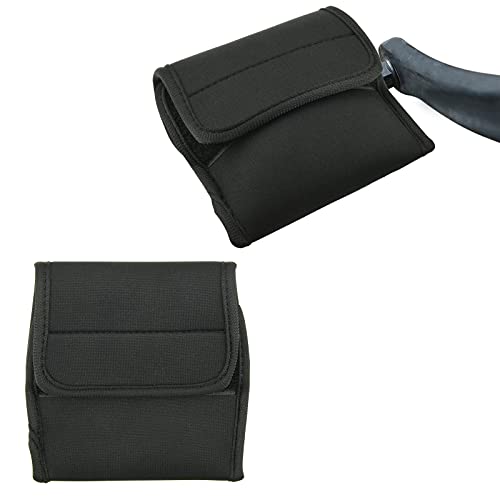
Cosmos neoprene bicycle pedal covers are the wrong category for a car buyer, and that is the point. They may protect bike pedals from scratches and are lightweight and washable, but they do not belong in a daily-driving fit decision. The drawback is total incompatibility with the use case being discussed here.
Frequently asked questions
Are adjustable pedals worth it for daily driving?
They are worth it when the current seat position forces a bad compromise. If the driver has to sit too close to the wheel to reach fixed pedals, adjustable pedals can improve comfort and safety margin. If the seat already fits properly, the added cost often buys convenience more than real daily value.
Do adjustable pedals make driving more comfortable?
Yes, when comfort problems come from reach. Better pedal position can improve posture, reduce ankle and hip strain, and make long commutes feel less tiring. The effect is smaller when the seat, wheel, and mirrors already align well, because the driver is not fighting reach in the first place.
Are power adjustable pedals safer than fixed pedals?
They can be safer when they help keep the driver at a proper distance from the steering wheel and airbag. That said, fixed pedals are perfectly safe when the seat position is already correct. Adjustable pedals improve safety only when they solve a real fit problem rather than creating a new one.
Who benefits most from adjustable pedals?
Short drivers, tall drivers who need more knee room, aging drivers with reduced flexibility, and multi-driver households get the most value. Fleet vehicles also benefit because one cabin has to suit many body sizes. The common thread is repeated seat adjustment or repeated fit compromise.
Are pedal extenders and adjustable pedals the same thing?
No. Adjustable pedals are usually a factory system that moves the pedal assembly with a motor and switch. Pedal extenders are aftermarket parts that change the pedal’s effective position, often for short drivers. Some extenders offer adjustable length and angle, but they are not compatible with every vehicle.
Should I choose adjustable pedals or pedal extenders?
Choose adjustable pedals for a shared vehicle or when the seat must stay farther back for a safer wheel distance. Choose pedal extenders when you only need a closer pedal and the vehicle supports that exact accessory. If a normal seat setup already gives good reach, neither is a strong buy.
Products related to this article
Sponsored / affiliate links. As an Amazon Associate I earn from qualifying purchases. I may earn additional commission from eligible campaigns.