What Causes a Spongy Brake Pedal in a Car?
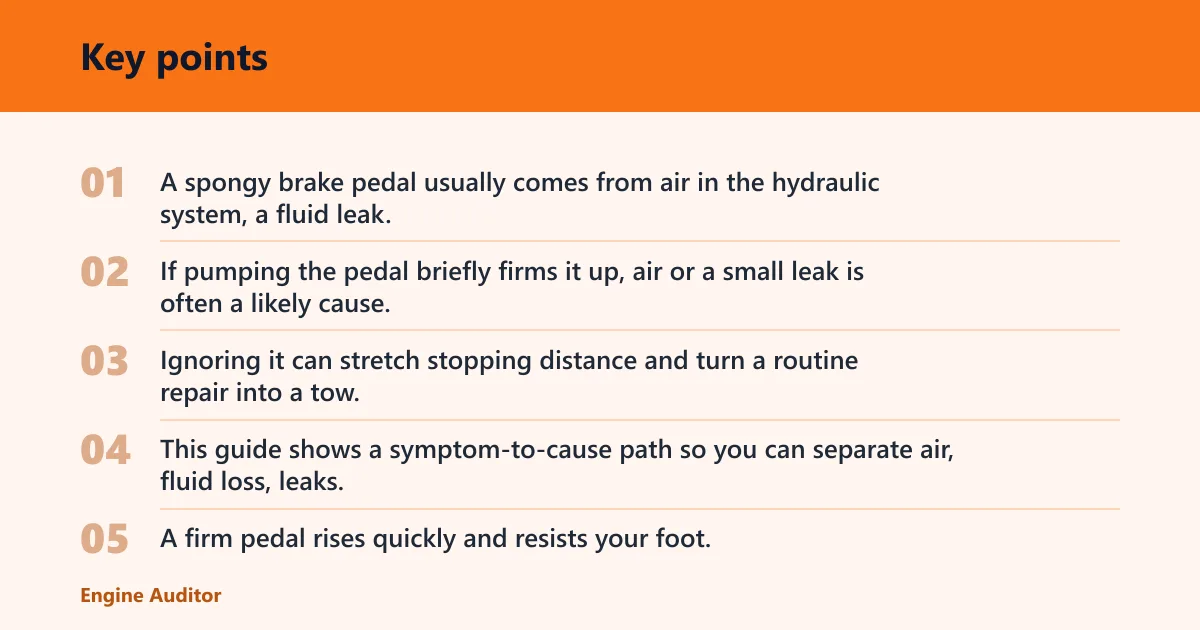
A spongy brake pedal usually comes from air in the hydraulic system, a fluid leak, a swollen brake hose, or a failing master cylinder. If pumping the pedal briefly firms it up, air or a small leak is often a likely cause. Ignoring it can stretch stopping distance and turn a routine repair into a tow. This guide shows a symptom-to-cause path so you can separate air, fluid loss, leaks, and master-cylinder faults before replacing parts.
Brake pedal feel tells you a lot. A firm pedal rises quickly and resists your foot. A soft or spongy pedal feels springy, travels farther than normal, and makes braking confidence drop because the pedal does not build pressure cleanly. A sinking pedal is different: it may feel normal at first, then slowly move downward under steady pressure.
What a spongy brake pedal means


That difference matters. A soft, spongy pedal often points to compressible air, hose expansion, or fluid condition. A pedal that sinks under a steady hold points more strongly to internal master-cylinder seal failure or a leak that cannot hold pressure. A hard pedal usually means a different problem altogether, such as a vacuum-assist fault or a restricted booster circuit.
If the pedal feel changes suddenly, or the car needs much more pedal travel to slow down, treat it as a safety issue. Stop driving immediately if the pedal goes to the floor, braking power drops sharply, or you see fluid under the car. A brake system that feels wrong deserves inspection before the next trip.
Brake pedal diagnostic matrix
Use the symptom first, then match the likely cause and the next check. This keeps you from replacing pads or bleeding the system blindly when the real fault is a hose, a leak, or the master cylinder.
| Symptom | Likely cause | Quick driveway check | Next action |
|---|---|---|---|
| Pedal feels spongy | Air in brake lines, fluid aeration, hose expansion | Press the pedal several times; if it firms briefly, note the change | Inspect for leaks, then bleed the brakes after the repair |
| Pedal sinks under steady pressure | Master cylinder internal seal failure or an active leak | Hold firm pressure for 20 to 30 seconds and watch for slow drop | Check fluid level and visible leaks; stop driving if it keeps sinking |
| Only fails after recent brake service | Air introduced during service or incomplete bleeding | Compare pedal feel before and after the work | Bleed the system again in the proper sequence |
| Soft pedal with visible fluid loss | Leak at a line, hose, caliper, fitting, or seal | Look under each wheel, along the lines, and at the master cylinder | Repair the leak, replace any damaged part, then bleed the system |
Say your pedal feels normal in the driveway, but after one stoplight it starts traveling farther than usual. That points away from pad wear and toward fluid pressure loss, hose expansion, or a hydraulic leak that changes as pressure builds.
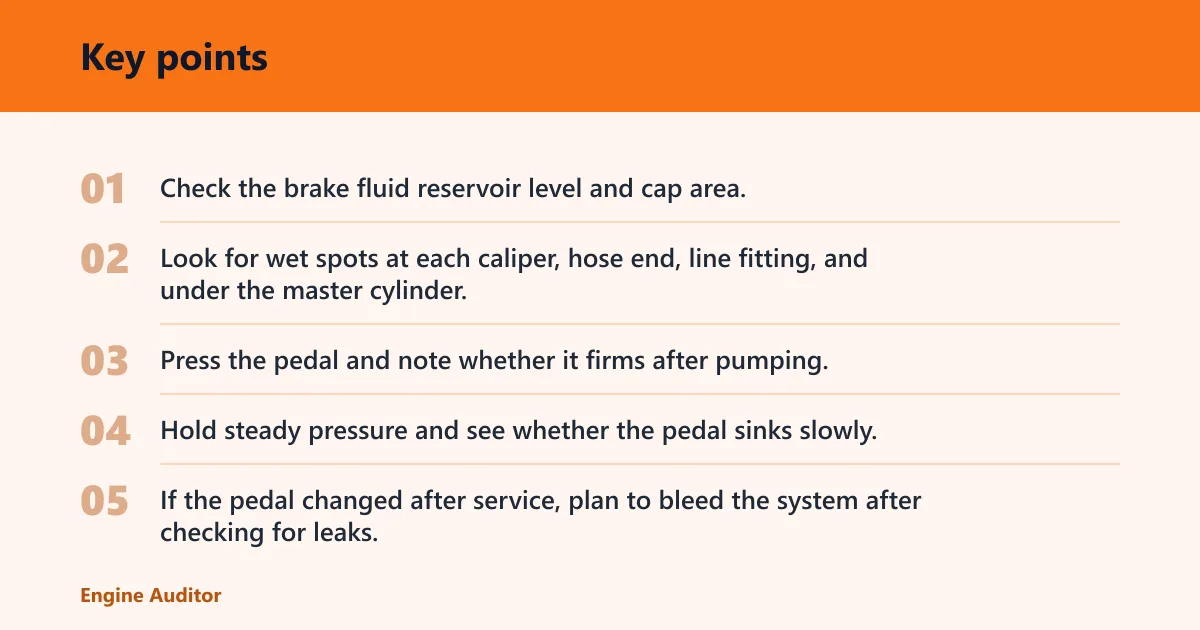
- Check the brake fluid reservoir level and cap area.
- Look for wet spots at each caliper, hose end, line fitting, and under the master cylinder.
- Press the pedal and note whether it firms after pumping.
- Hold steady pressure and see whether the pedal sinks slowly.
- If the pedal changed after service, plan to bleed the system after checking for leaks.
What causes air in brake lines?
Air in the lines is a common cause of a soft pedal because air compresses, while brake fluid transfers pressure. That compressibility adds travel before the brakes bite, so the pedal feels long or spongy. Air can enter during service, through a leak, or when the fluid level falls low enough to pull air into the circuit.
How service can introduce air
Any time a caliper, hose, line, or master cylinder is opened, air can enter the system. That includes pad replacement if a caliper is pushed back badly, hose replacement, fluid flushes, and bleeding done out of order. If the pedal felt fine before the work and soft afterward, service-related air moves near the top of the list.
A common first-timer mistake is replacing pads, then assuming the pedal should feel the same without bleeding. On many cars, pad work alone should not cause a major spongy feel. If it does, a caliper may have been opened, fluid level may have dropped, or air may have entered during the repair.
How leaks let air
Leaks do two things at once: they let fluid escape and they let air enter. A leak can allow fluid to escape from joints or fittings, and the lost volume creates room for air when the pedal is pressed and released. That is why a leak can create a soft pedal even before you see a puddle.
Look for damp fittings, stained dust around a hose crimp, wet caliper boots, and fresh fluid on the inside of a wheel. Rubber hoses can swell or crack with age. Metal lines can corrode where road spray stays trapped, especially near clips and bends.
Why trapped air lengthens pedal travel
Air acts like a cushion in a system that needs solid pressure transfer. The pedal moves farther because part of the force compresses the trapped gas instead of pushing pistons. That extra travel is what drivers feel as softness or a need to pump the pedal.
Can brake fluid cause a soft pedal?
Yes. Brake fluid is the hydraulic medium, and its level and condition matter. Low fluid often means a leak or worn pads with a low reservoir, while old fluid absorbs moisture over time. Moisture can turn to vapor when hot and make the pedal soft, especially after repeated stops or downhill braking.
Fluid level and visible condition
Check the reservoir first. If it is below the minimum mark, do not assume worn pads are the only reason. Low fluid can point to a leak or a system that has been opened and not fully restored. Fluid that looks dark, contaminated, or cloudy should also raise concern, because condition matters as much as level.
Wrong fluid specification problems
Use the correct fluid grade and specification for the vehicle. Wrong fluid can change how seals behave and how the system manages heat. Most manufacturers list the required spec on the reservoir cap or in the service information. Mixing the wrong type can create a pedal that feels off even when no leak is visible.
Brake leaks and pressure loss
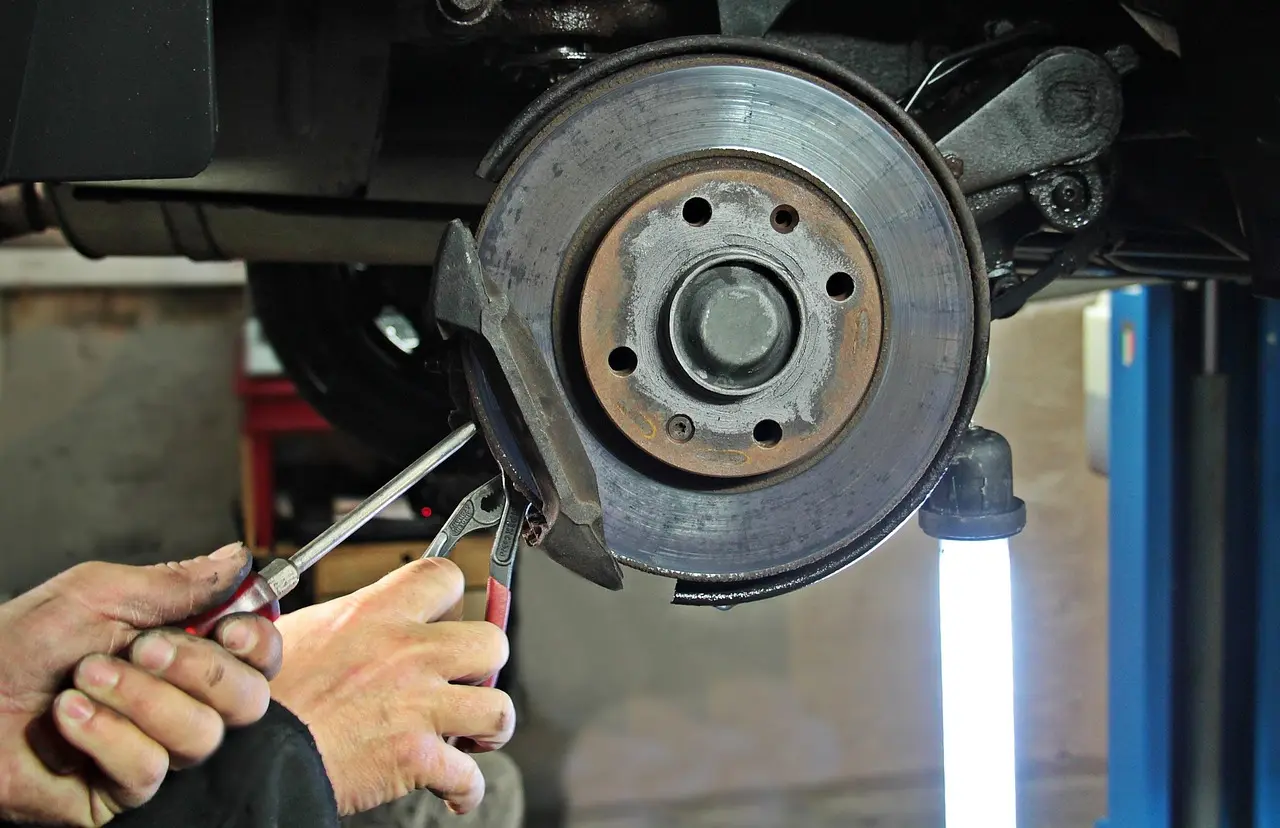
Brake leaks are a brake safety concern because they can lower hydraulic pressure and allow air into the system. Common leak points include hard lines, rubber hoses, calipers, bleeder screws, banjo fittings, and master-cylinder seals. If you see wet spots or a puddle, treat it as a repair-now issue, not a maintenance note for later.
Inspect the full path from the master cylinder to each wheel. Look for cracked rubber, rusted steel lines, and fluid at hose ends. A small leak may leave only a damp film. A larger leak may leave a streak on a control arm or a spot on the driveway after the car sits.
After repair, the system must be bled again. That step removes trapped air that entered during the leak or the repair itself. Skip it, and the pedal can stay soft even after the faulty part is replaced.
Brake bleeding after repair
Brake bleeding is the fix for trapped air. It belongs after leak repair, hose replacement, caliper work, or fluid service that opened the hydraulic circuit. If only one corner was opened, bleeding that corner may not be enough on every vehicle; many systems need a specific sequence so air moves out cleanly.
Master cylinder and hardware faults
A sinking pedal that slowly drops under steady pressure often points to the master cylinder. Its internal seals must hold pressure; if they leak past internally, the pedal can move downward without an obvious external leak. That symptom is different from a spongy pedal that firms with pumping.
Brake lines and hose expansion
Rubber hoses can expand under pressure, and corroded metal lines can weaken or crack. Either problem steals pressure that should reach the calipers. A swollen hose may be subtle in casual inspection, so compare both sides and look for a hose that balloons when someone presses the pedal.
Pads and calipers that affect feel indirectly
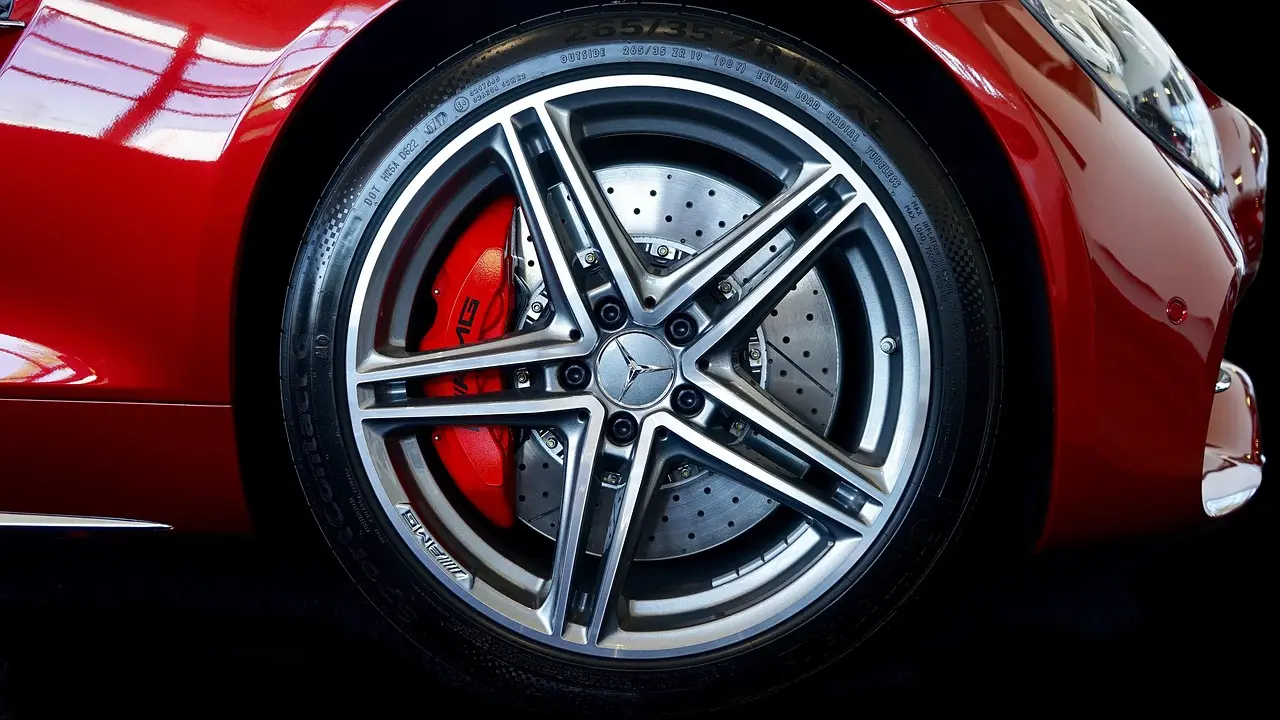
Brake pads and calipers are service wear items, but they can change pedal feel indirectly when they stick, hang up, or move unevenly. A caliper that does not slide well can create uneven pad contact and extra pedal travel. That said, pad wear alone usually does not create a truly spongy pedal unless another hydraulic fault is also present.
What causes a hard brake pedal?
A hard brake pedal usually points away from the hydraulic softness problems discussed above. It often means the booster is not assisting, the vacuum supply is weak, or a restriction is keeping the system from responding normally. An extremely hard pedal with poor stopping can be just as serious as a soft one.
Check whether the engine-off pedal and engine-on pedal feel different. If the pedal remains very hard with little assist when the engine starts, the vacuum booster, check valve, or vacuum supply deserves attention. If the pedal is hard and high, but the brakes still drag or the car slows poorly, the issue may be elsewhere in the system.
Frequently asked questions
Why does my brake pedal feel spongy?
A spongy pedal usually means pressure is being lost or delayed somewhere in the hydraulic system. Air in the lines is a common reason, but low or contaminated fluid, a leaking hose or fitting, and a swollen hose can produce the same feel. If the pedal firms after pumping, air or a small leak becomes more likely.
What causes brakes to be spongy?
The usual causes are air in the brake lines, fluid loss, moisture-contaminated fluid, hose expansion, or incomplete bleeding after service. A spongy feel is a warning sign that the braking system is not in good shape. If it appears after repair work, the system likely needs bleeding again after the fault is fixed.
What causes excessive brake pedal travel?
Excessive travel happens when the pedal must move farther before pressure builds. Air in the system, a low fluid level, leaking seals, or hose expansion are common reasons. Worn pads can add some travel, but they do not usually explain a suddenly long pedal by themselves. A rapid change deserves immediate inspection.
What can cause a spongy brake pedal?
A spongy brake pedal can come from trapped air, a leak, old fluid that has absorbed moisture, the wrong fluid spec, or a hose that expands under pressure. If the symptom started right after brake service, incomplete bleeding is high on the list. If fluid is visible on the ground, do not keep driving.
What causes a soft brake pedal?
A soft pedal often points to reduced hydraulic pressure transfer. Low fluid, air in the circuit, a leaking caliper or line, or internal master-cylinder problems can all make the pedal feel soft. A soft pedal that also sinks under steady pressure is more serious than a pedal that simply feels cushioned.
What causes a extremely hard brake pedal?
An extremely hard pedal with weak braking often means the booster is not helping at all, or vacuum supply has been lost. That can happen with a failed booster, a disconnected vacuum hose, or a failed check valve. If the pedal is very hard and braking performance drops, do not assume the issue is minor.
Products related to this article
Sponsored / affiliate links. As an Amazon Associate I earn from qualifying purchases. I may earn additional commission from eligible campaigns.