Why Won’t My Car Lights Turn On? Troubleshooting Guide
Why won’t my car lights turn on? This is a common and often frustrating problem for car owners, leaving you in the dark and potentially unsafe. Understanding the potential causes is the first step to diagnosing and fixing the issue, ensuring your vehicle’s lighting system functions correctly when you need it most.
This comprehensive guide will walk you through the most frequent reasons your car’s headlights or other exterior lights might fail to illuminate, from simple bulb replacements to more complex electrical issues.
Simply put, your car lights may not turn on due to a burned-out bulb, a blown fuse, a faulty relay, damaged wiring, or issues with the light switch itself. Start with the simplest checks like bulbs and fuses before investigating more complex electrical components.
Key Takeaways
- A burned-out bulb is the most frequent reason why won’t my car lights turn on.
- Blown fuses and faulty relays are common electrical culprits that cut power to the lights.
- Wiring issues, including loose connections or corrosion, can disrupt the electrical flow.
- The headlight switch itself can fail, preventing any power from reaching the light circuits.
- Always check your car’s owner’s manual for specific fuse box locations and bulb types.
What is the Electrical System of Your Car Lights?
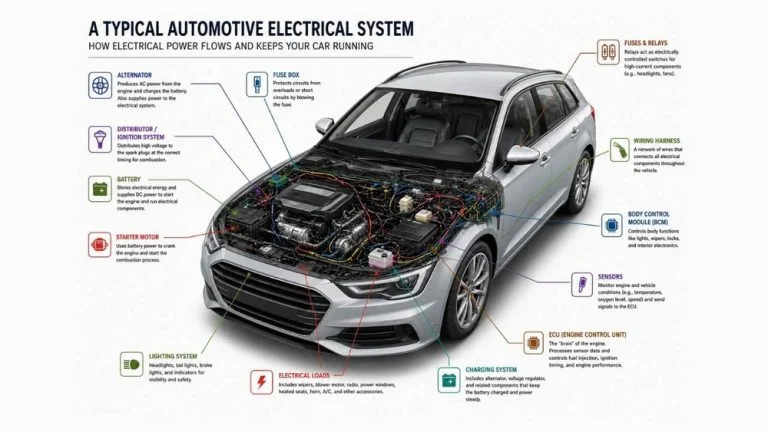
Your car’s lighting system is a network of components designed to illuminate the road ahead and signal your intentions to other drivers. It relies on a steady flow of electrical current from your car’s battery, regulated through various safety and control mechanisms.
This system typically includes the battery, alternator (which recharges the battery while the engine runs), fuses, relays, switches, wiring harnesses, and of course, the bulbs themselves. Each component plays a crucial role, and a failure in any one can lead to your lights not working.
Components of the Lighting System
- Battery: Provides the initial power source for all electrical components, including lights.
- Alternator: Generates electricity to keep the battery charged and power the vehicle when the engine is running.
- Fuses: Safety devices designed to blow and break the circuit if too much current flows, protecting other components from damage.
- Relays: Electromechanical switches that use a low-current circuit to control a high-current circuit, often used for high-power items like headlights.
- Light Switch: The user interface that allows you to turn your lights on and off and select different lighting modes (e.g., headlights, parking lights).
- Wiring Harness: A bundle of wires that carries electrical signals and power throughout the vehicle.
- Bulbs: The actual light-emitting components, typically halogen, HID, or LED.
Why Won’t My Headlights Turn On? A Step-by-Step Diagnosis
When your headlights fail, it’s not just an inconvenience; it’s a safety hazard. The first step is to approach the problem systematically. Most issues can be diagnosed and often fixed with basic tools and a little patience.
We’ll start with the most common and easiest fixes, progressing to more complex electrical diagnostics. Remember to always consult your vehicle’s owner’s manual for specific locations of fuses, relays, and the correct bulb types for your car.
Step 1: Check the Bulbs
The most straightforward reason why won’t my car lights turn on is simply a burned-out bulb. Bulbs have a finite lifespan and will eventually fail. This is particularly true for headlights, which are used frequently.
How to Check:
- Identify the headlight bulb that is not working.
- Carefully remove the bulb from its housing. This process varies significantly by vehicle make and model, so consult your owner’s manual if unsure. Some require removing the entire headlight assembly, while others have accessible covers.
- Visually inspect the filament inside the bulb. If it appears broken or the bulb is visibly blackened, it’s burned out.
- If you’re unsure, it’s best to replace the bulb. Purchase the correct replacement bulb specified in your owner’s manual.
- Install the new bulb, ensuring it’s seated correctly and the housing is sealed to prevent moisture entry.
- Test the lights.
Step 2: Inspect the Fuses
Fuses are designed to protect your electrical system from power surges. If a fuse blows, it interrupts the flow of electricity to the component it protects, such as your headlights.
How to Check:
- Locate your vehicle’s fuse box(es). Most cars have at least one under the dashboard and another in the engine bay. Your owner’s manual will show their locations.
- Find the fuse(s) specifically labeled for your headlights or DRLs (Daytime Running Lights).
- Gently pull the fuse out using a fuse puller (often found in the fuse box) or needle-nose pliers.
- Examine the fuse. A blown fuse will have a broken or melted metal strip inside.
- If blown, replace it with a new fuse of the exact same amperage rating. Using a higher amperage fuse can damage your electrical system.
- If the new fuse blows immediately, there’s likely a short circuit or another underlying electrical problem that needs further investigation.
Step 3: Examine the Relays
Headlight relays are like heavier-duty switches. They use a smaller electrical signal from your light switch to control the high-current circuit for the headlights. If the relay fails, power won’t reach the bulbs.
How to Check:
- Locate the headlight relay. It’s usually in the engine bay fuse box or a secondary fuse/relay box. Consult your owner’s manual for its exact location and designation.
- Remove the relay. Relays are typically rectangular plastic blocks.
- You can test a relay by swapping it with an identical relay for a non-critical function (e.g., horn relay, if it’s the same type). If the headlights work with the swapped relay, the original relay was faulty.
- Alternatively, you can test a relay using a multimeter and a 12V power source, but this requires more electrical knowledge.
- If the relay is faulty, replace it with a new one of the same part number.
Step 4: Check the Light Switch
The headlight switch is what you directly interact with to turn on your lights. If it’s faulty, it might not be sending the signal to the rest of the system, or it might not be making proper contact internally.
How to Check:
- Test the switch by trying different lighting positions: parking lights, headlights on, high beams.
- If some lights work but others don’t, or if the switch feels loose or unresponsive, it could be the culprit.
- Diagnosing a faulty switch often involves checking for voltage at the switch’s terminals with a multimeter and comparing it to the expected output. This is best left to a mechanic if you’re not comfortable with automotive electrical testing.
- If the switch is confirmed faulty, it will need to be replaced.
Troubleshooting Other Exterior Lights
While headlights are the most critical, other exterior lights also fail. The diagnostic process for tail lights, brake lights, turn signals, and reverse lights often follows a similar pattern.
Each of these lights has its own fuse, and some might share relays. The bulbs are specific to their function (e.g., brake light bulbs are often dual-filament). The switches for brake lights (brake light switch) and turn signals (multifunction switch/stalk) are separate components.
Common Issues for Other Exterior Lights
- Tail Lights & Brake Lights: Typically caused by burned-out bulbs or a faulty brake light switch located near the brake pedal. If one brake light works and the other doesn’t, it’s almost certainly a bulb issue. If neither works, suspect the switch, fuse, or wiring.
- Turn Signals: A common symptom of a failing turn signal bulb is hyper-flashing (blinking very rapidly). If both front or both rear signals don’t work, check the fuse or the multifunction switch. If only one side works, it’s likely a bulb.
- Reverse Lights: Usually fail due to a bulb. If both are out, check the fuse and the transmission range sensor/neutral safety switch, which tells the car when it’s in reverse.
- License Plate Lights: Often overlooked, these can fail due to bulb burnout or corrosion in their housing.
Table: Common Exterior Light Issues and Fixes
| Light Type | Common Cause(s) | Simple Fix | Advanced Diagnosis |
|---|---|---|---|
| Headlights | Burned-out bulb, blown fuse, bad relay | Replace bulb, check/replace fuse | Test relay, check light switch, wiring |
| Tail Lights | Burned-out bulb, blown fuse | Replace bulb, check/replace fuse | Check wiring to tail light assembly |
| Brake Lights | Burned-out bulb, faulty brake light switch | Replace bulb | Test brake light switch, check fuse |
| Turn Signals | Burned-out bulb, bad flasher relay, faulty switch | Replace bulb | Check/replace flasher relay, test switch |
| Reverse Lights | Burned-out bulb, faulty gear selector switch | Replace bulb | Check fuse, test gear selector switch |
This table offers a quick reference for common exterior lighting problems and their potential solutions.
Electrical System Warnings and Complexities
While many lighting issues are simple fixes, sometimes the problem lies deeper within the car’s electrical system. Ignoring persistent issues or making incorrect repairs can lead to more significant damage or safety concerns.
Modern cars have complex integrated electrical systems. A fault in one area can sometimes trigger issues in seemingly unrelated systems. For instance, a grounding problem can affect multiple lights or even engine sensors.
Important: If a fuse repeatedly blows, do not just keep replacing it. This indicates a short circuit or an overloaded circuit that requires professional diagnosis. Continuing to replace fuses can damage other electrical components or even pose a fire risk.
Potential Electrical Roadblocks
- Short Circuits: When a wire’s insulation is damaged, allowing current to flow to an unintended part of the circuit. This often results in a blown fuse or a burning smell.
- Bad Grounds: Electrical circuits need a good ground connection to complete the loop. Corroded or loose ground points can cause intermittent or complete failure of lights.
- Damaged Wiring: Wires can be damaged by abrasion, heat, moisture, or rodents. This can interrupt the flow of electricity.
- Control Module Issues: Some modern vehicles use computer modules (like the Body Control Module or BCM) to manage lighting functions. A failure in these modules can be complex and expensive to repair.
- Corrosion: Moisture can get into electrical connectors, causing corrosion that impedes electrical flow.
Warning: Working with your car’s electrical system can be dangerous if you are not properly trained. Always disconnect the battery before working on electrical components to avoid shocks or short circuits. If you are unsure about any step, seek professional help from a qualified mechanic.
When to Call a Professional Mechanic
While many simple light issues can be resolved by the average car owner, there are times when professional expertise is necessary. If you’ve gone through the basic checks and your lights still aren’t working, or if you suspect a more complex electrical problem, it’s time to consult a mechanic.
Mechanics have specialized diagnostic tools, such as oscilloscopes and advanced multimeters, that can trace electrical faults through complex wiring diagrams. They can also identify issues with control modules or intermittent faults that are difficult to pinpoint without expertise.
Signs You Need Professional Help
- Repeatedly Blowing Fuses: As mentioned, this indicates a serious electrical fault.
- Intermittent Problems: Lights that work sometimes and not others can be tricky to diagnose and may point to a loose connection or failing component.
- Multiple Lights Out: If several different lights or electrical systems are malfunctioning simultaneously, it could be a larger electrical system issue.
- Lack of Tools or Confidence: If you don’t have the right tools (like a multimeter, wiring diagrams) or feel uncomfortable working with electrical systems, it’s safer to let a professional handle it.
- Complex Vehicle Systems: Vehicles with advanced lighting systems (like LED matrix headlights, adaptive lighting) or those heavily reliant on computer modules often require specialized diagnostic equipment.
- Warning Lights on Dashboard: If your car displays a general electrical warning light or a specific system warning, it indicates a problem that needs professional attention.
Frequently Asked Questions
Why do my car lights flicker before going out?
Flickering lights can be an early warning sign of a failing bulb, a loose connection, or an unstable electrical current. It might indicate that the bulb is nearing the end of its life, or there’s a poor connection in the wiring or at the bulb socket that’s causing intermittent power loss.
Can a bad alternator cause my lights to not turn on?
While a bad alternator typically causes lights to dim or become excessively bright as it fails to regulate voltage, it can also contribute to lighting issues if it can no longer provide sufficient power. However, if the car starts and runs, the battery is likely providing some power, and the primary issue might be elsewhere unless the battery is critically low.
What is the difference between a fuse and a relay in a car’s lighting system?
A fuse is a safety device that sacrifices itself to break a circuit when there’s an overcurrent, protecting components. A relay acts as an electrically operated switch, using a small current to control a larger current, often used for high-power items like headlights, allowing the light switch to be less robust.
How often should I replace my car’s headlight bulbs?
Headlight bulbs don’t have a fixed replacement schedule, as their lifespan varies based on usage and bulb type. However, it’s generally recommended to check them periodically, especially when they start to dim or if one fails. Many manufacturers suggest replacing them every few years for optimal visibility, or as a pair to ensure consistent brightness and color.
Are LED headlights better than halogen bulbs?
LED headlights generally offer several advantages over traditional halogen bulbs, including brighter illumination, longer lifespan, and lower energy consumption. They also provide a more natural, white light that can improve visibility and reduce driver fatigue. However, they are typically more expensive upfront and may require specific housing designs for optimal beam pattern.
Final Thoughts
Understanding why won’t my car lights turn on is crucial for maintaining your vehicle’s safety and roadworthiness. By systematically checking bulbs, fuses, relays, and switches, you can often resolve common lighting issues yourself. Remember to always prioritize safety, consult your owner’s manual, and don’t hesitate to seek professional help for more complex electrical problems.
Keeping your car’s lights in good working order ensures you can see and be seen, day or night.
See also difference between car lights headlights. See also car interior light won’t turn off here’s the easy fix. If your high beams work fine but the regular headlights stay off, that is a different issue — see headlights not working but high beams are for the exact cause.
Products related to this article
Sponsored / affiliate links. As an Amazon Associate I earn from qualifying purchases. I may earn additional commission from eligible campaigns.
 48 72 LED Car Interior RGB Ambient Strip Lights 12V
 1 x Rear Parking Light Bulb Socket fits Chevrolet Tahoe 2002-2005
 12V RGB Led Strip Light with Remote, 4 Pcs 12" Super Bright Car Lights Strip IP67 Waterproof Golf Cart Underglow Lights for Motorcycles Interior Exterior Boat, Built-in Controller, Multi-Color