Difference Between Car Lights: Headlights
Car lights are more than just bright spots on a vehicle, they’re a critical safety feature, a legal requirement, and a rapidly evolving aspect of automotive technology. Among all vehicle lighting systems, headlights are perhaps the most recognizable and essential, guiding drivers through darkened roads, foggy mornings, and unexpected weather conditions. Yet, despite their ubiquity, many drivers are unaware of the complex differences among various headlight types, technologies, and functionalities. Understanding these differences isn’t just about clarity or style, it can mean the difference between a safe journey and a hazardous one.
This article cuts through the confusion by taking a deep dive into the world of car headlights. From halogen to LED to laser, from high beams to adaptive systems, we’ll explore how these lights work, what sets them apart, and why the right choice matters. Whether you’re a car owner aiming to upgrade, a fleet manager seeking cost-effective solutions, or simply curious about the science behind the beams, this comprehensive guide will illuminate everything you need to know about the difference between car lights: headlights.
Key Takeaways

Govee
Govee Car LED Lights, RGB Smart Car…
- Creative DIY Mode: Choose from 16 million available colors or customize car led light effects to your liking in DIY mode via Govee…
- Dynamic Music Mode: Built-in mic helps interior car lights sync with any music type. Liven up your road trips, weekend getaways or…
- Smart App Control: Manage the colors and brightness of car lights or choose music mode by one simple tap with Govee Home app. Enjo…
As an Amazon Associate I earn from qualifying purchases.
- Headlights play a vital role in vehicle safety, influencing visibility, comfort, and compliance with legal standards.
- There are significant differences between halogen, HID, LED, and laser headlights in terms of performance, cost, and lifespan.
- Features like high beams, low beams, and adaptive lighting systems impact how headlights function in various driving scenarios.
- Proper maintenance and understanding of headlight regulations are essential to avoid safety risks and legal issues.
- Recent innovations like matrix LEDs and laser headlights are transforming automotive lighting technology.
Credit: hawkglow.com
The Role And Importance Of Headlights
Fundamental Functions Of Headlights
Headlights are the primary source of forward illumination on a vehicle, serving two main functions:
- Visibility for the Driver: Ensuring the road ahead is visible, especially at night or in adverse conditions.
- Visibility to Others: Making the vehicle noticeable to pedestrians and other drivers.
Without well-functioning headlights, drivers are at greater risk of accidents, particularly during low-light or inclement weather conditions. The National Highway Traffic Safety Administration (NHTSA) emphasizes that effective headlight systems reduce nighttime crashes and fatalities.
Legal And Regulatory Requirements
Every country and region has specific regulations for headlight brightness, color temperature, and aim. In the United States, the Federal Motor Vehicle Safety Standard 108 (FMVSS 108) governs headlamp performance, while the European Union enforces ECE Regulation 48.
Key legal requirements include:
- Color: Most regions require headlights to emit white or select shades of yellow.
- Brightness: Headlights must meet minimum and maximum candela output levels.
- Aiming: Proper alignment is mandatory to avoid blinding oncoming drivers.
Ignoring these standards can result in fines, failed inspections, or increased liability in accidents.
Headlights And Road Safety
According to the Insurance Institute for Highway Safety (IIHS), nearly half of all fatal crashes occur in the dark, and poor headlight performance is a contributing factor. Vehicles equipped with advanced headlights have been shown to reduce pedestrian crashes by up to 27% at night (IIHS News).
Properly functioning headlights:
- Improve reaction times for obstacles or hazards
- Reduce driver fatigue during long trips
- Enhance confidence and comfort for all occupants
Types Of Headlights: Technologies Explained
Halogen Headlights
Halogen bulbs have been the automotive standard for decades. They use a tungsten filament housed in a glass enclosure filled with halogen gas, producing a warm yellowish light.
Advantages:
- Low initial cost
- Easy to replace
- Widely available
Disadvantages:
- Shorter lifespan (typically 450-1,000 hours)
- Lower energy efficiency
- Diminished brightness over time
High-intensity Discharge (hid/xenon) Headlights
HID headlights generate light by creating an electrical arc between two electrodes in a xenon gas-filled bulb. This produces a brighter, whiter light compared to halogen.
Advantages:
- High brightness
- Longer lifespan (up to 2,000 hours)
- Improved visibility, especially in low-light conditions
Disadvantages:
- Higher cost of replacement
- Glare risk for oncoming drivers if improperly aligned
- Requires a ballast for operation
Led Headlights
LED (Light Emitting Diode) headlights have gained popularity for their efficiency and design flexibility. They create light through the electroluminescence of semiconductor materials.
Advantages:
- Extremely long lifespan (up to 30,000 hours)
- Low energy consumption
- Compact size allows for creative headlight shapes
Disadvantages:
- Higher upfront cost
- Can generate heat in surrounding circuitry, requiring cooling systems
Laser Headlights
Laser headlights are the latest innovation, found primarily in high-end vehicles. They use laser diodes to excite a phosphor, emitting a bright, focused beam.
Advantages:
- Exceptional range (up to 600 meters)
- Highly energy efficient
- Compact and lightweight design
Disadvantages:
- Very high cost
- Limited availability and repair options
- Strict safety regulations
Comparison Table: Headlight Technologies
| Type | Brightness (Lumens) | Lifespan (Hours) | Energy Use | Cost | Main Applications |
|---|---|---|---|---|---|
| Halogen | 700, 1,200 | 450, 1,000 | High | Low | Most economy & older cars |
| HID/Xenon | 3,000, 3,500 | 2,000 | Medium | Medium | Luxury, mid-tier models |
| LED | 2,000, 4,000 | 20,000, 30,000 | Low | Medium, High | Modern & premium vehicles |
| Laser | Up to 6,000 | 10,000, 20,000 | Very Low | Very High | High-end, performance cars |
Credit: carlightvision.com
High Beams Vs. Low Beams: Core Differences
Understanding Beam Patterns
Headlights are designed with two primary beam patterns:
- Low Beams (Dipped Beams): Produce a wide, short-range light with a sharp cutoff to avoid blinding oncoming drivers. Ideal for city and normal traffic conditions.
- High Beams (Main Beams): Emit a bright, long-range light without a cutoff, illuminating far ahead. Used in rural or unlit roads without approaching traffic.
When To Use High Beams And Low Beams
Low beams should be used in:
- Urban environments
- Oncoming traffic
- Fog, rain, or snow (to reduce glare)
High beams are best for:
- Open highways
- Rural roads with minimal lighting
- Situations with no oncoming vehicles
Warning: Using high beams improperly can temporarily blind other drivers, increasing accident risk.
Switching Between Beam Modes
Most modern vehicles use a stalk or switch on the steering column to toggle between high and low beam settings. Some advanced cars offer automatic high-beam assist, which uses sensors to detect oncoming traffic and adjusts the beams accordingly.
Comparative Table: High Vs. Low Beams
| Feature | Low Beams | High Beams |
|---|---|---|
| Range | 30, 60 meters | 100, 200 meters |
| Pattern | Wide, short, with cutoff | Narrow, long, no cutoff |
| Usage | Most situations | Empty or rural roads |
| Legal Restrictions | Few | Many (must switch off for oncoming vehicles) |

Credit: sealight-led.com
Innovative Headlight Features And Technologies
Adaptive Front-lighting Systems (afs)
Adaptive headlights adjust the direction and range of the light beam in response to vehicle speed, steering angle, and road conditions. For example, they “pivot” into a curve, illuminating the road ahead during turns.
Benefits:
- Enhanced visibility on winding roads
- Improved safety during cornering
Example: The Mazda Adaptive Front-lighting System improves night driving safety by adjusting beam angles based on speed and steering input.
Matrix Led And Pixel Lighting
Matrix LED headlights use multiple individual LEDs controlled by a central processor. They can selectively dim or brighten specific areas, allowing for high beams without dazzling oncoming traffic.
Benefits:
- Customizable illumination patterns
- Automatically blocks out sections for other vehicles
Example: Audi’s Matrix LED system can recognize vehicles and pedestrians, dynamically adjusting the light to avoid glare and enhance safety.
Automatic High-beam Assist
This feature uses cameras or sensors to detect oncoming cars and automatically switches between high and low beams. It reduces driver workload and ensures optimal lighting at all times.
Pro Tip: Always keep sensors clean and calibrated for these systems to function correctly.
Cornering Lights
Some vehicles include cornering lights that activate at low speeds or when turning, providing extra illumination in the direction of travel. These are particularly useful in tight city streets or parking lots.
Headlight Performance: What Really Matters
Brightness And Color Temperature
Headlight brightness is measured in lumens, while color temperature is indicated in Kelvin (K). Most halogen bulbs emit around 3,000K (yellowish), HIDs around 4,300K (white), and LEDs can range from 5,000K, 6,500K (bluish-white).
Key considerations:
- Whiter light improves visibility and reduces eye strain.
- Excessively high color temperatures can be fatiguing and may be illegal in some regions.
Beam Pattern And Coverage
A well-designed beam pattern spreads light evenly without dark spots or excessive glare. The ideal headlight will illuminate the road ahead and the periphery, including road signs and potential hazards.
Example: In my experience, switching from factory halogen to a well-aligned LED system dramatically improved peripheral visibility during night highway drives.
Lifespan And Maintenance
Longer-lasting headlights reduce maintenance costs and downtime. LED and laser systems require less frequent replacements, but when they do fail, repairs can be more expensive due to integrated components.
Energy Consumption
LED and laser headlights are more energy-efficient, reducing the electrical load on the vehicle. This is particularly important for electric vehicles, where every watt saved extends driving range.
Cost And Value: Choosing The Right Headlights
Upfront And Long-term Costs
While halogen headlights are cheapest to buy and replace, their shorter lifespan and lower efficiency may result in higher long-term costs. HID and LED systems have higher initial costs but provide longer service intervals and better performance.
Factors Affecting Cost
- Technology type (halogen, HID, LED, laser)
- Brand and model
- Installation complexity
- Replacement parts availability
Value Comparison Table
| Headlight Type | Initial Cost | Replacement Cost | Average Lifespan | Efficiency |
|---|---|---|---|---|
| Halogen | Low | Low | Short | Poor |
| HID | Medium | Medium | Medium | Good |
| LED | Medium, High | High | Very Long | Excellent |
| Laser | Very High | Very High | Long | Outstanding |
Aftermarket Upgrades: Risks And Rewards
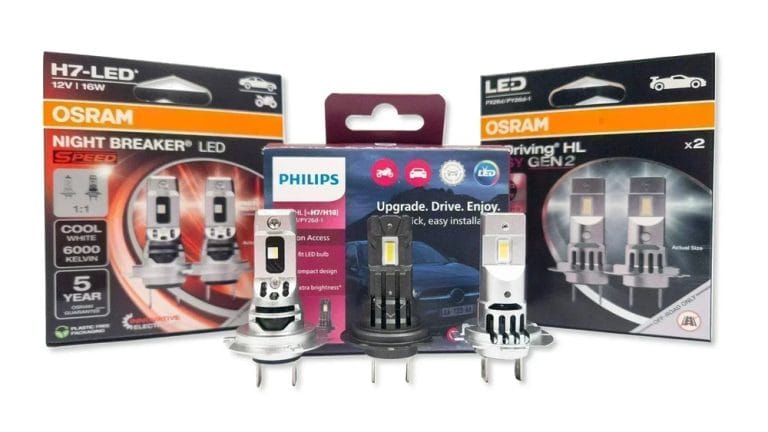
Many drivers consider aftermarket headlight upgrades for improved performance or aesthetics. While aftermarket LEDs or HIDs can offer better illumination, improper installation or non-compliant products may cause glare and violate regulations.
Warning: Always ensure aftermarket lights are DOT (Department of Transportation) or ECE approved, and professionally installed.
Case Studies: Real-world Examples
Case Study 1: Fleet Upgrade To Led
A delivery company operating primarily at night upgraded its entire fleet from halogen to LED headlights. The result was a 40% reduction in headlight replacement costs over two years (due to longer LED lifespan), and a 25% decrease in nighttime accident rates, attributed to improved visibility.
Case Study 2: Adaptive Headlights In Rural Areas
A rural police department equipped patrol vehicles with adaptive LED headlights. Officers reported safer navigation of winding roads and faster hazard detection, especially in inclement weather and during animal crossings.
Case Study 3: Luxury Segment, Laser Headlights
A premium car manufacturer introduced laser headlights in its flagship sedan. Customer feedback highlighted exceptional range and clarity at high speeds. However, repair costs after collisions were notably higher compared to conventional systems, influencing long-term ownership value considerations.
Maintenance And Troubleshooting
Common Headlight Issues
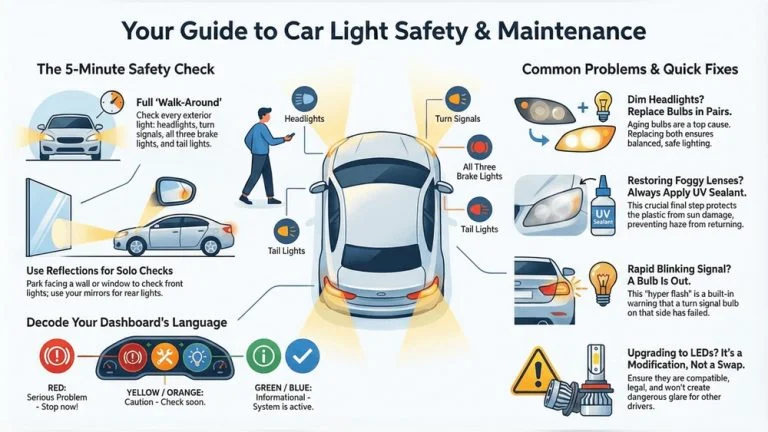
- Dimming or Flickering: Often caused by aging bulbs, corroded connectors, or electrical issues.
- Condensation Inside Lens: Can reduce output and cause glare; usually due to a broken seal.
- Yellowing or Clouded Lenses: UV exposure can degrade plastic covers, diminishing effectiveness.
Best Practices For Headlight Care
- Regularly clean lenses with automotive-safe cleaners.
- Inspect for cracks, moisture, or discoloration.
- Replace bulbs in pairs to ensure balanced output.
- Periodically check headlight aim and adjust as needed.
Diy Vs. Professional Maintenance
Some tasks, like cleaning or simple bulb replacements, can be handled by owners. More complex repairs, especially with HID, LED, or laser units, should be performed by certified technicians to avoid damage or safety risks.
Example: When I tested a DIY HID conversion kit, improper installation resulted in frequent flickering and eventual ballast failure, a costly lesson in the importance of professional service.
Headlight Regulations And Compliance
Us And International Standards
- FMVSS 108 (US): Specifies requirements for light output, placement, and aiming.
- ECE Regulation 48 (Europe): Covers installation, color, and performance standards.
- JIS D5500 (Japan): Governs headlight standards in Japan.
Key Compliance Considerations
- Use only DOT- or ECE-approved bulbs and assemblies.
- Ensure headlights are aimed within manufacturer specifications.
- Avoid illegal color temperatures or aftermarket modifications that increase glare.
Pro Tip: Check your vehicle’s owner manual and local DMV website for region-specific rules before upgrading or replacing headlights.
Penalties For Non-compliance
- Fines for improper or overly bright headlights
- Failed vehicle inspections
- Potential liability in accidents
External Resource
For an up-to-date listing of worldwide automotive lighting regulations, visit the Automotive Lighting Wikipedia page.
Frequently Asked Questions
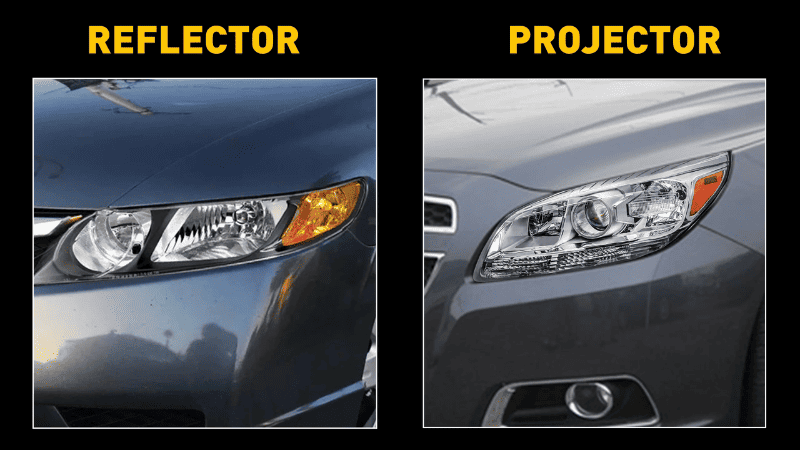
What Is The Difference Between Projector And Reflector Headlights?
Projector headlights use a lens that focuses the light beam into a sharper, more precise pattern, reducing glare and improving visibility. Reflector headlights, on the other hand, use a mirrored housing to bounce light forward, which can create a broader but less controlled beam.
Projectors are common in modern vehicles and are often paired with HID or LED technology.
Why Do Some Headlights Look Blue Or Purple?
Some HID or LED headlights emit light at higher color temperatures (above 5,000K), which can appear blue or even purple to the human eye. These colors are legal only within certain limits; excessively blue lights may violate regulations and can be uncomfortable or distracting for other drivers.
Are Aftermarket Led Or Hid Kits Legal?
Aftermarket headlight kits are only legal if they are certified by the DOT or ECE and installed in compatible housings. Many cheap kits do not meet these standards and can cause excessive glare, which is both unsafe and illegal in many regions.
Always check local laws and choose certified products.
How Often Should Headlights Be Replaced?
Halogen bulbs generally need replacement every 1, 2 years, while HID bulbs last about 2, 5 years, and LEDs can last over a decade with normal use. However, always replace bulbs when you notice dimming, flickering, or uneven output, regardless of age.
Can I Upgrade My Car’s Headlights To A Different Technology?
Upgrading from halogen to HID or LED headlights is possible in many vehicles, but it often requires new housings, wiring, or ballasts. Professional installation is strongly recommended to ensure safety, compliance, and optimal performance. Some vehicles may have warranty or insurance implications, consult your manufacturer or dealer before making changes.
With advancements in technology and a growing emphasis on safety, the world of car headlights is evolving rapidly. By understanding the differences between systems, the importance of proper maintenance, and the latest innovations, drivers can make informed decisions that enhance both safety and driving enjoyment.
Whether upgrading for performance, style, or efficiency, always prioritize legal compliance and professional installation to make the most of your vehicle’s headlights.
Related pick: Check today's price on Amazon
Products related to this article
Sponsored / affiliate links. As an Amazon Associate I earn from qualifying purchases. I may earn additional commission from eligible campaigns.