Car Light Not Turning On? Here’S Why And How to Fix It
Car Light Not Turning On? Here’s Why And How to Fix It
A sudden failure of your car lights is more than just a minor inconvenience; it’s a safety hazard that can put you and others at risk, especially during night driving or in adverse weather. Many drivers have experienced the panic of switching on their headlights or taillights only to be left in the dark.
Understanding why your car lights aren’t turning on and knowing how to resolve these issues quickly is essential for every vehicle owner.
This comprehensive guide explores the most common reasons behind car light failures, offers step-by-step troubleshooting advice, and provides actionable repair solutions. Whether you’re a DIY enthusiast looking to save on repair costs or someone wanting to communicate effectively with your mechanic, this article will arm you with the expertise to address car light problems confidently.
Key Takeaways
- Car light failures commonly result from blown fuses, faulty bulbs, wiring issues, or malfunctioning switches.
- Systematic troubleshooting can often identify and resolve the problem without professional help.
- Preventive maintenance significantly reduces the risk of unexpected car light outages.
- Modern vehicles may require advanced diagnostics due to complex electronic systems.
- Ignoring light issues can lead to legal penalties and increased accident risk.
- Professional assistance is recommended for persistent or complex electrical faults.

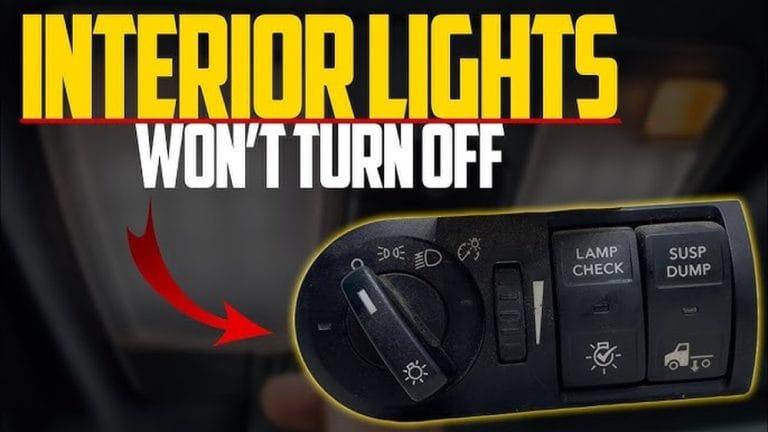
Credit: www.youtube.com
Understanding The Types Of Car Lights And Their Functions
Before diagnosing issues, it’s crucial to recognize the different types of car lights, as each serves a distinct purpose and may fail in unique ways.
Headlights
Headlights are your primary source of illumination for nighttime driving. They typically include:
- Low beams: For regular nighttime driving without dazzling oncoming traffic.
- High beams: For extra visibility on unlit roads.
Taillights And Brake Lights
Taillights illuminate when your headlights are on, ensuring your vehicle is visible from behind. Brake lights activate when you press the brake pedal, alerting drivers behind you.
Turn Signals And Hazard Lights
Turn signals indicate your intent to turn or change lanes, while hazard lights warn others of a temporary stop or emergency.
Fog Lights
Fog lights are designed to cut through fog, rain, or snow, providing better visibility in poor weather conditions.
Daytime Running Lights (drls)
DRLs are automatically activated during daylight to increase vehicle visibility.
| Light Type | Main Function | When Activated | Typical Bulb Type |
|---|---|---|---|
| Headlights (Low/High Beam) | Road illumination | Night / Low visibility | Halogen, LED, HID |
| Taillights | Rear visibility | With headlights | Incandescent, LED |
| Brake Lights | Warn on braking | Braking | Incandescent, LED |
| Turn Signals | Indicate turns/lane changes | Signaling | Incandescent, LED |
| Fog Lights | Cut through fog/weather | Foggy/poor weather | Halogen, LED |
| DRLs | Daytime visibility | Engine On (daytime) | LED, Halogen |

Credit: www.youtube.com
Common Reasons Why Car Lights Don’t Turn On
Car light failures can stem from a variety of causes, ranging from simple to complex. Understanding these helps narrow down your troubleshooting.
Blown Bulbs
The most frequent culprit is a burned-out bulb. Halogen and incandescent bulbs have limited lifespans, often failing after 500, 1,000 hours of use.
Symptoms:
- Only one light (e.g., left headlight) is out.
- No response when switching on a specific light.
Example: If your right headlight is out but the left one works, the bulb is likely blown.
Blown Fuses
Fuses protect your car’s electrical circuits from overload. A surge or short can cause a fuse to blow, cutting power to the lights.
Symptoms:
- Multiple lights (e.g., all headlights or all taillights) stop working simultaneously.
- No visible signs of power reaching the lights.
Pro Tip: Consult your owner’s manual for the fuse box location and fuse diagram.
Faulty Switches And Relays
Light switches (on the dashboard or steering column) and relays (electronic switches) can fail with age or wear, interrupting the power supply.
Symptoms:
- Lights don’t respond to the switch.
- Intermittent operation.
Example: When you turn the headlight switch and nothing happens, but the bulbs and fuses are fine.
Wiring Issues
Wiring problems, such as damaged, corroded, or loose connections, can prevent electricity from reaching your car lights.
Symptoms:
- Flickering lights
- Only certain modes (e.g., high beam) malfunction
- Visible damaged wires or connectors
Faulty Control Modules
Modern vehicles often use Body Control Modules (BCMs) or similar electronic controllers for lighting. Faults here can cause unpredictable lighting failures.
Symptoms:
- Multiple unrelated lights malfunctioning.
- Error messages on the dashboard.
Bad Ground Connections
A poor ground (earth) connection can stop lights from working, even if the bulb and fuse are good.
Symptoms:
- Dim or non-functioning lights
- Other electrical issues
Faulty Alternator Or Battery
If your battery or alternator is weak, low voltage can affect lighting performance, especially on newer cars with voltage-sensitive electronics.
Symptoms:
- Dim lights when engine is idling
- Lights improve with revving engine
Aftermarket Modifications
Incorrectly installed aftermarket lights or accessories can disrupt the lighting circuit, causing failures.
Pro Tip: Always use compatible, vehicle-specific lighting kits and follow installation instructions.
Step-by-step Troubleshooting Guide
Diagnosing why your car lights aren’t turning on requires a logical, stepwise approach. In my experience, working systematically prevents unnecessary repairs and saves time.
Step 1: Identify Which Lights Are Out
- Is it one light (e.g., left headlight), a pair (both brake lights), or all lights in a category (all headlights)?
- Are other electrical components affected?
Step 2: Inspect The Bulb
- Remove the affected bulb and visually inspect the filament (for halogen/incandescent) or look for discoloration.
- For LEDs, check for visible damage or try swapping with a known good bulb.
Step 3: Check The Fuse
- Locate the fuse box (often under the dashboard or hood).
- Use the diagram to find the relevant lighting fuse.
- Remove and inspect the fuse for a broken wire or discoloration.
| Symptom | Likely Cause | Action |
|---|---|---|
| One headlight out | Blown bulb | Replace bulb |
| Both headlights out | Blown fuse, relay, switch | Check fuse/relay/switch |
| All lights out | Battery, alternator, BCM | Test battery, alternator, scan for codes |
| Lights flicker | Wiring, ground connection | Inspect/repair wiring and grounds |
Step 4: Test The Switch And Relay
- Operate the switch while listening for relay clicks.
- Swap relays with a similar one in the fuse box, if possible.
Step 5: Inspect Wiring And Grounds
- Look for frayed wires, loose connectors, or corroded terminals near the affected light.
- Clean and tighten ground connections.
Step 6: Scan For Diagnostic Trouble Codes (dtcs)
- Many modern cars store error codes related to lighting in the OBD-II system.
- Use a code scanner to check for relevant codes.
Step 7: Seek Professional Help If Needed
- Persistent or complex electrical faults may require a professional mechanic or auto-electrician.

Credit: us.gooloo.com
How To Fix Specific Car Light Problems
Once you’ve identified the cause, targeted repairs can restore your car lights efficiently.
Replacing A Blown Bulb
- Turn off the ignition and ensure lights are off.
- Access the bulb (often via the engine bay or trunk).
- Remove the old bulb by twisting or unclipping.
- Install the new bulb, ensuring it’s securely seated.
- Test the light before reassembling any covers.
Example: Replacing a halogen headlight bulb in a 2015 Toyota Camry typically takes less than 10 minutes.
Changing A Blown Fuse
- Locate the correct fuse using the diagram.
- Remove the fuse with fuse pullers or pliers.
- Replace with a new fuse of the same amperage rating.
- Test the lights.
Warning: Never use a higher-rated fuse to avoid electrical fires.
Repairing Switches Or Relays
- Replace faulty switches (e.g., headlight stalk) by removing panels and swapping with a new unit.
- Replace relays by pulling out the defective relay and inserting a new, identical one.
Fixing Wiring And Ground Issues
- Repair damaged wires by splicing, soldering, and insulating with heat-shrink tubing.
- Clean corroded terminals using a wire brush and contact cleaner.
- Tighten ground bolts to ensure good metal-to-metal contact.
Addressing Control Module Problems
- Reset the BCM by disconnecting the battery for 10, 15 minutes.
- If problems persist, a professional scan tool may be needed to reprogram or replace the module.
Solving Battery And Alternator Issues
- Test battery voltage (should be 12.4, 12.7V with engine off).
- Check alternator output (13.8, 14.4V with engine running).
- Replace as needed.
Fixing Aftermarket Installation Problems
- Revert to original wiring if possible.
- Use proper connectors and relays for additional lights.
- Consult a professional if unsure.
Preventive Maintenance Tips For Car Lights
Regular care can keep your car lights reliable and reduce unexpected outages.
Periodic Inspections
- Check all exterior lights monthly.
- Inspect for clouded, cracked, or moisture-filled lenses.
Cleanliness
- Keep lenses clean for maximum brightness.
- Remove dirt, bugs, and road grime regularly.
Replace Bulbs In Pairs
- Bulbs age at similar rates; replace both sides together to maintain balanced illumination.
Use Quality Replacement Parts
- Choose OEM or high-quality aftermarket bulbs and fuses.
- Avoid cheap, unbranded parts that may fail prematurely.
Secure Wiring And Connections
- Ensure wiring is protected from abrasion and heat.
- Fasten loose connectors and harnesses.
Professional Inspections
- Have a mechanic check the electrical system during regular service intervals.
Real-world Examples And Case Studies
Example 1: Blown Headlight Bulb On A Family Sedan
A 2014 Honda Accord owner noticed their left headlight was out. After consulting the owner’s manual, they accessed the bulb from the engine bay, replaced it with an OEM halogen bulb, and restored full functionality in under 10 minutes. No tools beyond gloves and a new bulb were needed.
Example 2: Multiple Lights Out Due To A Fuse
A driver of a 2018 Ford F-150 found that both the taillights and dashboard lights stopped working after a rainy night. Inspection revealed a blown fuse in the interior fuse box, likely caused by water ingress. Replacing the fuse restored all functions, but the driver later sealed a small leak near the taillight to prevent recurrence.
Example 3: Flickering Led Lights From Poor Ground
A car enthusiast installed aftermarket LED fog lights on a 2016 Subaru Outback. The lights flickered when driving. Inspection revealed a loose ground wire. After cleaning the contact and tightening the bolt, the flickering stopped, demonstrating the importance of secure ground connections.
Modern Challenges: Led, Hid, And Computerized Lighting Systems
Contemporary vehicles use advanced lighting technologies and control systems, adding complexity to troubleshooting and repairs.
Led And Hid Bulb Considerations
- LEDs last much longer but require compatible drivers and wiring.
- HIDs need ballasts and precise alignment.
- Incorrect installation can trigger dashboard errors.
Adaptive And Computer-controlled Lights
- Features like adaptive headlights or automatic high beams rely on sensors and software.
- Malfunctions often require diagnostic tools and may only be serviceable at dealerships.
Can Bus Systems
- Many modern cars use a CAN bus network for electrical communication.
- Installing the wrong bulb type can cause warning lights or disable systems.
Dealer-only Repairs
- Some repairs, such as reprogramming BCMs or updating light control firmware, require dealer-level access and tools.
| Lighting Technology | Pros | Cons | Repair Complexity |
|---|---|---|---|
| Halogen | Low cost, easy to replace | Short lifespan | Simple |
| LED | Long life, bright | Higher cost, sensitive to wiring | Moderate to complex |
| HID (Xenon) | Very bright, efficient | Expensive, needs ballast | Moderate |
| Adaptive/Matrix | Optimal visibility, safety | Very expensive, dealer service | Complex |
Legal And Safety Implications Of Non-functioning Car Lights
Driving with faulty lights is not just unsafe, it’s also illegal in most jurisdictions. According to the National Highway Traffic Safety Administration (NHTSA), lighting failures contribute to thousands of accidents annually.
Safety Risks
- Reduced visibility increases accident risk, especially at night or in bad weather.
- Other drivers may not see your vehicle or anticipate your movements.
Legal Consequences
- Police can issue tickets for non-functioning headlights, taillights, or brake lights.
- Vehicles can fail safety inspections due to lighting issues.
Insurance Implications
- Accidents caused by poor lighting may lead to denied insurance claims or increased premiums.
Pro Tip: Address any lighting issue immediately to avoid fines and keep everyone safe.
For more on vehicle lighting safety, see the NHTSA vehicle lighting guidelines.
When To Call A Professional Mechanic
While many car light issues are DIY-friendly, some require professional expertise.
Persistent Or Unexplained Failures
If you’ve checked bulbs, fuses, and basic wiring but lights still don’t work, deeper electrical faults may be present.
Complex Lighting Systems
Vehicles with adaptive, matrix, or LED systems often need dealer-level diagnostics and programming.
Water Damage Or Corrosion
Extensive corrosion or water ingress can lead to widespread electrical problems best handled by professionals.
Warranty Concerns
If your car is under warranty, professional repairs may be required to maintain coverage.
Pro Tip: Always document repairs and keep receipts for warranty and insurance purposes.
For verified repair shops, consult the National Institute for Automotive Service Excellence (ASE).
Frequently Asked Questions
What Should I Do If Only One Headlight Isn’t Working?
If a single headlight is out, the most likely cause is a burned-out bulb. Replace the bulb with a new one of the correct type. If the new bulb doesn’t work, check the fuse for that headlight circuit, then inspect the wiring and socket for corrosion or damage.
Can I Drive With My Car Lights Not Working?
You should not drive with non-functioning headlights, taillights, or brake lights, as it is illegal and unsafe. In most states, driving without these lights can result in fines and increased accident risk. If an outage occurs while driving, use your hazard lights and pull over safely to address the issue.
Why Do My Car Lights Work Sometimes But Not Always?
Intermittent lighting issues often point to loose wiring, a failing switch, or a poor ground connection. Vibration while driving can cause temporary contact loss. Inspect all connectors, grounds, and switches for wear or corrosion. If the problem persists, a mechanic should perform a detailed diagnosis.
How Often Should Car Light Bulbs Be Replaced?
While halogen bulbs typically last 500, 1,000 hours, LEDs can last much longer, often up to 30,000 hours. Replace bulbs as soon as you notice dimming or failure, and consider replacing them in pairs to ensure even lighting. Always use quality parts to maximize lifespan.
Are Aftermarket Led Or Hid Kits Legal?
Aftermarket LED or HID kits are legal only if they meet specific federal and state regulations for brightness and beam pattern. Improperly installed or non-compliant kits can cause glare and may fail inspections. Check your local laws and use DOT-approved kits to avoid fines or safety hazards.
Keeping your car lights working isn’t just about compliance, it’s about keeping yourself and others safe on the road. With the right approach, most lighting problems can be resolved quickly and affordably, whether you’re a seasoned DIYer or a first-time car owner.
Regular inspections and prompt repairs ensure your vehicle remains visible, legal, and safe, whatever the driving conditions.
Products related to this article
Sponsored / affiliate links. As an Amazon Associate I earn from qualifying purchases. I may earn additional commission from eligible campaigns.