Why Does My Exhaust Sound Louder Than Normal?
This guide is part of our Car Noise Diagnosis by Symptom: Where the Sound Comes From and How Serious It Is series.
Mechanic-reviewed note: This guide reflects common shop diagnostics used to separate normal exhaust note changes from leaks, restrictions, and heat-related faults. Safety guidance below aligns with EPA and NHTSA advice on exhaust fumes and driving with warning signs, and with OE-style scan-diagnosis practice for fuel-trim and oxygen-sensor faults.
A louder exhaust can indicate a leak, a damaged muffler, or a restriction. If the noise seems to come from under the car and gets louder under load, it is commonly checked for leaks first. Ignoring it can waste fuel, raise cabin noise, trigger check-engine codes, and allow hot exhaust to damage nearby parts. EPA and NHTSA both treat exhaust odors in the cabin as a safety concern, not just a noise complaint. This guide shows how to sort harmless sound changes from leaks or restrictions using sound location, load response, smell, and power loss.
Normal noise versus a real exhaust fault
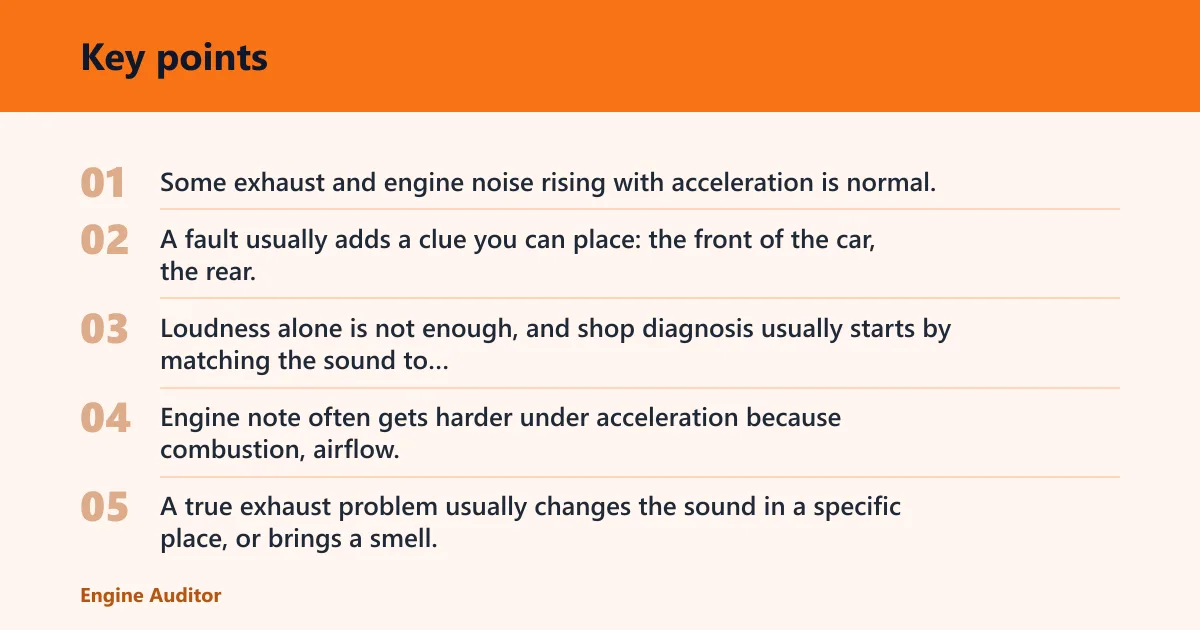


Some exhaust and engine noise rising with acceleration is normal. A fault usually adds a clue you can place: the front of the car, the rear, under throttle, at startup, or inside the cabin. Loudness alone is not enough, and shop diagnosis usually starts by matching the sound to heat, smell, and drivability changes before any parts are replaced.
Normal load noise versus a fault
Engine note often gets harder under acceleration because combustion, airflow, and exhaust flow all increase. That is not the same as a leak. A true exhaust problem usually changes the sound in a specific place, or brings a smell, vibration, smoke, heat, or power loss with it. Cold start also can sound momentarily harsher; that alone is not a failure if it fades quickly and no other symptom appears.
When sound alone is not enough
A louder car is not automatically a broken car. A louder exhaust note does not prove the engine is burning more fuel. It does mean you should separate sound shape from sound location and from any new symptom. In the shop, that means confirming the complaint under idle, light throttle, and load before deciding whether to repair or simply monitor.
What changes with speed, load, and temperature
Load-related noise tends to rise on acceleration, hill climbs, and passing maneuvers. Heat can change a crack or gasket gap enough to make a leak easier to hear after startup. Cold-start roar, idle tick, and steady-speed drone point to different parts of the system. A short cold-start clatter that fades as parts warm is often normal; a sharp, repeating tick that persists deserves inspection.
Is it engine noise or exhaust noise?
Start by placing the sound. Noise near the front of the car often points to the exhaust manifold or a leak close to the engine. Noise from the rear points more toward the muffler, tailpipe, or the last section of pipe. If the sound changes with throttle but not road speed, that also helps separate engine-side exhaust issues from rear muffler damage.
Head toward the front of the car or the rear
Front-end ticking or sharp puffing is more consistent with an exhaust manifold leak. A louder rear note, especially one that sounds hollow or droney, is more consistent with muffler damage, a split pipe, or a damaged tailpipe. That split matters because front leaks can also heat nearby components, while rear leaks usually change noise first.
Ticking, roaring, drone, or rattle
A ticking sound often shows up at the manifold. A roaring sound can come from a cracked manifold, an open gasket leak, or a missing section of muffler. Drone at speed often points to rear exhaust damage, while a rattle under throttle can point to broken internal parts. Related diagnosis for this branch is covered in the Exhaust leak guide, especially when the sound is new but the vehicle still drives.
What a cabin smell changes
If the cabin smells like exhaust, treat it as more than a noise issue. Exhaust leaks can allow fumes into the vehicle, and they can also create a burning odor or extra heat in the engine bay. EPA and NHTSA guidance treat interior exhaust odor as a stop-and-check symptom because the risk is exposure, not just added noise. That turns a sound concern into a safety concern.
Say your sedan gets louder only on a cold morning and the noise fades after two minutes. That can fit a small manifold gasket leak that closes slightly as parts warm up. If the same car also smells of exhaust inside the cabin, the leak is no longer just a noise complaint and should be checked before more driving.
Louder exhaust diagnostic matrix
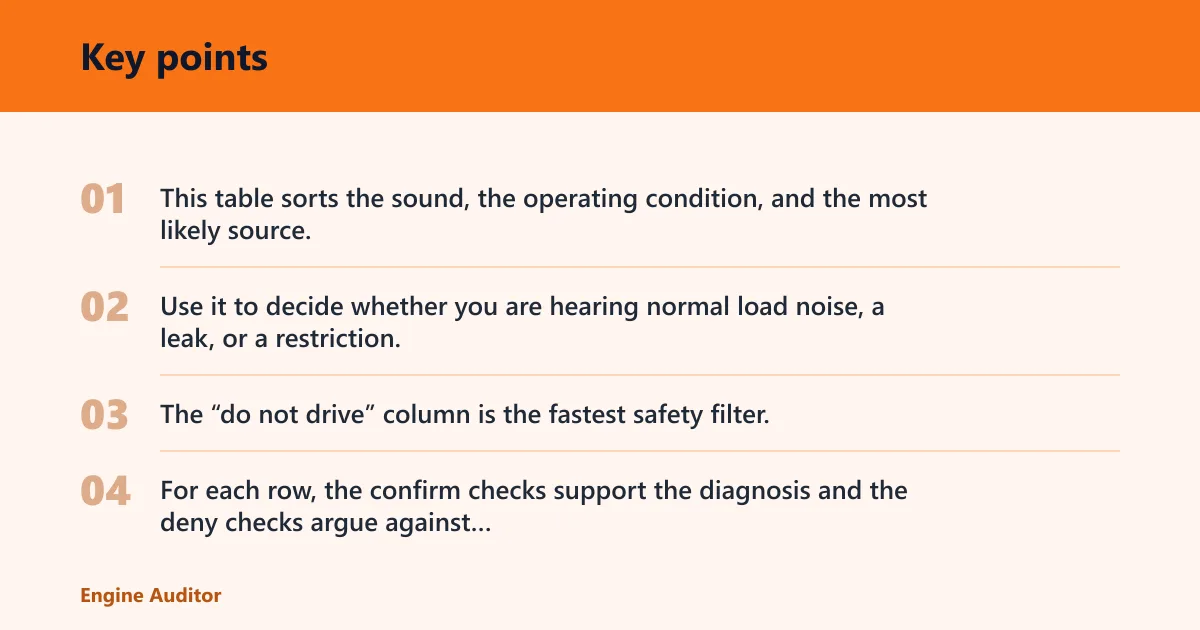
This table sorts the sound, the operating condition, and the most likely source. Use it to decide whether you are hearing normal load noise, a leak, or a restriction. The “do not drive” column is the fastest safety filter. For each row, the confirm checks support the diagnosis and the deny checks argue against it.
| Sound type and condition | Likely component | Confirming signs | Do not drive flags |
|---|---|---|---|
| Idle tick, especially cold | Exhaust manifold or manifold gasket | Severity: Medium. Confirm with a front-of-engine tick, louder cold start, and sound that may lessen as metal expands. Deny: rearward-only noise, no change with temperature, or noise that follows road bumps instead of engine speed. | Stop and inspect: exhaust smell in cabin; visible soot near the manifold; strong heat near wiring or hoses |
| Cold-start roar | Muffler hole, cracked pipe, or missing section | Severity: Medium. Confirm with a rear of car that sounds much louder than before, especially on first start, and a muffler shell with rust, holes, or carbon buildup. Deny: no rear noise change, no visible damage, or sound only from the front. | Stop and inspect: burning odor; fumes inside the vehicle; metal noise from a loose or dragging part |
| Acceleration drone | Rear exhaust damage or failed muffler | Severity: Medium to high if worsening. Confirm with loudness that rises under load, sound from under the floor or rear, and a tailpipe or hanger that is damaged. Deny: no load-related change, no rearward sound path, or only normal engine note at steady throttle. | Stop and inspect: loss of power with heat or smell; part hanging low; exhaust contacting the body |
| Cabin exhaust smell | Manifold leak, pipe leak, or muffler leak | Severity: High. Confirm if the smell gets stronger at idle or with windows closed, especially after cold start, and if soot or corrosion marks appear at joints. Deny: fuel smell from a separate source, coolant odor, or no change with fan speed and window position. | Stop and inspect: any fumes in the cabin; headache or dizziness; visible smoke or strong burning odor |
| Rattle under throttle | Broken catalytic converter internals or loose exhaust shield | Severity: Medium to high depending on power loss. Confirm with a noise that changes with engine speed and sounds like gravel or metal pieces moving. A restriction can also change oxygen sensor readings and fuel trims, so scan data may show richer or unstable control if the converter is collapsing. Deny: noise that only appears over potholes or only at idle. | Stop and inspect: reduced power; flashing or persistent fault light; sudden change after theft or impact |
What component is usually at fault?
The most common causes are a muffler problem, catalytic converter damage, manifold cracking, or pipe damage. The key is not the part name alone. The sound pattern and the location of the sound tell you which part deserves attention first. In shops, technicians usually confirm the location before replacing parts because multiple exhaust failures can sound similar from the driver’s seat.
Muffler damage, rust, or carbon buildup
The muffler reduces sound vibrations in the exhaust system. If it develops holes, rust, or heavy carbon buildup, the car can become noticeably louder, especially at idle and during acceleration. Broken mufflers or exhaust pipes are common causes of loud acceleration noise. A rearward hollow tone, visible rust-through, and soot at seams support the muffler as the source.
Catalytic converter clog, breakage, or theft
The catalytic converter converts toxic exhaust gases into less harmful gases. If it is clogged, broken internally, or stolen, noise and performance can change. A damaged or missing unit may sound louder, but a restriction can also make the exhaust quieter while power drops. EPA and OE-style diagnostics also note that converter problems can push oxygen-sensor data and fuel trims out of range, which is why scan confirmation matters before repair.
Exhaust manifold crack or gasket leak
The exhaust manifold is the closest exhaust component to the engine. A crack or gasket leak often makes a ticking noise during acceleration, and it can make the engine sound loud on startup. This fault usually sounds more like a front-end engine noise than a rear exhaust note. Brief shop diagnosis often starts here when the noise fades warm, because heat expansion can temporarily reduce the leak.
Tailpipe holes and impact damage
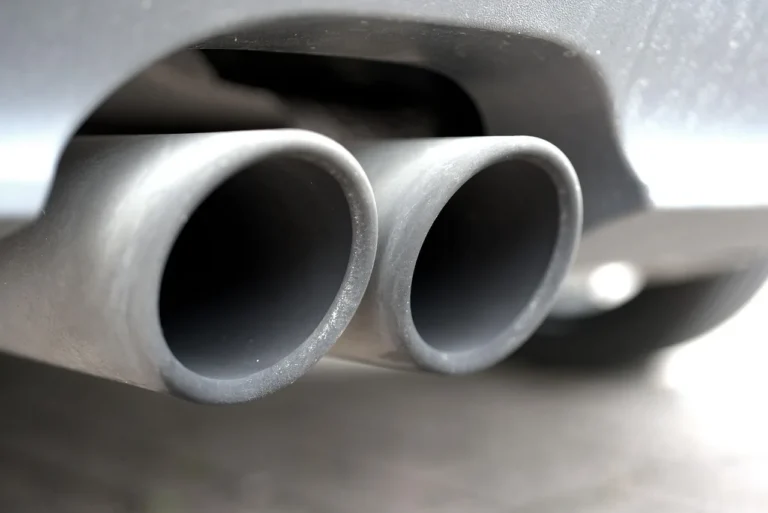
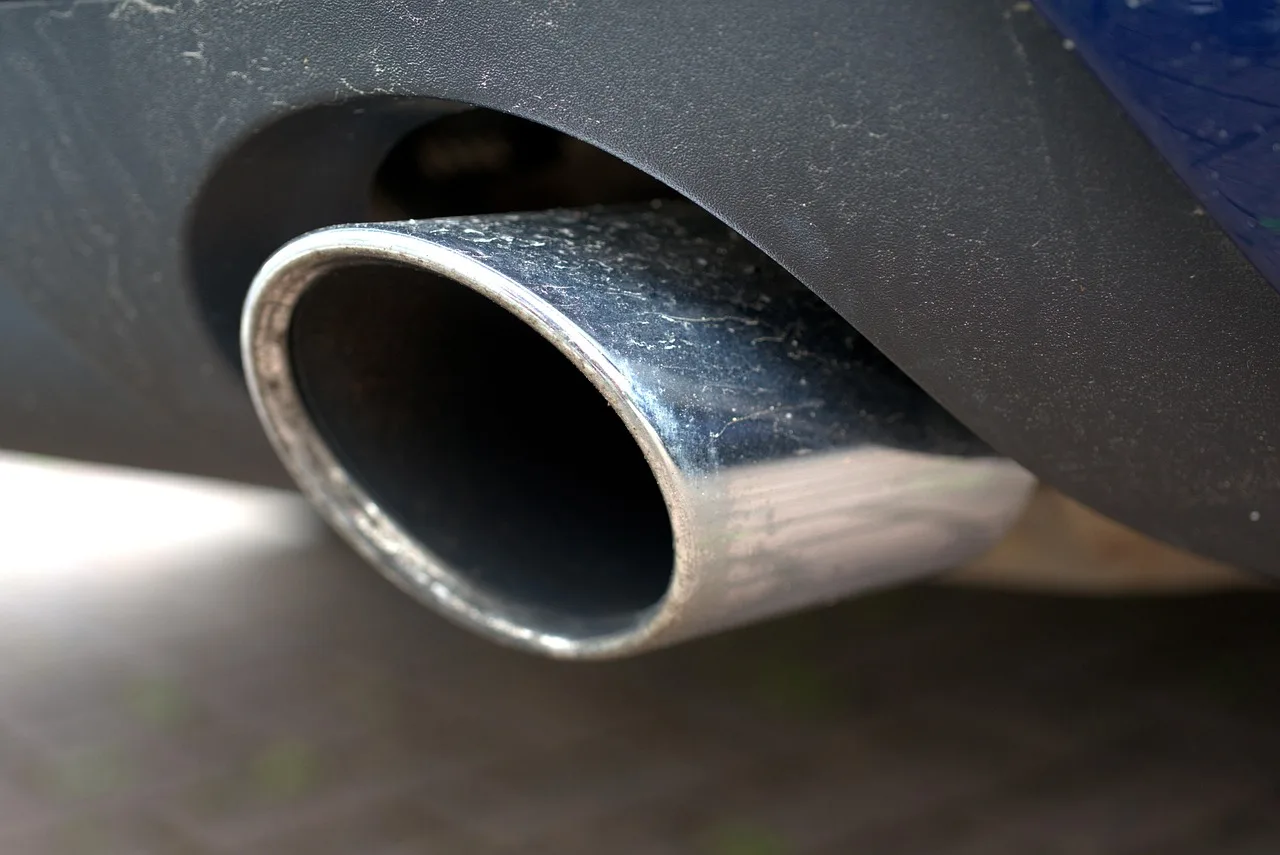
The tailpipe is the final outlet, so visible damage there changes the volume you hear at the back of the car. A damaged tailpipe can crack from speed bumps or road hazards, and rust can open holes that make the car sound much louder than before. If the tip is bent, scraped, or hanging low, confirm whether the sound is actually from the last pipe section rather than the muffler body.
Can a restriction make it quieter?
Yes. A blocked exhaust can sound quieter even while hurting performance. That is where back pressure matters. Back pressure rises when exhaust flow is restricted, and that restriction can reduce sound at the tailpipe while the engine may lose efficiency, power, or response. A quieter exhaust is not always a healthier exhaust; sometimes it means the system is choking flow.
How back pressure changes sound
Back pressure is resistance in the exhaust path. When flow is restricted, less sound may escape, but the engine has to push against that restriction. The result can be a muted exhaust note, poor acceleration, and a hotter, more strained engine bay. In practice, this is why a quieter-than-usual exhaust paired with weak pull deserves diagnosis, not just a sound complaint.
Why a clogged converter may mute the exhaust
A clogged catalytic converter can sometimes make the exhaust sound quieter rather than louder because the blockage limits how much pulse noise reaches the outlet. That does not mean the vehicle is fine. It often means the engine cannot breathe out properly, so power falls. A restriction can also trigger oxygen-sensor and fuel-trim changes as the engine management system tries to correct the exhaust imbalance.
Air filter and oxygen sensor checks
An air filter that is restricted should be inspected when engine sound changes. Restricted airflow can make the exhaust seem quieter rather than louder, and it can affect performance and combustion quality. Oxygen sensor problems can contribute to rich running and carbon buildup, and scan data may help during diagnosis. If fuel trims are unusually rich or unstable, a deeper cause such as a restriction, misfire, or sensor fault should be confirmed before replacing the exhaust.
Suppose a pickup sounds softer than usual but feels weak on a highway on-ramp. A clogged converter or restricted air intake fits that pattern better than a muffler hole. If a scan shows fuel-control concerns, that supports a deeper diagnosis instead of a simple noise repair. That is the point where testing should lead the decision, not guesswork.
Quick driveway checks
Use a short, methodical inspection. Start with what you can see, then listen with the engine cold and warm, then check for smell, smoke, vibration, and power loss. Follow the vehicle manual, do not work under a vehicle held only by a jack, do not exceed the vehicle’s rated roof, hitch, or tow limit, keep items out of airbag zones and the driver’s view, and check local laws.
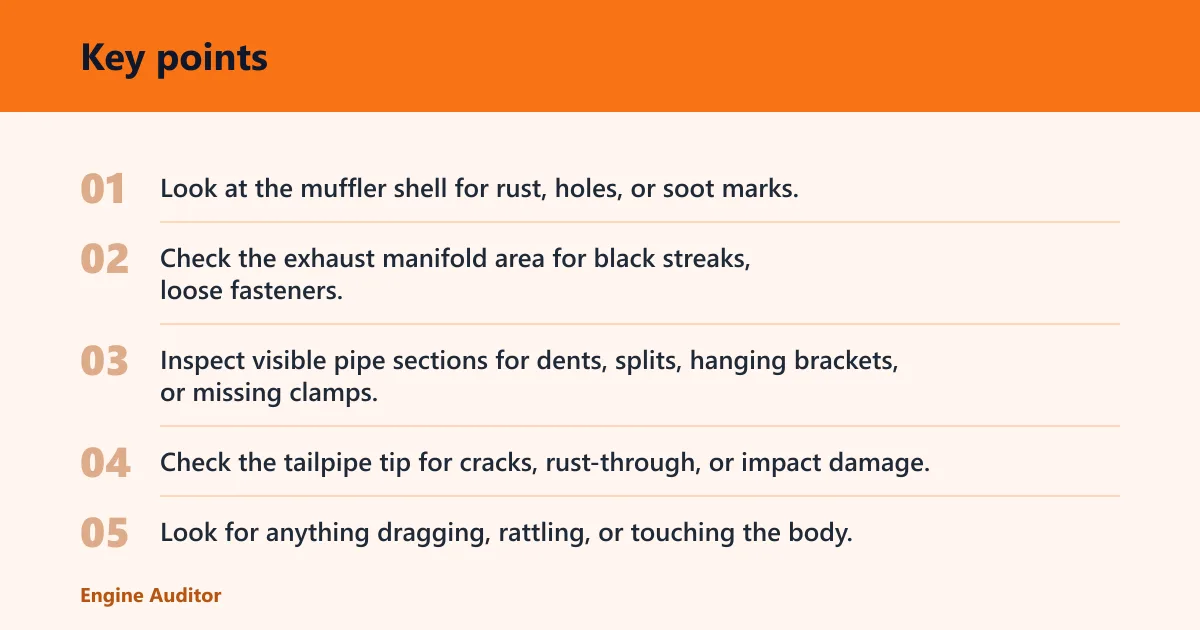
Visual inspection points
- Look at the muffler shell for rust, holes, or soot marks.
- Check the exhaust manifold area for black streaks, loose fasteners, or cracked heat shields.
- Inspect visible pipe sections for dents, splits, hanging brackets, or missing clamps.
- Check the tailpipe tip for cracks, rust-through, or impact damage.
- Look for anything dragging, rattling, or touching the body.
Listen with the engine cold and warm
Start the vehicle cold if it is safe to do so. A cold exhaust leak often sounds sharper. A manifold leak may tick or roar on startup, then fade as parts expand. A rear leak or broken muffler usually stays obvious regardless of temperature, but may be louder under throttle. A brief cold-start rattle can be normal on some engines, but persistent noise that changes with load is the key warning sign.
Smell, smoke, vibration, and power-loss checks
If you smell exhaust inside the cabin, stop and treat it as a fault. If the engine bay feels hotter than expected or you notice strong burning odors, suspect a leak near the manifold or a hot part contacting another component. If power drops, suspect a restriction or a damaged converter. Shop practice is to test before repair when the symptom is only louder sound; repair sooner when fumes, heat, or performance loss appear.
Safety cautions before you inspect
Do not reach under a hot exhaust, and do not run the engine in a closed space. If you need to inspect underneath, use proper support equipment and the vehicle’s manual procedures. Any fumes in the cabin or a strong exhaust smell means the car should be checked before further driving. Carbon monoxide exposure is the safety issue here, which is why interior exhaust odor is treated as urgent.
Should you keep driving?
That depends on the symptoms attached to the noise. A louder exhaust with no smell, no smoke, and no power loss may be a short-drive issue. Loud exhaust with fumes, heat, or a loss of performance deserves immediate attention. The safest rule is simple: test briefly only when the noise is isolated; repair first when the symptom reaches the cabin or affects drivability.
Do-not-drive signs
Do not keep driving if exhaust fumes enter the cabin, if there is a strong burning odor, if the engine bay gets unusually hot, if a part is hanging loose, or if power drops off sharply. Those signs point to a leak or restriction that can get worse fast. If the check-engine light is flashing, treat that as an additional stop-and-check warning because converter damage can worsen quickly.
When a short trip is reasonable
A short trip can be reasonable when the only change is extra exhaust noise and the car otherwise drives normally. Even then, keep the trip brief and schedule inspection soon. A small leak can become a larger one, and a minor rust hole can spread. That is the window where “test soon” is acceptable, but “ignore it” is not.
When to schedule a repair soon
Schedule repair soon if the sound is new, if it is louder under load, if the check-engine light is on, or if the tailpipe or muffler shows visible damage. A damaged catalytic converter can affect sound and performance, and a loose or cracked exhaust part usually does not fix itself. If scan data shows oxygen-sensor or fuel-trim changes, the repair should move from “monitor” to “fix.”
Frequently asked questions
Why does my exhaust sound louder than normal?
The usual causes are a leak, a damaged muffler, or a restriction that changes how exhaust pulses leave the system. Start by placing the noise. If it is under the car and rises under load, inspect for leaks first. Smell, heat, and power loss make the problem more serious. A louder exhaust with none of those extra signs is less urgent, but still worth checking soon.
Why is my exhaust louder than usual?
“Louder than usual” matters because it may be a gradual change rather than a sudden failure. Rust holes, a cracked pipe, a manifold leak, or a failing muffler can all build noise over time. If the sound is rearward and hollow, look at the muffler and tailpipe first. If it is sharp and front-end near startup, look at the manifold area first.
Why does my car exhaust sound louder?
Some cars sound louder because the exhaust system has worn parts, while others sound louder because the engine is under heavier load. Aftermarket exhausts and straight pipes are also louder than stock. The key is whether the sound is normal for the vehicle or tied to a new symptom. If the louder note came on suddenly, assume fault until the sound is matched to a component.
Why does my engine sound louder?
A louder engine sound may be exhaust-related even if it seems like engine noise. An exhaust manifold leak can make the engine tick or roar, especially on startup or acceleration. If the noise is strongest near the front of the engine, the manifold area deserves the first inspection. If the sound is paired with exhaust smell or heat, prioritize it over general noise concerns.
Why are some exhausts louder than others?
Factory exhausts, aftermarket systems, and straight pipes all control sound differently. Mufflers reduce sound vibrations, so smaller mufflers or fewer muffling sections usually mean more noise. Diesel and turbo vehicles can also sound different, and some turbo whistle is normal, especially under load. That said, a sudden volume increase is different from a design difference and should be checked.
Why has my exhaust get louder?
If the exhaust has become louder over time, the most likely reasons are rust-through, cracked joints, a failing muffler, or a tailpipe impact. A clogged converter can change sound too, but it may also make the exhaust quieter while performance gets worse. Check for both sound change and drivability change. A quiet-but-weak vehicle is one of the classic “don’t assume it’s fine” patterns.
How can I make my exhaust sound louder?
The simplest ways are aftermarket exhaust changes, but those can affect noise laws and inspection rules. Before modifying anything, decide whether the current sound change is already a fault. A damaged muffler, pipe, or converter should be repaired first, not used as a sound upgrade. If the vehicle already has a new rattle, smell, or power issue, repair takes priority over modification.
Products related to this article
Sponsored / affiliate links. As an Amazon Associate I earn from qualifying purchases. I may earn additional commission from eligible campaigns.