Why Does My Car Heater Take So Long to Warm Up?
Byline: Written for DIY drivers and shop readers by an automotive repair editor focused on OEM service procedures, ASE-style diagnostics, and cooling-system troubleshooting.
This guide is part of our Car Heater and Defrost Problems in Winter: Causes and Fixes series.
If your heater is slow only at idle but warms up within 5 to 15 minutes of driving, that is usually normal cold-start behavior; if cabin heat stays cold after the engine reaches normal temperature, suspect a cooling or HVAC fault. Ignoring the difference can lead to unnecessary parts replacement, overheating, or a failed thermostat or low-coolant problem being missed. This guide shows how to separate slow engine warm-up from a true heater-system fault by checking temperature rise, hose heat, and speed-related airflow changes.
Why cabin heat starts late

- Reads and clears engine fault codes
- Supports live sensor data graphing
- Includes OBD2 readiness and EVAP checks
Cabin heat depends on hot engine coolant moving through the heater core, a small radiator under the dash. Until the engine warms enough to send that heat into the cooling loop, the vents will stay cool or only turn lukewarm. Cold weather slows that process further, and the heater feels weak for longer.
How the engine warms the heater core
The engine makes heat first. That heat eventually reaches the cabin heater core, which works opposite the radiator: one sends heat to outside air, the other sends it to the cabin air stream. If coolant is not hot yet, the heater core cannot give you strong heat.
That is why a modern vehicle may need only a short idle before driving. EPA guidance on anti-idling and cold-weather operation emphasizes minimizing unnecessary idle time, and OEM owner manuals commonly recommend driving soon after startup rather than letting the vehicle sit and idle. For exact warm-up behavior, follow the owner’s manual for the specific make and model, because thermostat strategy and engine-management calibration vary by platform.
Why cold weather slows heat at the vents
Cold ambient air pulls heat out of the engine, heater hoses, and cabin ducting faster. Diesel engines also tend to warm more slowly than gasoline engines, so the first few minutes can feel weaker in freezing weather. A block heater can shorten that wait by preheating the engine block before start, which is common in freezing regions and on some diesel setups.
Say your sedan sits outside at 10°F, and you drive away after a short idle. The vents may stay cool for several minutes, then turn warm once coolant temperature rises. That is normal if the temperature gauge climbs to its usual spot and the heat improves with driving.
What normal warm-up feels like
Normal cold-start behavior usually looks like this: the gauge rises gradually, heat improves as you drive, and the vents stop feeling cold within a modest time. Heat that is weak only while stopped can still be normal in very cold weather, especially if the engine has not fully reached operating temperature yet.
Is it normal or a fault?
It can be normal when the car is cold, the gauge is still climbing, and heat improves once the engine has had time to warm under load. It points to a fault when the engine is warm but the cabin stays cold, the gauge stays low, or the heat acts differently at idle versus while driving.
When slow heat is still normal
Slow heat is more likely normal if outside temperatures are very low, the engine was started cold, and the heater gets noticeably warmer after a few miles. That pattern usually means the cooling system is working, just slowly. Short idle time before driving is enough for most modern engines.
When slow heat points to a problem
If the engine reaches normal temperature but the air from the vents stays cool, the issue is no longer simple cold weather. A thermostat that opens too soon, low coolant, trapped air, a restricted heater core, a weak water pump, or a blend door fault can all delay cabin heat. SAE-style cooling-system diagnostics and OEM service information all point to these checks before any parts replacement.
Idle-only delay versus drive-time delay
The idle-versus-driving split matters. If heat improves on the highway and gets worse at idle, think circulation or airflow through the heater core. If heat is weak at speed too, think low coolant, air pockets, a thermostat that stays open, or a heater core that cannot pass enough hot coolant.
Car heater symptom table
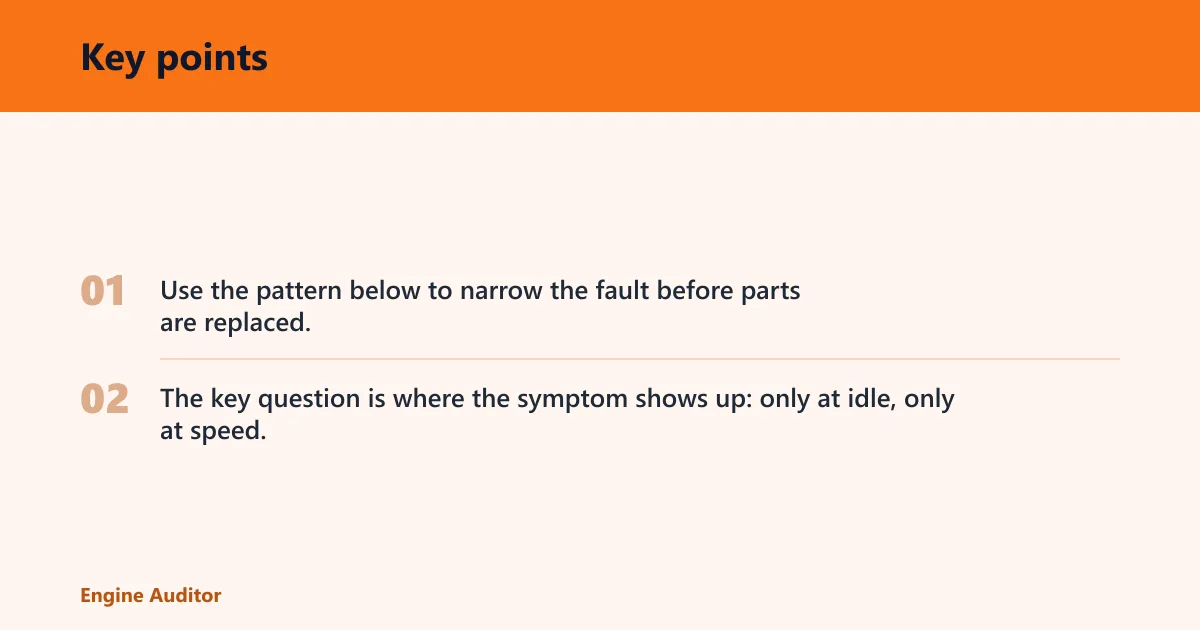
Use the pattern below to narrow the fault before parts are replaced. The key question is where the symptom shows up: only at idle, only at speed, on one side of the cabin, or everywhere.
| Symptom pattern | Likely cause | Next check | Heat only at highway speed | Heat improves at idle | Temp gauge stays low | Coolant smell/fogging | One side hot/one side cold | |
|---|---|---|---|---|---|---|---|---|
| Heat is weak at idle but better while cruising | Weak water pump flow or low coolant level | Hose temperature difference and coolant level check | Check coolant cold; inspect hose flow and belt condition | Yes | No | Maybe | Sometimes | No |
| Heat is delayed on cold start, then becomes normal | Normal cold engine warm-up | Gauge rise and cabin heat recovery after driving | Watch gauge rise and compare after 5 to 15 minutes of driving | No | No | Briefly, then normal | No | No |
| Heat stays weak even after the engine is warm | Thermostat stuck open or heater core restriction | Hot engine, cooler-than-expected heater hoses, weak cabin output | Feel upper radiator and heater hoses when safe; compare inlet and outlet heat | Sometimes | No | Yes | Sometimes | Sometimes |
| Heat changes from side to side in the cabin | Blend door fault | Temperature change mismatch left to right | Check HVAC temperature blend, actuator movement, and mode changes | No | No | No | Sometimes | Yes |
| Heat comes and goes with a sweet smell or fogging | Coolant leak at heater core or related hose | Film on glass, damp carpet, and visible coolant loss | Inspect for damp carpet, film on glass, and coolant loss | Sometimes | No | Maybe | Yes | Maybe |
| Heat is weak after topping off coolant or after a repair | Low coolant or air pockets | Low reservoir level, gurgling, and fluctuating heat output | Check for leaks, bleed the system per OEM procedure, recheck level cold | Sometimes | Sometimes | Maybe | Sometimes | No |
| Engine is warm but cabin air stays cool and one hose is much cooler | Clogged heater core | One hot heater hose, one cooler hose, poor flow through core | Compare heater hose temperatures and consider a reverse flush per service info | Sometimes | No | Usually normal | Sometimes | Sometimes |
What the thermostat does
The thermostat controls when coolant starts flowing through the radiator. Most passenger vehicles use a thermostat that opens at a set engine temperature, often around 180°F to 195°F depending on the design. OEM service literature and cooling-system training materials generally describe the thermostat as the part that regulates engine warm-up and stable operating temperature. If it sticks open, the engine may run below normal operating temperature and cabin heat will take longer to arrive.
Open temperature and warm-up timing
A thermostat that opens too early lets coolant circulate through the radiator before the engine has built much heat. That slows warm-up in the engine and heater core at the same time. The gauge may hover below its usual mark for too long, especially in cold weather or at low load.
Signs of a stuck-open thermostat
A stuck-open thermostat often shows up as a slow temperature rise, weak heat on the road, and a gauge that never settles where it normally should. If the cabin warms a little only after a long drive, but the engine still seems underheated, the thermostat is high on the list.
Why the gauge may stay below normal
When the thermostat stays open, coolant keeps moving through the radiator too soon. That pulls heat away from the engine. The cabin heater then gets cooler coolant than it should, which delays the first strong burst of warm air.
Could low coolant or air be the cause?
Yes. Low coolant level can reduce heater performance, and trapped air can mimic the same symptom. Check coolant only when the engine is cold and the system is safely depressurized. Never open a hot system cap. EPA and OEM service guidance both treat proper coolant level and safe pressure release as basic safety steps before diagnosis. If the level is low, the heater core may not stay full of hot coolant long enough to give stable heat.
Why low coolant hurts heater output
The heater core sits high in the system on many vehicles, so a low coolant level can affect it. Air can enter the core, reduce heat transfer, and leave the cabin with lukewarm or no heat even while the engine itself seems to run normally.
A common first-timer mistake is checking coolant after a short shutdown and trusting the result. That can hide a low level or make the system look fuller than it is. Cold-engine checks are the safer baseline.
How air pockets interrupt flow
Air pockets block coolant circulation through the heater circuit. They can cause intermittent heat, delayed heat, or a sudden change from warm to cold. Proper bleeding procedures from OEM service manuals are the right fix path here; if heat returns after bleeding, the diagnosis points to trapped air rather than a bad heater core.
Safe cold-engine checks and bleeding
- Let the engine cool fully.
- Check the coolant reservoir against the cold mark.
- Look for wet hoses, crusty residue, or a sweet smell.
- If the level is low, inspect for leaks before topping off.
- Bleed or burp the system only after following the vehicle procedure.
- If heat returns after bleeding, recheck the level over the next few drives.
When the heater core or blend door fails
If the engine is warm but the cabin is still cold, the problem may be inside the heater circuit or inside the HVAC box. A blocked heater core is a common cause when the engine is warm and the cabin is cold. A blend door problem can create late, uneven, or side-to-side temperature differences even with normal coolant temperature.
Heater core restriction and weak flow
The heater core is a small radiator inside the dashboard. If its tubes are restricted, coolant flow drops and heat weakens. A common clue is one hose hot and the other cooler when the system should be passing heat normally. Major automaker service guidance commonly uses hose temperature comparison and flow checks to separate heater core restriction from blend door faults.
Another common clue is heat that comes back while driving. That can happen when higher engine speed pushes more coolant through a partially restricted core.
Blend door faults and uneven cabin heat
The blend door mixes hot and cold air for cabin temperature control. If it sticks, the vents may blow cold air longer than they should, or one side of the cabin may feel hot while the other stays cool. That is an HVAC-side fault, not a coolant-flow fault.
Signs that point to HVAC-side trouble
Uneven temperature from left to right, delayed change when you turn the temperature knob, or heat that seems unrelated to engine speed points toward the blend door or its actuator. If the engine stays at normal temperature and the heater hoses are hot, the HVAC box deserves attention.
Picture a crossover SUV with hot coolant at the firewall, normal gauge position, and warm air on the driver side but cool air on the passenger side. That pattern fits a blend door issue better than a thermostat problem.
What about the water pump or block heater?
A weak water pump can delay heat delivery because it cannot move coolant through the engine and heater core fast enough. That kind of weakness often shows up more at idle than while driving. In cold climates, a block heater changes the picture by reducing the amount of warm-up time needed before the engine starts.
Weak circulation at idle
If heat is poor at idle but improves once road speed rises, coolant circulation is a strong suspect. The pump may be worn, the belt may be slipping, or the system may be low on coolant. Because the heater depends on hot coolant flow, weak circulation makes the cabin feel slow to warm even when the engine is already producing heat.
Pressure cap issues during bleeding
The radiator cap, sometimes called a pressure cap, helps the cooling system hold pressure and manage boiling point. Poor pressure control can affect coolant flow and heating, especially during bleeding or when trapped air is part of the problem. If the cap cannot hold pressure, the system may be harder to purge and less stable afterward.
Cold-climate use of a block heater
A block heater is not a repair for a broken heater system. It is an optional aid that preheats the engine before startup, which can cut the time before cabin heat arrives. That matters most in freezing regions and on diesel vehicles, where the first minutes of operation can feel especially slow.
Suppose a diesel truck is parked outside overnight in subfreezing weather, and the driver wants faster cabin heat before a short commute. A block heater can shorten the cold-start delay, but it will not fix a thermostat that opens too soon or a clogged heater core.
How a technician diagnoses this in the bay
A shop diagnosis starts with a cold engine, a verified coolant level, and a scan for temperature data if the vehicle supports it. Next comes hose-temperature comparison, HVAC command checks, and a look for idle-versus-road changes. That sequence separates warm-up delay, circulation issues, and blend-door faults without guessing.
Hands-on inspection notes
The most useful first checks are visual and tactile: coolant level cold, obvious leaks, hose temperature at the firewall, and whether the engine reaches expected operating temperature. If the heater output changes with RPM, airflow, or HVAC command position, the pattern often points to the failed subsystem before any parts are removed.
Frequently asked questions
How long to let car warm up
A short idle is usually enough before driving. On modern engines, EPA and OEM guidance generally favors brief idle time and then gentle driving rather than extended stationary warm-up. After that, gentle driving warms the engine faster than sitting still, and the heater will usually improve sooner.
How long to warm up a car
For most modern cars, you do not need a long idle period. A short wait is enough to stabilize oil pressure and get moving. If the heater stays weak for many minutes after the engine reaches normal temperature, that is no longer a warm-up question; it is a diagnosis question.
How long to warm up car engine
Cold weather extends warm-up time, but the answer is still shorter than many drivers expect. A brief idle period followed by gentle driving is usually the right approach. If the temperature gauge stays low for too long, especially on a highway run, check the thermostat and coolant level.
How many minutes to warm up car
In many cases, only a minute or two of idle time is enough before driving off gently. The exact time depends on outside temperature, engine type, and whether a block heater was used. If heat only starts after 5 to 15 minutes of driving, that can still be normal in cold weather.
Should I warm up my car?
Yes, but only briefly. A short idle helps the engine stabilize, then light driving finishes the job more effectively than long stationary warm-up. If cabin heat is slow only because the engine is cold, that is normal. If heat stays cold after normal temperature, look for a fault.
Should you let a car warm up?
Yes, but not for long. Modern engines do not need extended idling, and long warm-ups do not fix heater problems. The better test is whether heat improves as the engine reaches operating temperature and whether the symptom changes with speed, because that tells you where the fault sits.
Related guides
- Thermostat symptoms and stuck-open signs
- Low coolant causes and leak checks
- Heater core flush guide
- Blend door actuator symptoms
- Water pump failure symptoms
Sources
- EPA guidance on reducing unnecessary vehicle idling and cold-weather warm-up habits
- OEM owner’s manuals and service information for thermostat operation, coolant level checks, and safe pressure-cap handling
- AAA guidance on winter driving, cold-start behavior, and engine warm-up best practices
- NHTSA safety guidance on cooling-system precautions and avoiding hot-system cap removal
- Automaker HVAC and cooling-system service manuals for heater-core flow checks, blend-door diagnostics, and bleed procedures
Products related to this article
Sponsored / affiliate links. As an Amazon Associate I earn from qualifying purchases. I may earn additional commission from eligible campaigns.