Can Low Coolant Cause No Heat in the Car?
Yes. Low coolant can cause no heat only when the heater core loses its coolant supply. If the engine also runs hot, treat that as a leak or circulation fault until you prove otherwise. Ignore it and the engine can overheat. This guide separates low coolant from air pockets, thermostat trouble, heater-core blockage, and larger engine faults by symptom pattern.
How low coolant blows cold air through your vents


Yes. Engine coolant does two jobs: it cools the engine and carries heat into the cabin. The heater core needs a steady stream of hot coolant to work. If the level drops far enough that coolant cannot reach the heater core, the cabin can blow cold or only lukewarm air.
What low coolant changes in the heater circuit
The heater core is a small radiator behind the dashboard. It depends on hot coolant moving through it, so a low reservoir can leave the heater circuit partly empty or full of air instead of hot fluid. That is why the heater may fail first, before the engine shows clear trouble.
Check coolant only when the engine is cool. A hot cooling system is pressurized, and opening it can cause burns.
When low coolant points to a leak, not a top-off issue
A one-time top-off can restore heat if the level only dipped below the MIN mark, but repeated loss usually means something else is wrong. If the reservoir drops again after a short drive, treat that as a leak search, not routine maintenance. Low coolant can also turn on a coolant warning light.
How the cabin heater depends on coolant
The cabin heater does not make its own heat. It uses hot engine coolant routed through the heater core, then a blower pushes air across that core and into the cabin. If coolant flow drops, heat output drops too, even when the fan still sounds normal.
Cooling system parts that affect heat output
The cooling system is pressurized when hot and includes the radiator, hoses, water pump, reservoir, and thermostat. Any problem that changes flow through the heater core can cut cabin heat. Air pockets after coolant loss or service can do the same, and air carries heat poorly in the cooling system.
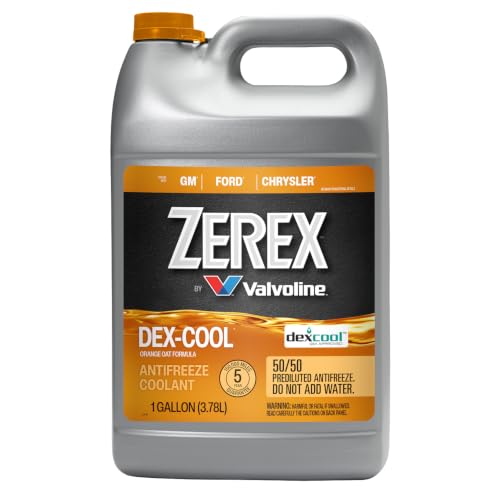
Modern vehicles may require OAT, HOAT, or manufacturer-approved extended-life coolant. Use the type and mix listed on the owner’s manual or reservoir cap.
Why coolant level matters when the engine is cold
When the engine is cold, start with the reservoir. The level should sit between the MIN and MAX marks, or within the visible fill range if the tank uses that layout. Below MIN, or below the visible cold fill range, is low enough to justify a closer look.
Winter heat diagnosis table
This table separates the most common no-heat patterns from the first check and the next step. Use it as a branch guide, not a substitute for a leak inspection.
| Symptom pattern | Most likely cause | First check | Next escalation step |
|---|---|---|---|
| No heat + rising temperature gauge | Low coolant, thermostat stuck closed, or circulation loss | Check the reservoir cold and inspect for leaks | Stop driving and inspect thermostat, pump, and hoses |
| Heat only at speed | Low coolant or air pocket limiting flow at idle | Bleed air if service was recent; recheck level cold | Look for a leak or weak water pump circulation |
| Heat only at idle | Thermostat issue or airflow-related cooling imbalance | Watch gauge behavior and upper hose warm-up | Test thermostat and cooling fan operation |
| Heat returns after topping off | Low coolant or trapped air | Confirm the reservoir stayed at the mark after cooldown | Search for the leak if the level drops again |
| One heater hose hot, one cool | Flow problem, clogged heater core, or air pocket | Feel both hoses after warm-up | Bleed the system or test heater-core flow |
| Sweet smell in cabin | Coolant leak, possibly heater core | Inspect carpets, windows, and dash vents | Check for heater-core leakage and pressure loss |
| Foggy windshield with damp carpet | Heater-core leak | Look for wet passenger-side carpet and oily film | Pressure-test cooling system and inspect core |
| Bubbling reservoir or repeated coolant loss | Air pocket, leak, or head gasket problem | Check for external leaks and exhaust smoke | Do not keep topping off; test for internal coolant loss |
What symptom patterns point to low coolant?
Low coolant usually shows up as weak heat, heat that changes with engine speed, or heat that returns after a refill. It can also come with a rising temperature gauge, a sweet smell, fogging, bubbling at the reservoir, or a coolant warning light. Those clues matter more than the no-heat complaint alone.
No heat plus a rising temperature gauge
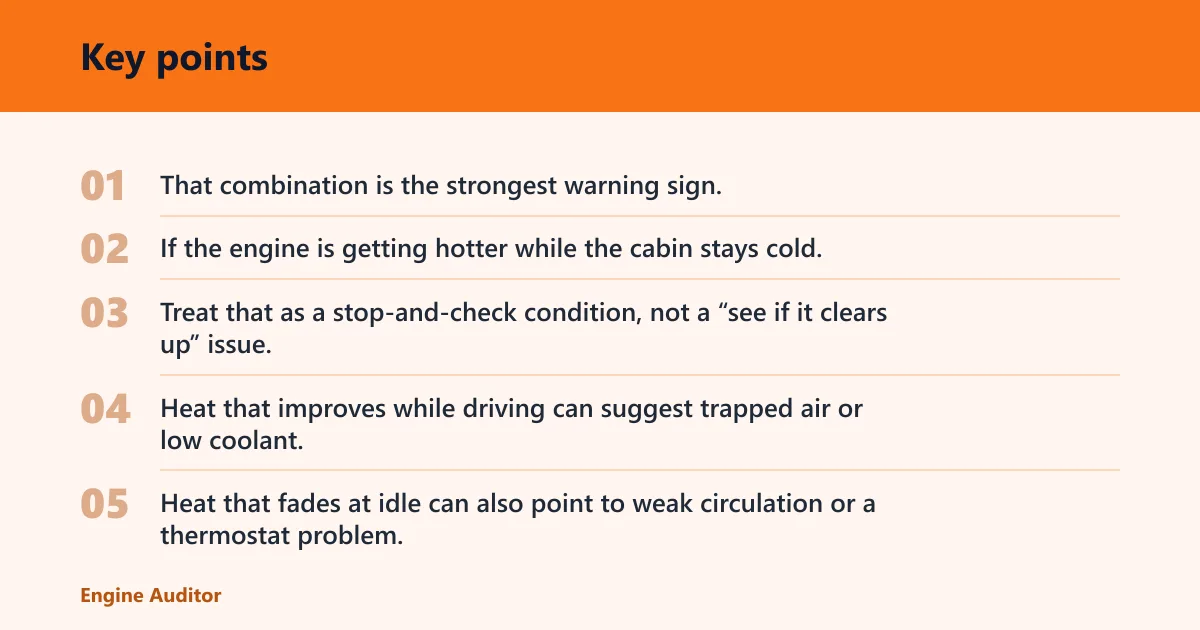
That combination is the strongest warning sign. If the engine is getting hotter while the cabin stays cold, the heater core may not be getting enough coolant, or circulation may be failing. Treat that as a stop-and-check condition, not a “see if it clears up” issue.
Heat only at speed or only at idle
Heat that improves while driving can suggest trapped air or low coolant. Heat that fades at idle can also point to weak circulation or a thermostat problem. A common mistake is to assume any warm engine means the heater core must be fine. It does not.
Heat returns after you add coolant
If the heater works again after a top-off, low coolant was likely part of the problem. If heat returns only briefly, the system may still contain air, or the refill may have covered a leak that is dropping the level again. Repeated refills are not a normal fix.
Sweet smell, fogged glass, or a damp carpet
Those point more toward a leak than a simple low-level condition. A sweet smell in the cabin, fogging that is hard to clear, or wet carpet near the firewall can fit a leaking heater core. Suppose the passenger carpet is damp and the reservoir is dropping every few days; that is a leak pattern, not a random cold-air problem.
What else can cause no heat?
Low coolant is only one cause. A thermostat stuck closed can block flow to the heater core and overheat the engine. A thermostat stuck open can keep the engine too cool for strong cabin heat. A clogged heater core, a weak water pump, or a head-gasket leak can also leave the cabin cold.
Thermostat stuck closed or open
A thermostat stuck closed can cut off cabin heat and cause overheating because coolant may not circulate normally. A thermostat stuck open can keep the engine too cool, which can reduce heater output even if the reservoir level looks fine. Both faults can mimic a coolant problem from the driver’s seat.
Air pockets after a repair or flush
Air pockets are common after a leak or coolant service. They can block coolant flow and leave the heater core partly dry, especially on vehicles that need a specific bleeding procedure to remove air completely. If heat is weak right after service, bleeding the system may matter more than another top-off.
Heater-core clog or leak
A clogged heater core can cause lukewarm air or intermittent heat. One hot heater hose and one cool hose can suggest a flow problem. If both the coolant level and engine temperature look normal but the cabin stays cold, the heater core deserves attention.
Water-pump circulation loss
The water pump moves coolant through the system. If circulation weakens, the engine may not send enough hot coolant through the heater core, so cabin heat drops. That kind of failure can look like low coolant at first because both can produce poor heater output.
Head-gasket leak clues
An internal coolant leak can come from a head gasket. White exhaust smoke, bubbling in the reservoir, and repeated coolant loss after a refill fit that pattern better than a simple top-off issue. Do not keep driving if the level keeps dropping and no external leak appears.
How do you check coolant safely?
Check the reservoir first, with the engine cool. Read the MIN and MAX marks and compare the level to the cold fill range. Then inspect hoses, the cap area, and the ground under the car for visible leaks. Use the correct coolant type and mix from the owner’s manual or reservoir cap.
Step-by-step cold check
- Park on level ground and let the engine cool fully.
- Find the coolant reservoir and read the MIN and MAX marks.
- Confirm the level is not below MIN or below the visible cold fill range.
- Look for crusty residue, wet hoses, or drips near the cap and radiator area.
- After warm-up, feel the heater hoses carefully; one hot and one cool suggests a flow problem.
- Top off only with the coolant type specified for the vehicle.
What to use when topping off
Use the coolant type and mix the vehicle calls for, not a random universal fill. Modern vehicles may require OAT, HOAT, or manufacturer-approved extended-life coolant. Wrong chemistry can reduce corrosion protection and create more trouble than the low level itself.
When does no heat mean a bigger problem?
No heat becomes a bigger problem when the level drops again, the reservoir bubbles, the engine overheats, or the cabin picks up a sweet smell. These patterns suggest a leak, trapped air that was not removed, a heater-core fault, or an internal engine issue. A top-off that does not hold is a warning.
Repeated coolant loss after a refill
If the reservoir falls again after a short drive, stop treating it as ordinary maintenance. That points to an external leak or an internal loss path. A simple rule works here: a refill that disappears quickly is diagnosis time, not more topping off.
Bubbling reservoir or white exhaust smoke
Bubbling in the reservoir can mean combustion gas entering the cooling system. White exhaust smoke can support that suspicion. Together, those clues fit a head-gasket problem better than a heater-only fault, especially if the cabin heat keeps failing after refills.
One heater hose hot and the other cool
That split usually means coolant is not moving through the heater core as it should. Air trapped in the core, a clog, or a valve issue can all do that. After warm-up, both hoses should normally be hot; a mismatch deserves more than a casual top-off.
Heat that disappears again after a short drive
If the heat comes back for a few miles and then goes cold again, suspect air, a leak, or poor circulation. Say your car blows warm for five minutes after a refill, then goes cold on the highway while the gauge climbs. That is not a normal bleeding issue to ignore.
Can you drive with low coolant?
Only for the shortest practical move to safety, and only if the engine is not overheating. Low coolant can turn into an overheating problem fast, especially if the heater core has already lost flow. If the temperature gauge rises, pull over and shut the engine off before adding anything.
When to stop driving
Stop driving if the gauge climbs, the warning light comes on, steam appears, or the cabin heat vanishes along with the coolant level. Do not open a hot cooling system. Let it cool before checking the reservoir or adding coolant.
What to do before adding more coolant
Look for obvious leaks, confirm the engine is cool, and check the reservoir level against MIN and MAX. If the coolant is visibly low and the engine is not hot, top off with the correct type, then watch whether the level stays steady after the next cooldown.
Frequently asked questions
Can low antifreeze cause no heat in the car?
Yes. In everyday use, antifreeze and coolant are often used to mean the same fluid, and a low level can leave the heater core without enough hot fluid. The result can be weak heat, cold air, or heat that comes and goes, especially if air is also trapped in the system.
Can low refrigerant cause no heat in the car?
No. Low refrigerant affects the air-conditioning system, not the engine coolant circuit that feeds the heater core. If the cabin heater is cold, focus on coolant level, airflow through the heater core, thermostat behavior, and circulation problems before thinking about A/C refrigerant.
Can low coolant cause heat to not work?
Yes. If coolant is low enough, the heater core may not get a steady supply of hot fluid, and the cabin heater can stop working or turn weak. That is especially likely when the reservoir is below MIN, heat improves after topping off, or the engine temperature changes at the same time.
Why does my car heater blow cold air when coolant is low?
Because the heater core needs hot coolant to warm cabin air. When the level drops, the core can run partly empty or pick up air instead of hot fluid. Since air carries heat poorly in the cooling system, the vent air turns cold or stays lukewarm.
How can I tell if low coolant or a bad heater core is causing no heat?
Start with the cold reservoir check. If the level is low and heat returns after a proper top-off, low coolant or air was likely the issue. If one heater hose is hot and the other cool, or the cabin gets a sweet smell or damp carpet, the heater core is more suspect.
Can I drive with low coolant and no heat?
Only if you can move the car a very short distance without the temperature gauge rising. Low coolant and no heat often point to a cooling system fault that can turn into overheating quickly. If the gauge climbs, or the level keeps dropping, stop driving and inspect for leaks.
Why does the heater work only sometimes after I add coolant?
That usually means air is still trapped, the system was not bled fully, or the refill covered a leak that is still present. Heat that improves while driving can fit trapped air, and some vehicles need a specific bleeding procedure before the heater behaves normally again.
What else besides low coolant can cause no heat in a car?
A stuck thermostat, a clogged heater core, a weak water pump, air pockets after service, or a head-gasket leak can all cause no heat. If the engine temperature is abnormal, the reservoir bubbles, or coolant keeps disappearing, the problem is larger than a simple low-level top-off.
Products related to this article
Sponsored / affiliate links. As an Amazon Associate I earn from qualifying purchases. I may earn additional commission from eligible campaigns.