What Does an Exhaust Leak Sound Like?
Mechanic-reviewed byline:
This guide is part of our Car Noise Diagnosis by Symptom: Where the Sound Comes From and How Serious It Is series.
An exhaust leak usually sounds like a sharp ticking at cold start, a hiss under load, or a low rumble near the firewall or pipe joints. If the noise rises with throttle, or you smell exhaust in or around the cabin, stop driving and arrange an inspection right away. Ignoring a leak can waste fuel, distort oxygen-sensor readings, and let hot exhaust damage nearby parts. This guide shows how to tell a leak from a rattle, drone, or knock by sound, location, and engine state.
How to identify an exhaust leak by sound

A classic exhaust leak sounds like rapid ticking during cold starts or acceleration. Many drivers hear tapping, sharp hissing, popping, or a thin metallic chatter that changes with rpm. The key clue is simple: the sound follows exhaust flow, not random engine noise.
Front-of-engine leaks often sound sharper than rear leaks. A leak at the exhaust manifold or exhaust manifold gasket can be loudest right after startup, then seem to fade as the manifold heats up and seals a bit better. That does not mean it is gone.
How pitch changes with rpm
Exhaust noise usually rises and falls with engine speed. A small leak can sound like a quick, even tick at idle, then turn into a faster staccato under throttle. A larger opening can flatten into a hiss or an angry, airy roar. If the rhythm tracks rpm closely, the leak is usually upstream of the muffler.
Location changes the tone. Near the engine, you are more likely to hear tapping or ticking. Under the vehicle, a split flex pipe often sounds raspier. At the rear, muffler damage usually deepens the tone into a rumble or drone.
Why cold starts make leaks easier to hear
Cold metal contracts, so gasket faces, studs, and pipe joints may not seal as well before the engine warms up. That is why the ticking or tapping sound can happen right after turning on the car. The sound may stop until the next startup as the manifold expands.
Rust often starts the failure, and repeated heat cycles spread it. Road salt speeds corrosion on pipes, mufflers, clamps, and hangers, especially in cars that see winter driving.
Where the sound starts matters

Pinpointing the start of the noise matters more than the word “loud.” A front-of-engine leak, an underbody leak, and a rear exhaust failure do not behave the same way. Listen for where the sound seems strongest with the hood open, then from the side of the car near the wheel wells and under the floor. A heat shield rattle can mimic a leak, but the source and tone usually differ.
Exhaust manifold and gasket leaks at the front of the engine
Exhaust manifold leaks are a prime suspect when the noise is sharp and close to the firewall. An exhaust manifold gasket seals the manifold to the cylinder head, and heat cycling can weaken that seal. Broken bolts or studs can do the same thing. A leaking exhaust manifold may sound like the engine is roaring, and soot marks or chuffing near the flange are classic clues.
These leaks often change with throttle and can affect acceleration. The sound may be a fast tick, a tapping pulse, or a short hiss that is strongest near the front wheel or engine bay. For a deeper visual overview, see exhaust manifold leak.
Flex pipe leaks under the vehicle
A flex pipe sits underneath the vehicle and can split or crack from movement and corrosion. When it fails, the sound is often sharper and raspier than a muffler problem. It may get louder during acceleration because exhaust pressure rises.
If the leak is under the car, you may hear it more clearly from the side of the vehicle than from the engine bay. The sound can travel along the floor pan, which makes the location feel less obvious than it is.
Muffler, hanger, and tailpipe noise at the rear
Muffler trouble usually creates a deeper rumble, drone, or hollow exhaust tone near the back of the car. Internal rust or holes change the tone, but that is not the same as catalytic converter damage. A loose hanger can also bang or rattle against the body.
Rear noise often shows up as a constant drone at certain road speeds. Road speed can make the drone more noticeable, even though the sound source is still tied to exhaust flow and engine load. That is a useful clue when you are sorting through the sound.
What the sound means by driving condition
Engine state changes the clue set. Idle, acceleration, deceleration, and cold start each put a different load on the exhaust path. Use that pattern before you assume the worst. The safest interpretation comes from matching sound plus engine state plus location, not sound alone.
Idle versus acceleration
At idle, a small leak may sound like a steady tick or soft hiss. Under acceleration, it often grows louder because exhaust flow increases. That is why manifold and donut gasket leaks are prime suspects for hissing, popping, tapping, or ticking, especially during acceleration or a cold start.
If the noise fades when you lift off the throttle, that points toward flow-related exhaust movement rather than a constant mechanical knock.
Deceleration and steady cruise
On decel, some leaks pop or crackle as exhaust flow changes direction and pressure drops. At steady cruise, a rear leak may become a drone or low rumble, while a front leak can sit there as a faint but persistent tick. The pitch often matters more than loudness.
A leak may be more likely than a wheel bearing or accessory squeal when ticking returns after a cold start and comes back under light throttle. That pattern fits a front leak far better than a wheel bearing or accessory squeal.
Cold start versus warm engine
Cold-start noise that improves as the engine warms points toward expansion-related leakage, especially at the manifold, gasket, or broken stud area. Warm-only noise can still be exhaust-related, but it is more likely to involve a flex joint, hanger, or rear pipe vibration.
A common first-timer mistake is calling every warm ticking sound a lifter issue. Exhaust leaks can mimic that pattern when the noise tracks rpm and gets quieter as parts heat up.
Exhaust-noise decision table
Use this table to sort the sound before you book service. It ties the noise to when it happens, where it usually starts, how severe it may be, and whether you should stop driving, inspect soon, or arrange a tow. The extra columns help separate leaks from heat-shield rattle, wheel noise, and other false matches.
| Sound type | Temperature sensitivity | RPM sensitivity | Smell/soot clue | Common false match | Confidence level | When it happens | Likely location | Likely severity | Drive or tow |
|---|---|---|---|---|---|---|---|---|---|
| Sharp ticking or tapping | Strongest cold; may soften warm | Often rises with rpm | Possible soot near manifold; may smell at start | Lifter tick | High for manifold/gasket leak | Cold start, idle, acceleration | Exhaust manifold, manifold gasket | Moderate to high if loud or growing | Inspect soon; tow if cabin fumes are present |
| Fast hiss or rasp | Can be louder cold or under load | Usually stronger with throttle | Soot at flex section or joint is common | Vacuum leak | High for flex pipe/joint leak | Acceleration, light throttle | Flex pipe, pipe joint, clamp | Moderate | Inspect soon |
| Deep rumble or drone | Often steadier warm or at road speed | Usually tied more to vehicle speed than rpm | Rust holes or black residue near rear section | Tire noise | Moderate for rear exhaust fault | Steady cruise, certain road speeds | Muffler, rear pipe, hanger | Low to moderate | Inspect soon |
| Rattle that changes at idle or set rpm | May appear hot, cold, or both | Often appears in one narrow rpm band | Usually no exhaust odor or soot | Heat shield rattle | Moderate for shield-related noise | Idle, certain rpm bands | Heat shield, catalytic converter area | Low to moderate | Inspect soon |
| Strong exhaust smell in cabin | Often worse at idle or stop-and-go | Can occur at any rpm | Soot may appear anywhere along leak path | HVAC intake smell from outside traffic | Very high risk | Any time, often worse at idle | Any leak path into cabin or underbody | High | Stop driving and tow now |
| Loud roar with poor acceleration | Often obvious cold and warm | Rises quickly under load | May show soot or obvious pipe break | Intake leak or engine misfire | High for major exhaust break | Acceleration, uphill, passing | Front manifold, major pipe break | High | Tow now if power is badly reduced |
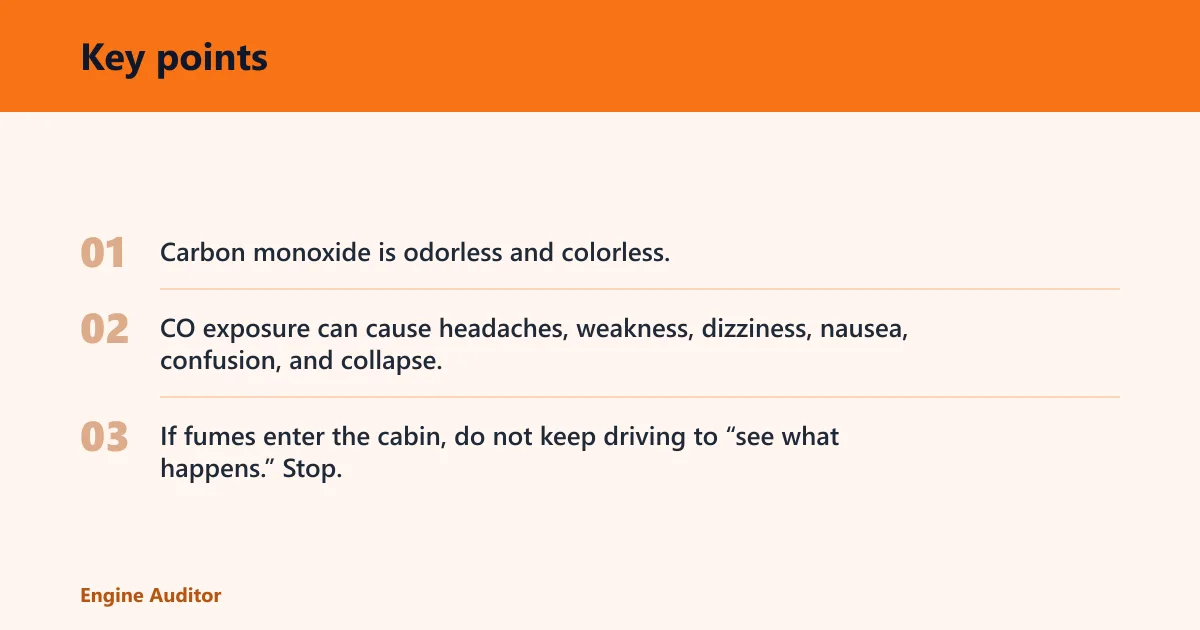
Smell changes the call fast. Carbon monoxide is odorless and colorless, so a cabin exhaust odor is not a carbon monoxide test, but it is a warning that exhaust gases may be entering the vehicle. CO exposure can cause headaches, weakness, dizziness, nausea, confusion, and collapse.
If fumes enter the cabin, do not keep driving to “see what happens.” Stop, ventilate the cabin, and arrange service or a tow.
Can it sound like another engine problem?
Yes. Exhaust noise is often confused with lifter tick, engine knock, wheel noise, or a loose heat shield. The trick is to match the sound to temperature, rpm, and location, not to the loudest guess. A bay-side sound check and a close look for soot usually separate exhaust from internal engine noise.
Lifter tick versus exhaust tick
A lifter tick usually sounds like it lives inside the engine, while an exhaust tick often seems to come from the manifold, firewall, or one side of the engine bay. Exhaust noise often gets louder on cold start and changes with exhaust flow. Lifter noise more often follows oil pressure behavior and internal valve train motion.
Can an exhaust leak sound like a lifter tick? Yes. That is one of the most common mistakes, especially when the tick is rhythmic and sharp. The difference is that exhaust leaks often peak during acceleration or right after startup.
Engine knock versus leak rattle
Can exhaust leak sound like engine knock? Sometimes, but the pattern is different. Knock is usually a heavier metallic ping or rap that follows load and timing more than exhaust placement. A leak tends to sound airier, more tapping than striking, and often gets quieter as the engine warms.
If the noise seems deep in the block and worsens with heavy load, treat that as more serious than a typical exhaust tick.
Heat shield rattle and other lookalikes
Heat shields can rattle with age or loose fasteners, and the noise may vary at idle or certain rpm. That can be mistaken for exhaust failure because the shield sits near the exhaust system. A heat shield rattle is usually lighter, more metallic, and less tied to throttle than a true leak.
Wheel bearing hum is usually a road-speed noise that changes with steering input, not engine rpm. Accessory squeal comes from belts or pulleys and often has a higher-pitched squeak rather than a tick or hiss. A catalytic converter can rattle too, which is why converter noise and leak noise should not be lumped together.
Why exhaust leaks matter
Exhaust leaks can make the ride noisier and damage the catalytic converter. They can also distort oxygen sensor readings, which affects fuel mixture and efficiency. That is why a check engine light can appear with exhaust or emissions issues, often alongside oxygen sensor codes.
A check engine light is a clue, not proof of location. It can point you toward emissions trouble, but it does not tell you whether the leak is at the manifold, flex pipe, or rear section.
Exhaust leaks can cause poor vehicle acceleration. A large enough leak can reduce exhaust energy and change backpressure, which may make the vehicle feel flat or slow to respond. That is more credible than a blanket “bad mileage” claim because the drivability effect depends on leak size and location.
What causes the noise?
Heat cycling, rust, and road-salt corrosion are commonly reported causes of exhaust noise across the exhaust path. Exhaust leaks can happen anywhere from the exhaust valve and cylinder head to the tailpipe, but most repair decisions start with the gasket, pipe, and mounting points. Failed manifold gaskets, cracked flex joints, and corroded flanges are frequent repeat offenders.
Rust, road salt, and heat cycling
Rust attacks thin steel first. Road salt speeds corrosion on pipes, mufflers, clamps, hangers, and joints, especially on high-mileage vehicles. As parts heat and cool, they expand and contract, which weakens seals and opens cracks.
Broken bolts, studs, and gasket failure
Broken bolts and studs can also create an exhaust manifold leak. Once clamping force drops, the gasket can no longer seal the manifold to the cylinder head. That is why ticking at the front of the engine is such a common complaint after the vehicle has sat overnight.
Cracked pipes, loose clamps, and damaged hangers
Underbody cracks often show up as hiss or rasp. Loose clamps can leak at a joint, and damaged hangers can let the pipe touch the body, which creates extra rattle. If the catalytic converter is part of the complaint, remember that converter rattle is not the same thing as a leak, even when both sound loud under the car.
How I confirm this in the bay
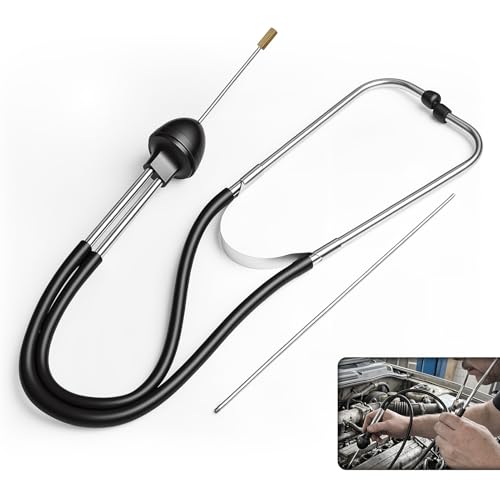
The quickest confirmation is a cold start plus a careful listening path from the manifold to the tailpipe, then a visual check for soot, cracked flex braid, loose shields, and broken fasteners. If the source is still unclear, a smoke test, stethoscope, or targeted blockage test can help.
The biggest bay clues are repeatable: a sharp tick that peaks cold, black soot around one flange, a sound that pulses with rpm, or a shield that only rattles at one frequency. If the cabin smells like exhaust, the diagnosis moves from “noise complaint” to safety issue.
- Start with the engine cold and listen near the front fenders, then under the middle of the car only if it is safely lifted and secured, then near the rear bumper.
- Note whether the sound changes with throttle, idle, or steady rpm.
- Check for exhaust smell outside the vehicle and inside the cabin.
- Look for soot at joints, cracked piping, loose shields, missing fasteners, or hanging pipe sections.
- If the sound is loud, the cabin smells of exhaust, or power drops hard, stop driving and arrange a tow.
What does an exhaust leak look like on a car? Often it is not dramatic. You may see black soot around a flange, a cracked flex section, rust holes in a pipe or muffler, a missing hanger, or a heat shield hanging loose. On some cars, the leak is visible only from underneath or only after the engine is running.
What does an exhaust leak sound like when accelerating?
During acceleration, a leak often gets louder, faster, and more obvious because exhaust pressure rises. You may hear sharp ticking from the manifold area, a hiss from a flex pipe, or a deeper roar if the front section has opened up. That is one reason acceleration is such a useful diagnostic moment.
If the sound grows with throttle but fades on lift-off, that leans toward an exhaust leak rather than a wheel bearing or accessory squeal. A large leak can also make the vehicle feel sluggish.
What does an exhaust leak sound like when idling?
At idle, an exhaust leak often sounds like a steady tick, tap, or light hiss. If the leak is small, it may be easiest to hear with the hood open near the firewall or wheel well. A rear leak can be quieter at idle and more noticeable once the vehicle starts moving.
Idle is also when cabin intrusion can show up most clearly. If you smell exhaust while the car is sitting still, take that seriously.
What does an exhaust leak sound like when driving?
While driving, the sound may change from a tick to a drone, rumble, or raspy hiss depending on speed and load. Steady cruise can make rear exhaust problems more obvious, while acceleration brings front leaks to the front of the conversation. Cabin resonance can make the source seem farther away than it is.
Suppose a truck only drones at 45 mph and quiets at lower speeds. That pattern is more consistent with a rear exhaust or hanger issue than a manifold leak.
What does an exhaust leak sound like on a truck?
On a truck, the sound is often louder because of larger exhaust volume and more ground clearance around the underbody. You may hear a coarse tick up front, a sharp hiss along the frame, or a deep drone from the rear section. Road-salt corrosion is especially common on truck exhaust parts.
Truck cabins can also transmit sound differently, so a leak may seem to come from the dash when it is actually under the floor or along the frame rail.
What does an exhaust leak sound like on a diesel?
On a diesel, the noise can be masked by normal engine clatter, so a leak may stand out as a sharper puffing, tapping, or chuffing sound. Under load, it can become more obvious, especially around the manifold, EGR-related piping, or flex sections. A strong leak may also add smell and reduce drivability.
Because diesel engines already make more mechanical noise, location and change with rpm matter even more than volume alone.
Frequently asked questions
Does an exhaust leak sound like ticking?
Yes. Ticking is one of the classic exhaust leak sounds, especially at cold start and during acceleration. The noise is often sharp and rhythmic, and it commonly points to the exhaust manifold, manifold gasket, or a cracked joint near the front of the engine.
Can exhaust leak sound like engine knock?
It can, especially when the leak is near the engine and the noise changes with load. Exhaust noise is usually airier and more top-side or front-side focused, while knock tends to sound deeper and more internal. If the noise is heavy and load-related, get it checked quickly.
Can an exhaust leak sound like a lifter tick?
Yes. A small leak at the manifold or gasket can mimic lifter tick closely because both can sound like fast, even tapping. The difference is often temperature behavior and location: exhaust leaks are often loudest cold and near the firewall, then quiet as parts heat.
What does an exhaust leak sound like in a car?
In a car, it may sound like a tick near the engine bay, a hiss under the floor, or a drone from the rear. If the noise changes with throttle and gets worse on cold start, exhaust is a strong suspect. If it changes with road speed only, look elsewhere too.
What does an exhaust leak look like on a car?
Look for soot at joints, rust holes, cracked flex pipe, loose heat shields, broken hangers, or missing fasteners. Some leaks are visible only from underneath, and some show up only after startup. If you also smell exhaust or see a check engine light with oxygen sensor codes, do not ignore it.
Products related to this article
Sponsored / affiliate links. As an Amazon Associate I earn from qualifying purchases. I may earn additional commission from eligible campaigns.