Why Do I Hear a Rattling Noise Under My Car?
Byline:
This guide is part of our Car Noise Diagnosis by Symptom: Where the Sound Comes From and How Serious It Is series.
A rattling noise under your car is commonly caused by a loose exhaust heat shield, hanger, clamp, or bracket, but stop driving and inspect it promptly if the rattle changes with engine speed, comes with low oil pressure, or turns into a knocking sound. Ignoring the wrong one can mean a cheap fix becomes exhaust damage, suspension failure, or engine damage. This guide helps you sort the noise by when it happens, where it comes from, and which symptoms mean you need immediate repair.
Inspection method: Start with a safe visual check on level ground, then narrow the noise by idle, rpm, bump response, and load changes. Driveway checks can identify loose shields, obvious hanger failures, or hanging exhaust parts; shop-only diagnosis is needed for internal engine noise, pressure testing, lift inspection, and precise mount or suspension diagnosis. Follow the owner’s manual, use jack stands if you go underneath, and do not rely on a jack alone.
Rattle decision table
| Noise location | Sound character | When it happens | Likely cause | Simple confirmation test | Estimated risk/cost range | Urgency |
|---|---|---|---|---|---|---|
| Under the car at idle | Thin metallic buzz, ting, or rapid flutter | Parked, engine running, rattle changes with rpm | Loose exhaust heat shield, hangers, clamps, or a failing catalytic converter; low oil pressure if the sound is from the engine | Lightly tap nearby shield with a rubber mallet; if the tone changes, the shield is loose | Low risk if it is a shield; higher risk and higher cost if converter or engine noise is involved | Book soon; stop driving if the sound becomes knocking or oil pressure is low |
| Under the car while driving | Metallic clatter, scrape, or vibration at certain speeds | Rattle appears on bumps, rough roads, or steady speed | Heat shield touching the exhaust, loose exhaust bracket, flex pipe, muffler, or resonator, or suspension parts | Listen over a speed bump; if the noise changes with chassis movement, inspect exhaust hangers and suspension joints | Low to moderate for hardware; moderate to high if exhaust welding or part replacement is needed | Inspect soon; urgent if part of the exhaust is hanging low |
| Front end over bumps | Clunk, knock, or dull rattle | Clunk or rattle over speed humps, potholes, driveway edges | Shocks, struts, or worn suspension components; may also point to loose mounts or brackets | Push down on each corner; excessive rebound or side-to-side looseness supports a suspension cause | Moderate to high, depending on strut or control arm wear | Book soon; sooner if the car pulls or sits unevenly |
| Rattle with acceleration | Thump, buzz, or load-related metallic chatter | Noise starts as you press the gas or shift under load | Motor mounts, transmission mounts, loose exhaust hardware, or a worn serpentine belt tensioner or idler pulley | Power-brake lightly in gear (automatic, brake firmly applied) or blip the throttle in park; excess engine movement points to mounts | Low to moderate for hardware; moderate if mounts or pulleys must be replaced | Book soon; urgent if the noise becomes a knock or vibration is strong |
| Do not drive | Deep knock, heavy metallic rap, or warning-light accompanied noise | Low oil, low oil pressure, or rod-knock symptoms | Internal engine friction, worn oil pump, clogged filter, piston slap, rod knock, or lifter noise | Check the oil level and warning light; if the oil pressure warning is on, shut the engine off | High risk; costs can range from diagnosis to major engine repair or replacement | Stop driving and get professional diagnosis now |
What does the sound location tell you?
The location is the fastest filter. A metallic rattle under the car points first to the exhaust system, while a front-end clunk over bumps points more toward suspension parts. If the noise shows up with acceleration, engine movement, motor mounts, or belt-drive parts move higher on the list.
Under the car at idle
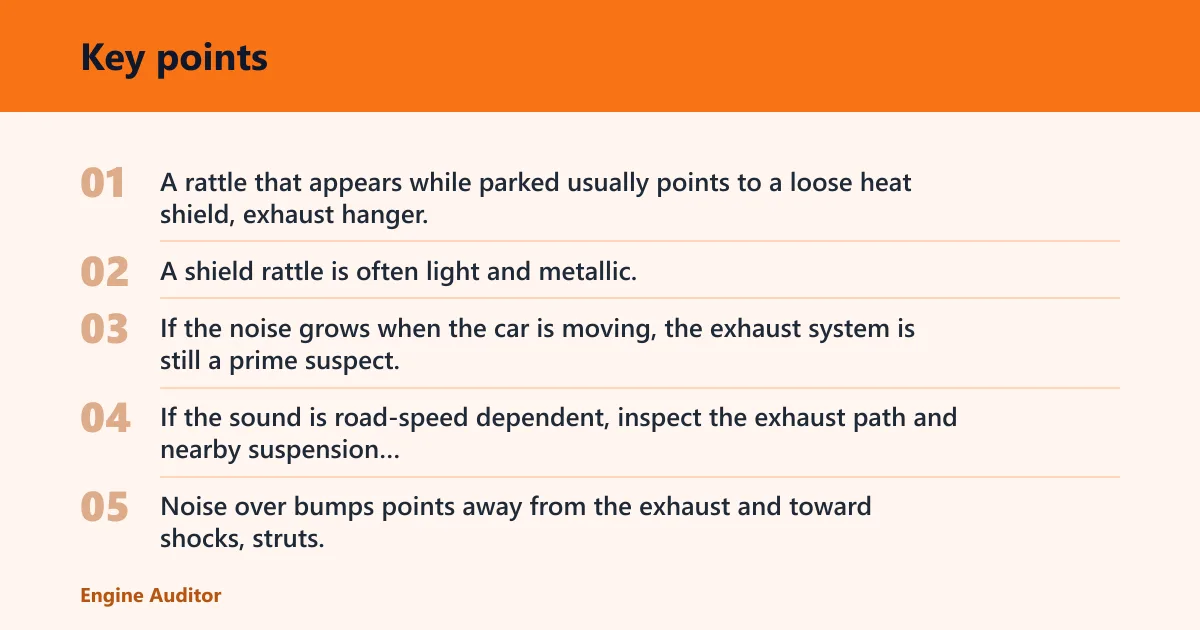
A rattle that appears while parked usually points to a loose heat shield, exhaust hanger, or catalytic converter. A shield rattle is often light and metallic; an internal converter failure is usually heavier and may affect exhaust flow.
Under the car while driving
If the noise grows when the car is moving, the exhaust system is still a prime suspect, especially hangers, clamps, brackets, mounts, flex pipe, muffler, or resonator. If the sound is road-speed dependent, inspect the exhaust path and nearby suspension hardware before assuming the engine is at fault.
Front end over bumps
Noise over bumps points away from the exhaust and toward shocks, struts, or other suspension components. A worn suspension part can clunk, shift the stance, or affect handling. Uneven ride height, pulling, or a front end that feels loose makes this path more likely than a simple shield rattle.
Rattle with acceleration
Acceleration loads the engine and can expose weak mounts or loose exhaust hardware. A changing rattle under load deserves a careful under-hood and undercar inspection.
Could it be the exhaust system?
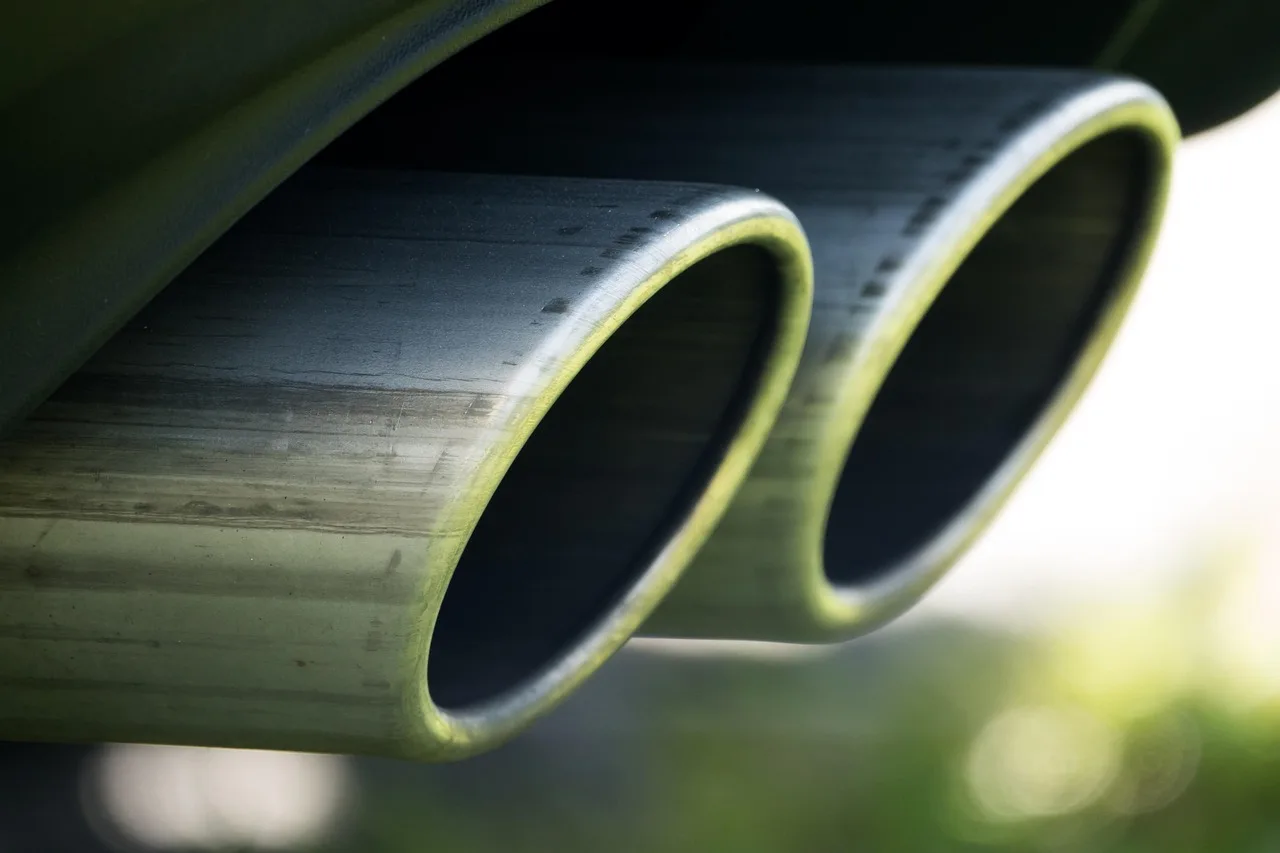
Yes. Exhaust parts are among the most common causes of a metallic rattle under the car. A loose heat shield can touch the pipe and vibrate, hangers and clamps can loosen or rust, and flex pipe, muffler, or resonator sections can fail or separate enough to make noise.
Heat shield rattle
An exhaust heat shield can loosen or corrode, then tap the exhaust and buzz with engine vibration. It may be riveted or bolted in place. A shield rattle is often thin, metallic, and worst at idle or low speed; a quick tap test with the car safely parked can confirm a loose panel when the tone changes or you hear the shield contact the pipe.
Hangers, clamps, brackets, and mounts
Exhaust hangers, clamps, brackets, and mounts hold the system in place. When they rust or loosen, the pipe can shift and rattle against the body or subframe. If the noise changes when the exhaust is pushed by hand from a safe position, or if the tailpipe moves unusually far, the support hardware deserves attention before more expensive parts are blamed.
Flex pipe, muffler, and resonator
The flex pipe, muffler, and resonator are all exhaust-system sections that can loosen or fail. These parts can chatter, leak, or strike nearby metal.
Say your car rattles mostly at idle, and the sound disappears when you blip the throttle in park. That pattern fits a heat shield or loose hanger better than a suspension problem, because bumps are not the trigger. A mechanic will often check for a shield touching the pipe before replacing anything costly.
How do you spot a catalytic converter problem?
A failed catalytic converter often sounds different from a loose shield. When the internal honeycomb breaks apart, the rattle can sound like pebbles shaken in a tin can. That noise usually comes from the converter body itself, not from a thin piece of sheet metal flapping against the exhaust. If the sound pairs with reduced power or a check-engine light, the converter needs closer inspection.
Broken internal substrate sound
A broken substrate can move inside the converter shell and rattle when the engine vibrates or when exhaust pulses shift the debris. That sound may come and go, especially at idle or during light throttle. If the converter is hot, the exhaust flow seems restricted, or the car feels flat on acceleration, the diagnosis should move beyond a simple underbody buzz.
How it differs from a loose shield
A loose shield makes a light metallic buzz or ring that often changes with a finger tap, road vibration, or engine speed. A broken converter tends to sound heavier and deeper because the damage is inside the canister.
When emissions issues matter
A damaged or clogged catalytic converter is more than a noise issue. It can reduce exhaust flow, hurt fuel economy, and trigger warning lights. If the rattle is paired with a chugging feel, poor acceleration, or a sulfur smell, schedule diagnosis soon rather than treating it as a simple loose part.
Could the suspension be making it?
Yes, especially if the rattle shows up over bumps instead of at idle. Worn shocks, struts, bushings, or other suspension parts can clunk under load and create undercar noise that gets mistaken for exhaust trouble. Pulling, uneven stance, or a loose-feeling front end points this way.
Shocks and struts
Shocks and struts control wheel movement. When they wear out, they can knock or clunk over dips and rough pavement. That noise often comes with a harsher ride, nose dive under braking, or one corner of the car sitting differently from the others. It is less likely to sound like a thin metal buzz and more likely to feel tied to wheel travel and body motion.
Loose or worn suspension parts
Control arm bushings, sway bar links, and related hardware can also rattle. These parts move as the wheels travel, so the noise is often tied to bumps or body roll. If the car pulls, wanders, or sits unevenly, the issue is more likely in the suspension than the exhaust. Shop-level inspection is usually needed to isolate a worn joint from a loose bracket.
Signs that point away from exhaust noise
If the sound is loudest at the front wheels, changes when turning, or gets worse over potholes, stop thinking only about the exhaust. An exhaust rattle usually tracks with engine speed or body vibration, while suspension noise tracks with wheel movement. That difference can save a pointless exhaust repair and help a technician focus on the right corner of the car.
Why does it rattle on acceleration?
Acceleration shifts weight and torque through the drivetrain, which can expose weak mounts and loose hardware. Motor mounts and transmission mounts can let the engine move enough to strike nearby parts. A worn belt tensioner or idler pulley can also rattle as the engine loads up. Because load changes are important diagnostic clues, a brief inspection should compare idle, light throttle, and shift-in/load conditions.
Motor mounts and transmission mounts
Motor mounts hold the engine in place, and transmission mounts help steady the drivetrain. If they fail, vibration rises and the engine can move enough to make impact noises on acceleration. The rattle may feel like a thump through the floor or firewall, not a free metallic buzz underneath. If the engine visibly rocks more than expected, a mount diagnosis becomes more likely than an exhaust diagnosis.
Serpentine belt tensioner and idler pulley
The serpentine belt system includes the belt tensioner and idler pulley. When those parts wear, they can rattle and also affect the alternator and other accessories. A failing tensioner often sounds most obvious from the front of the engine and may change with accessory load.
Picture a sedan that idles quietly in the driveway but rattles hard when merging onto a road. If the sound appears only as the throttle opens, mount movement or a worn tensioner climbs above a loose shield. If the vibration is strong enough to shake the cabin, the inspection should move up fast.
Engine movement under load
When torque rises, a weak mount lets the engine shift farther than normal. That movement can make a heat shield tap the exhaust, a hanger hit the body, or a pulley noise stand out more clearly. Multiple causes often overlap, so a mount problem can expose a separate exhaust rattle that was already there.
When does a rattle mean stop driving?
Stop driving when the rattle comes with low oil pressure, a deep knocking sound, or clear signs of internal engine damage. Low oil or low oil pressure can create engine rattling at idle and may reflect internal friction, a leak, a worn oil pump, or a clogged filter. That is a prompt-attention problem, and abnormal engine noise should be treated as an immediate concern.
Low oil or low oil pressure
Low oil pressure can cause rattling because the engine’s moving parts are no longer fully protected. If the oil light comes on, the sound appears at idle, or the engine gets louder after a cold start and then stays rough, do not keep driving. Low oil pressure can damage bearings and other internal parts very quickly.
Rod knock and other internal engine damage
Internal engine damage is more serious than trim or exhaust rattle. Rod knock, piston slap, or lifter noise can all create harsh engine sounds that follow engine speed. Those noises do not belong to loose sheet metal, and they usually need professional diagnosis before the engine suffers worse damage.
When to book a shop visit now
Book a shop visit now if the sound is new, repeated, or hard to place; if the car pulls, vibrates, or sits unevenly; or if the exhaust is visibly loose. If the rattle becomes a knock, or the oil warning light appears, stop driving and arrange towing instead of a normal visit. That distinction matters because a driveway check can find a loose shield, but it cannot rule out internal engine damage.
How can you check it safely?
Start with the car parked on level ground and fully secured. Use jack stands, not a jack alone, before going underneath the car. A factory service manual helps identify the layout, and a rubber hammer or stethoscope can help isolate a loose shield, bracket, or pulley without guessing. Use a stethoscope only for under-hood diagnosis, and keep clear of moving belts and unsupported vehicle areas. If the noise suggests engine knock, skip further driveway testing and move straight to professional diagnosis.
- Listen at idle, then gently raise rpm and note when the rattle changes.
- Check whether the noise comes from under the car, the front end, or the engine bay.
- Inspect the exhaust for loose heat shields, hangers, clamps, brackets, and mounts.
- Look for a hanging flex pipe, cracked muffler, or loose resonator section.
- Check for uneven stance, pulling, or clunks over bumps that suggest suspension trouble.
- If oil pressure is low or the sound turns into a knock, stop the test and do not drive it.
Frequently asked questions
Why do I hear a rattling noise under my car while driving?
A moving-car rattle often comes from the exhaust, especially a loose heat shield, hanger, clamp, bracket, flex pipe, muffler, or resonator. If the noise changes with road bumps, suspension parts move higher on the list. If it changes with engine speed, check mounts and belt-drive parts too.
Why is there a rattling noise under my car when I accelerate?
Acceleration can shift the engine and exhaust enough to make weak parts knock or buzz. Motor mounts, transmission mounts, loose exhaust hardware, and a worn belt tensioner or idler pulley are common suspects. If the sound gets harsher under load, do not ignore it, because movement is part of the trigger.
Can a loose heat shield make a rattling noise under a car?
Yes. A loose or corroded exhaust heat shield can touch the exhaust and vibrate, which makes a metallic rattle under the car. The noise is often worst at idle or at certain rpm bands. Because the shield may be riveted or bolted in place, it can rattle even when the exhaust itself is intact.
How can I tell if the rattle is the exhaust or the catalytic converter?
A loose exhaust shield or hanger usually makes a thin metallic buzz or ring, while a broken catalytic converter often sounds like pebbles in a tin can. If the sound seems to come from inside the converter body and comes with power loss or exhaust restriction, the converter is more likely.
Is it safe to drive with a rattling noise under my car?
Sometimes, but only if the sound is light, stable, and clearly tied to a loose exhaust shield or hanger. Do not keep driving if the rattle becomes a knock, if the oil light appears, if the exhaust is hanging low, or if handling changes. Those signs can point to serious damage.
Could low oil cause a rattling noise under my car?
Yes. Low oil or low oil pressure can cause engine rattling at idle and may signal internal friction, a leak, a worn oil pump, or a clogged filter. That noise is more urgent than a shield buzz. If the oil warning light is on, stop driving and get the car checked now.
Can loose exhaust brackets or hangers cause a metal rattling noise under the car?
Yes. Loose exhaust brackets or hangers are common causes of a metal rattling noise under the car. They can let the exhaust shift, touch the body, and vibrate against nearby parts. Tightening may fix it, but rusted hardware sometimes needs replacement or welding before the rattle is gone.
Sources
For diagnosis and safety guidance, consult your vehicle’s repair manual and owner’s manual, along with national safety guidance and professional technician resources. Relevant manufacturer and repair-manual procedures generally cover exhaust shield attachment, catalytic converter inspection, mount movement, belt-drive components, and engine-oil pressure checks in separate diagnostic steps. Follow the owner’s manual and shop manual for your exact model year and engine.
Products related to this article
Sponsored / affiliate links. As an Amazon Associate I earn from qualifying purchases. I may earn additional commission from eligible campaigns.