Can You Add Coolant to a Hot Engine?
Yes, add coolant only after the engine has cooled and the cooling system is no longer pressurized. If the gauge is in the red, steam is coming out, or the cap hisses, shut it off and wait or tow it. Opening a hot cooling system can spray boiling coolant and steam, which can cause severe burns. Driving an overheated engine can warp the head or destroy the engine. This guide shows when to wait, when to top off coolant, and when to stop and call for help.
First steps for a hot or overheating engine


No, not through the radiator cap. A hot cooling system is pressurized, and that pressure raises the boiling point while also making the cap dangerous to open. If the engine is only warm and behaving normally, wait for cooldown, then check the reservoir. If it is actively overheating, adding fluid is not the fix.
The safe rule is simple: a hot engine is not the same as an overheating engine, but both need caution. A normal hot engine may only need time before a reservoir check. An overheating engine needs the engine shut off, then a decision about towing or professional help if the warning signs do not clear.
What to do in the first 5 minutes
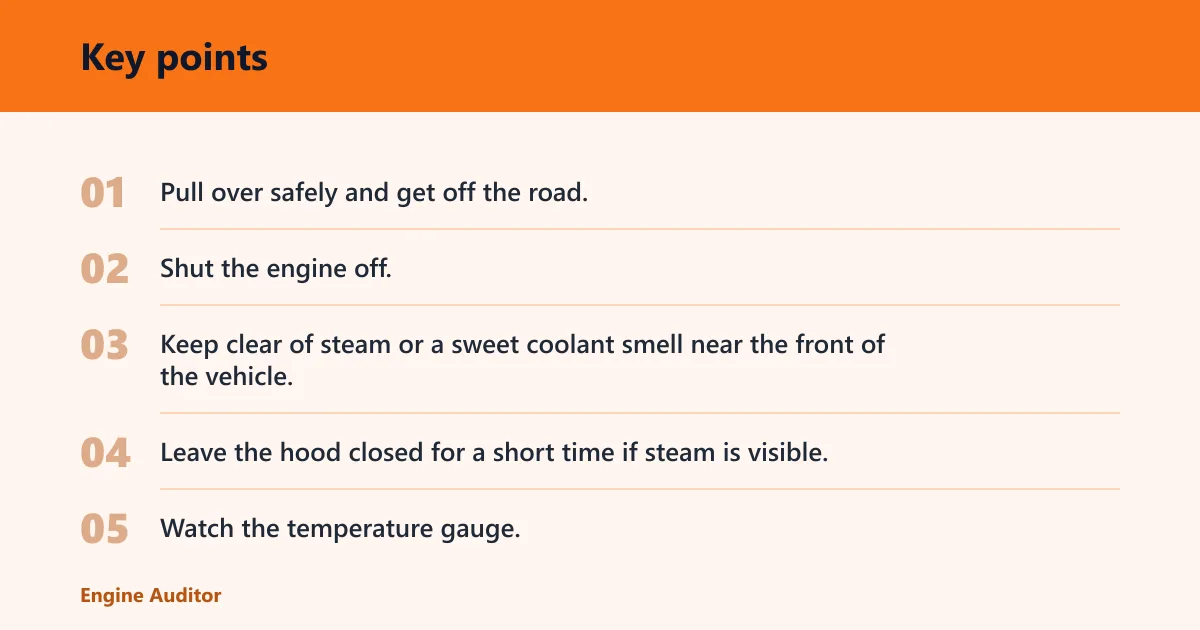
- Pull over safely and get off the road.
- Shut the engine off.
- Keep clear of steam or a sweet coolant smell near the front of the vehicle.
- Leave the hood closed for a short time if steam is visible; opening it can put your face and hands near hot vapor.
- Watch the temperature gauge. A red-zone or high reading means the system is still too hot to open.
The hood can usually be opened later to let heat escape, but not while steam is actively venting. If the gauge is high and the vehicle has lost power, treat it as an overheating event, not a routine top-off.
Hot engine decision table
| Symptom state | Immediate action | Add coolant now, later, or not at all |
|---|---|---|
| Normal hot engine, no steam, no warning light | Park safely, shut off, wait for cooldown | Later, after the reservoir can be checked safely |
| Steaming engine, sweet coolant smell, gauge high | Stop driving, shut off, do not open the cap | Not at all right now; tow or get help if the warning stays |
| Empty reservoir, radiator full after cooldown | Top off at the reservoir, then recheck after a short drive | Later, at the reservoir only unless a trained repair procedure says otherwise |
| Diesel or turbo vehicle after a hard pull, tow, or climb | Allow a longer cooldown before any check | Later; pressure and heat can stay elevated longer than expected |
Why the radiator cap is dangerous when hot
The cooling system is pressurized. That pressure helps raise the boiling point of the coolant, which is useful while the engine is running, but it also means a cap release can send out boiling coolant and steam. That is why the radiator cap stays closed until the system has cooled and pressure has dropped.
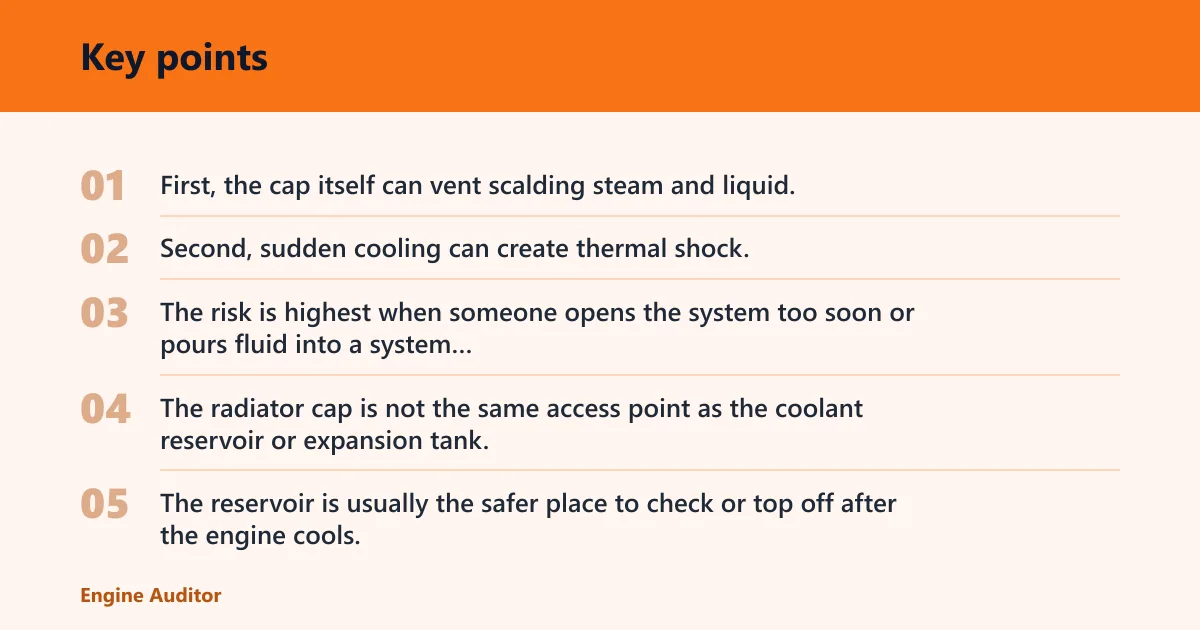
Two hazards matter here. First, the cap itself can vent scalding steam and liquid. Second, sudden cooling can create thermal shock, especially if cold coolant hits very hot metal parts. The risk is highest when someone opens the system too soon or pours fluid into a system that is still near boiling.
Radiator cap versus reservoir
The radiator cap is not the same access point as the coolant reservoir or expansion tank. The reservoir is usually the safer place to check or top off after the engine cools, because many vehicles are designed for routine checking there. In some systems the reservoir is a pressurized expansion tank; in others it is a non-pressurized overflow reservoir, and the correct topping-off point depends on the vehicle design. The radiator itself should stay closed until the system has cooled safely.
That distinction matters. A low reservoir does not always mean the radiator is empty, and a top-off at the reservoir is not the same as opening a pressurized radiator. Do not treat those as interchangeable steps.
Should you add coolant now or later?
Later, in most cases. If the engine is hot but not overheating, wait until it cools, then check the reservoir and add fluid to the marked line if needed. If the engine is steaming, losing power, or showing a warning light with a high gauge reading, stop driving instead of trying to top it off roadside.
Low coolant can be the cause of overheating, but it can also be a symptom of a leak, a failed cap, a bad hose, or trapped air. A top-off does not fix those problems. It only restores fluid level if the system is otherwise intact.
How to refill safely after cooldown
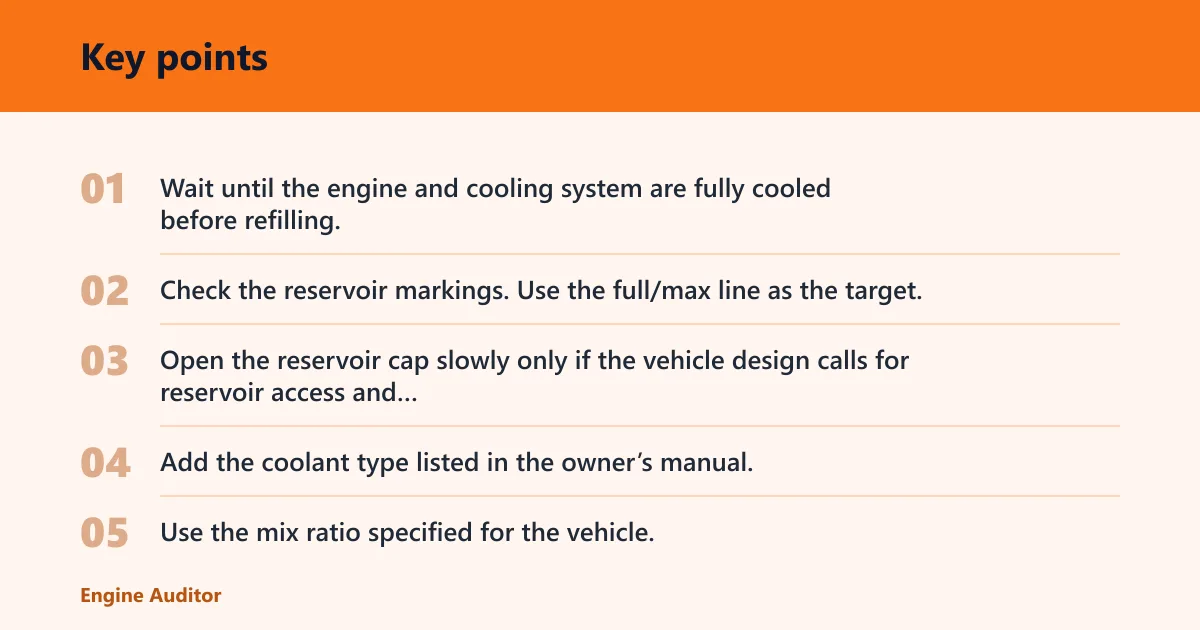
- Wait until the engine and cooling system are fully cooled before refilling.
- Check the reservoir markings. Use the full/max line as the target.
- Open the reservoir cap slowly only if the vehicle design calls for reservoir access and there is no pressure.
- Add the coolant type listed in the owner’s manual.
- Use the mix ratio specified for the vehicle, often 50/50 coolant and water unless the manual says otherwise.
- Reinstall the cap fully, then recheck the level after the engine has been run and cooled again.
If the reservoir is empty but the radiator may still be full, do not assume that means you can open the radiator cap safely. Let the system cool first, then follow the vehicle-specific procedure.
Suppose a compact sedan comes off a highway trip and the gauge edges upward, but no steam appears. The driver parks, shuts it off, and waits. After cooldown, the reservoir is below the low mark. That is a later top-off job, not a roadside cap removal job.
A common first-timer mistake is pouring coolant into a hot overflow bottle because the bottle looks easy to reach. If the engine is already near its limit, that fluid may not fix the overheating cause, and the level can change again once trapped air moves through the system.
Cooling system air pockets
Air pockets can form after refilling, after a leak, or after service work. They can cause hot spots, unstable gauge readings, and poor circulation. Some vehicles need bleeding or a follow-up level check after the first heat cycle.
If the level drops again after cooldown, that is not normal. It can mean trapped air has worked its way out, or it can point to a leak that needs diagnosis. Recheck the reservoir only after the engine is fully cooled.
What happens if you add coolant to a hot engine?
If coolant is poured into a very hot system, it can flash to steam, spit back, or overflow from the fill point. The sudden temperature change can also stress hot parts. That is why the risk is not just theoretical; it is tied to a pressurized, overheated system and a rushed refill.
Thermal shock is the concern when cold fluid meets very hot components. It is not the main danger in every case, but it becomes real when someone opens a hot cap or pours coolant into a boiling system. The bigger immediate risk is burn injury from pressurized steam.
How long should you wait before adding coolant?
Do not remove the cap until the engine and cooling system have cooled enough that there is no steam and no pressure at the fill point. For a system that was steaming or heavily loaded, a longer wait is safer. Diesel and turbo vehicles may hold heat and pressure longer.
Use the gauge, the steam, and the cap’s behavior as the real gatekeepers.
Diesel, turbo, and heavy-load cases
After towing, steep climbing, track use, or a long highway pull, heat can stay elevated longer than expected. Turbochargers and diesel cooling systems can keep pressure and temperature high even after shutdown. Give those vehicles extra time before opening anything.
If the vehicle overheated under load, do not assume the problem is solved just because the steam has faded. Wait, check the reservoir later, and look for a leak or a failed fan, belt, hose, or thermostat if the level keeps falling.
Roadside coolant decision table
| Symptom state | Immediate action | Add coolant now, later, or not at all |
|---|---|---|
| Gauge high but no steam, no warning light | Park, shut off, and wait for the gauge to fall before any cap or reservoir check | Later, only after cooldown |
| Steam from under the hood | Stop driving, shut off, keep clear of the cap and front of the vehicle | Not at all right now |
| Reservoir low, engine cool, radiator access not needed | Top off to the marked line with the correct fluid mix | Later, at the reservoir |
| Diesel or turbo after severe load | Allow extra cooldown time before checking any level | Later, after a longer wait |
What this table means for towing is straightforward. If the engine is actively steaming, losing power, or sitting in the red, do not try to fix it with a quick pour. If the vehicle cools normally and only the reservoir is low, a later refill may be enough to get you back on schedule.
Frequently asked questions
Can you add coolant to a hot engine?
No. The safe answer is to wait until the engine and cooling system are fully cooled, then check the reservoir. A hot cooling system is pressurized, and opening it can send out boiling coolant or steam. If the gauge is in the red or the hood is steaming, stop driving and wait or tow it.
Should you add coolant to a hot engine?
Not directly to the radiator or any pressurized fill point. If the engine is simply warm and not overheating, let it cool first. If it is actively overheating, adding fluid is not the fix. Shut it off, let pressure drop, and look for warning signs before touching the system.
Can you add cold coolant to a hot engine?
Not while the system is still very hot and pressurized. Cold fluid can trigger splashing, steam release, and thermal shock in hot components. Wait until the engine has cooled, then add the correct coolant mix at the reservoir if the vehicle calls for that access point.
Will adding coolant help overheating?
Only if low coolant is the problem and the engine has already cooled. It will not cure a fan failure, clogged radiator, stuck thermostat, hose leak, or air pocket. If the gauge is high, the car is steaming, or power is dropping, stop driving and get help.
Products related to this article
Sponsored / affiliate links. As an Amazon Associate I earn from qualifying purchases. I may earn additional commission from eligible campaigns.