When is the Best Time to Charge Electric Car for Maximum Savings
Owning an electric car is exciting, but one common question troubles many drivers: When is the best time to charge an electric car? The answer is not always simple, because it depends on several factors like cost, battery health, your daily routine, and even the type of charger you use.
Understanding when and how to charge can save money, protect your battery, and make your driving experience smoother. This guide will walk you through everything you need to know, with practical advice, real-world data, and insights that most beginners miss.
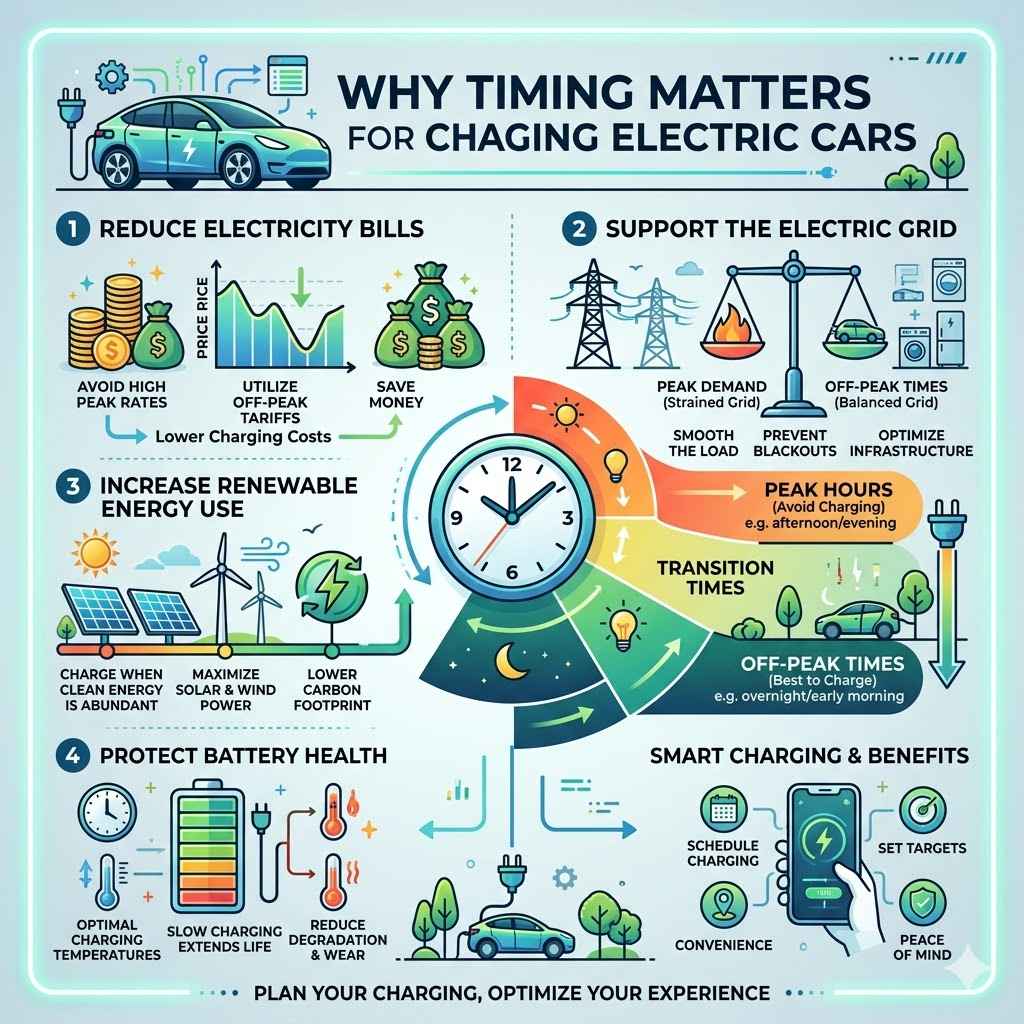
Why Timing Matters For Charging Electric Cars
Charging your electric car is not just about plugging in when the battery is low. The timing can affect your electricity bills, the health of your battery, and even the environment. In many places, electricity prices change throughout the day. Charging during the wrong hours can cost much more than needed. Also, charging at certain times helps reduce stress on the electric grid and supports the use of renewable energy.
Some drivers think charging whenever they get home is best, but this is not always true. For example, charging during peak hours (when most people use electricity) can increase costs and may wear your battery faster. Planning your charging schedule can bring big benefits, both for your wallet and your car.
Understanding Peak And Off-peak Electricity Hours
Most electric companies use time-of-use (TOU) pricing, which means the cost of electricity changes based on the time of day. Here is how it usually works:
- Peak hours: Highest demand, highest price (usually late afternoon/evening)
- Off-peak hours: Lowest demand, lowest price (usually overnight)
- Mid-peak hours: Moderate demand and price (sometimes during the day)
Charging your car during off-peak hours often saves the most money. But the exact hours can vary depending on your electricity provider and location.
Comparing Electricity Costs By Time Of Day
Here’s an example for a typical TOU plan in the US:
| Time of Day | Cost per kWh | Typical Charging Time |
|---|---|---|
| Peak (4pm-9pm) | $0.30 – $0.50 | Most expensive |
| Off-Peak (12am-6am) | $0.10 – $0.18 | Least expensive |
| Mid-Peak (6am-4pm, 9pm-12am) | $0.18 – $0.28 | Moderate cost |
This simple table shows how much you can save by charging your EV when demand is lowest.
Best Times To Charge For Battery Health
Electric car batteries are a major investment, and their health depends partly on your charging habits. Many new EV owners overlook this, focusing only on cost or convenience.
Key Points For Battery Care
- Avoid charging to 100% daily. It’s better to keep your battery between 20% and 80% for regular use.
- Don’t let the battery drop too low. Try not to go under 10%.
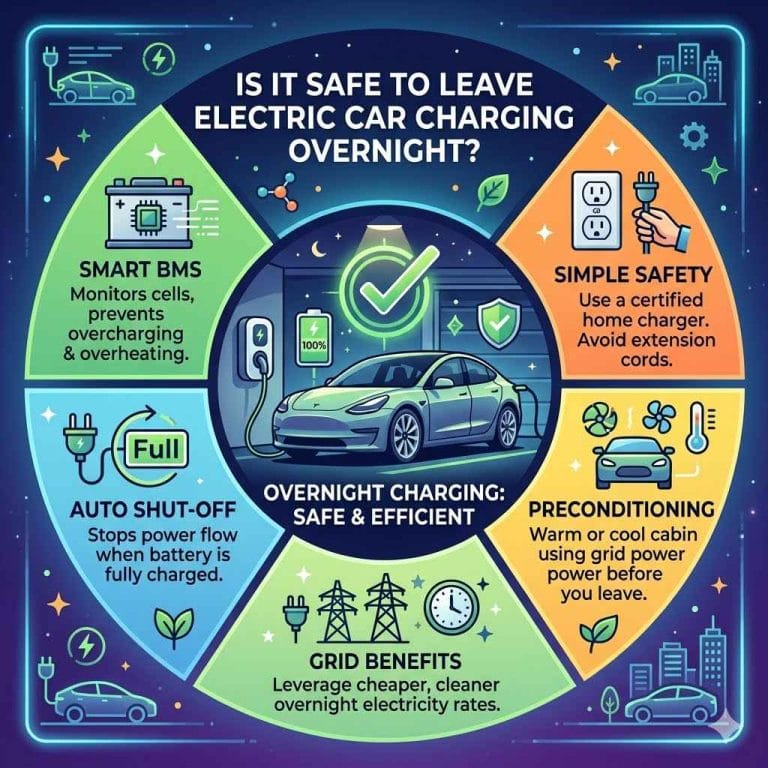
- Night charging is generally better. Temperatures are cooler, and slow charging overnight is gentler on the battery.
- Use slow charging (Level 2) when possible. Fast charging (DC) is convenient but can stress the battery if used often.
Charging overnight during off-peak hours aligns well with these battery-friendly habits.
Example: Charging Schedules And Battery Lifespan
A study from the International Council on Clean Transportation found that charging between 20% and 80% can extend battery life by up to 30%. Fast charging every day, especially at high states of charge, can reduce battery lifespan by 10% or more over a few years.
Saving Money: How Electricity Rates Affect Your Bill
Electricity rates are not the same everywhere. In the United States, the average cost per kilowatt-hour (kWh) is about $0. 16, but it can be as low as $0. 10 at night or over $0. 40 during peak hours in some states.
Real-world Example
If your EV uses 30 kWh to travel 100 miles, here’s how charging cost changes by time:
- Peak hours: 30 kWh × $0.40 = $12.00
- Off-peak hours: 30 kWh × $0.12 = $3.60
That’s over three times more expensive during peak hours! Over a year, this can mean hundreds of dollars saved just by charging at the right time.
How To Find Your Off-peak Hours
Check your electricity bill or the utility company’s website. Look for terms like “time-of-use,” “peak,” or “off-peak. ” Some companies let you choose a special EV rate plan, which can lower costs further.
Environmental Impact: Charging When The Grid Is Cleanest
Most people don’t realize that the electricity mix changes throughout the day. At night, there may be more wind power and less coal or gas. Some regions have more solar power during midday. Charging when more renewable energy is available helps lower your carbon footprint.
Example: California’s Grid
In California, solar power peaks between 10am and 4pm. If you charge during this time and your utility supports “green charging,” your car may run on cleaner energy. In other states, night charging might use more wind power. It’s worth checking your local energy mix if the environment is important to you.
Home Vs. Public Charging: Timing Strategies
Where you charge also affects your best timing. Home charging is the most flexible, while public charging can be more limited.
Home Charging
- Most control over timing
- Can use smart chargers to schedule charging automatically
- Often cheaper due to home rates
Public Charging
- Less control over timing
- Some stations are more expensive, especially at peak times
- Fast chargers are convenient but can be pricey and harder on the battery
Workplace Charging
- Useful if your workplace offers free or cheap charging
- May let you take advantage of daytime solar energy
- Can reduce the need for home charging
How Smart Chargers And Apps Help
Many modern EVs and home chargers support scheduled charging. This means you can set your car to start charging only during off-peak hours, even if you plug in earlier.
Top Features Of Smart Charging Apps
- Automatic scheduling for lowest rates
- Notifications when charging starts or stops
- Data tracking for electricity use and cost
- Integration with solar panels or home batteries
Popular apps include the Tesla app, ChargePoint, and JuiceNet. Using these tools can save you money and make charging stress-free.
Fast Charging: When To Use And When To Avoid
Fast charging (Level 3 or DC fast charging) is useful for long trips or emergencies. However, it’s more expensive and can wear out the battery faster if used daily.
When Fast Charging Makes Sense
- Road trips where you need a quick charge
- Occasional emergencies
- When you cannot charge at home
For daily use, stick to Level 2 home charging during off-peak hours for the best balance of cost and battery care.
How Weather And Seasons Affect The Best Charging Time
Weather and temperature can influence both your battery and your charging routine.
- Cold weather: Batteries lose range and charge slower. Try to charge when the car is warm (after driving).
- Hot weather: High temperatures can stress the battery. Night charging is better, as it’s cooler.
- Winter: Consider charging before the coldest hours to keep the battery warm.
Some EVs let you preheat or precool the battery before charging, which helps in extreme climates.
Charging At Home With Solar Panels
If you have solar panels, your best charging time may be different. Daytime, especially midday, is when panels produce the most energy.
Example: Home Solar + Ev
Charging your EV at 12pm with solar panels can mean your car runs on 100% renewable energy, cutting your costs and emissions. Some smart chargers can sync with your solar output, charging only when extra solar power is available.
Differences Between Ac And Dc Charging
There are two main types of charging for EVs:
- AC charging (Level 1 and 2): Slower, gentler on battery, perfect for overnight charging at home.
- DC fast charging (Level 3): Fast but can heat up the battery and cause more wear if used often.
Whenever possible, use AC charging at home during off-peak hours.
How To Set Up Scheduled Charging
Most EVs and chargers let you set a charging schedule. Here’s a step-by-step example for a typical electric car:
- Plug in your car when you get home.
- Open your car’s app or dashboard menu.
- Go to charging settings.
- Set your preferred charging window (for example, 12am to 6am).
- Save the schedule.
Now your car will wait and start charging only during those hours, even if you plug it in earlier.
Comparison: Manual Vs. Scheduled Charging
| Method | Pros | Cons |
|---|---|---|
| Manual (plug in and charge) | Easy, instant charging | May charge during expensive hours, possible battery stress |
| Scheduled (set charging times) | Cheaper, better for battery, less grid stress | Needs setup, may require compatible charger or app |
Common Mistakes To Avoid
Many new EV owners repeat the same charging mistakes. Being aware of these can save you money and increase your battery’s life.
- Charging to 100% every night: Only do this before long trips.
- Always using fast chargers: Reserve for emergencies or travel.
- Ignoring electricity rates: Check your utility plan and adjust charging times.
- Letting the battery go below 10% often: Try to keep a healthy buffer.
- Not using scheduled charging: Take advantage of smart features to save money.
- Charging during extreme heat or cold: Whenever possible, charge during milder hours.
How Different Ev Models Handle Charging
Not all electric cars are the same. Some have better battery management systems or more advanced charging features.
Examples
- Tesla: Allows detailed scheduling and can limit charging to a set percentage.
- Nissan Leaf: Has basic scheduling and battery care features.
- Chevrolet Bolt: Offers manual and scheduled charging, but not as many smart features as Tesla.
Check your car’s manual or app for the best options.
Charging At Apartment Complexes Or Shared Spaces
If you live in an apartment or use shared charging stations, you may not have as much control. Here’s what to do:
- Ask the property manager about charging hours and rules.
- Try to plug in during off-peak times if allowed.
- Use portable Level 1 chargers if dedicated spots are busy.
- Consider talking to neighbors to create a fair charging schedule.
Charging On Road Trips: Planning Ahead
Long trips require more planning. Apps like PlugShare or A Better Route Planner can help you find charging stations and see their costs.
- Plan stops around fast chargers for quick refueling.
- Try to arrive with 10-20% battery and charge up to 80% for faster sessions.
- Avoid charging to 100% unless necessary, as the last 20% is much slower.
How Grid Demand And “smart Grids” Affect Charging
Electric utilities are starting to use smart grids that can communicate with your charger. Some programs let you earn rewards for charging when demand is low or pausing charging during grid stress.
Example: Demand Response Programs
In some states, you can join programs where the utility manages your EV charging. In return, you get bill credits or lower rates.
Case Study: How An Average Driver Can Save
Let’s say you drive 12,000 miles per year (about 33 miles per day) and your EV uses 30 kWh per 100 miles. That’s 3,600 kWh per year.
If you charge during peak hours at $0. 40 per kWh, your yearly cost is $1,440. If you charge at night at $0. 12 per kWh, it drops to $432. That’s a savings of over $1,000 per year!
How To Monitor And Optimize Your Charging
Tracking your charging habits helps you improve. Many EVs and chargers send reports to your phone or email.
- Look for trends in your charging times and costs.
- Adjust schedules to maximize savings.
- Review battery health every few months.
The Role Of Renewable Energy And Future Trends
As more wind and solar power come online, utilities may encourage charging during times of excess renewable energy. In the future, your car might charge automatically when the grid is greenest, or even send energy back to the grid when needed.
Non-obvious Insights Most Beginners Miss
- Electricity rates can change seasonally. Some utilities adjust their peak/off-peak hours in summer or winter. Always check for updates.
- Some EVs let you precondition the battery before charging. This means warming or cooling the battery for the healthiest and fastest charging, especially useful in extreme weather.
- Public chargers may have different rates for members vs. non-members. Joining a charging network can save money if you use public stations often.
Frequently Asked Questions
What Is The Cheapest Time To Charge An Electric Car?
The cheapest time is usually overnight, between 12am and 6am, when electricity demand is low. Check your local utility’s time-of-use plan for exact hours, as they can vary by location.
Is It Bad To Charge My Electric Car Every Night?
Charging every night is not bad if you don’t always fill to 100%. It’s best to keep your battery between 20% and 80% for daily use. Only charge to 100% before long trips.
Should I Use Fast Chargers For Everyday Charging?
No, using fast chargers daily can reduce battery life. Use Level 2 home charging for routine charging and save fast charging for travel or emergencies.
How Do I Set Up Scheduled Charging?
Most EVs and home chargers have a scheduled charging feature. Use your car’s app or dashboard to pick the hours you want charging to start and stop, usually overnight during off-peak times.
Can I Charge My Electric Car With Solar Panels?
Yes, charging with solar panels is possible and can be very cost-effective. It’s best to charge during the day when solar output is highest. Some smart chargers can match your EV charging to your solar production.
For more detailed information about electric vehicle charging, you can visit the official U.S. Department of Energy resource: U.S. Department of Energy.
Charging your electric car at the right time is about more than saving money — it’s about protecting your battery, supporting a cleaner grid, and making your EV ownership smoother. By following the tips and examples in this guide, you’ll get the most from your vehicle and stay ahead as the world goes electric.
Products related to this article
Sponsored / affiliate links. As an Amazon Associate I earn from qualifying purchases. I may earn additional commission from eligible campaigns.
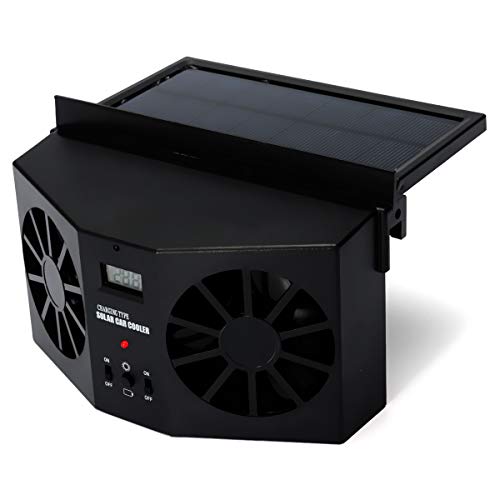 Solar Powered Car Window Fan - Universal Solar Car Front/Rear Window Exhaust Fan Car Window Cooler Fan Air Ventilator Exhaust Radiator, Eliminate Smell (Black)
 4G GPS Tracker Car Anti-Theft Long Battery Life 20000mAh Real Time GPS Tracking Device Magnet No Geographic Restriction Car Tracker with Alerts, Geo Fence, History Playback TK905C