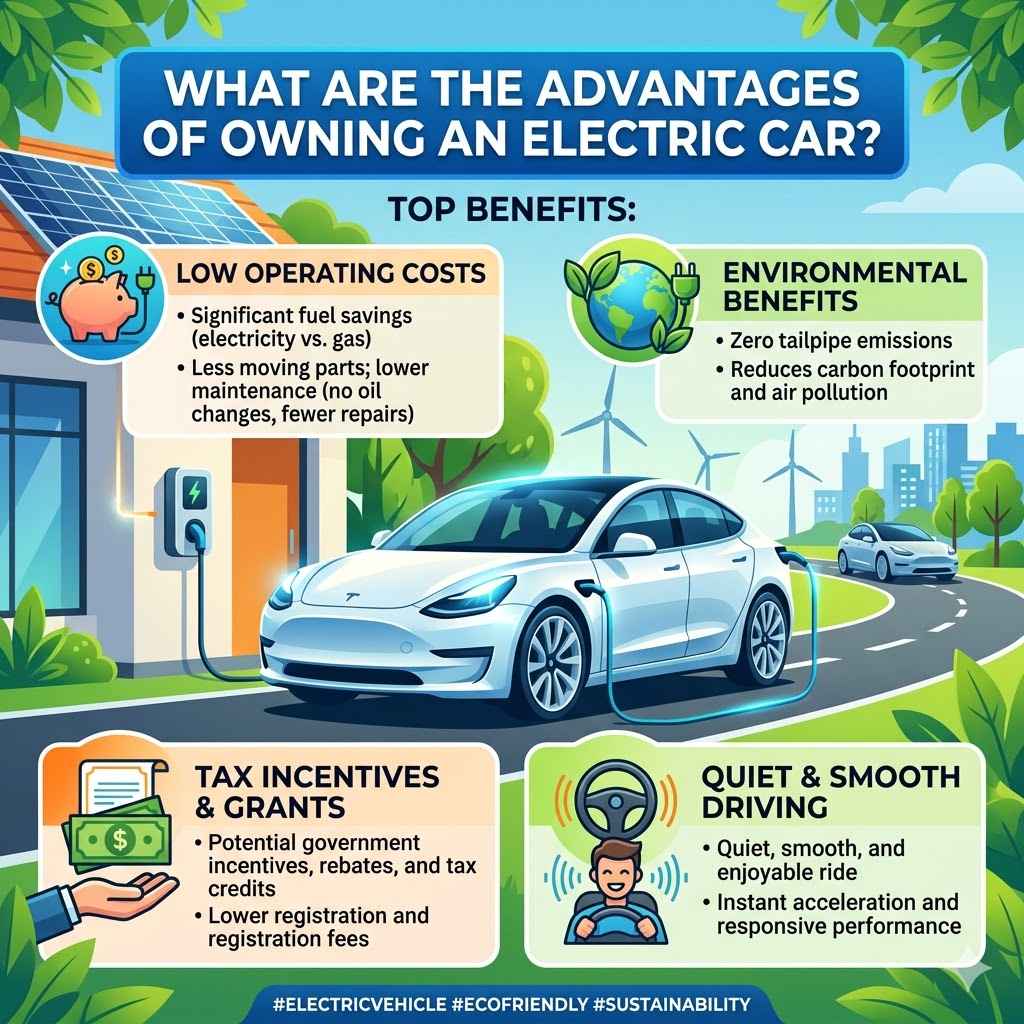
What are the Advantages of Owning an Electric Car: Top Benefits
Owning a car is a big decision, and today, more people are choosing electric cars instead of traditional gasoline vehicles. Electric vehicles (EVs) are not just a trend—they are changing the way we think about transportation, energy, and the environment.
But what makes electric cars so appealing? Why are governments, businesses, and drivers worldwide supporting this shift? Let’s explore the real advantages of owning an electric car, and why this choice might be smarter than you think.
Lower Running Costs
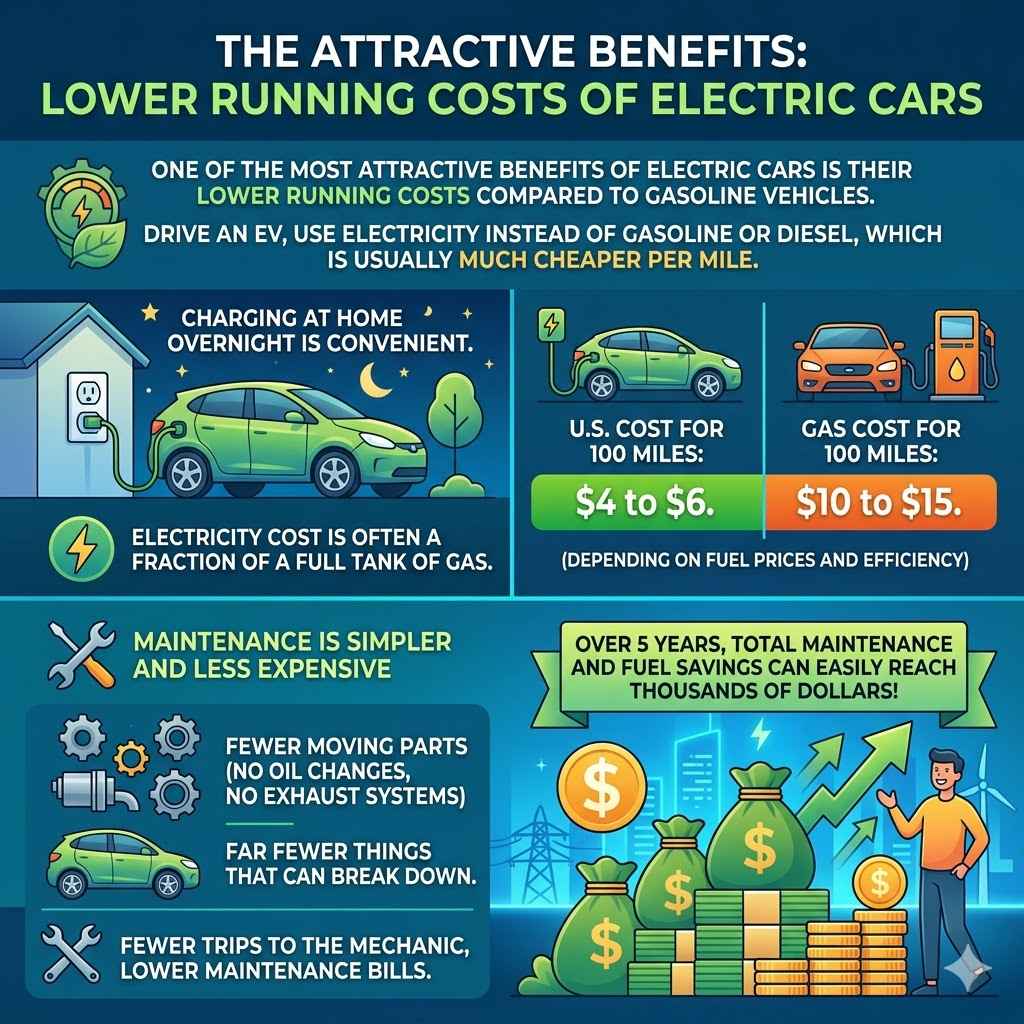
One of the most attractive benefits of electric cars is their lower running costs compared to gasoline vehicles. When you drive an EV, you use electricity instead of gasoline or diesel, which is usually much cheaper per mile.
Most electric cars can be charged at home overnight, and the cost of electricity is often a fraction of what you’d pay for a full tank of gas. For example, in the United States, charging an electric car for 100 miles might cost $4 to $6, while driving the same distance in a gasoline car could cost $10 to $15, depending on fuel prices and efficiency.
Maintenance is also simpler and less expensive. Electric cars have fewer moving parts—no oil changes, no exhaust systems, and far fewer things that can break down. This means fewer trips to the mechanic and lower maintenance bills. Over five years, the total maintenance and fuel savings can easily reach thousands of dollars.
Environmental Benefits
Electric vehicles are often called “green cars” for a reason. They offer several important environmental advantages over traditional vehicles.
First, EVs produce zero tailpipe emissions. This means when you drive, you’re not releasing harmful gases like carbon dioxide (CO2), nitrogen oxides, or particulate matter into the air. Air pollution in cities is a major health risk, and replacing gas cars with electric ones can make a real difference.
Second, even though producing electricity can create emissions (depending on the source), electric cars are still cleaner overall. As more electricity comes from renewable sources like solar and wind, the environmental benefits of EVs increase.
Finally, electric cars are quieter. Noise pollution is a real problem, especially in crowded cities. EVs run almost silently, making streets more peaceful for everyone.
Government Incentives And Perks
Many governments want more people to drive electric cars, so they offer special incentives and perks. These can make buying and owning an EV even more appealing.
Some common benefits include:
- Purchase rebates – Many countries or states offer cash rebates or tax credits that reduce the purchase price of a new electric car. For example, in the U.S., the federal government offers up to $7,500 in tax credits for eligible EVs.
- Reduced taxes and fees – Some regions lower annual car taxes or registration fees for electric vehicles.
- Access to carpool lanes – In many places, EV drivers can use high-occupancy vehicle (HOV) lanes, even when driving alone, saving time during busy commutes.
- Free or discounted parking – Cities sometimes offer free or cheaper parking for electric cars.
- Home charging grants – Some governments help pay for home charging stations, making it easier and cheaper to charge at home.
It’s important to check local rules because incentives can change and may depend on the car model or your location.
Convenience Of Home Charging
Imagine never having to visit a gas station again. With an electric car, you can charge at home, often overnight. Just plug in your car before bed, and you’ll wake up to a full battery.
This is a huge time-saver. You don’t have to stand in line at a busy station or drive out of your way to fill up. If you install a Level 2 home charger, you can add 20 to 30 miles of range per hour, which is more than enough for most daily driving.
For people with solar panels, charging an EV with sunlight is even possible. This means you’re using clean energy from your own roof, making driving almost free and even better for the planet.
Improved Driving Experience
Many new EV owners are surprised by how fun and smooth these cars are to drive. Electric motors deliver instant torque, which means quick acceleration without waiting for the engine to “rev up.” You press the pedal, and the car moves—fast.
EVs are also very quiet, which creates a calm cabin. With the heavy battery located under the floor, most electric cars have a low center of gravity, which improves handling and stability. Corners feel more secure, and the ride is smoother.
There’s also less vibration because there are fewer moving parts. Once you experience electric driving, traditional cars can feel rough and noisy by comparison.
Less Frequent Maintenance
Traditional cars have complex engines, transmissions, and exhaust systems. These parts need regular checks, oil changes, and repairs. Electric cars are much simpler:
- No oil changes
- No transmission fluid
- No spark plugs or timing belts
- Fewer filters to replace
The main things you’ll need to check are the tires, brakes, and battery. In fact, EVs use regenerative braking, which helps slow the car and recharge the battery at the same time. This reduces wear on brake pads, so they last longer.
Most experts agree that electric cars spend less time and money in the shop. Over the life of the car, this can add up to thousands of dollars saved.
Strong Resale Value And Future-proofing
While electric cars used to lose value quickly, the market is changing. Demand for used EVs is growing, especially as battery technology improves and more people want to switch.
Resale values for popular models like the Tesla Model 3 or Nissan Leaf are now strong, and as governments set bans on new gasoline cars (for example, the UK plans to stop new petrol and diesel car sales by 2030), electric cars will remain in demand.
Buying an electric car now means you’re ready for the future. You won’t need to worry about stricter emissions rules or rising gasoline costs. Also, as more charging stations are built, owning an EV becomes even easier.
Better Performance In Urban Driving
City driving is where electric cars shine. They are perfect for stop-and-go traffic, thanks to:
- Instant acceleration from electric motors
- Regenerative braking, which works best at low speeds
- No need to idle—EVs use no energy when stopped
Many cities are introducing “low emission zones” where only clean vehicles can enter. With an electric car, you can drive freely in these areas, avoiding fines or restrictions.
EVs are also easier to park because many models are compact, and the lack of a bulky engine allows for more flexible designs.
Quiet, Comfortable Rides
Noise can make driving stressful, especially on long trips or busy streets. Electric cars are almost silent, inside and out. You’ll notice:
- Less engine noise
- Fewer vibrations
- Calmer cabin atmosphere
This makes conversations easier, music sounds better, and you arrive at your destination less tired. For city drivers, the lack of engine noise also means less disturbance to pedestrians and neighbors.
Access To New Technology
Electric cars are usually packed with the latest technology. Because they are built on newer platforms, manufacturers include advanced features such as:
- Large touchscreens for controls and navigation
- Over-the-air software updates (like a smartphone)
- Advanced driver assistance systems (ADAS) for safer driving
- Smartphone integration for checking battery status or pre-heating the car
Some electric cars can even drive themselves in certain conditions, park automatically, or suggest the nearest charging station. This “future-ready” approach makes daily driving more convenient and enjoyable.
Lower Carbon Footprint
Switching to an electric car is one of the best ways to reduce your personal carbon footprint. Even if your local electricity comes from a mix of sources, EVs are more efficient than gas cars. As more wind, solar, and hydroelectric power is added to the grid, the environmental impact drops even further.
For example, a typical gasoline car emits about 4. 6 metric tons of CO2 each year. An electric car charged from average U. S. electricity emits about half that amount—and much less if charged from renewable energy.
If you want to make a real difference for the climate, driving electric is a powerful step.
Increasing Range And Charging Speed
Early electric cars had short ranges, but things have changed fast. Today’s EVs can often travel 200 to 400 miles on a single charge. Some high-end models, like the Tesla Model S, can reach over 400 miles.
Charging is also getting much faster. With high-speed DC fast chargers, you can add 100–200 miles of range in 30 minutes or less. This makes long road trips possible, and public charging stations are growing every year.
Here’s a look at how electric car ranges have improved:
| Model Year | Typical Range (miles) | Fast Charging Time (20-80%) |
|---|---|---|
| 2015 | 80–120 | 40–60 min |
| 2020 | 150–250 | 30–40 min |
| 2024 | 200–400+ | 15–30 min |
Energy Efficiency
Electric cars are much more energy efficient than internal combustion engine (ICE) vehicles. This means they turn more of the energy from their fuel (electricity) into motion.
A typical gasoline car uses only about 20% of the energy in the fuel to move the wheels—the rest is lost as heat and noise. Electric cars convert about 60%–80% of electrical energy into motion. This means less waste and lower costs.
Here’s a simple comparison:
| Vehicle Type | Energy Efficiency (%) | Energy Lost as Heat/Noise (%) |
|---|---|---|
| Gasoline Car | 20 | 80 |
| Electric Car | 60–80 | 20–40 |
Supporting Renewable Energy
Owning an electric car can support the shift to renewable energy. Many utilities now offer “green charging” options, where your electricity comes from wind or solar. Some EV owners install solar panels and use them to charge their cars directly.
This creates a “virtuous circle”—the more people use clean energy, the more is built, making it cheaper for everyone. By driving electric, you help speed up the end of fossil fuels.
Lower Total Cost Of Ownership
While some electric cars still cost more to buy, the total cost of ownership can be lower after a few years, thanks to:
- Lower fuel costs
- Reduced maintenance
- Tax credits and rebates
- Higher resale value
If you keep your car for 5–8 years, you may spend less overall compared to a gasoline car. Some studies show that drivers save $6,000–$10,000 over the life of the car.
Better For Public Health
Reducing air pollution is not just good for the climate—it protects people’s health. Gasoline and diesel engines create smog, particulates, and harmful chemicals that cause asthma, heart disease, and other problems.
By driving an electric car, you help clean the air in your city or neighborhood. Studies show that switching to EVs can lead to fewer hospital visits and better quality of life, especially for children and older adults.
Growing Charging Infrastructure
Charging used to be a worry for electric car owners, but now, public charging stations are everywhere—and growing fast. In 2012, there were about 12,000 public charging stations in the US. By 2024, there are over 145,000.
With more workplaces, shopping centers, and parking lots offering charging, it’s easier than ever to keep your car powered up, even if you can’t charge at home.
There are also mobile apps to help you find the nearest charger, check if it’s available, and even pay for charging. Many new EVs include navigation systems that plan routes with charging stops included.
Less Dependency On Oil
Electric cars help reduce dependency on imported oil. This can make countries more secure, keep energy prices stable, and protect drivers from sudden gasoline price spikes.
Electricity can be made from many sources, including solar, wind, hydro, and nuclear. This flexibility helps protect against supply shocks and price swings in world oil markets.
Instant Heating And Cooling
Electric cars heat and cool the cabin differently than gas cars. They can warm up quickly in winter or cool down fast in summer, because there’s no need to wait for a big engine to warm up. Many EVs let you start heating or cooling remotely using an app, so your car is comfortable before you even get in.
This is a small detail, but for people who live in very hot or cold places, it makes a big difference in daily life.
Community And Brand Image
Driving an electric car is seen by many as a positive choice. It shows you care about the environment and technology. Many EV owners find a sense of community—there are clubs, online groups, and events where drivers share tips and experiences.
For businesses, using electric vehicles can improve their public image, attract eco-conscious customers, and even win special contracts from governments or companies that require “green fleets. ”
Safer Design
Electric cars are designed for safety. With no engine in front, many EVs have a “crumple zone” that absorbs impacts better. The heavy battery under the floor can lower the risk of rollovers.
EVs must pass the same crash tests as gas cars, and many score top marks for safety. Some also include advanced driver aids and emergency braking as standard.
Two Non-obvious Insights
- Battery as a Backup Power Source: Some electric cars can act as a backup power source for your home during blackouts. This is called “vehicle-to-home” (V2H) or “vehicle-to-grid” (V2G). For example, the Nissan Leaf and Ford F-150 Lightning can power a house for a few days. This is a unique benefit that gasoline cars cannot offer.
- Software Upgrades That Add Features: Many EVs can improve over time with software updates. This means your car can gain new abilities, better driving range, or smarter navigation without visiting a mechanic. For example, Tesla and other brands often add new features with “over-the-air” updates, keeping your car up to date for years.
Common Misunderstandings
Some people worry that electric cars are only for city driving, or that the battery will wear out quickly. In reality, most modern EV batteries are designed to last 8–15 years, and many can go 200,000 miles or more. Charging networks now cover most highways, and range continues to improve.
Another common myth is that EVs are slow or boring. In fact, many electric cars are quicker than gas cars, and even basic models can feel sporty and fun.
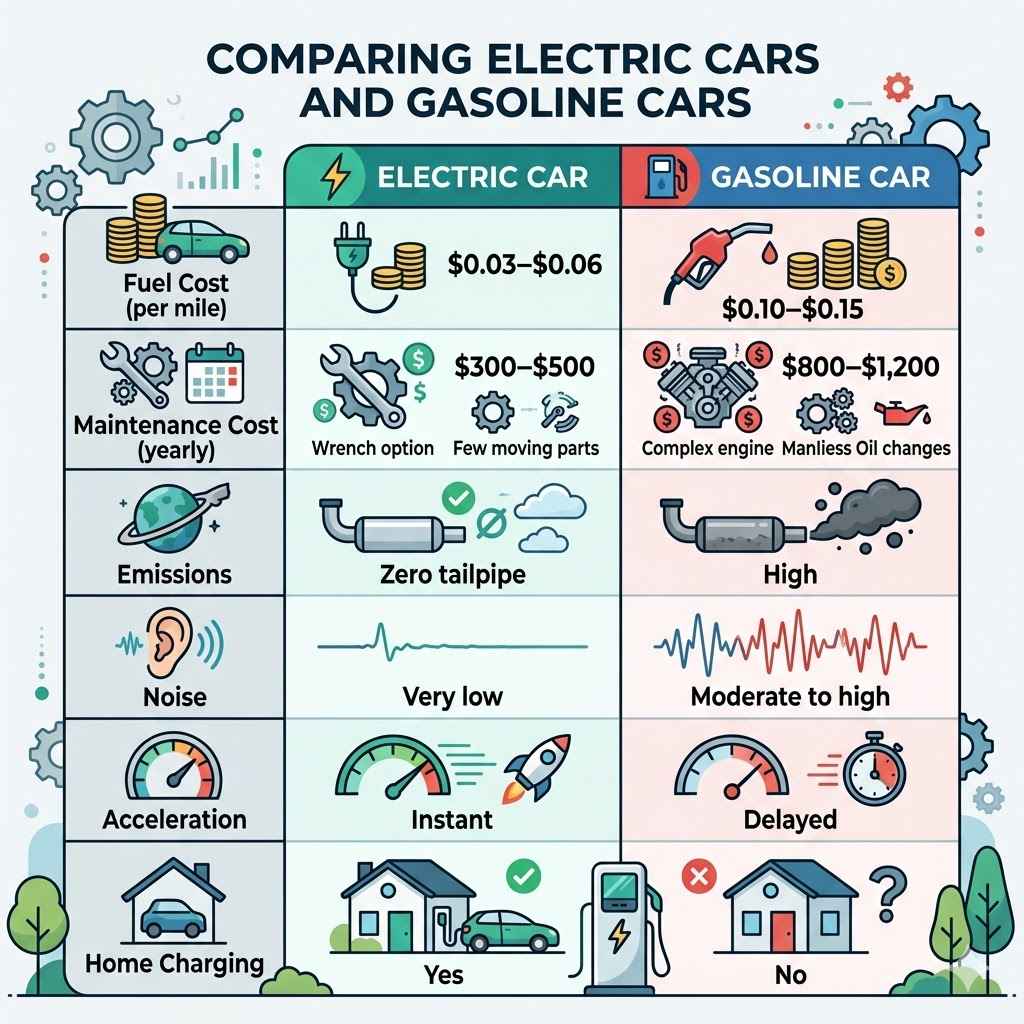
Comparing Electric Cars And Gasoline Cars
Here’s a quick side-by-side look at some key factors:
| Feature | Electric Car | Gasoline Car |
|---|---|---|
| Fuel Cost (per mile) | $0.03–$0.06 | $0.10–$0.15 |
| Maintenance Cost (yearly) | $300–$500 | $800–$1,200 |
| Emissions | Zero tailpipe | High |
| Noise | Very low | Moderate to high |
| Acceleration | Instant | Delayed |
| Home Charging | Yes | No |
Frequently Asked Questions
How Long Does It Take To Charge An Electric Car?
Charging time depends on the charger type and battery size. Home charging (Level 2) can take 4–12 hours for a full charge. Fast chargers can add 100–200 miles in 20–40 minutes. Most people charge overnight at home, so the car is ready in the morning.
Do Electric Cars Work Well In Cold Or Hot Weather?
Extreme temperatures can affect battery performance, but modern EVs have systems to manage heat and cold. Range may drop slightly in winter, but pre-conditioning (warming the car while plugged in) helps a lot. In hot climates, battery cooling systems protect the car.
Is It Expensive To Replace An Electric Car Battery?
Battery prices are falling quickly. In 2024, a replacement battery can cost $5,000–$10,000, but most batteries last 8–15 years. Some manufacturers offer warranties up to 8 years or 100,000 miles. Battery recycling and reuse are also improving.
Where Can I Find Public Charging Stations?
Public charging stations are found at shopping centers, parking lots, gas stations, and along highways. Apps like PlugShare or Google Maps help you locate chargers. Networks like Tesla Supercharger, ChargePoint, and Electrify America have thousands of locations.
Are Electric Cars Really Better For The Environment?
Yes. Even when charged from “average” electricity, EVs emit less CO2 than gasoline cars. As more renewable energy is added, the environmental benefit grows. For more details, see the Electric car Wikipedia page.
Switching to an electric car is not just about saving money or following a trend. It’s a choice that benefits your wallet, the planet, and your driving experience. As technology advances and more people make the switch, the advantages of owning an electric car will only grow stronger.
If you’re thinking about your next car, now is the perfect time to consider going electric.