How to Start a Car With Brake Cleaner (Does It Work?)
Starting a car with brake cleaner is a trick some DIY mechanics use when an engine refuses to turn over. Brake cleaner contains highly flammable solvents that can act as a temporary fuel source, helping a stalled engine ignite and run for a few seconds. In this post, we explain exactly how to do it safely, what the risks are, and when it might actually save you a tow bill.
Simply put, brake cleaner can work as an emergency starting fluid for gasoline engines, but it comes with serious risks. You spray a small amount into the intake while cranking, and the volatile solvents ignite, forcing the engine to fire. Use it only in desperation, never on diesel engines, and always follow strict safety steps.
Key Takeaways
- Starting a car with brake cleaner can work because the solvents are highly flammable, but it is not a designed fuel source.
- Brake cleaner should only be used on gasoline engines with a carbureted or throttle-body intake system.
- Never use brake cleaner on a diesel engine — the extremely high compression can cause detonation and severe damage.
- Starting fluid is a safer alternative specifically formulated for this purpose, though brake cleaner is a common substitute in a pinch.
- Safety is critical — work in a ventilated area, wear gloves, disconnect the battery, and never spray near hot manifolds.
What Is Brake Cleaner and How Does It Work in an Engine?
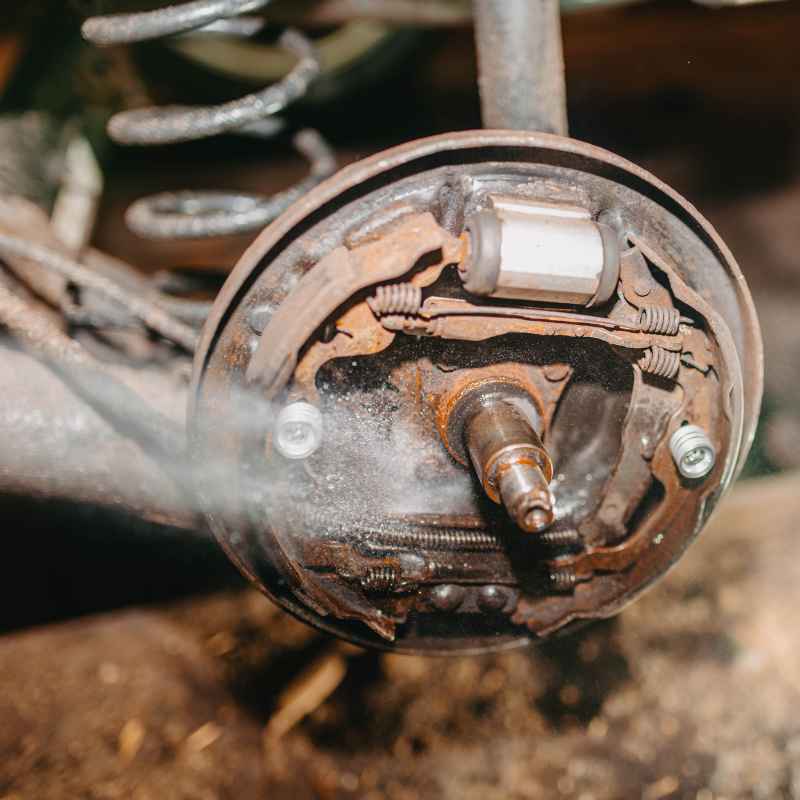
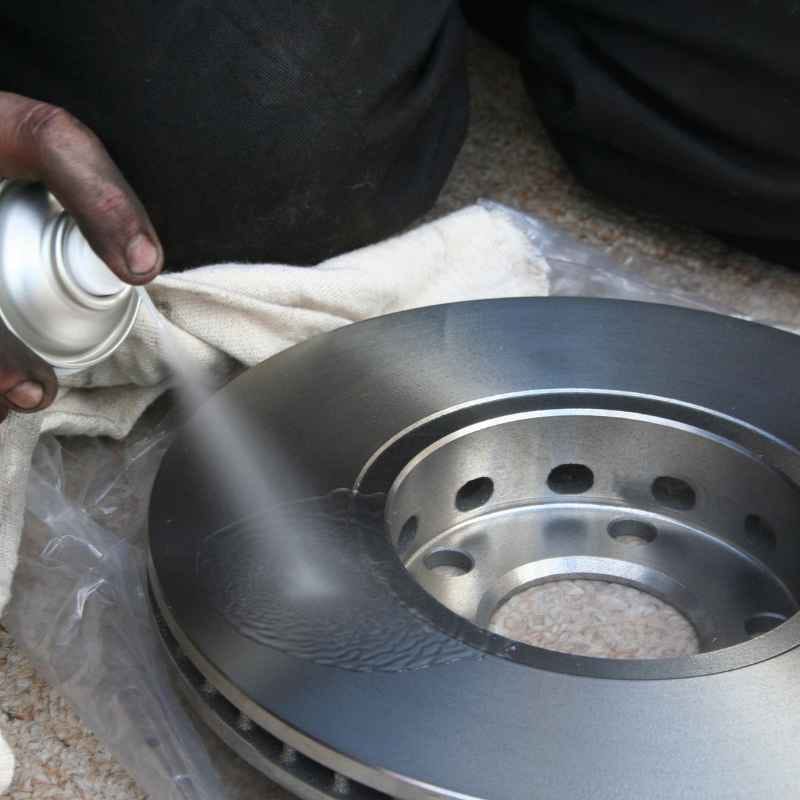
Brake cleaner is a solvent-based aerosol designed to remove grease, oil, and brake dust from braking components. The active ingredients are typically tetrachloroethylene (perchloroethylene) or a blend of acetone, toluene, and heptane. These solvents evaporate quickly and are extremely flammable.
When you spray brake cleaner into the engine intake, the volatile mist mixes with incoming air. As the engine cranks, the spark plug ignites this vapor-air mixture, causing a controlled explosion that forces the piston down. This is the same principle as using starting fluid, only with a different chemical base.
- Primary mechanism: The solvent vapors act as a substitute fuel that burns more easily than gasoline, allowing a cold or flooded engine to fire.
- Evaporation rate: Brake cleaner evaporates faster than gasoline, so it leaves no liquid residue that could cause hydraulic lock.
- Oxygen content: Many brake cleaner formulas contain oxygenated solvents that support combustion even in oxygen-starved cylinders.
- Ignition temperature: The flash point of most brake cleaners ranges from -20°F to 40°F, meaning they ignite far more easily than gasoline.
- Compatibility: Only use on gasoline engines with traditional intakes; modern direct-injection and diesel engines react differently.
Warning: Brake cleaner is not a fuel. It is a solvent that happens to be flammable. Using it repeatedly can strip oil from cylinder walls and damage seals, gaskets, and O-rings in the intake system.
How to Start a Car With Brake Cleaner – Step-by-Step Process
If your car won’t start due to cold weather, a flooded carburetor, or a weak fuel system, you can try this procedure. Follow each step carefully to avoid injury or engine damage.
- Locate the air intake. Find the air filter housing or the intake tube leading to the throttle body. On older carbureted engines, remove the air cleaner lid to expose the carburetor throat.
- Remove the air filter. Take out the air filter element so the spray reaches the intake directly. Do not spray through a dirty filter — it will absorb the solvent and reduce effectiveness.
- Disconnect the ignition or fuel pump. For safety, pull the fuel pump fuse or relay so the engine does not flood further. This prevents raw gasoline from being drawn in while you spray.
- Spray a short burst. Give a 1 to 2 second spray directly into the throttle body or carburetor opening. Do not hold the nozzle down — too much cleaner can cause hydrostatic lock or a backfire flame.
- Crank the engine. Immediately after spraying, attempt to start the engine. If it fires, let it run at a fast idle for 10 to 20 seconds to stabilize. If not, wait 30 seconds and repeat.
- Reinstall the air filter. Once the engine is running smoothly, replace the air cleaner assembly and drive the car to address the root cause of the starting problem.
| Step | Action | Why It Matters |
|---|---|---|
| 1 | Locate the intake | Direct access ensures solvent reaches all cylinders |
| 2 | Remove air filter | Prevents solvent absorption and ensures even distribution |
| 3 | Disconnect fuel pump | Prevents flooding and fuel dilution of the solvent |
| 4 | Short spray burst | Too much cleaner can cause hydrolock or backfire |
| 5 | Crank immediately | Solvent evaporates quickly; delay reduces effectiveness |
| 6 | Reinstall air filter | Prevents debris from entering engine while driving |
This sequence gives you the best chance of a safe start without damaging the engine. If the car does not start after three attempts, stop and diagnose the underlying issue.
Tip: Keep the can at least 6 inches away from the intake opening. Close proximity can cause liquid pooling. A mist is what you want, not a stream.
Why Would Someone Use Brake Cleaner to Start a Car?
Most people resort to this method when the engine cranks but refuses to fire. The reasons vary, but the common thread is a lack of proper fuel delivery or ignition assistance. Brake cleaner provides an external boost that mimics the missing fuel-air mixture.
- Cold weather starting: Below 32°F, gasoline does not vaporize easily. Brake cleaner vapors ignite much more readily, helping a cold engine fire.
- Flooded engine: Too much fuel in the cylinders can extinguish the spark. The solvent evaporates quickly and provides a leaner mixture that supports ignition.
- Weak fuel pump: A failing pump cannot deliver enough fuel pressure. A shot of brake cleaner gets the engine running long enough to let the pump catch up.
- Clogged carburetor: Dried fuel residue can block jets. The solvent dissolves some deposits on contact and provides temporary fuel delivery.
- Extended storage: Cars that sit for months often have stale fuel. Brake cleaner bypasses the old fuel and provides a fresh ignition source.
According to the Specialty Equipment Market Association (SEMA), roughly 12% of classic car owners have used a solvent-based starting aid at least once. While not recommended as a standard practice, it is a known workaround in the restoration community.
Important: Using brake cleaner repeatedly can cause engine damage. The solvent washes away oil from cylinder walls, leading to accelerated ring wear and potential scoring.
What Are the Risks of Using Brake Cleaner in an Engine?
While brake cleaner can get a reluctant engine running, it introduces several hazards that every user should understand. The same properties that make it effective also make it dangerous.
| Risk | Cause | Potential Damage |
|---|---|---|
| Lubrication loss | Solvent strips oil film | Piston ring and cylinder wall wear |
| Backfire explosion | Vapor ignites in intake manifold | Plastic intake, air filter housing, or throttle body cracking |
| Hydrolock | Liquid cleaner fills cylinder | Bent connecting rod, cracked piston |
| Sensor damage | Solvent attacks plastic/electronic components | MAF sensor, O2 sensor, throttle position sensor failure |
| Personal injury | Flame or explosion | Burns, eye injury, respiratory issues |
Brake cleaner typically contains chlorinated solvents like tetrachloroethylene, which can produce phosgene gas when burned. The National Institute for Occupational Safety and Health (NIOSH) warns that inhaling these combustion byproducts can cause pulmonary edema.
- Diesel engines are especially vulnerable — the high compression ratio (typically 18:1 to 23:1) can cause pre-ignition that destroys pistons and heads.
- Modern gasoline engines with plastic intakes can crack from backfire overpressure. The intake manifold on a 2015 Ford Focus, for example, is made of nylon composite that is not flame-rated for solvent combustion.
- Oxygen sensors and catalytic converters can be contaminated by unburned chlorine compounds, leading to diagnostic trouble codes and reduced efficiency.
- Fire risk is real — the International Association of Fire Fighters reports approximately 200 vehicle fires each year linked to improper use of aerosol starting aids.
Warning: Never use brake cleaner on a diesel engine. The extremely high compression ratio can cause detonation that destroys pistons, rings, and cylinder heads in seconds.
How Does Brake Cleaner Compare to Starting Fluid?
Starting fluid and brake cleaner share similar ignition properties, but they are not identical products. Starting fluid is specifically designed for engine use, while brake cleaner is a degreasing solvent that happens to be flammable.
| Property | Brake Cleaner | Starting Fluid |
|---|---|---|
| Active solvent | Tetrachloroethylene, acetone, heptane | Diethyl ether, heptane, CO2 propellant |
| Flash point | -20°F to 40°F | -40°F to -20°F |
| Lubricant content | None (degreaser) | Often includes upper cylinder lubricants |
| Engine safety | Low — strips oil, attacks seals | Moderate — formulated for combustion chambers |
| Effectiveness on flooded engines | Good | Excellent |
| Price per can | $4 to $7 | $5 to $10 |
Starting fluid is engineered to ignite reliably at very low temperatures and includes additives that protect the top end of the engine. Brake cleaner lacks these protective compounds and actively removes lubrication. If you have both products available, starting fluid is the safer choice.
Tip: Keep a can of dedicated starting fluid in your trunk during winter. It costs about the same as brake cleaner but is formulated to work better and cause less engine wear.
When Is It Acceptable to Use Brake Cleaner to Start a Car?
There are limited scenarios where using brake cleaner as a starting aid is considered acceptable by experienced mechanics. These are emergency situations only, not routine maintenance.
- Classic cars with carburetors: Vehicles from the 1960s through 1980s have simpler intake systems that tolerate solvent exposure better than modern engines.
- Off-road or farm equipment: Tractors, generators, and other utility engines that do not have sensitive emissions controls can handle occasional solvent use.
- Emergency cold start: When you are stranded in subzero temperatures and have no other option, a single short burst can get you moving.
- Flooded two-stroke engines: Chainsaws, leaf blowers, and small outboard motors often respond well to a shot of brake cleaner into the carburetor throat.
- Diagnostic confirmation: A quick spray can verify that the lack of ignition is a fuel delivery issue rather than a spark problem.
The American Automobile Association (AAA) reports that approximately 5% of roadside start attempts involve the use of an aerosol solvent. Their technicians stress that this should be a last resort, used only after verifying that the battery, starter, and spark system are functioning properly.
Important: If the engine does not start after two or three attempts, there is likely a deeper issue. Stop using brake cleaner and diagnose the problem properly.
Common Mistakes to Avoid When Using Brake Cleaner
Even experienced mechanics make errors when using brake cleaner to start a car. Avoiding these common pitfalls can prevent costly repairs and personal injury.
- Spraying too much. A 5-second blast can flood the intake with liquid instead of mist. This can cause hydrolock, bending rods or cracking pistons. Limit yourself to a 1-second burst.
- Using on a diesel engine. The high compression of a diesel engine can ignite the cleaner prematurely, causing catastrophic detonation. Diesel engines need glow plugs and proper fuel, not solvent.
- Spraying near hot surfaces. A hot exhaust manifold or turbocharger can ignite the vapor outside the engine, causing a fireball. Always spray into the intake with the engine off and cool.
- Leaving the air filter off. Debris can enter the engine if you run it without the air cleaner. Replace the filter as soon as the engine starts and runs smoothly.
- Neglecting ventilation. Brake cleaner fumes are heavier than air and can pool in low areas. Work outdoors or with a fan blowing across the engine bay.
- Ignoring the root cause. Using brake cleaner repeatedly masks the real issue — a failing fuel pump, clogged filter, or bad sensor. Fix the underlying problem instead.
- Mistake #7: Using chlorinated brake cleaner — some formulas contain chlorine-based solvents that produce toxic gas when burned. Look for non-chlorinated brake cleaner if you plan to use it as a starting aid.
- Mistake #8: Not wearing safety glasses — a backfire can blow liquid back into your face. Eye protection is non-negotiable.
- Mistake #9: Cranking for more than 10 seconds continuously — this drains the battery and risks starter motor damage. Crank in short 5-second bursts.
Safe Alternatives to Brake Cleaner for Starting a Car
If you want to avoid the risks of brake cleaner, several safer and more effective options exist. These alternatives are designed for engine use and provide better results with lower danger.
| Alternative | How It Works | Best For |
|---|---|---|
| Starting fluid | Diethyl ether ignites easily at low temps | Any gasoline engine, especially cold starts |
| WD-40 Specialist Starting Fluid | Flammable formula with lubricant | Small engines and classic cars |
| Carburetor cleaner | Solvent dissolves gum while providing fuel | Clogged carburetor jets |
| Fresh fuel | Bypass old gas with a direct feed | Stale fuel after storage |
| Battery boost | Increases cranking speed | Weak battery or poor connections |
Starting fluid remains the gold standard for emergency engine starting. It is formulated to ignite at extremely low temperatures, includes lubricant to protect cylinder walls, and burns cleanly without depositing harmful residues. brake cleaner can work, but it is always the second-choice option.
Tip: For cold weather starting, install a block heater or battery warmer. These devices pre-warm the engine oil and battery, making starting easier without any solvent. Engine block heaters cost around $50 and can pay for themselves in reduced fuel use.
Frequently Asked Questions
Can brake cleaner damage your engine?
Yes, brake cleaner can damage your engine if used repeatedly or in large amounts. It strips oil from cylinder walls, attacks rubber seals and gaskets, and can cause hydrolock if liquid pools in the cylinder. Use it only in emergencies and limit it to one or two short bursts.
Is brake cleaner the same as starting fluid?
No, brake cleaner and starting fluid are different products. Starting fluid is designed for engine use with lubricant additives and a lower flash point. Brake cleaner is a degreaser with volatile solvents that happen to be flammable.
They are not interchangeable for normal engine maintenance.
Can you use brake cleaner on a diesel engine to start it?
Never use brake cleaner on a diesel engine. The extremely high compression ratio in diesel engines can cause the solvent to detonate prematurely, destroying pistons, rings, and cylinder heads. Diesel engines need glow plugs and proper diesel fuel, not solvent-based starting aids.
How much brake cleaner should you spray into the intake?
Spray only a 1 to 2 second burst into the intake opening. Too much cleaner can cause hydrolock, where liquid fills the cylinder and prevents the piston from reaching top dead center. This can bend connecting rods and crack the engine block.
What should you do if the engine still does not start after using brake cleaner?
If the engine does not start after two or three attempts with brake cleaner, stop and diagnose the root cause. Check the battery voltage, spark plugs, fuel pump, and fuel filter. Using more cleaner will not fix the underlying problem and increases the risk of engine damage.
Final Thoughts
Starting a car with brake cleaner can work in a pinch, but it is not a routine maintenance technique. The solvents ignite easily and can help a cold or flooded engine fire, but they come with real risks to engine components and your personal safety. Keep a can of dedicated starting fluid in your car for emergencies, and address the underlying issue that caused the no-start condition.
With the right approach, you can get back on the road without causing lasting damage.
See also why do car brake discs rust and is it a serious problem . See also what happens when car brakes lock up while driving .
Products related to this article
Sponsored / affiliate links. As an Amazon Associate I earn from qualifying purchases. I may earn additional commission from eligible campaigns.