What Are the Symptoms of a Bad Car Thermostat?
A bad car thermostat usually shows one of two patterns: stuck closed means fast overheating and a hard upper radiator hose, while stuck open means slow warm-up, weak cabin heat, and a low gauge; one symptom alone is not enough. Miss the pattern, and you can replace the wrong part or keep driving with an engine that runs too hot. This guide shows how to spot thermostat failure, separate stuck-open from stuck-closed, and rule out common cooling-system mimics before you buy parts.
What a bad thermostat does
The thermostat is a temperature-controlled valve in the cooling system. It stays closed when the engine is cold, then opens near its rated temperature so coolant can move through the radiator. Many engines warm up in roughly 165 to 195 degrees, and many newer cars run at 195 degrees for better gas mileage.
When it fails, the valve may stick open, stick closed, or move slowly. A stuck-closed thermostat blocks coolant flow and can make the engine overheat quickly after startup. A stuck-open thermostat lets coolant circulate too early, so the engine may run too cold and the heater may stay weak.
Stuck open vs. stuck closed
Stuck closed is the higher-risk pattern. Coolant can stay in the engine instead of reaching the radiator, so heat may build quickly and the temperature gauge may climb into the red zone. A thermostat stuck open is often less dramatic but still harmful because the engine may never reach normal temperature, which can hurt fuel economy and cabin heat.
Why partial sticking is harder to spot
A partially closed thermostat can make the car run hot without fully overheating. That creates a confusing middle case: the gauge may rise, fall, then rise again, especially in stop-and-go traffic or on a grade. Partial sticking can also look like trapped air, low coolant, a weak radiator, or a coolant-flow problem elsewhere.
Thermostat symptom decision table
| Symptom pattern | Likely thermostat failure mode | Top mimic to rule out first |
|---|---|---|
| Temperature gauge rises fast after startup, may reach the red zone, engine may overheat rapidly | Stuck closed or partially closed | Low coolant level or trapped air |
| Long warm-up, gauge stays low, cabin heat takes too long to get warm | Stuck open | Coolant temperature sensor fault |
| Gauge fluctuates up and down during the drive | Partial sticking or slow response | Air pocket, low coolant, or radiator flow issue |
| Weak or cold heater output, especially in winter | Stuck open | Low coolant level or heater core restriction |
| Poor fuel economy, sluggish warm-up, engine runs cool | Stuck open | Cooling fan running too much or bad temperature sensor |
| Check engine light with P0128 | Often stuck open or slow to warm | Low coolant, bad sensor, or air trapped in the system |
Imagine a compact sedan that needs 15 minutes to move the gauge off the cold mark on a mild day, while the heater stays lukewarm. That pattern points first to a thermostat stuck open or slow to respond. If the upper hose warms too soon and the lower hose warms at nearly the same time, check coolant level and sensor data before replacing parts.
A common first-time mistake is seeing one hot day, one warning light, and one bad heater blast, then jumping straight to the thermostat. Low coolant can create the same symptoms because the engine cannot move enough hot coolant through the radiator or the heater core. Check level, leaks, and trapped air first.
How to tell if my car thermostat is bad
Start with the pattern, not one symptom. A bad thermostat usually causes either fast overheating or slow warm-up. Then compare gauge behavior, heater output, coolant level, and hose temperature. If the engine runs hot quickly and the upper radiator hose stays cool for too long, stuck closed becomes more likely. If the gauge stays low and cabin heat is weak, stuck open moves to the front of the list.
Is low coolant the real problem?
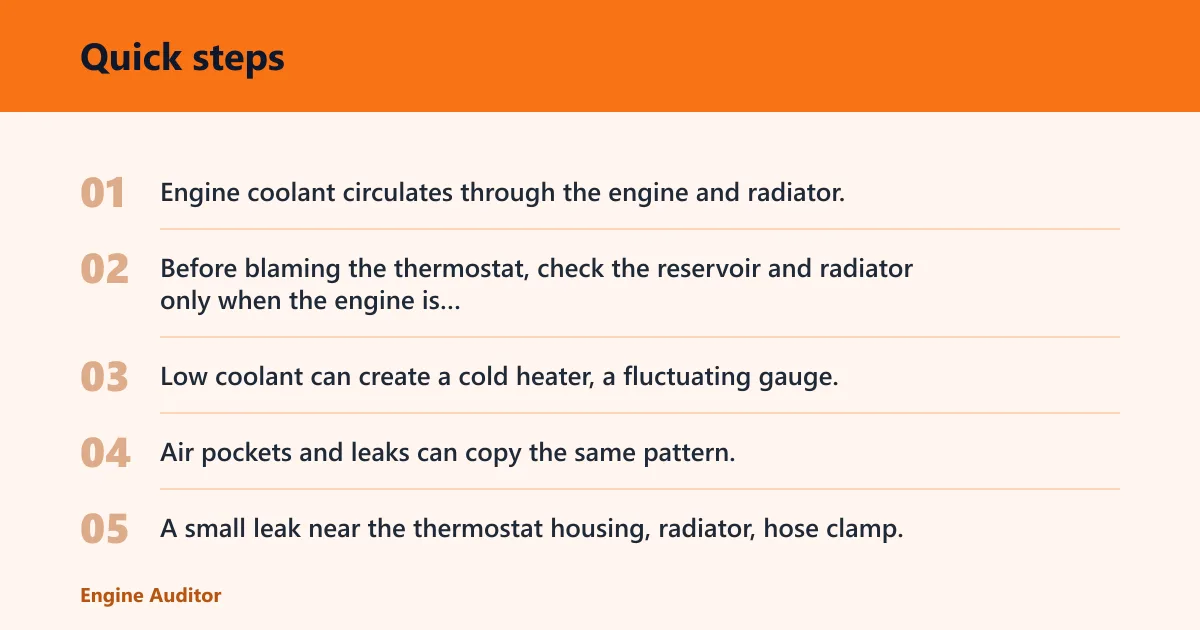
Yes, it can be. Engine coolant circulates through the engine and radiator, and low level can mimic thermostat symptoms. Before blaming the thermostat, check the reservoir and radiator only when the engine is cool. Low coolant can create a cold heater, a fluctuating gauge, and delayed opening behavior that looks like a thermostat fault.
Air pockets and leaks can copy the same pattern. A small leak near the thermostat housing, radiator, hose clamp, or water pump can leave the system low enough that the thermostat never sees steady flow. A sticky cap or a leak that only shows up under pressure can also mislead the diagnosis.
Look at the thermostat housing for residue, crusty deposits, or corrosion. That area is a common leak point. A sweet coolant smell, a damp housing, or dried residue near the gasket can mean the cooling system is losing pressure, and pressure loss can change how the thermostat behaves.
What do hose temperatures tell you?
Hose temperature is a clue, not a verdict. The upper radiator hose usually gets hot when the thermostat opens and coolant starts moving to the radiator. If the engine is warming normally and the upper hose heats up near operating temperature, that is a healthy sign. If it stays cool while the gauge climbs, flow may be blocked.
The lower radiator hose can stay cool until hot coolant reaches the radiator and passes through it. If both hoses stay cool while the engine overheats, suspect a thermostat stuck closed, low coolant, or trapped air. If both hoses warm too early and the engine stays cool, a stuck-open thermostat becomes more likely.
Do not overread hose feel. A hot hose can show up during a normal warm-up, and a cooler hose can still be normal early in the drive. Hose checks help only when you compare them with gauge behavior, heater output, and coolant level.
What are the symptoms of a stuck open thermostat in a car?
A stuck-open thermostat usually makes the engine warm up slowly, keeps the temperature gauge low, and can leave the cabin heater blowing cold air. It may also reduce fuel economy because the engine stays below normal temperature longer than it should. On modern cars, P0128 may appear when the engine does not warm up properly.
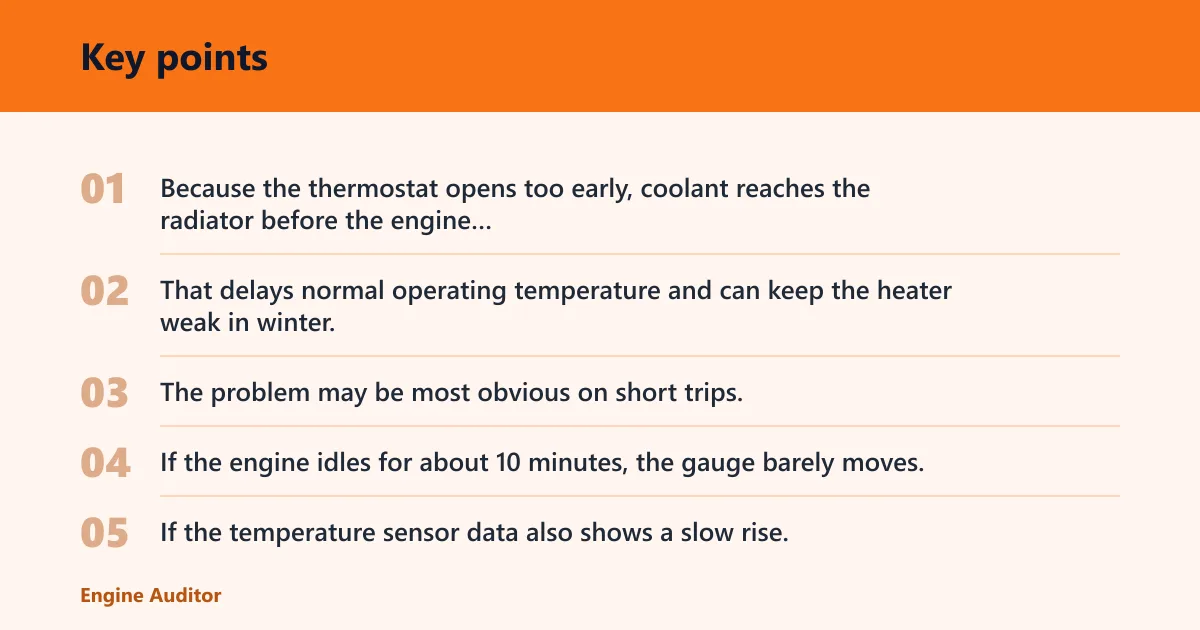
Because the thermostat opens too early, coolant reaches the radiator before the engine is ready. That delays normal operating temperature and can keep the heater weak in winter. The problem may be most obvious on short trips, where the gauge never settles where it should.
If the engine idles for about 10 minutes, the gauge barely moves, and the heater is still weak in cool weather, that can point to a thermostat issue. That is classic stuck-open behavior. If the temperature sensor data also shows a slow rise, the thermostat moves up the list fast.
Can a bad thermostat make the heater blow cold?
Yes. The cabin heater uses hot coolant, so if the thermostat is stuck open or slow to close, the engine may not get hot enough to feed warm coolant through the heater core. Weak heat in winter is one of the clearest stuck-open clues, especially when the gauge also stays low.
If the heater is cold only at idle but warms up on the road, that points more toward low coolant, trapped air, or a flow issue than a simple thermostat fault. If the heater stays weak at all speeds and the gauge never climbs normally, the thermostat becomes a stronger suspect.
What are the symptoms of a stuck closed thermostat?
A stuck-closed thermostat blocks coolant flow to the radiator, so the engine can overheat quickly after the first few minutes of driving. The temperature gauge may spike dangerously, and in severe cases steam can rise from under the hood. This pattern is urgent and should not be ignored.
You may also see the upper radiator hose stay cooler than expected while the engine gets hotter. That matters because coolant is not reaching the radiator the way it should. A partially closed thermostat can behave similarly, but the gauge may rise and fall before settling into an overheat pattern.
Can a bad thermostat cause the temperature gauge to fluctuate?
Yes. A common symptom is a fluctuating temperature gauge, especially when the thermostat opens late, opens unevenly, or sticks partway. But low coolant, trapped air, a bad temperature sensor, and radiator flow problems can create the same motion on the gauge. Use the full symptom pattern before replacing anything.
If the gauge bounces while the heater also turns hot and cold, think about air pockets or a low system level first. If the gauge spikes after a few minutes and the upper hose stays cool, the thermostat becomes more likely. If the radiator fans are running and the engine still climbs, look beyond the thermostat too.
Can a bad thermostat trigger code P0128?
Yes. A check engine light may appear with code P0128 when the engine is not warming up properly. On many vehicles, that code points to a cooling-system condition that keeps the engine below target temperature too long. A stuck-open thermostat is a common cause, but it is not the only one.
Low coolant, a faulty coolant temperature sensor, or trapped air can also trigger the same code. That is why P0128 should be treated as a warm-up fault, not an automatic thermostat verdict. If the gauge stays low and the heater is weak, the code becomes more persuasive.
How do you test a thermostat without replacing it?
Use a short diagnostic chain. First confirm coolant level. Then inspect for leaks and residue at the thermostat housing. Next watch warm-up behavior on a cold start. After that compare upper and lower hose temperature. Finally, scan for codes and live coolant-temperature data if the vehicle supports it.
Do not rely on one clue. A thermostat that is opening normally can still sit inside a system with low coolant or a bad sensor. A scan tool helps because it can show whether coolant temperature climbs smoothly, stalls low, or jumps around in a way that matches the gauge.
Do not drive if this happens
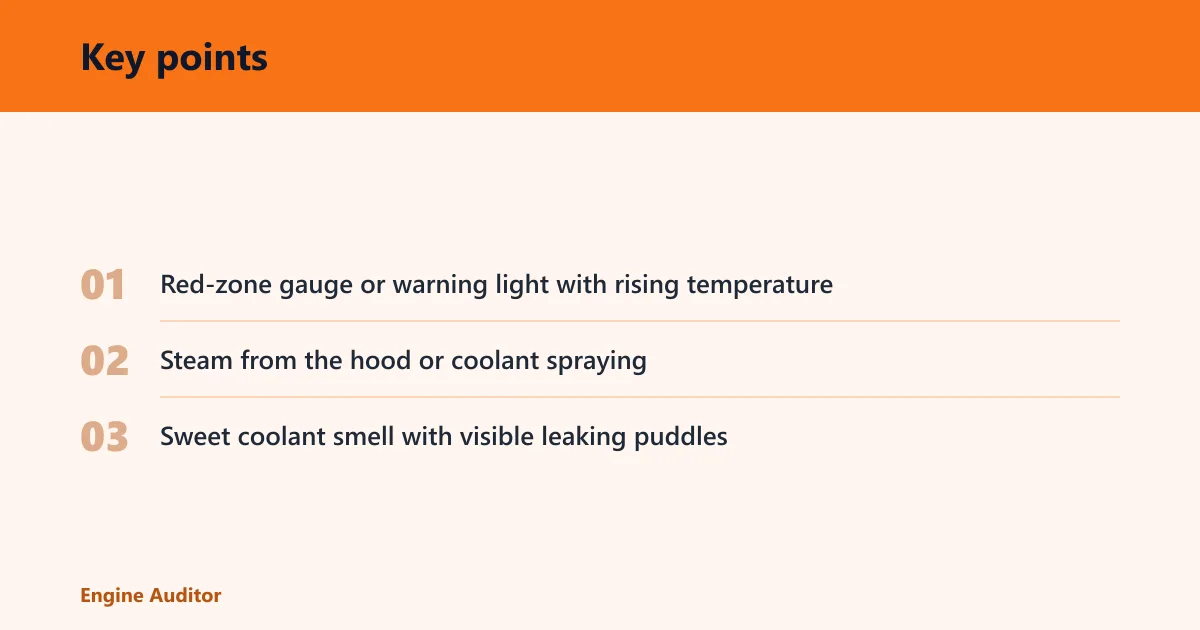
If the temperature gauge is in the red zone, steam is coming from under the hood, or you smell sweet coolant with visible puddles, shut the engine off as soon as it is safe. A hot engine can warp parts fast. Do not try to “make it home” through a clear overheating event.
- Red-zone gauge or warning light with rising temperature
- Steam from the hood or coolant spraying
- Sweet coolant smell with visible leaking puddles
At-home thermostat triage checklist
- Check coolant level only when the engine is cool. Low coolant can mimic a thermostat fault.
- Look around the thermostat housing, hoses, and cap area for residue, corrosion, or dampness.
- Watch the cold-start warm-up. Note whether the gauge rises fast, stays low, or fluctuates.
- Compare hose temperatures. The upper radiator hose should warm when the thermostat opens; the lower hose often warms later.
- Scan for codes, especially P0128, and check live coolant-temperature data if available.
If the coolant is full, the housing is dry, the gauge rises too fast, and the upper hose stays cool, the thermostat rises on the suspect list. If the gauge stays low, the heater is weak, and P0128 appears, a stuck-open thermostat is more likely. If the readings do not match the pattern, keep looking for a mimic.
Frequently asked questions
Can a bad thermostat make the heater blow cold air?
Yes. If the thermostat is stuck open or opening too soon, the engine may never get hot enough to send warm coolant through the heater core. Cold cabin air is most convincing when it comes with a low gauge and slow warm-up on a cold start.
How can I tell if it is the thermostat or low coolant?
Check coolant level first when the engine is cool. Low coolant can cause weak heat, gauge swings, and delayed warm-up that look like thermostat trouble. If the level is correct, inspect for leaks and compare hose temperatures, because flow clues and housing residue can separate the two faster.
Products related to this article
Sponsored / affiliate links. As an Amazon Associate I earn from qualifying purchases. I may earn additional commission from eligible campaigns.