What Is a Full-size Car? Features and Buyer Fit Explained
A full-size car is generally described as a large passenger car with substantial interior room, often measured by EPA interior volume rather than passenger volume alone. It usually gives you more rear-seat and trunk space than midsize cars. If you miss that class difference, you can end up with cramped rear seats, awkward parking, or paying for size you do not use. This guide compares the features, space tradeoffs, and buyer fit that matter most.
How to spot a full-size car on a spec sheet
A full-size car is a market classification for a large passenger car, usually used in North America. In EPA vehicle class terms, the classification is based on interior volume, which combines passenger and cargo space. The label is about cabin size and packaging, not price or engine type.
That matters because two cars with similar outside length can land in different classes if one uses its footprint more efficiently. Check the published interior volume figures on a spec sheet. Together, they tell you more than a badge or trim name.
Most shoppers will see full-size sedans first. They are the most common body style in this class, and they usually have the best rear-seat room and a larger trunk than a midsize sedan. Some models also appear as wagons or large hatchbacks, depending on market.
Class labels can vary by country and by manufacturer. A model sold as full-size in one market may be listed differently elsewhere, so use the published dimensions and space figures instead of the marketing name alone.
How to spot one on a spec sheet
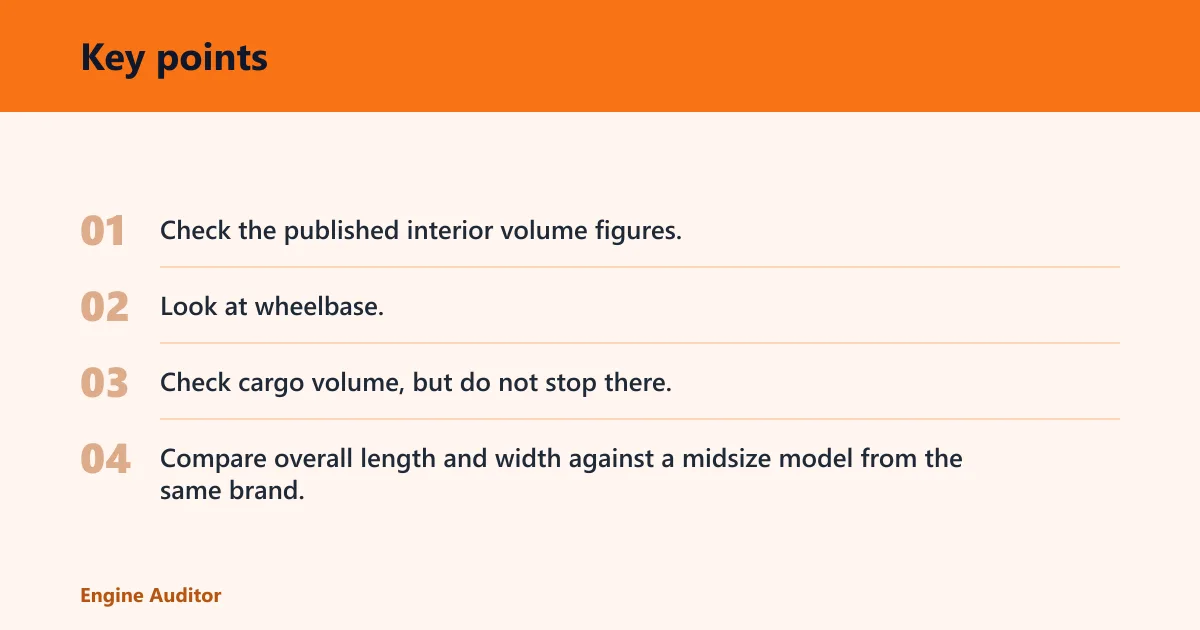
- Check the published interior volume figures. That is the most reliable way to see whether a sedan fits the EPA full-size class.
- Look at wheelbase. A longer wheelbase often gives rear passengers more legroom and can improve ride quality over broken pavement.
- Check cargo volume, but do not stop there. A long exterior body does not always mean a deep or wide trunk opening.
- Compare overall length and width against a midsize model from the same brand. The full-size car is usually larger in one or both dimensions.
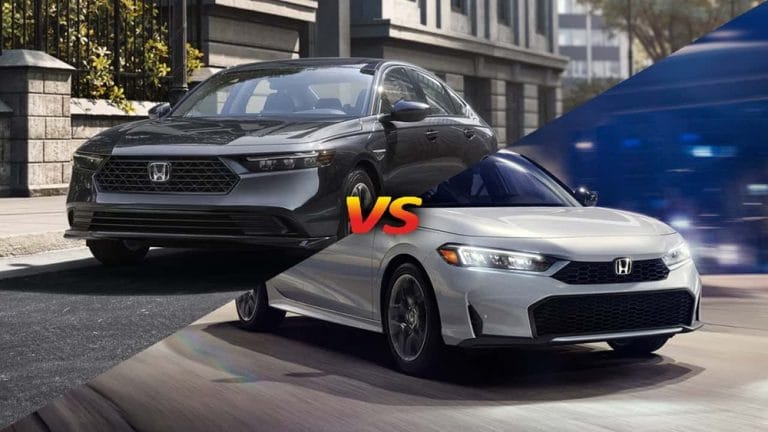
How does a full-size car compare with a midsize car?
A full-size car is often longer, with more passenger room and often more rear-seat room than a midsize car. The extra size can make the back seat easier for adults, car seats, and long trips, while a midsize car usually asks less of your garage, your parking spot, and your fuel budget.
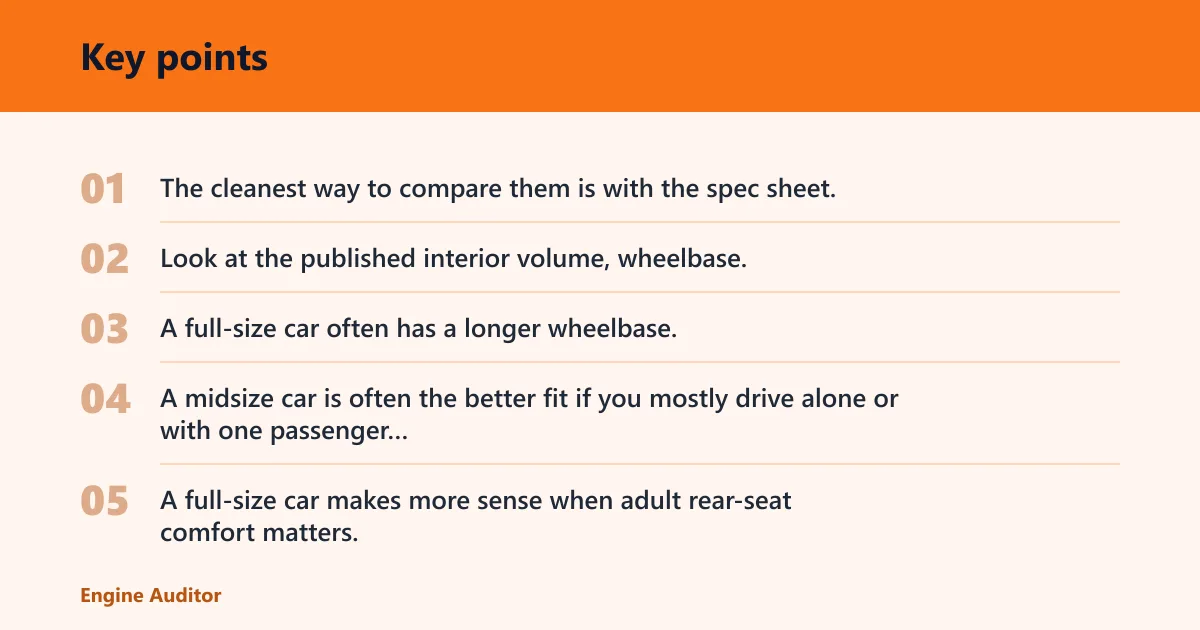
The cleanest way to compare them is with the spec sheet. Look at the published interior volume, wheelbase, and cargo space before you look at trim features. A full-size car often has a longer wheelbase, which can help rear legroom and steady highway manners, though it also increases the space you must park and store.
A midsize car is often the better fit if you mostly drive alone or with one passenger and need easier urban parking. A full-size car makes more sense when adult rear-seat comfort matters, or when the back seat is part of daily life instead of an occasional use.
Cabin space and rear-seat legroom
Full-size cars usually give rear passengers more knee room, more toe room under the front seats, and more shoulder room across the bench. That does not guarantee lounge-like comfort, but it gives the back seat a better chance of working for adults on ordinary trips. Midsize cars can be fine for short rides, yet they are more likely to feel tight with taller front occupants.
Suppose a 6-foot driver sets the seat far back in a midsize sedan. The rear seat behind that driver may become a short-trip spot only. In a full-size sedan, the same driver position often leaves more usable space for another adult, especially if the wheelbase is longer.
Wheelbase and ride quality
Wheelbase is the distance between the front and rear axles. A longer wheelbase usually helps with rear legroom because the cabin can stretch between the axles, and it can also calm the way the car pitches over bumps. That does not make every full-size car softer or quieter, but it explains why many of them feel settled on the highway.
Typical buyer fit
A midsize car suits buyers who want a balanced footprint and enough room for occasional rear passengers. A full-size car fits buyers who regularly carry adults in back, use child seats often, or spend long stretches on the interstate. If the rear seat is mostly empty, the extra size may buy more car than you need.
How does a full-size car compare with a compact car?
A full-size car is much larger than a compact car in passenger space, cargo room, and overall footprint. The trade-off is plain: the compact car is easier to park and often easier on fuel, while the full-size car is usually more comfortable for adults and more useful for travel with passengers or luggage.
Compact cars are the strong choice for tight city parking, short commutes, and lower running costs. Full-size cars are easier to live with when cabin room matters more than curb-side convenience. The difference shows up in garage fit, turning around in cramped lots, and how much space you have left once people climb in.
Parking footprint and urban use
Compact cars usually fit into smaller parking spaces with less effort. Full-size cars can still be manageable, but they demand more attention in narrow streets, tight garages, and crowded lots. If your daily routine includes parallel parking, older apartment garages, or busy curbside parking, the larger body is part of the ownership cost.
Fuel economy trade-offs
In general, a larger car weighs more and pushes more air, so it often uses more fuel than a compact car with a smaller body. That is a class-level trade-off, not a promise for every model. Powertrain choices matter too, but size itself usually works against efficiency.
Everyday convenience differences
A compact car is easier to thread through traffic and easier to place in small spaces. A full-size car is easier to share with passengers on a long day, especially when the second row is full. If your routine is mostly solo driving, compact-size convenience can matter more than extra cabin room.
What features matter most in a full-size car?
The most useful full-size-car features are the ones that turn size into real comfort: rear-seat legroom, a usable trunk opening, and front seats that do not pinch space for the people behind them. Highway comfort matters too, because many buyers choose this class for long drives and daily commuting.
Do not judge the car by exterior length alone. A large sedan can still have a trunk opening that is awkward for suitcases, stroller frames, or boxed items. Seat shape, door opening size, and the distance from the seatback to the roofline all affect whether the cabin works in practice.
Rear-seat space and seat comfort
Look for enough legroom that rear passengers can sit without pressing knees into the front seatbacks. Seat cushion length and backrest angle matter as well. A full-size car should make the back seat acceptable for adults, not merely available in a pinch.
Trunk opening and cargo volume
Cargo volume is useful, but trunk shape matters almost as much. A sedan with a large cubic-foot number can still have a narrow opening or a high liftover height. For family use, check whether bags, folding strollers, and travel gear can pass through the opening without awkward angles.
Highway comfort and family-seat fit
Full-size cars often make highway use easier because the longer wheelbase gives them a calmer feel over pavement seams and expansion joints. Family-seat fit depends on more than room, though. Rear-facing child seats need front-seat clearance, anchor access, and enough door opening to install the seat without strain.
Full-size car checklist
Use this checklist to judge whether a full-size car fits your needs. Score each area from 1 to 5, where 1 means poor fit and 5 means strong fit. Then read the short verdict for the use case that score supports.
| Area | What to check | Score guide | Best for |
|---|---|---|---|
| Rear-seat legroom | Can an adult sit behind a normal driving position with usable knee room? | 5 = adult-friendly, 3 = fine for short trips, 1 = cramped | Families, tall drivers, regular rear passengers |
| Trunk usefulness | Does the trunk opening fit luggage, strollers, or boxes without forcing odd angles? | 5 = wide opening and useful shape, 3 = enough volume but limited shape, 1 = awkward access | Travel, errands, family cargo |
| Parking ease | Can you fit it into your garage, apartment lot, or daily parking space without stress? | 5 = easy in tight spaces, 3 = manageable, 1 = frequent hassle | Urban drivers, shared garages, narrow driveways |
| Highway comfort | Does the longer wheelbase and cabin size support quiet, steady long-distance driving? | 5 = strong long-trip fit, 3 = acceptable, 1 = tiring on long drives | Commuters, road trips, interstate use |
| Family-seat compatibility | Can you install child seats, still reach buckles, and leave front-seat room? | 5 = child-seat friendly, 3 = works with compromises, 1 = difficult fit | Rear-facing seats, growing families |
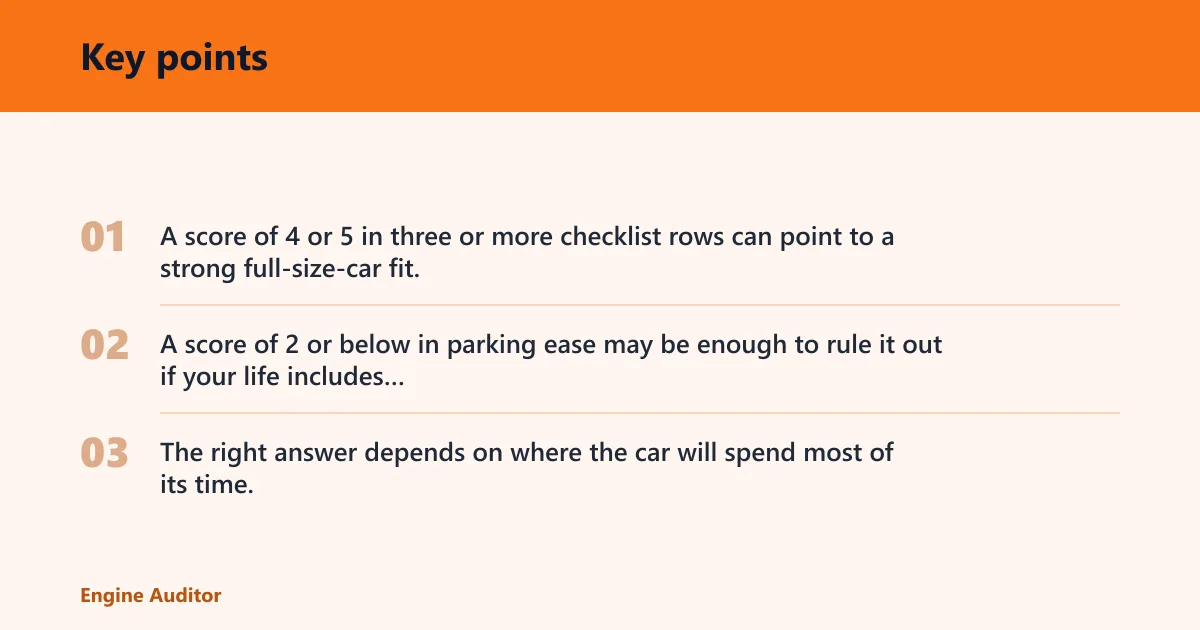
A score of 4 or 5 in three or more checklist rows can point to a strong full-size-car fit. A score of 2 or below in parking ease may be enough to rule it out if your life includes small garages or dense city parking. The right answer depends on where the car will spend most of its time.
Is a full-size car right for families and commuting?
A full-size car is often a good fit for families and commuters who spend real time on the highway. The extra room can help tall drivers, rear-seat passengers, and child seats, while the larger body can make long drives less tiring. It is less attractive if you mainly need easy parking and low running costs.
Tall drivers and adult passengers
Tall drivers often appreciate the extra adjustment range in a full-size sedan, especially when the rear seat still needs usable space. Adult passengers benefit from the broader cabin and longer wheelbase. If adults ride in back regularly, that extra room can matter more than many luxury features.
Say your commute includes one adult in back three days a week, plus a 40-minute highway drive each way. A compact car may work, but the rear seat can become the limiting factor. In a full-size car, the same commute is more likely to feel reasonable for both rows.
Rear-facing child seats
Rear-facing child seats are a common reason shoppers move up a size class. They need front-seat clearance and wide door openings, and some seat bases fit better in a larger cabin. A full-size car is not automatically easy, but it gives you more room to work with than a midsize or compact car.
Long-distance commuting and road trips
For frequent highway use, a full-size car can be a sensible choice. The extra cabin space helps on longer trips, and the longer wheelbase often makes the ride feel more settled over broken pavement. That said, a buyer who rarely leaves town may never use the extra space enough to justify the size.
What are the pros and cons of buying one?
The main advantages of a full-size car are space, adult-friendly rear seating, and better long-trip comfort than smaller cars. The main downsides are fuel use, parking difficulty, and garage fit. Whether those trade-offs are worth it depends on how often you use the back seat and how tight your parking space is.
Pros
Comfort is the biggest reason to choose this class. Full-size cars usually provide more room for adults, more relaxed back-seat use, and a trunk that works better for travel. They also tend to feel more composed on highways than smaller cars, especially over long distances.
Cons
The larger body usually means more fuel use than a smaller car, and it can be harder to park in tight urban spaces. Garage fit can also become an issue, especially in older homes or compact apartment parking. Some large sedans still have only moderate cargo space for their exterior size, so bigger does not always mean more useful.
Frequently asked questions
What is considered a full-size car?
In EPA terms, a full-size car is generally a passenger car classified by interior volume, which combines passenger and cargo space. In shopper terms, it is a large sedan or wagon with more rear-seat room and often more trunk space than a midsize car.
What is the difference between a full-size car and a midsize car?
A full-size car usually has more interior volume, a longer wheelbase, and more rear-seat room than a midsize car. The trade-off is size: it is harder to park and may use more fuel. A midsize car is often the better all-around choice if you do not need the extra cabin space.
How many people can a full-size car seat comfortably?
Most full-size cars seat five people, like most modern sedans. Comfort is the key difference. The front seats are usually fine for two adults, and the rear seat is more likely to work well for adults too, especially on longer trips, though the center rear position is still the least comfortable.
Is a full-size car good for families?
Yes, if your family uses the back seat often or needs room for child seats and luggage. The larger cabin can make rear-facing seats easier to install and adult passengers easier to carry. It is less compelling if your family wants the easiest parking and lowest fuel use above all else.
Are full-size cars better on the highway than smaller cars?
Often, yes. The longer wheelbase and larger cabin can make a full-size car feel steadier on the highway and more comfortable on long drives. That does not mean every model rides the same, but the class usually favors commuting, road trips, and frequent interstate travel over tight-city convenience.
What are examples of full-size cars?
Common examples in North America include the Nissan Maxima, Toyota Avalon, and Chrysler 300, though market labels can change over time. Some models sold as full-size in one market may be classed differently in another, so always check the manufacturer spec sheet and EPA category.
Is a full-size car bigger than an SUV?
Usually no. Many SUVs are taller and may offer more cargo room or seating flexibility, though they are a different body style. The better comparison for a full-size car is with other passenger cars, especially midsize and compact sedans, where the class differences in cabin space are easier to judge.
What are the pros and cons of buying a full-size car?
The pros are rear-seat comfort, more useful long-distance space, and a better chance of fitting adults or child seats without compromise. The cons are higher fuel use than smaller cars, more difficult parking, and less convenience in tight garages. It is a practical choice when space is the priority.
Products related to this article
Sponsored / affiliate links. As an Amazon Associate I earn from qualifying purchases. I may earn additional commission from eligible campaigns.