How to Protect Your Car From Salt, Rust, and Corrosion
Protect your car from salt by washing it weekly during active salt season, applying paint protection before winter, and using underbody protection if salted roads are part of your regular drive. If you skip that routine, chloride residue keeps working on painted panels, brake lines, rocker panels, and hidden seams long after the trip ends. This guide separates paint, underbody, and cabin protection so you can match the plan to your exposure level.
Winter salt damage basics


Road salt is spread on roads to lower the freezing point of water and cut ice buildup. That salt can be sodium chloride (NaCl) or, in some regions, magnesium chloride (MgCl2). Once it sticks to the car and stays wet, it attacks painted surfaces, bare metal, trim, and fasteners.
The key difference is where the damage starts. Paint damage shows up first as dulling, staining, or chips that let moisture reach metal. Structural corrosion starts in exposed metal areas such as wheel wells, rocker panels, frame rails, brake lines, and fuel lines. Those areas trap slush and salt first.
Salt also stays active in seams, drain holes, door sills, and behind liners. A short drive can leave residue in places a quick rinse misses. If the weather stays above freezing and the car dries slowly, that residue keeps pulling moisture to the same spots.
What you’ll need before winter
- pH-neutral car soap
- Microfiber wash mitts
- Drying towels
- Wheel brush
- Wax or paint sealant
- Ceramic coating, if you want the longest paint protection
- Rust inhibitor or anti-corrosion spray for underbody and cavities
- Flashlight
- Gloves
- Jack or ramps, if safe to use
- Tire-safe cleaner for wheel areas
How often should you wash in winter to remove salt?
Wash more often while salted roads are being treated, after storms, and after long commutes. A rinse every 1-2 weeks is a common baseline, but heavy-salt regions need a shorter interval. The goal is to remove fresh residue before it dries into seams and wheel wells.
Use a touchless car wash when hand washing is impractical. It uses high-pressure water and chemicals without physical brushes, which makes it acceptable for salt removal. Avoid brush washes; they can grind salt crystals into paint and trim.
Say your commute is 35 miles each way on salted highways three days a week. Waiting two full weeks lets repeated spray build up on the undercarriage and around the wheel arches. A weekly rinse is the better fit.
If that didn’t work, use this winter wash routine
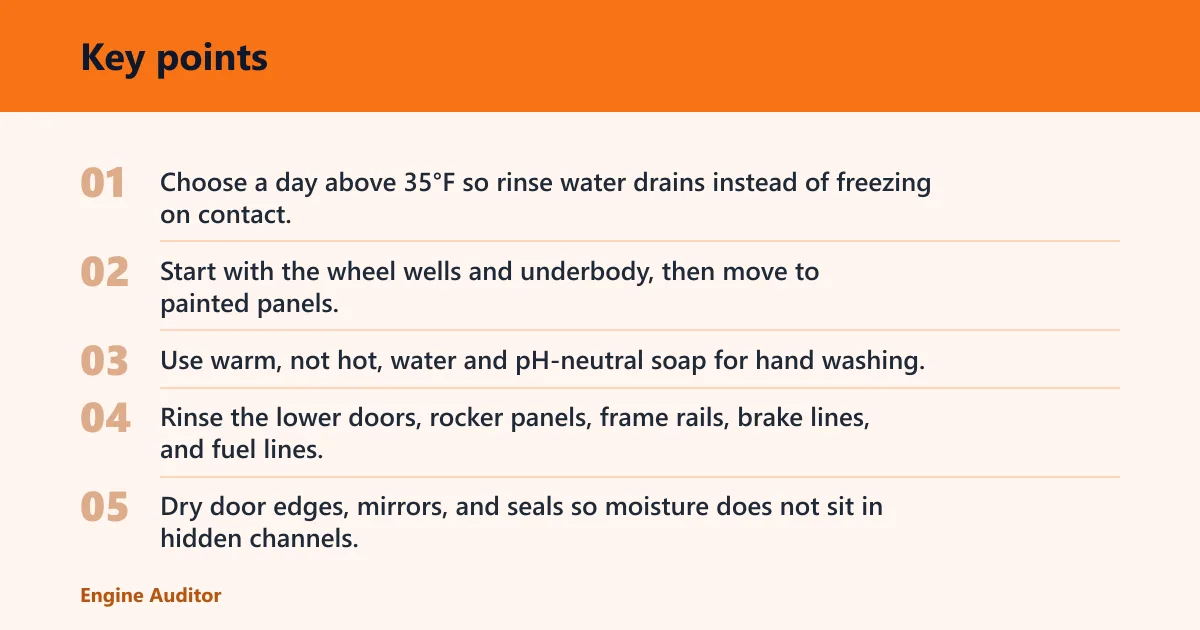
- Choose a day above 35°F so rinse water drains instead of freezing on contact.
- Start with the wheel wells and underbody, then move to painted panels.
- Use warm, not hot, water and pH-neutral soap for hand washing.
- Rinse the lower doors, rocker panels, frame rails, brake lines, and fuel lines.
- Dry door edges, mirrors, and seals so moisture does not sit in hidden channels.
What should you protect first?
Protect paint first, exposed metal second, and the cabin last. That order matters because each layer fails in a different way. Paint protection slows salt bonding. Underbody protection slows corrosion on steel and seams. Cabin cleanup reduces tracked-in salt and wet slush that can soak mats and carpet.
Paint protection
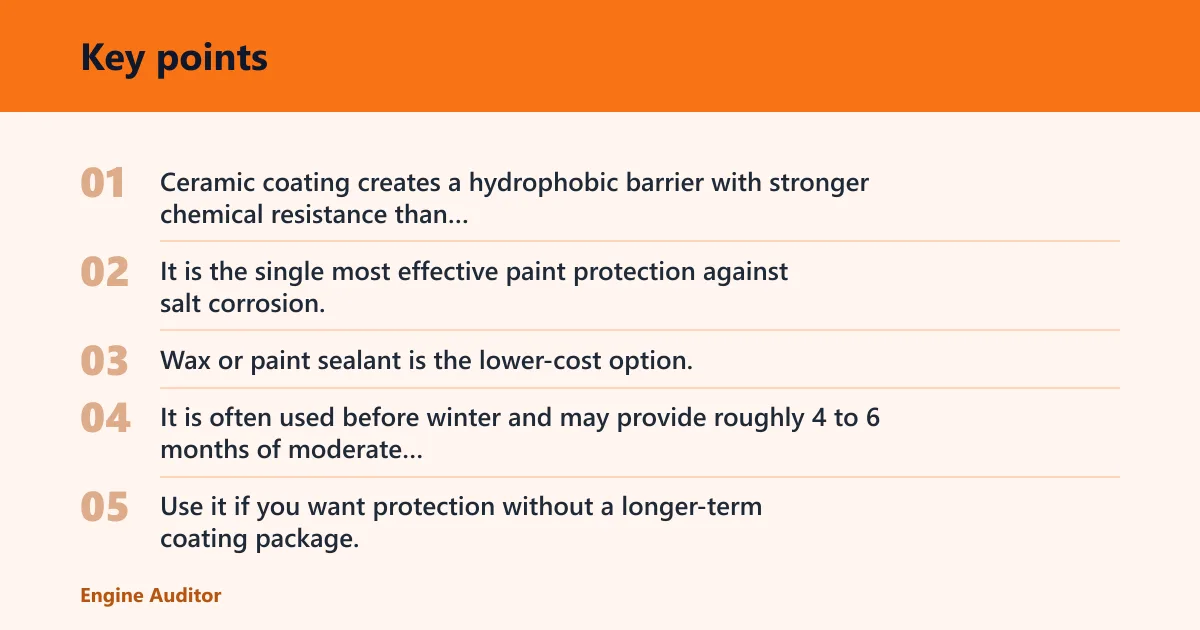
Ceramic coating creates a hydrophobic barrier with stronger chemical resistance than basic wax. It is the single most effective paint protection against salt corrosion, especially when the goal is easier washing and less residue bonding.
Wax or paint sealant is the lower-cost option. It is often used before winter and may provide roughly 4 to 6 months of moderate chemical resistance, though it typically wears sooner than ceramic coating. Use it if you want protection without a longer-term coating package.
Underbody protection
Rust inhibitor or anti-corrosion spray belongs on the underbody and inside hidden cavities. It can penetrate seams and joints, which helps in places where spray water and slush keep returning. Seasonal or annual application is common, depending on the product and exposure level.
Cabin protection
Salt tracked in on shoes and slushy boots can leave residue on mats, floor carpet, and door sills. Shake out mats, vacuum grit, and wipe the sill plates and pedal area after wet storms. That keeps salt from staying damp inside the cabin.
Should you wax before winter?
Yes, if you want a lower-cost barrier before salt season starts. Wax or paint sealant gives the paint a sacrificial layer that helps salt release during washing. It is cheaper than ceramic coating, but it does not last as long and needs more frequent renewal.
Choose ceramic coating if the car sees salted roads often and you want easier cleanup over a longer period. It still needs washing. No coating stops corrosion on its own if salt sits on the car for weeks.
Picture a weekend car that only leaves the garage after snowfall ends. A fresh sealant layer before winter may be enough for its light exposure. A daily commuter in the same city needs more frequent rinsing and a stronger paint-protection plan.
How do I stop road salt from damaging the undercarriage?
Focus on the areas that trap spray first: wheel wells, rocker panels, frame rails, brake lines, and fuel lines. These parts collect salt and slush before most other areas, and they need targeted rinsing plus inspection. Hidden cavities and seams matter too.
Rinse the underbody after storms and after long, salted drives. If you can safely inspect the car, use a flashlight to check behind liners, around drain holes, and along seams where wet debris lingers. Drying or airing out these areas helps when temperatures allow.
Targeted underbody steps
- Rinse wheel wells first to clear packed slush.
- Flush rocker-panel edges, frame rails, and suspension mounts.
- Check brake lines and fuel lines for wet residue or peeling coating.
- Spray rust inhibitor into seams, joints, and hidden cavities.
- Recheck after the vehicle dries so missed salt spots are easier to see.
What parts of my car rust first from road salt?
The first trouble spots are often the undercarriage and any area where salt tends to stay wet. Wheel wells, rocker panels, frame rails, brake lines, fuel lines, door sills, and the back side of liners are common failure points. Chipped paint and lower-body panels also rust faster once moisture reaches bare metal.
Older vehicles need a closer look at the subframe, brake lines, rocker panels, and floor pans. Surface rust is different from structural perforation. Surface rust can often be slowed. Perforation means the metal has already been eaten through and the repair decision changes.
Can I protect an older car from corrosion, or is it too late?
You can still protect an older car if rust is mostly surface-level and the metal is sound. Annual oil-based rust proofing is worth starting on a 10 to 15-year-old vehicle with surface rust but no perforation. That kind of treatment can slow further spread in seams and hidden metal.
If the subframe has perforation, the vehicle is beyond effective rust-proofing in that area. At that point, a shop inspection matters more than another coating. Safety inspection relevance goes up when brake lines, floor pans, or structural mounts show advanced corrosion.
Inspect the rocker panels and floor pans from underneath, then look at brake lines and the subframe. If those areas are flaking badly or showing holes, prioritize repair planning over prevention products.
Winter salt protection decision table
| Vehicle-use scenario | Recommended wash cadence | Exterior protection | Underbody protection | Inspection checkpoints | When to escalate to a shop |
|---|---|---|---|---|---|
| Daily salted-road commuter | Weekly; sooner after storms or heavy spray | Ceramic coating or a fresh sealant before winter | Seasonal rust inhibitor on seams, joints, and cavities | Wheel wells, rocker panels, brake lines, drain holes | Any bubbling paint, fresh rust around lines, or repeated wet seams |
| Weekend driver | Every 1-2 weeks during salt season, plus after major storms | Wax or sealant before storage periods | Annual underbody spray if roads are salted often | Lower doors, liners, frame rails, hidden edges | If rust appears near mounts, pinch welds, or brake lines |
| Older high-mileage car | After salted drives, then every 1-2 weeks if it stays on the road | Sealant for budget protection; ceramic if paint is still healthy | Oil-based rust proofing if metal is still intact | Subframe, floor pans, rocker panels, brake lines | Perforation, weak floor sections, or brake-line corrosion |
Common mistakes
Do not let salt sit on seams, door sills, and drain holes. That is where wet residue hides longest. Do not use brush washes in winter; they can drag grit across the finish and grind salt into the paint.
Do not skip brake-line, rocker-panel, and floor-pan checks on older vehicles. Those parts can look fine from the side while corrosion spreads underneath. A quick visual inspection with a flashlight catches more than a surface rinse alone.
Do not rely on wax, ceramic coating, or undercoating as a substitute for washing. Those products slow damage. They do not stop salt from working if the car stays dirty.
What should you do after driving on salted roads?
Rinse the lower body, wheel wells, and undercarriage as soon as practical. If a full wash is not possible that day, get the salt off before it sits through another freeze-thaw cycle. That single step reduces how long chloride residue stays active.
Also remove slush from mats and wipe the door sills. Wet salt inside the cabin can keep the floor damp and carry grit into seams and carpet edges. If the car is parked in a garage, open the doors briefly to let trapped moisture escape.
Frequently asked questions
How do I protect my car from road salt and rust?
Use a split plan: protect paint with wax, sealant, or ceramic coating; protect exposed metal with rust inhibitor or anti-corrosion spray; and wash salt off before it dries into seams. If you drive salted roads regularly, the underbody needs targeted rinsing as much as the paint does.
How often should I wash my car in winter to remove salt?
A common baseline is every 1-2 weeks during salt season, but heavy salting, storms, and long commutes call for more frequent rinsing. If the car sees salted roads several times a week, weekly washing is the safer schedule. Touchless washes are acceptable when hand washing is not practical.
Is touchless car wash safe for removing road salt?
Yes. A touchless automatic wash uses high-pressure water and chemicals without physical brushes, so it is a practical choice for winter salt removal. It is better than waiting for salt to build up, and it avoids the grit-grinding problem that brush washes can cause.
Should I wax my car before winter?
Yes, if you want a cheaper pre-winter layer that helps salt release during washing. Wax or paint sealant gives shorter protection than ceramic coating, so it is best for lighter exposure or tighter budgets. It still needs regular washing to keep working.
Do I need undercoating or rust inhibitor for my car?
If you drive on salted roads often, underbody protection is worth serious consideration. Rust inhibitor or anti-corrosion spray can reach seams, joints, and hidden cavities that rinse water misses. Annual or seasonal application is typical, but the payoff is highest on cars that see regular salt spray.
Products related to this article
Sponsored / affiliate links. As an Amazon Associate I earn from qualifying purchases. I may earn additional commission from eligible campaigns.