How Many Lumens Does a Car Light Need for Safe Driving?
Car headlights are more than just a legal requirement, they are a crucial factor in ensuring driver and pedestrian safety after sunset and in poor visibility conditions. The question of how many lumens a car light needs for safe driving is becoming increasingly relevant as drivers upgrade halogen bulbs to LEDs or HIDs, and as new vehicles roll out with advanced lighting technologies. Yet, many car owners remain uncertain about what lumen ratings mean for actual nighttime visibility, glare, and compliance with road safety standards.
With the surge in aftermarket headlight options and the shift towards energy-efficient lighting, understanding the true impact of lumens on road safety is vital. This article explores the science behind car lighting, the regulations that govern brightness, real-world case studies, and practical advice for choosing the right lumens for your driving needs. Whether you’re a commuter, an off-road enthusiast, or simply want to upgrade your headlights, you’ll find actionable insights and data-driven comparisons here.
Key Takeaways
- Lumens measure total light output, higher lumens mean brighter headlights, but more is not always better for safety.
- Most road-legal headlights range from 700 to 2,000 lumens per bulb for low beams, and up to 3,000 lumens for high beams.
- Excessive lumens can cause glare, reduce visibility for oncoming drivers, and may violate local regulations.
- The ideal lumen rating depends on vehicle type, road conditions, and headlight technology (halogen, LED, HID).
- Proper beam pattern and headlight alignment are as important as lumen output for safe nighttime driving.
- Consult your state’s Department of Transportation or local laws to ensure compliance with headlight brightness standards.
Credit: carlightvision.com
The Science Of Lumens And Automotive Lighting
Understanding how lumens relate to headlight performance is the foundation for making safe and effective lighting choices. Lumens measure the total amount of visible light emitted by a source, while watts measure energy consumption, and lux measures light intensity over a surface area.
What Are Lumens?
A lumen is a unit of luminous flux, which quantifies the total visible light output from a lamp or bulb. Unlike watts, which indicate energy usage, lumens directly reflect how much light you actually see. For car headlights:
- Higher lumens = brighter light
- Lower lumens = dimmer light
However, brightness alone does not guarantee safety. The beam pattern, color temperature, and directionality all influence how well you can see, and be seen, on the road.
Headlight Technologies: Halogen, Led, And Hid
Modern vehicles use several types of headlight bulbs, each with unique lumen outputs and characteristics.
- Halogen Bulbs: The traditional choice, typically emitting 700, 1,200 lumens per bulb for low beams. These bulbs are affordable but less energy-efficient and have a yellowish hue.
- LED Bulbs: Increasingly common in new vehicles, LEDs can deliver 1,500, 2,000 lumens for low beams with a crisp white color, greater longevity, and lower power consumption.
- HID (Xenon) Bulbs: Known for their intense brightness, HIDs can reach 2,000, 3,000 lumens or more, often used in high-end or performance vehicles.
| Bulb Type | Typical Lumen Output (Low Beam) | Color Temperature | Average Lifespan |
|---|---|---|---|
| Halogen | 700, 1,200 lm | 3,000, 3,500 K (warm white) | 500, 1,000 hours |
| LED | 1,500, 2,000 lm | 5,000, 6,500 K (cool white) | 15,000, 30,000 hours |
| HID (Xenon) | 2,000, 3,000 lm | 4,000, 6,000 K (blue-white) | 2,000, 5,000 hours |
Lumens Vs. Lux: Why Both Matter
While lumens measure total light output, lux measures how much light reaches a specific area, crucial for seeing the road ahead. A headlight with a high lumen rating but a poor beam pattern may scatter light, causing glare and reducing effective visibility. Therefore, a balanced approach considering both lumens and lux is essential.
Regulatory Standards And Safety Limits
Most countries regulate maximum permissible headlight brightness to prevent glare and ensure road safety. For example, in the US, the Department of Transportation (DOT) sets standards that typically limit headlights to around 3,000 lumens per bulb. Exceeding these limits can result in fines or failed vehicle inspections.
Legal Requirements And Industry Standards
Selecting car headlights is not solely about picking the brightest bulb, compliance with legal standards is mandatory. Regulations vary by country and even by state, so understanding these rules is crucial for safe, legal driving.
U.s. Department Of Transportation (dot) And Sae Standards
The DOT and the Society of Automotive Engineers (SAE) set the benchmark for headlight performance and safety in the United States. DOT-approved headlights must pass tests for:
- Luminous intensity (candelas and lumens)
- Beam pattern and cutoff to minimize glare
- Color temperature (typically 3,000, 6,000 K)
- Physical durability
DOT standards generally cap low-beam headlights at up to 3,000 lumens per bulb. For high beams, the limit is slightly higher, but manufacturers must still design beams to avoid dazzling other drivers.
European Ece Regulations
In Europe, the Economic Commission for Europe (ECE) establishes headlight standards. ECE regulations focus on beam shape and glare control rather than absolute lumens but usually result in similar brightness limits to DOT.
State-specific Laws And Inspections
Some states impose their own headlight brightness limits or inspection requirements. For example, California Vehicle Code Section 25950 mandates that headlights must not project glaring rays into the eyes of oncoming drivers. Always check your state’s Department of Motor Vehicles (DMV) website for up-to-date rules.
Penalties For Non-compliance
Driving with headlights that exceed legal limits can result in:
- Fines or citations
- Failed safety or emissions inspections
- Insurance claim disputes after accidents
Pro Tip: Always look for the DOT or ECE marking on your headlight bulbs or housings to ensure compliance.

Credit: seekingled.com
How Many Lumens Are Needed For Safe Driving?
The ideal lumen rating for your vehicle’s headlights depends on a variety of factors, including road conditions, typical driving environment, and headlight technology. Here’s how to determine what’s right for you.
Standard Lumen Ranges By Headlight Type
For most passenger vehicles, the following lumen guidelines are recommended for safe nighttime driving:
- Low Beams: 700, 1,200 lumens (halogen), 1,500, 2,000 lumens (LED), up to 3,000 lumens (HID)
- High Beams: 1,200, 1,700 lumens (halogen), 2,000, 3,000 lumens (LED/HID)
These ranges provide enough illumination for urban, suburban, and rural driving without causing excessive glare.
| Headlight Position | Halogen (lm) | LED (lm) | HID (lm) |
|---|---|---|---|
| Low Beam | 700, 1,200 | 1,500, 2,000 | 2,000, 3,000 |
| High Beam | 1,200, 1,700 | 2,000, 3,000 | 3,000, 3,500 |
Factors Affecting Lumen Requirements
- Driving Environment: Urban drivers benefit from lower lumen outputs due to street lighting, while rural or off-road drivers need higher outputs for unlit roads.
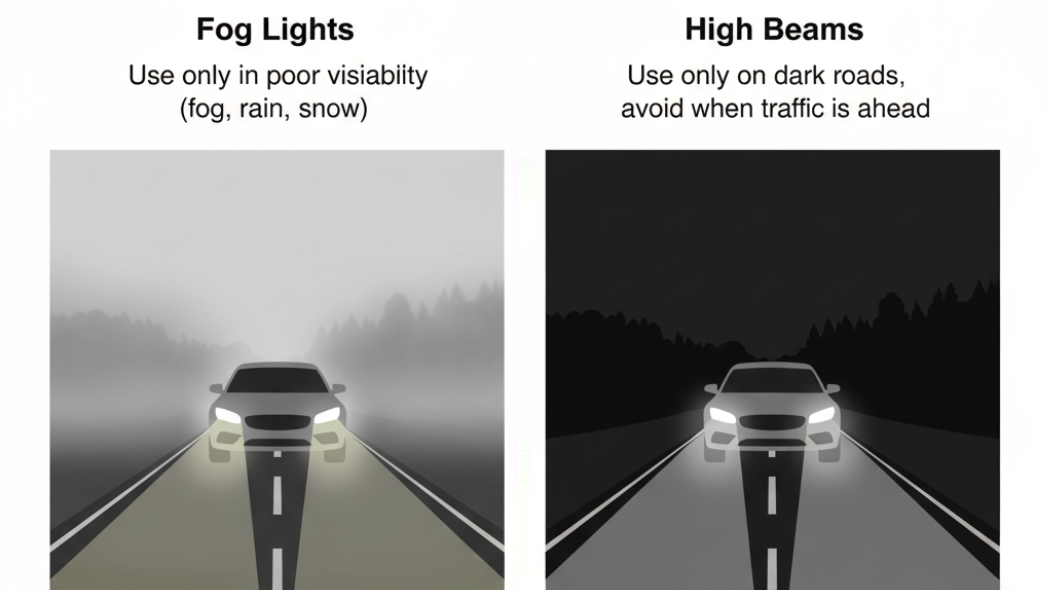
- Weather Conditions: Rain, fog, and snow reduce visibility, making a precise beam pattern more important than raw lumens.
- Vehicle Height: Trucks and SUVs may require different aiming or outputs to avoid blinding lower passenger vehicles.
Risks Of Excessive Lumens
More lumens are not always better. Overly bright headlights can:
- Cause glare, temporarily blinding other drivers
- Reduce contrast, making it harder to see road markings or hazards
- Lead to legal penalties
A study by the Insurance Institute for Highway Safety (IIHS) found that poorly designed, overly bright headlights are a leading cause of nighttime accidents due to glare (IIHS).
Example: Urban Vs. Rural Driving
- Urban Example: A commuter in New York City may find 1,000, 1,500 lumens adequate due to ample street lighting.
- Rural Example: A rural driver in Montana, where roads are often unlit, may benefit from 2,000, 3,000 lumens, provided the beam pattern is well-controlled.
How To Measure Headlight Lumens
Manufacturers typically list lumen output on bulb packaging. For aftermarket upgrades, use a light meter or consult professional installation services to ensure your headlights meet legal and safety standards.

Credit: www.naoevo.com
Beam Pattern, Color Temperature, And Headlight Alignment
Choosing the right lumen output is only part of the equation. Beam pattern, color temperature, and alignment play equally vital roles in night driving safety.
Importance Of Beam Pattern
A well-designed beam pattern projects light onto the road without scattering upwards or sideways into the eyes of oncoming drivers. Even a high-lumen bulb is unsafe if the reflector or projector housing creates an uncontrolled beam.
- Reflector Housings: Common in older vehicles; more prone to glare with high-output bulbs.
- Projector Housings: Found in modern cars; offer sharper cutoff lines and better control.
Color Temperature: Seeing Vs. Being Seen
Measured in Kelvin (K), color temperature affects visibility and comfort:
- 3,000, 4,000 K: Warm white, better for fog or rain (less glare and better penetration)
- 5,000, 6,000 K: Cool white, most natural daylight-like visibility
- Above 6,000 K: Blue-tinted light, may cause more glare and eye strain
Pro Tip: For most conditions, 4,000, 6,000 K provides the best balance of visibility and comfort.
Proper Headlight Alignment
Even the brightest, best-patterned headlight is ineffective if misaligned. Misalignment can:
- Cause glare for oncoming vehicles
- Reduce your own visibility
To check alignment:
- Park on a level surface 25 feet from a wall.
- Measure the height from the ground to the center of your headlights.
- Mark that height on the wall.
- Turn on low beams; the top of the beam should align with or just below the mark.
Many service centers offer professional headlight aiming as part of routine maintenance.
Example: Poor Alignment And Glare
In my experience, I once installed high-lumen LED bulbs in a reflector housing without adjusting the aim. The result was severe glare for other drivers and less usable road illumination. After realigning the headlights, the beam focused properly, greatly improving both my vision and safety for others.
Real-world Case Studies And Data
Understanding how lumens affect driving safety is best illustrated through real-world examples and studies.
Case Study: Led Upgrade In A 2015 Sedan
A driver upgraded their 2015 sedan’s halogen low beams (900 lumens each) to aftermarket LEDs rated at 2,000 lumens each. Before the upgrade:
- Visibility range: 100 feet ahead
- No complaints of glare
After the upgrade:
- Visibility range increased to 180 feet
- Significant glare reported by oncoming drivers
- Failed state inspection due to excessive brightness and improper beam pattern
This case underscores the importance of not just lumens, but beam pattern compatibility with your vehicle’s headlight housing.
Iihs Headlight Ratings And Crash Data
The IIHS regularly tests and rates vehicle headlights. Its 2026 study found that vehicles with “Good” rated headlights had up to 20% fewer nighttime crashes than those with “Poor” ratings. The best-performing headlights balanced lumen output, beam pattern, and minimal glare (IIHS News).
Off-road And Auxiliary Lighting Example
An off-road enthusiast equipped their SUV with auxiliary LED light bars producing over 10,000 lumens. While these lights provided unmatched visibility on trails, their use on public roads resulted in repeated traffic stops and citations.
Warning: Auxiliary lights exceeding legal limits should only be used off-road or in conditions where no other vehicles are present.
Fleet Vehicle Safety Policy Example
A logistics company standardized its delivery vans with DOT-approved LED headlights rated at 1,800 lumens per bulb, paired with strict maintenance and alignment checks. The result was a measurable reduction in nighttime incident rates and lower overall liability costs.
Choosing The Right Headlight Bulbs: Practical Guidance
With dozens of options available, selecting the optimal headlight bulb for your needs requires balancing lumens, compliance, and real-world visibility.
Step-by-step Bulb Selection Process
- Check Your Owner’s Manual: Find the recommended bulb type and wattage.
- Confirm Legal Requirements: Look for DOT, SAE, or ECE approval.
- Match Bulb Type to Housing: Use bulbs designed for your vehicle’s reflector or projector housing.
- Consider Your Driving Conditions: Urban drivers can opt for lower lumens; rural drivers may need higher outputs.
- Compare Color Temperatures: Select a color temperature between 4,000, 6,000 K for optimal visibility.
- Prioritize Quality Brands: Choose reputable manufacturers to avoid unreliable or misleading lumen ratings.
Table: Popular Headlight Bulb Comparisons
| Brand / Model | Type | Lumens (per bulb) | DOT Approved | Approx. Price |
|---|---|---|---|---|
| Philips X-tremeVision | Halogen | 1,000 | Yes | $25 |
| Sylvania SilverStar Ultra | Halogen | 1,200 | Yes | $30 |
| Osram Night Breaker LED | LED | 1,800 | Yes | $60 |
| Morimoto XB HID | HID | 2,800 | Yes | $120 |
| Amazon Generic LED | LED | 6,000 | No | $25 |
Installation And Testing Tips
- Avoid “too good to be true” claims: Extremely high-lumen bulbs often lack proper beam control and DOT approval.
- Test before night driving: After installation, check the beam pattern against a wall and adjust as needed.
- Replace bulbs in pairs: Ensures balanced color and brightness on both sides.
Example: Diy Bulb Upgrade Experience
When I installed premium DOT-approved LED bulbs in my compact car, I immediately noticed sharper road definition and less eye fatigue on dark highways. Following manufacturer instructions for alignment, I achieved maximum usable light without causing glare, a win for both safety and compliance.
Maintenance, Upgrades, And Future Trends
Ensuring your headlights perform optimally is an ongoing process. Regular maintenance, smart upgrades, and awareness of future lighting trends can all improve night driving safety.
Routine Headlight Maintenance
- Clean headlight lenses regularly to remove dirt, oxidation, and haze.
- Inspect bulbs for dimming or color changes, which signal imminent failure.
- Check alignment after pothole impacts or vehicle repairs.
When To Upgrade Your Headlights
- Aging halogen bulbs: If your headlights seem dimmer, replacing worn bulbs can restore original brightness.
- Lens yellowing: Restoration kits or replacement lenses can dramatically improve light output.
- Technology upgrades: Moving from halogen to LED or HID can yield better visibility and energy efficiency, provided the upgrade is legal and properly installed.
Advances In Automotive Lighting
The future of automotive lighting is moving towards adaptive LED systems, laser headlights, and matrix beam technology. These systems automatically adjust beam patterns and intensity based on speed, road conditions, and the presence of other vehicles.
- Matrix LED headlights: Can dim specific segments to avoid dazzling oncoming traffic while maximizing illumination elsewhere.
- Laser headlights: Offer extremely high lumen outputs in a compact size, with precise beam control. Currently found in select luxury vehicles.
Regulatory Changes Ahead
As lighting technologies evolve, expect stricter regulations on headlight brightness and beam pattern. Keeping up-to-date with local laws and vehicle manufacturer recommendations is essential to avoid penalties and maximize safety.
Frequently Asked Questions
How Do Lumens Compare To Watts For Car Headlights?
Watts measure power consumption, while lumens measure actual light output. Two bulbs with the same wattage can emit vastly different lumens depending on technology. Always compare lumens, not watts, when assessing brightness.
Can I Use Aftermarket Bulbs With Higher Lumens Than Stock?
You can, but only if the bulbs are DOT or ECE approved and compatible with your headlight housing. Installing excessively bright bulbs in housings not designed for them can cause glare and may be illegal, even if the bulbs fit.
Do Brighter Headlights Always Improve Nighttime Safety?
Not necessarily. While higher lumens can improve road visibility, beam pattern, color temperature, and alignment are equally crucial. Excessive brightness can cause glare, reduce contrast, and even increase accident risk.
How Do I Know If My Headlights Are Too Bright?
If other drivers frequently flash their high beams at you, or if you notice a lot of scattered light above the horizon, your headlights may be too bright or misaligned. A professional inspection can confirm compliance with local regulations.
What’s The Safest Color Temperature For Headlights?
For most drivers, 4,000, 6,000 Kelvin provides optimal visibility and comfort. Warmer (3,000, 4,000 K) is better for fog, while cooler (5,000, 6,000 K) mimics daylight. Avoid extremes above 6,000 K to minimize glare.
Selecting the ideal lumen output for your car headlights is a balance between visibility, safety, and legal compliance. While higher lumens can enhance your ability to see the road, it’s crucial to factor in beam pattern, color temperature, and proper alignment. By choosing DOT- or ECE-approved bulbs and maintaining your headlight system, you’ll maximize safety for yourself and others. Remember to stay informed about the latest regulations and technologies, and always test your lights after any upgrade. Safe driving starts with seeing, and being seen, clearly on the road.
Products related to this article
Sponsored / affiliate links. As an Amazon Associate I earn from qualifying purchases. I may earn additional commission from eligible campaigns.