How Do I Know If My Thermostat Is Stuck Open?
A thermostat stuck open usually makes the engine run too cool: the temperature gauge stays low, cabin heat is weak, and the upper radiator hose warms too early. A stuck-closed thermostat drives the gauge hot fast. Ignore either fault and you waste fuel, lose heat, and can chase the wrong cooling problem. This guide shows a symptom-and-test decision tree to help separate thermostat failure from low coolant, air trapped in the system, fan faults, and water pump problems.
What the thermostat does
The engine thermostat is a temperature-controlled valve in the coolant path, typically between the engine outlet and the radiator inlet. A wax pellet or wax-filled element expands with heat and pushes the valve open. When the engine is cold, it restricts coolant flow. At operating temperature, it opens so coolant can circulate through the radiator and shed heat.
That opening point matters. A healthy thermostat helps the engine reach normal temperature, then hold it there. A thermostat that sticks open sends coolant through the radiator too soon and too long. A thermostat that sticks closed traps heat in the engine.
Temperature matters because the rest of the system depends on it. The heater core needs hot coolant before the cabin gets warm. The radiator needs enough flow to move heat out of the engine. The gauge and hose temperatures tell you which side of that process has gone wrong.
How do you tell open from closed?
A stuck-open thermostat usually shows up as a cold-running engine. The gauge stays low or takes a long time to rise, cabin heat stays weak or lukewarm, and the upper radiator hose warms before the lower hose has much heat. A stuck-closed thermostat does the opposite: the gauge climbs fast, may go above normal, and the engine can overheat quickly.
Cold-start gauge behavior
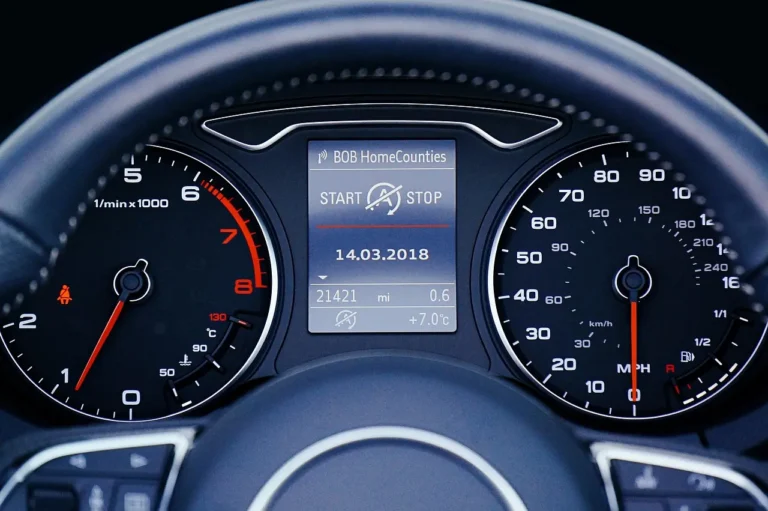
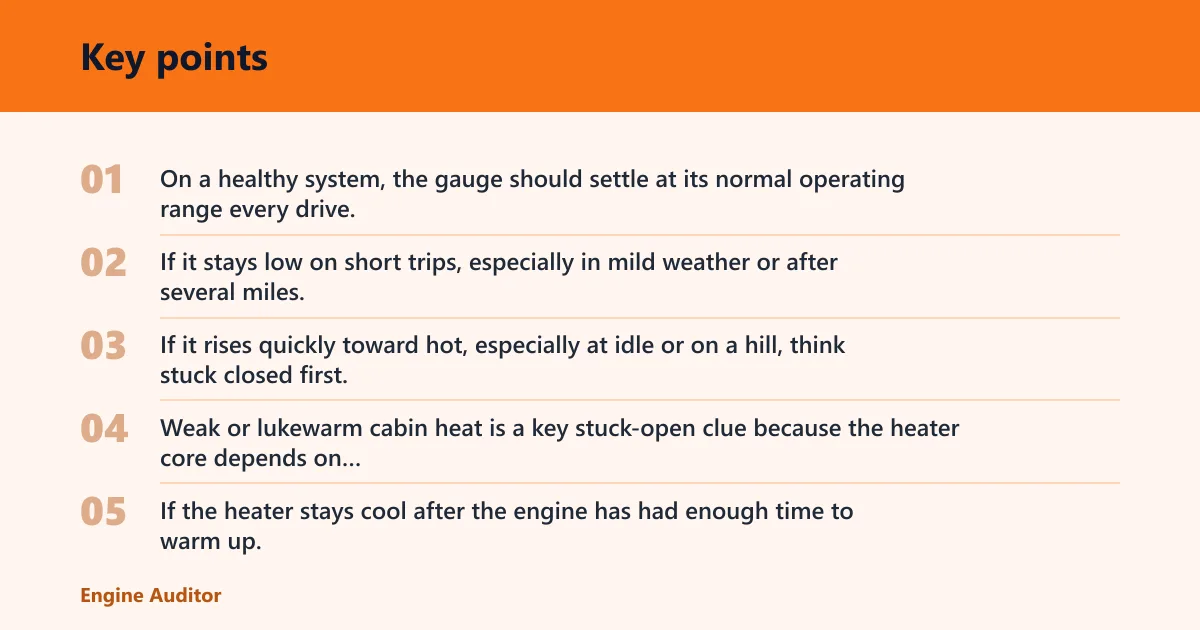
On a healthy system, the gauge should settle at its normal operating range every drive. If it stays low on short trips, especially in mild weather or after several miles, suspect a thermostat stuck open. If it rises quickly toward hot, especially at idle or on a hill, think stuck closed first.
Heater output clues
Weak or lukewarm cabin heat is a key stuck-open clue because the heater core depends on engine coolant reaching normal temperature. If the heater stays cool after the engine has had enough time to warm up, the thermostat is one possibility. Low coolant or air in the system can create the same complaint, so do not stop at heat alone.
Upper and lower hose pattern
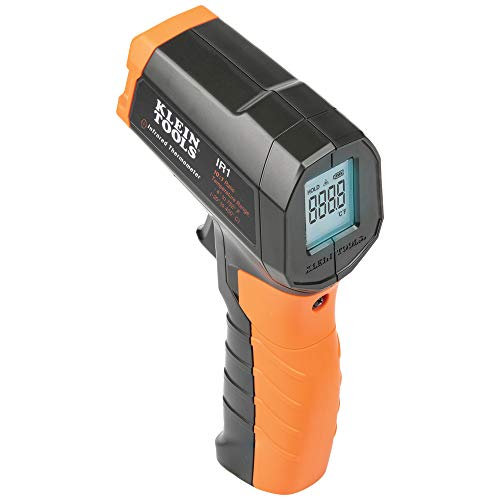
Hose-warming patterns can vary by vehicle, but the lower radiator hose should generally stay cooler until the thermostat opens. If the upper and lower hoses become similar in temperature early in warm-up, that can point to a thermostat stuck open. An infrared thermometer is better than hand-feel here, because touch tests can miss small but useful differences.
Highway versus idle behavior
Short-trip commuting often exposes a stuck-open thermostat first because the engine never gets enough continuous load to warm up fully. On the highway, the gauge may sit lower than normal for miles, and the heater may stay weak. A stuck-closed thermostat often shows itself more at idle, in traffic, or while towing, when heat builds faster than the system can shed it.
Picture a 4-cylinder commuter car that should reach normal operating temperature within a few miles. Instead, the needle lingers low, the heater is only warm at best, and the lower hose starts warming too soon. That pattern fits a stuck-open thermostat better than an overheating fault.
Thermostat diagnosis table
| Symptom | Likely cause | Next check |
|---|---|---|
| Gauge stays low after normal driving | Thermostat stuck open | Read coolant temperature with a scan tool and compare it with hose warmth |
| Gauge takes forever to leave cold, heater stays lukewarm | Thermostat stuck open or low coolant | Check coolant level cold, then confirm with scan-tool coolant data |
| Upper and lower hoses warm too early | Thermostat stuck open | Use an infrared thermometer and watch for similar hose temperatures before full warm-up |
| Gauge climbs fast above normal, especially at idle | Thermostat stuck closed | Pull over if the temperature rises quickly, then inspect coolant level only when safe and cool |
| Highway temperature stays lower than normal, heat is weak | Thermostat stuck open | Check for code P0128 and confirm slow warm-up with scan-tool coolant data |
| Overheating warning or temperature light | Thermostat stuck closed, fan fault, low coolant, or water pump issue | Do not keep driving; diagnose only after the engine is safe to inspect |
How do you rule out false positives?
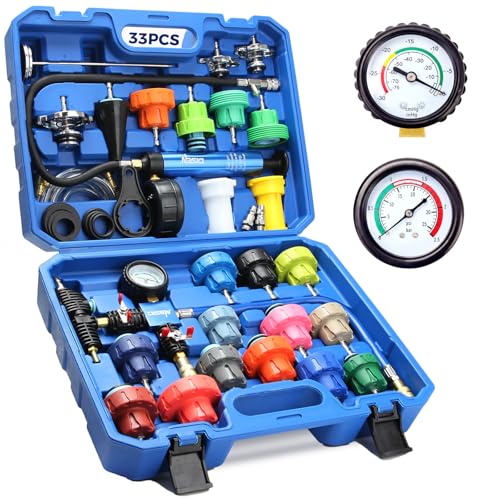
Low coolant, a radiator that has air trapped in the cooling system, a bad fan or relay, a slipping water pump, or a leaking thermostat housing can copy thermostat symptoms. The fastest way to avoid a wrong diagnosis is to check when the symptom happens, not just what it feels like.
| False positive | How it mimics a thermostat problem | How to rule it out |
|---|---|---|
| Low coolant | Weak heat, erratic gauge, slow warm-up, or overheating | Check the reservoir and radiator only when the engine is cold; look for leaks before replacing parts |
| Air trapped in the cooling system | Noisy heat, uneven temperature, odd gauge swings after service | Consider recent coolant service and bleed the system as specified for that vehicle |
| Bad fan or relay | Overheating at idle or in traffic that can look like a stuck-closed thermostat | Watch whether the fan comes on when coolant temperature rises and whether it behaves correctly with the A/C on |
| Water pump | Poor circulation, weak heat, or overheating under load | Look for coolant movement issues, leaks at the pump, or temperature changes that do not match thermostat behavior |
| Thermostat housing leak | Loss of coolant and air entry can create false thermostat symptoms | Inspect the housing for crusty residue, wet seams, or dried coolant tracks |
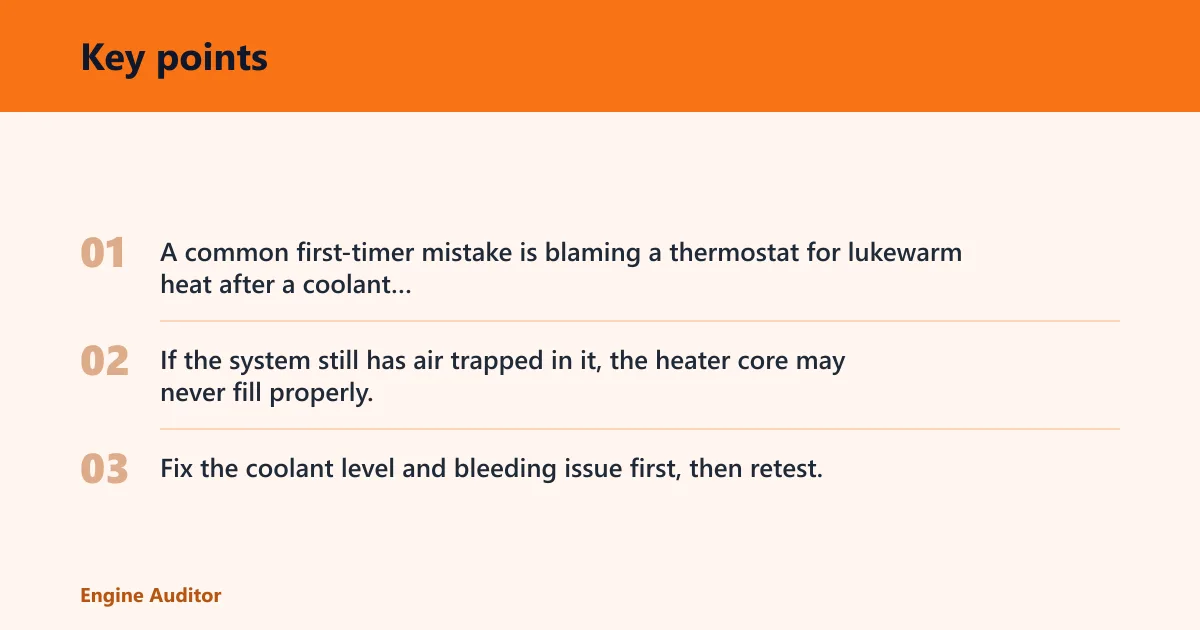
A common first-timer mistake is blaming a thermostat for lukewarm heat after a coolant top-off. If the system still has air trapped in it, the heater core may never fill properly, and the gauge can lie in either direction. Fix the coolant level and bleeding issue first, then retest.
What do scan tool readings mean?
An OBD-II scan tool reading coolant temperature is more accurate than touch tests. It gives you a number instead of a guess, which helps separate a slow warm-up from a real overheating problem. An infrared thermometer is also useful for checking hose temperatures, but the scan tool is the cleaner first read.
Coolant temperature PID
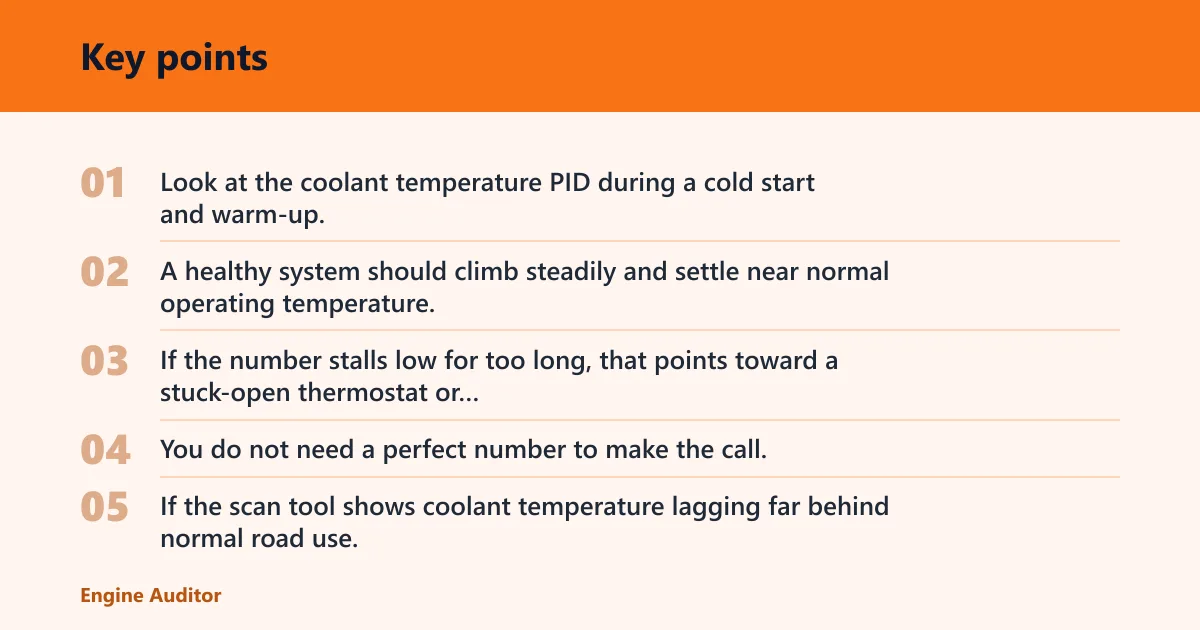
Look at the coolant temperature PID during a cold start and warm-up. A healthy system should climb steadily and settle near normal operating temperature. If the number stalls low for too long, that points toward a stuck-open thermostat or another warm-up problem.
Pass or fail reading
You do not need a perfect number to make the call. If the scan tool shows coolant temperature lagging far behind normal road use, while the gauge stays low and the heater stays weak, the thermostat is a strong suspect. If the temperature climbs fast and keeps rising, the concern shifts toward a stuck-closed thermostat or a circulation problem.
P0128 and slow warm-up
P0128 is a common code on many vehicles when the engine takes too long to warm up. That code does not prove the thermostat by itself, but it fits the rest of the stuck-open pattern very well. Use it as a clue, then verify with coolant temperature, hose behavior, and heater output.
Suppose a sedan on a cold morning shows P0128, a low gauge, and only lukewarm air after a 15-minute drive. If the lower hose warms early and the scan tool shows the coolant never reaches the expected range, the thermostat is a stronger suspect than the heater core.
What if the engine overheats instead?
Overheating warnings and a temperature light are more associated with a thermostat stuck closed. In that case, coolant cannot move through the radiator as it should, so heat rises quickly. If the gauge climbs fast, or you see steam, pull over and shut the engine off.
Do not open the radiator cap on a hot engine. Let it cool first. Do not keep driving to “see if it clears up,” because a stuck-closed thermostat can turn a manageable fault into a much larger repair.
Highway pulling, towing, and long idle time make stuck-closed problems show up faster. Short trips can hide them for a while, then one hot climb or traffic jam brings the fault back immediately.
What happens if thermostat is stuck open?
A stuck-open thermostat keeps coolant circulating continuously, so the engine runs too cool. That can mean poor heater performance, a low or never-normal gauge, and fuel waste from extended warm-up. It can also trigger P0128 on many vehicles if the engine takes too long to reach temperature.
What to do today
- Start with a cold engine.
- Check the gauge on a normal drive and note whether it stays low or climbs too fast.
- Feel the upper and lower hoses only after the engine has run long enough to warm up, or use an infrared thermometer instead.
- Read coolant temperature with an OBD-II scan tool and compare the number with the gauge and heater output.
- Check coolant level when the engine is cold, especially if the heat is weak or the gauge acts erratically.
- If the temperature rises fast, or a warning light appears, pull over and shut the engine off.
- If the symptoms fit low coolant, trapped air, fan trouble, a water pump issue, or a housing leak, fix those first before replacing the thermostat.
Frequently asked questions
How do I know if my thermostat is stuck open or closed?
A stuck-open thermostat usually keeps the gauge low, delays cabin heat, and warms the upper and lower hoses too early. A stuck-closed thermostat drives the gauge hot fast and can trigger an overheating warning. The cleanest split is timing: slow warm-up points open, fast heat rise points closed.
How do I know if my car thermostat is stuck open?
If your car takes a long time to reach normal temperature, the heater stays lukewarm, and the lower hose warms sooner than expected, the thermostat may be stuck open. Confirm with an OBD-II scan tool, because coolant temperature data is more accurate than touch tests alone.
Why does my engine take forever to warm up?
A thermostat stuck open is a common reason an engine warms up slowly. Low coolant, trapped air after service, or a temperature sensor problem can also delay warm-up. If the gauge stays low and the heater stays weak, read coolant temperature with a scan tool before replacing parts.
Why is my heater blowing lukewarm air?
Lukewarm heat often means the engine coolant is not reaching normal temperature, which fits a stuck-open thermostat. It can also happen with low coolant or air trapped in the system. Check coolant level cold, then confirm the warm-up pattern with the gauge and scan tool.
Products related to this article
Sponsored / affiliate links. As an Amazon Associate I earn from qualifying purchases. I may earn additional commission from eligible campaigns.