What Causes Car Tires to Wear on the Inside Edge?
Inside-edge tire wear usually comes from too much negative camber or toe, but one-sided wear, cupping, or repeat wear after an alignment often points to worn suspension parts. Ignore it and you can burn through new tires, pull the steering off-center, and shorten ball joint, bushing, or tie-rod life. This guide shows how to read the wear pattern, separate alignment from suspension failure, and tell the shop what to inspect next.
Wear pattern diagnostic table


| Wear pattern clue | Most likely cause | Next inspection step |
|---|---|---|
| Smooth inner-shoulder wear with the rest of the tread looking even | Negative camber, often with toe also out of spec | Check camber and toe on the affected axle, then compare inner, center, and outer tread depth with a tread depth gauge |
| Feathering you can feel across the tread blocks | Toe-in or toe-out misadjustment | Inspect for sawtooth edges on the tread and request a full toe check, not just a front toe set |
| Cupping or scalloping with repeating dips | Shocks or struts that are not damping the wheel well enough | Inspect for bounce, leaking dampers, and looseness in nearby suspension parts |
| One-sided wear on one tire, not both sides of the axle | A failed part on that corner, such as a ball joint or control arm bushing | Check for play, torn rubber, and shifted wheel position under load |
| Front tires wear inside but rear tires look normal | Front-axle camber or toe, steering-related impact damage, or worn front parts | Inspect front alignment numbers and front suspension joints before rotating the tires |
| Rear tires wear inside more than the fronts | Rear camber or rear toe on independent rear suspension, or worn rear suspension parts | Check rear alignment and rear control arm bushings, then look for damaged dampers |
| Inner tread is much lower than the center and outer ribs | Wear has moved past the point where alignment alone is enough | Replace the tire first if the inner shoulder is near the wear bars or the cord is visible, then correct the alignment cause |
What inside edge wear looks like
Inside-edge wear is not one look. Smooth shoulder wear points to alignment, feathering points to toe, and cupping points to damping or looseness. The pattern matters because it tells you whether the next inspection should focus on angles, worn parts, or both.
Smooth inner-shoulder wear
Smooth wear on the inner shoulder usually points to negative camber, especially when the rest of the tread still looks even. Negative camber means the tire leans inward toward the vehicle when viewed from the front or rear, and it can happen on the front or rear axle. It is a common cause of inner tire deterioration.
Feathering across the tread
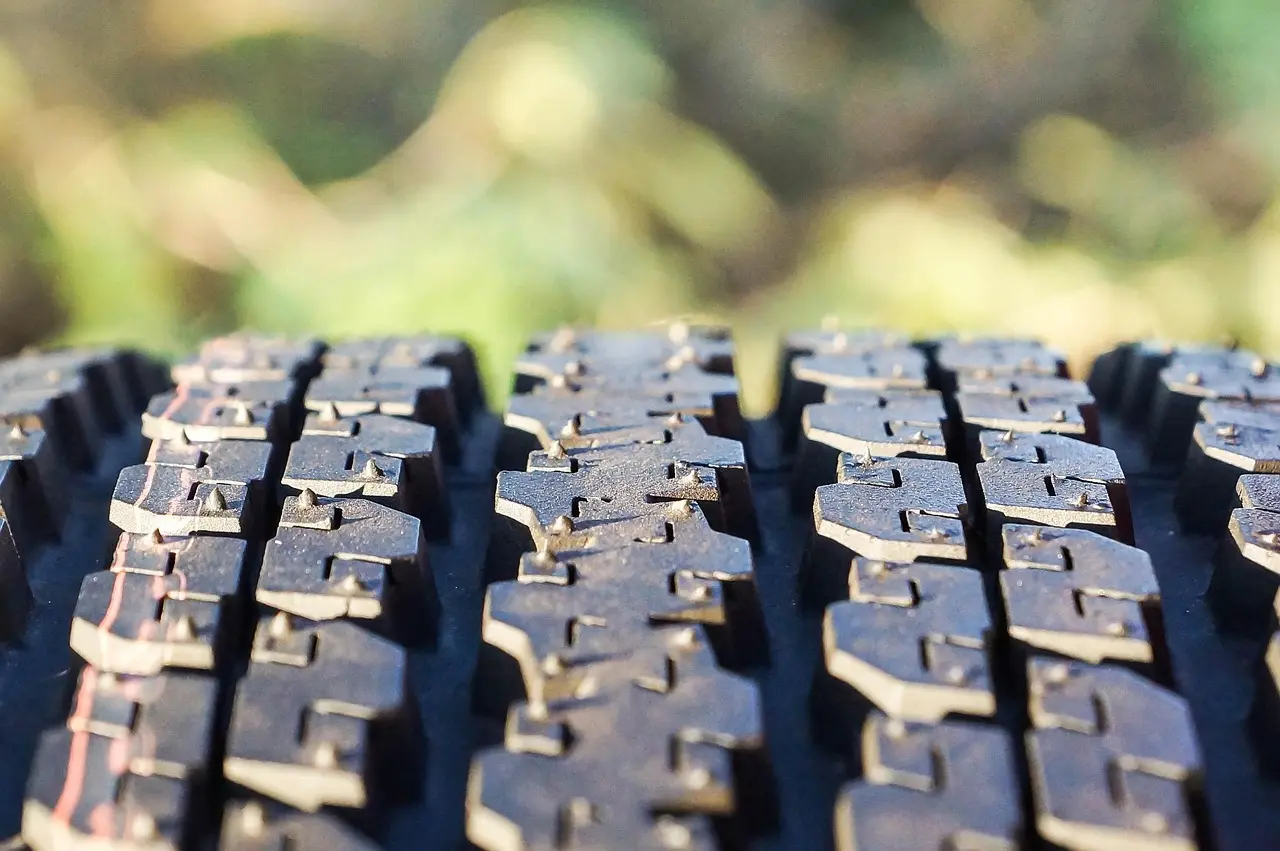
Feathering feels like one tread block edge is sharp and the next is rounded. That pattern usually points to toe misalignment, because incorrect toe settings make the tire point inward or outward and scrub as it rolls. Toe problems can still wear the inner edge, but the tread texture usually gives them away.
Cupping or scalloping
Cupping or scalloping shows up as repeated dips or high and low spots around the circumference. Worn shocks and struts can cause that pattern, and bad shock springs may also make interior or exterior tread wear unevenly. If cupping sits beside inner-shoulder wear, suspect more than one fault at once.
One-sided wear versus both shoulders
One-sided wear on a single tire often means the corner itself has a problem, not just a general alignment setting. Both front tires with similar inner wear usually point to a shared front-axle issue. One rear tire with heavier inner wear calls for a closer look at that side’s hardware and rear geometry.
Why are my tires wearing on the inside edge?
Most inside-edge wear starts with negative camber or toe misalignment. Underinflation or overinflation can add to the problem, but inflation alone usually does not create the same pattern as a bad alignment angle. When the wear is mixed, the tire may be showing two problems at once, such as camber wear plus feathering.
Negative camber
Negative camber is the most common alignment-related cause of inner-edge wear. The top of the wheel leans inward, which loads the inside shoulder harder than the rest of the tread. Some performance or sport-tuned vehicles use negative camber on purpose, so the key question is whether the camber is within spec for that vehicle.
Toe misalignment
Toe misalignment wears tires by scrubbing them as they roll. That can accelerate inside-edge wear and often creates feathering instead of the smooth shoulder wear linked to camber. A wheel alignment can correct toe only if the suspension parts that set those angles still fall within spec.
Underinflation or overinflation
Improper tire inflation can deform a tire and speed up wear. Low pressure often loads the outer shoulder more, but it can also change how the contact patch slides and make existing alignment wear worse. Check pressure cold against the placard or owner’s manual before deciding the alignment is the only issue.
For example, a 225/45R18 front tire may show about 4/32 on the inner rib, about 7/32 in the center, and about 6/32 on the outer rib, with smooth wear and no feathering. That pattern leans toward camber. If the same tire also has sharp, sawtooth tread blocks, toe joins the list.
Mixed causes on the same tire
Mixed wear is common. A tire can have a camber-related inner shoulder and toe-related feathering on the same tread. That is why a visual guess is not enough. Compare tread depth at the inner, center, and outer ribs with a tread depth gauge, then use the pattern to choose the next inspection.
Is it an alignment problem or worn parts?
Inside wear can begin as an alignment issue and then keep returning because something is loose or worn. Ball joints, control arm bushings, and shocks and struts can all change wheel position under load. A fresh alignment does not fix worn parts, so repeat wear after a recent alignment is a warning sign.
Ball joints
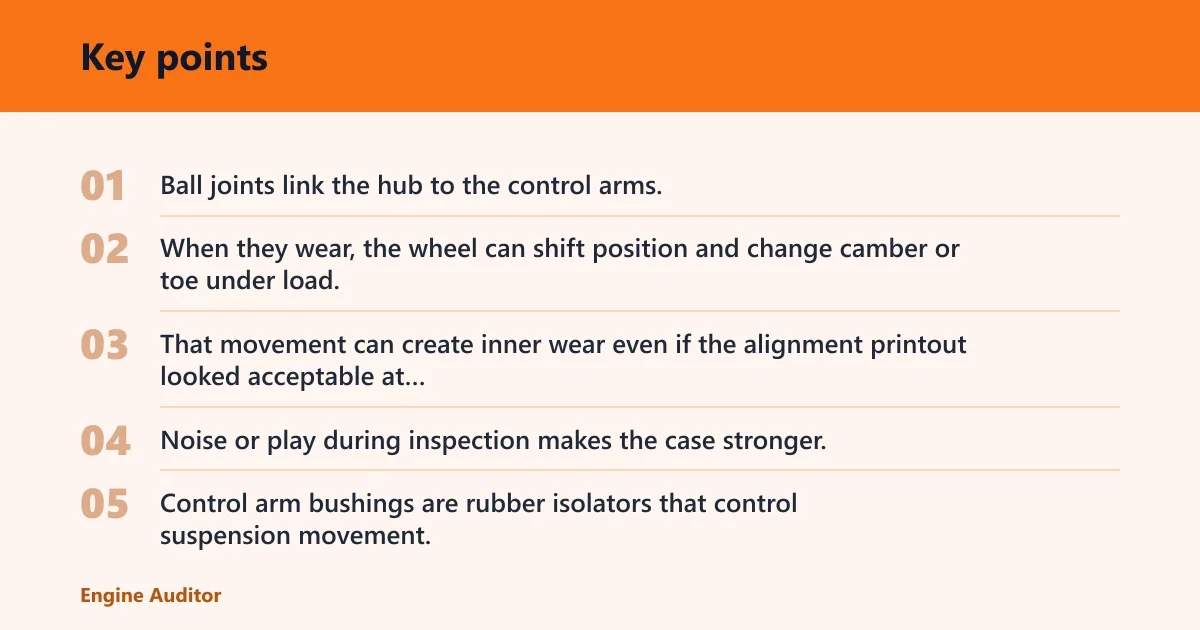
Ball joints link the hub to the control arms. When they wear, the wheel can shift position and change camber or toe under load. That movement can create inner wear even if the alignment printout looked acceptable at the time of service. Noise or play during inspection makes the case stronger.
Control arm bushings
Control arm bushings are rubber isolators that control suspension movement. If they are worn, the arm can move enough to shift alignment under braking, cornering, or acceleration. That can produce uneven internal or external tread wear, and the change may show up only while the vehicle is driving.
Shocks and struts
Shocks and struts damp suspension bounce. When they are worn, the tire can skip and wear in cups or scallops, and that uneven motion can worsen inner-edge wear already caused by alignment. If the tire wears unevenly and the body bounces more than expected, the dampers belong in the diagnosis.
Why alignment alone may not hold
Wheel alignment corrects camber and toe specs, but only within the limits of the parts that hold those angles. If a ball joint is loose, a bushing is cracked, or a strut is weak, the numbers can drift again after the service. That is why repeated inner wear after an alignment often means a part failed first.
A common first-timer mistake is to buy two front tires, pay for an alignment, and skip the suspension check. If a worn lower ball joint is letting the wheel tip inward under load, the new tires can start wearing the same way within weeks.
Why are only my front tires wearing on the inside?
Front-only inner wear usually points to front-axle camber or toe, steering-related impact damage, or wear in front suspension parts. If the car also pulls, tracks poorly, or has a crooked steering wheel, the front end deserves the first inspection. Front wear often changes steering feel before it changes ride quality.
Front-axle camber and toe
Front geometry is the first place to look when both front tires wear inside at a similar rate. Negative camber can do that, and toe misalignment can speed it up. A front wheel alignment should check both angles, not only toe, and should be followed by a suspension inspection if the wear returns.
Steering feel clues
If the steering wheel is off-center, the vehicle darts on grooved pavement, or the front end feels nervous in a straight line, toe is worth a close look. If the front tires wear inside without those symptoms, camber or a sagging part may be more likely. The pattern should guide the shop, not the other way around.
Impact damage and curb hits
Hitting a pothole or curb can bend or shift a front suspension part enough to alter camber or toe. That can create one-sided inner wear on a single front tire, especially if the damage happened after a fresh alignment. A quick visual check is not enough if the wheel or suspension took a hit.
When front wear points to a single failed part
One front tire wearing inside much faster than the other often points to a corner-specific fault. That may be a ball joint, a control arm bushing, or a bent component. If the wear is severe on one side only, ask for a play check on that corner before more alignment work.
Why are my rear tires wearing on the inside?
Rear inner wear often points to rear camber, rear toe, or wear in the rear suspension on vehicles with independent rear suspension. Lowered cars and sport-tuned setups can also run more rear negative camber by design, which makes the distinction between intended geometry and a fault especially important.
Rear alignment checks
Rear alignment matters even though the rear wheels do not steer. Rear camber and rear toe can wear the inner shoulder and affect vehicle stability. The Drive Quip page notes that rear inner wear can involve misalignment, improper camber, or worn suspension components, which is why rear readings should not be skipped.
Independent rear suspension
Independent rear suspension has more parts that can move out of spec, including links and bushings that affect camber and toe. That makes rear inner wear more likely to come from geometry changes or worn hardware than from tire pressure alone. A shop should inspect the rear axle, not only the front end.
Lowered or sport-tuned geometry
Lowered vehicles often run more negative camber than stock height vehicles. Some performance setups accept a small amount of inner wear as a tradeoff, but the tire should still wear evenly enough to stay serviceable. If rear tires wear rapidly on the inside, a lowered stance is not a free pass to ignore a fault.
Rear tire wear and vehicle stability
Rear tire wear affects more than tread life. It can change how the vehicle tracks, how it reacts in a lane change, and how much grip the rear axle has in wet turns. That is why rear inner wear deserves the same inspection priority as front wear, even if the steering wheel feels normal.
Tire wear check list
- Measure tread depth at the inner, center, and outer ribs on each affected tire with a tread depth gauge.
- Check tire pressure cold and set it to the placard or owner’s manual, not the number molded on the sidewall.
- Inspect for play at the ball joints and control arm bushings, then look for torn rubber, looseness, or shifting at the wheel.
- Check shocks and struts for leaks, bounce, and cupping or scalloping that matches the wear pattern.
- Review any recent impact, curb strike, or suspension repair that could have changed alignment.
- Decide whether the tire is still serviceable, needs alignment work, or should be replaced before any other service.
Replace the tire first if the inner shoulder is near the wear bars, if cord is visible, or if the wear difference is severe enough that the tire is no longer safe to keep in service. A new alignment cannot restore missing tread. It can only stop the next tire from wearing the same way.
Frequently asked questions
Why are my car tires wearing on the inside edge?
Inside-edge wear usually means too much negative camber or toe misalignment. Underinflation or worn suspension parts can add to it. The pattern matters: smooth shoulder wear points to camber, feathering points to toe, and cupping points to shocks or struts.
Is inside tire wear an alignment problem?
Often, yes. Poor wheel alignment can cause camber problems and inside tire wear. But if the wear returns after an alignment, a worn part may be letting the angle drift again. Ball joints, control arm bushings, and shocks and struts are common suspects.
Can bad ball joints cause inside tire wear?
Yes. Ball joints can let the wheel shift position, which changes camber or toe under load. That movement can create inner-edge wear even if the static alignment looked acceptable. Noise, looseness, or uneven steering response can support that diagnosis.
What does negative camber do to tires?
Negative camber tilts the tire inward toward the vehicle. That puts more load on the inner shoulder and often causes inner tire deterioration. Some performance or sport-tuned vehicles use more negative camber on purpose, so the key is whether the setting matches the vehicle’s spec.
Can low tire pressure cause inner edge wear?
Incorrect tire inflation can deform tires and speed up wear, so pressure should always be checked cold first. Low pressure can change the contact patch and worsen uneven wear, but it does not replace the need to check camber, toe, and suspension parts when the pattern points that way.
Can tire rotation fix inside edge wear?
Rotation can help slow future uneven wear, but it does not fix the root cause. If the tire is already worn heavily on the inner shoulder, rotation only moves the problem to another position on the vehicle. Fix the alignment or worn part first, and replace the tire if it is already past safe tread depth.
Products related to this article
Sponsored / affiliate links. As an Amazon Associate I earn from qualifying purchases. I may earn additional commission from eligible campaigns.