Transmission Control System P0730 Code: Incorrect Gear Ratio
P0730 means the transmission control system sees an input-to-output speed ratio that does not match the commanded gear, a ratio-validation fault rather than a single-part failure code. If you ignore it, a control issue can turn into clutch damage, limp mode, or a no-move condition. This guide shows how to separate bad sensor data, low hydraulic pressure, and true internal slip.
What P0730 means
P0730 is an OBD-II powertrain code commonly associated with an incorrect gear ratio. The transmission control module watches commanded gear against the ratio calculated from input and output speed data, then flags a fault when the numbers do not agree long enough to matter. The same code can appear with harsh shifts, slipping, or limp mode, but the root cause is not the same on every vehicle.
How the control module judges ratio
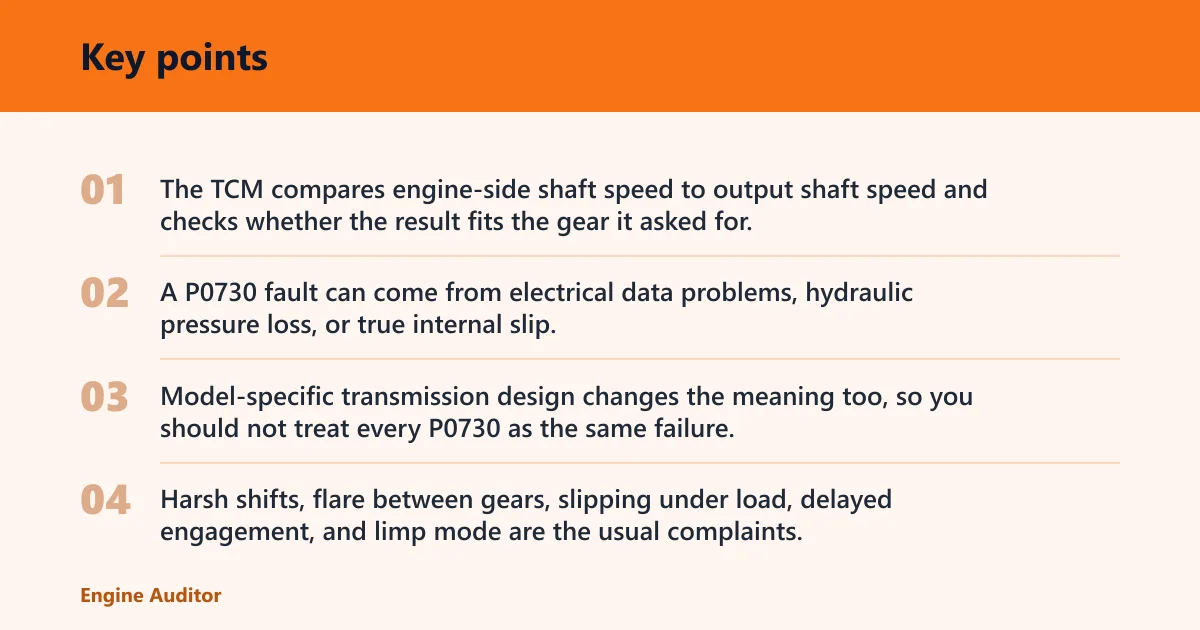
The TCM compares engine-side shaft speed to output shaft speed and checks whether the result fits the gear it asked for. If the signal from the input speed sensor, output speed sensor, vehicle speed signal, or a hydraulic circuit is wrong, the module may think the transmission is in the wrong gear even when the driver feels only a shift complaint.
Why the code is broader than one part
A P0730 fault can come from electrical data problems, hydraulic pressure loss, or true internal slip. That is why one vehicle may need a sensor or connector repair, while another needs a valve body or rebuild. Model-specific transmission design changes the meaning too, so you should not treat every P0730 as the same failure.
Symptoms that often show up
Harsh shifts, flare between gears, slipping under load, delayed engagement, and limp mode are the usual complaints. Some vehicles also set additional TCM-related codes, and those extra codes often point you toward the right branch of the diagnosis faster than P0730 alone.
P0730 diagnosis decision tree
Use live data, freeze-frame information, fluid checks, and related codes to sort the fault into one of three buckets: signal error, hydraulic loss, or internal slip. The first clue matters most. A clean scan pattern can save you from replacing parts that are not the problem.
| Product | Badge | Best for | Price | ||
|---|---|---|---|---|---|
 |
FOXWELL Car Scanner NT604 Elite OBD2 Scanner ABS SRSFOXWELL | Our pick | OBD2 · Live data · ABS/SRS/Transmission | $169.99
Price as of 19 Nov 2026
|
View |
 |
Master Engine and Transmission Oil Pressure Test SetDKwoeshg | Also great | Oil pressure test set · 14 adapters | $42.99
Price as of 19 Nov 2026
|
View |
 |
ANENG Multimeter,TRMS 20000 Count Magnetic High ResolutionANENG | Pair with it | 20,000 count · Magnetic · Automotive multimeter | $42.99
Price as of 19 Nov 2026
|
View |
| Observable evidence | Related codes | Live input/output speed behavior | Fluid and pressure clues | Likely fix tier | Next test to run |
|---|---|---|---|---|---|
| Noisy, missing, or implausible speed data | Sensor or circuit codes such as P0715, P0720, P0717, or vehicle speed signal faults | Input speed drops out, jumps, or reads zero at the wrong time; output speed and commanded gear do not line up | Fluid may be normal or only mildly off; pressure may still be in range | Electrical | Check sensor waveform or resistance, then inspect wiring and connector pins |
| Delayed apply, flare, or slip mostly under load | Shift solenoid or pressure control codes such as P07xx solenoid faults, line-pressure codes, or TCM pressure complaints | Gear command changes, but actual ratio is late or unstable on the scan tool | Low, aerated, or burnt ATF; line pressure low or slow to build | Hydraulic | Check ATF level and condition first, then measure line pressure and inspect the valve body |
| Speed data looks sane, but ratio still slips in one or more gears | P0730 plus gear-specific ratio codes such as P0731, P0732, or P0734 | Input and output speeds are believable, yet the actual ratio stays outside range during the shift | Burnt fluid, metallic debris, or pressure that falls under load | Mechanical | Perform a pressure test, then inspect clutch pack or band wear and internal sealing loss |
| Intermittent fault after bumps, rain, or heat soak | TCM communication or intermittent sensor codes | Live data breaks up only when cable movement or heat changes the signal | Fluid may be fine; pressure may test normal | Electrical | Perform a wiggle test on cable runs and recheck connector corrosion and grounds |
Evidence that points to sensor or signal error
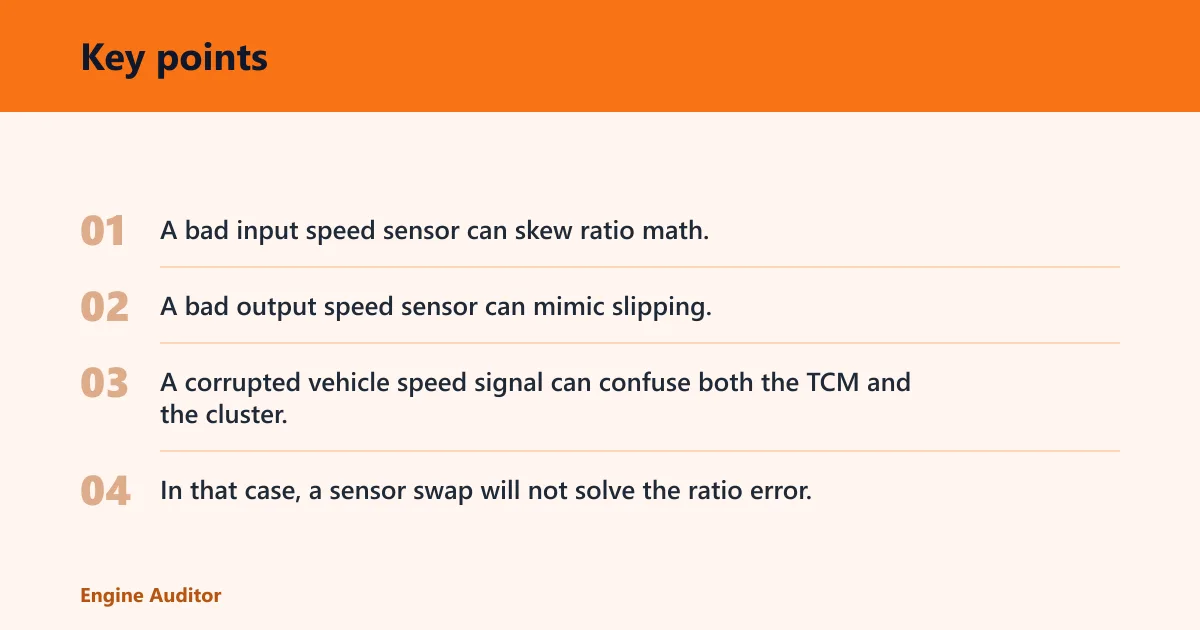
Sensor trouble is likely when live data jumps, flatlines, or disagrees with engine and road speed in a way that does not match the drive complaint. A bad input speed sensor can skew ratio math. A bad output speed sensor can mimic slipping. A corrupted vehicle speed signal can confuse both the TCM and the cluster.
Evidence that points to hydraulic pressure loss
Hydraulic trouble is more likely when the transmission moves, but the shift feels late, soft, or flare-prone under throttle. Burnt ATF, low level, or slow pressure rise points toward pump wear, valve body leakage, stuck valves, or another internal leak path. In that case, a sensor swap will not solve the ratio error.
Evidence that points to internal slip
If the live speed data is believable and line pressure checks out, but the actual ratio still misses the commanded gear, suspect clutch pack wear, band slip if the design uses bands, or another internal sealing failure. That is the point where repeated driving can turn a repairable fault into wider damage.
Can low transmission fluid cause a P0730?
Low transmission fluid can trigger P0730 because ATF level and condition affect clutch apply, hydraulic pressure, and shift timing. If the fluid is low, aerated, dark, or burnt, the transmission may slip or flare enough to make the ratio calculation fail. A simple top-off is only useful if the level problem is the real fault.
Fluid level and condition clues that matter
Check the fluid at the correct temperature and procedure for that vehicle, because some units require the engine running and the shifter cycled through each range. A warm, overfull, foamy, or burnt sample points in different directions. Dark fluid with a sharp odor and debris on the dipstick or pan magnet raises the odds of hydraulic or internal wear.
How aerated or burnt ATF changes shift quality
Aerated ATF compresses more easily, so clutch circuits fill and apply poorly. Burnt ATF often means heat, friction, or both, and that usually follows prolonged slip. Either condition can create harsh shifts, slip under load, or a ratio error that comes back after a reset.
Say your scan tool shows P0730 in third gear, the ATF is one quart low, and the fluid is dark but not full of metal. Fix the level and service the fluid only if the transmission then commands clean shifts and the ratio stays stable. If the fault returns, look deeper before assuming the service solved it.
When a fluid service is enough and when it is not
A fluid service can help when the issue is a low level, contaminated ATF, or a filter restriction that is not tied to hard internal damage. It is not enough when pressure is low because of pump wear, valve body leakage, or worn clutches. A fresh service cannot restore worn friction material.
- Verify the fluid level. Check ATF at the specified temperature and procedure, then correct any low level before moving on. A bad level reading can mislead every later test.
- Inspect the fluid condition. Look for burnt odor, dark color, foam, or metal debris in the pan or on the dipstick. These clues help separate maintenance issues from internal wear.
- Recheck live data. Clear codes only after the level is correct, then watch commanded gear, input speed, output speed, and vehicle speed during a road test. If the ratio error returns, continue diagnosis instead of repeating fluid service.
Speed sensor checks that matter most
Input and output speed sensor data are central to the ratio calculation, so a bad signal can create a false P0730. The cleanest check is live data first, then a meter or scope if the readings look wrong. Do not replace both sensors at once unless the data supports that move.
Input speed sensor data and test limits
The input speed sensor should rise and fall smoothly with engine and transmission behavior. If it drops to zero, spikes, or reports a speed that makes no sense for the gear commanded, the TCM may misjudge the ratio. A multimeter can catch open or shorted circuits, but a scan tool or scope is better for signal quality.
Output speed sensor behavior in live data
The output speed sensor should track vehicle motion in a stable way. If the output reading is missing or erratic, the transmission may look like it is slipping even when it is not. A faulty output signal can also affect the vehicle speed display, depending on the platform.
Vehicle speed signal cross-checks
Cross-check the vehicle speed signal against road speed and the cluster. If the scan tool shows a clean output speed but the vehicle speed data is wrong, the problem may be in the circuit that feeds the TCM, the cluster, or a shared network path. Freeze-frame data helps show whether the fault happened during acceleration, cruise, or a shift event.
- Review freeze-frame data. Note gear, road speed, engine load, and temperature when the code set. That context tells you whether the fault happened during a shift or under steady load.
- Compare all speed signals. Watch input speed, output speed, and vehicle speed together on the scan tool during a road test. A mismatch in one stream usually narrows the fault fast.
- Test the circuit next. Check the sensor connector, cable routing, power, ground, and signal integrity with a meter or scope. Replace the sensor only after the circuit data confirms the fault.
What related codes tell you
Related codes often point toward the failed system faster than P0730 itself. Electrical codes suggest a bad signal path. Pressure or solenoid codes suggest hydraulic control trouble. Gear-specific ratio codes raise the chance of real slip or a clutch that cannot hold the commanded gear.
Codes that support an electrical or sensor fault
Sensor or circuit codes such as input speed, output speed, or vehicle speed faults make an electrical path more likely. If the TCM has missing or implausible data, the ratio math becomes unreliable even if the transmission is mechanically healthy. That is the branch where wiring, connector corrosion, and sensor power or ground deserve first attention.
Codes that point to pressure control or solenoid issues
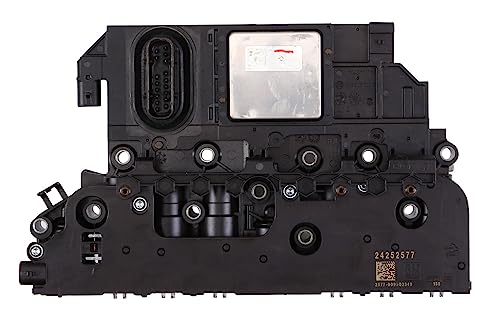
Shift solenoid faults, pressure control faults, and line-pressure codes point toward hydraulic command trouble. The shift solenoid controls which clutch circuit applies under load, so a stuck or electrically failed solenoid can cause the wrong ratio even with good sensors. Valve body wear can produce the same pattern.
Codes that raise suspicion of internal mechanical wear
Additional gear-ratio codes, especially those tied to specific gears, can suggest worn clutch packs, band problems, or sealing loss inside the transmission. If the code appears with burnt fluid or metal debris, the odds of internal damage rise. At that stage, a scan tool alone is not enough.
Hydraulic and mechanical failure paths
Hydraulic and mechanical faults often look similar from the driver’s seat, but the diagnosis changes once you check pressure and fluid. The useful question is whether the transmission is failing to apply the correct element, or whether it is applying but slipping under load. The answer changes the repair tier.
Shift solenoid and valve body problems
A faulty solenoid can absolutely cause an incorrect gear ratio. If the solenoid sticks, leaks internally, or fails electrically, the wrong clutch circuit may apply, or the apply may arrive too late. Valve body wear can mimic the same problem by bleeding off pressure before the clutch fully grabs.
Low line pressure and pump or leak clues
Low line pressure can come from pump wear, a worn pressure regulator, valve body leakage, seal failure, or an internal leak. A pressure test gives the clearest answer here. If pressure is low in the gears that set the code, the problem is more likely hydraulic than electronic.
A common first-timer mistake is replacing a speed sensor after seeing one bad shift. Suppose the scan tool shows a steady input speed, a steady output speed, and a drop in line pressure only during a hot third-gear pull. That pattern points away from the sensor and toward pressure loss or internal slip.
Transmission internal wear and slip evidence
Internal wear becomes more likely when the fluid is burnt, the pan has friction material, and the ratio error appears under load even though the speed data looks believable. Clutch pack wear, a slipping band, or sealing loss can make the transmission command the right gear and still miss the ratio target. No sensor replacement fixes that.
Is it safe to drive?
Limited driving may be possible if the transmission still shifts normally, the fluid is full and clean, and the code has not pushed the vehicle into limp mode. Continued driving is risky when the transmission slips, bangs into gear, or loses drive. A battery reset will not fix the fault because it does not solve the ratio mismatch.
When limited driving may be possible
If the code is intermittent, the vehicle still moves normally, and live data does not show active slip, short trips to a repair location may be reasonable. Keep load light and avoid towing or hard acceleration. If the condition worsens, stop driving and recheck the fluid and codes.
When continued driving risks more damage
Do not keep driving if the transmission flares, slips, stays in limp mode, or loses one gear after another. That behavior can burn clutches quickly and turn a hydraulic or electrical fault into a rebuild-level failure. Once the unit starts slipping hard, damage can spread fast.
Why a battery reset will not fix the fault
Disconnecting the battery may clear the code temporarily, but it does not repair a bad sensor, weak pressure, or worn clutch pack. The module will relearn only until the ratio check fails again. Resetting without a diagnosis can also erase freeze-frame data that would have helped narrow the problem.
Must-have
These are the three items that matter first if you are tracing P0730 from live data to proof. They support code reading, circuit checks, and pressure diagnosis without guessing.
Our pick
FOXWELL · OBD2 · Live data · ABS/SRS/Transmission
- Reads transmission-related trouble codes
- Shows live data for diagnosis
- No app or Bluetooth pairing needed
Drawback: Check compatibility with your vehicle before buying.
$169.99
Price as of 19 Nov 2026
View on Amazon →
As an Amazon Associate we earn from qualifying purchases. Prices and availability are accurate as of the date shown and are subject to change
- Reads transmission-related trouble codes
- Shows live data for diagnosis
- No app or Bluetooth pairing needed
FOXWELL NT604 Elite OBD2 scanner. Based on the published product details, this tool reads transmission-related trouble codes and shows live data without app pairing. That makes it useful for watching commanded gear, input and output speeds, and freeze-frame data. The drawback is that it is a scan tool, not a pressure tester, so it cannot prove hydraulic health by itself.
Pair with it
ANENG · 20,000 count · Magnetic · Automotive multimeter
- Magnetic body attaches to metal surfaces
- Measures voltage, current, resistance and more
- Double-fuse design adds protection
Drawback: Check the included lead set against your testing needs.
$42.99
Price as of 19 Nov 2026
View on Amazon →
As an Amazon Associate we earn from qualifying purchases. Prices and availability are accurate as of the date shown and are subject to change
- Magnetic body attaches to metal surfaces
- Measures voltage, current, resistance and more
- Double-fuse design adds protection
ANENG TRMS multimeter. Based on the manufacturer’s specs and buyer feedback, this meter is useful for checking sensor power, ground, resistance, and continuity on speed sensor circuits and solenoids. The magnetic body can help with underhood placement. The drawback is that a multimeter may miss intermittent waveform problems that a scope would catch faster.
Also great
DKwoeshg · Oil pressure test set · 14 adapters
- Includes 14 thread adapters
- Covers engine and transmission pressure testing
- Comes in a storage case
Drawback: Coverage depends on the included adapters.
$42.99
Price as of 19 Nov 2026
View on Amazon →
As an Amazon Associate we earn from qualifying purchases. Prices and availability are accurate as of the date shown and are subject to change
- Includes 14 thread adapters
- Covers engine and transmission pressure testing
- Comes in a storage case
DKwoeshg oil pressure test set. This pressure test kit matters when you need to verify line pressure instead of guessing. The 14 adapters help it fit more ports, and the case helps keep the pieces together. The drawback is that pressure ports and adapter fit vary by transmission, so you still need the correct service information.
Nice-to-have
These items help when the diagnosis turns from scan data to physical testing, especially if the fault shifts toward pressure loss or internal wear.
DKwoeshg oil pressure test set. It fits here as a second-level diagnostic aid when live data alone does not settle the question. The main limit is that a gauge reading still needs the right spec for that transmission family, or the number will not mean much.
: aNENG TRMS multimeter
ANENG TRMS multimeter. For electrical checks, this meter can confirm whether a sensor or solenoid circuit has power, ground, and continuity. A drawback is that it does not replace a wiring diagram or a scan tool, so you still need the right reference data.
Consumables and spares
These are the items most likely to be needed after the diagnosis points to a specific branch. They are not first-line guesses. They are the follow-through parts if the evidence supports the repair.
: fOXWELL NT604 Elite OBD2 scanner
FOXWELL NT604 Elite OBD2 scanner. This is not a consumable in the usual sense, but it can stay in the toolkit for repeat checks after a repair. The drawback is that it helps verify the fix, yet it will not replace a failed clutch, solenoid, or pressure circuit.
: aNENG TRMS multimeter
ANENG TRMS multimeter. Keep it available for post-repair voltage, resistance, and continuity checks. Its limitation is that it can only confirm circuit health, not the condition of the transmission’s internal friction parts.
Budget setups
Use the setup that matches how far you need to go. A scan-only plan is enough for a first pass. A pressure-capable plan is better when the data points to hydraulic trouble. A full electrical-and-pressure setup is the right choice when the fault refuses to separate cleanly.
| Setup | What it includes | Typical use | Price |
|---|---|---|---|
| Starter | FOXWELL NT604 Elite OBD2 scanner | Read P0730, check freeze-frame data, watch input and output speed behavior | $169.99 |
| Mid | FOXWELL NT604 Elite OBD2 scanner + ANENG TRMS multimeter | Trace sensor and solenoid circuits after the scan tool points to an electrical path | $212.98 |
| Serious | FOXWELL NT604 Elite OBD2 scanner + ANENG TRMS multimeter + DKwoeshg pressure test set | Separate sensor error from hydraulic loss and confirm line pressure before deeper repair | $255.97 |
Frequently asked questions
What does P0730 incorrect gear ratio mean?
P0730 means the transmission control module calculated a gear ratio that did not match the gear it commanded. That mismatch can come from a bad speed signal, low hydraulic pressure, or true internal slip. The code is a check result, so the cause still has to be proven with live data and related codes.
Can low transmission fluid cause a P0730 code?
Yes. Low ATF can reduce apply pressure, add aeration, and let the transmission slip enough to fail the ratio check. The fluid level must be checked at the correct temperature and procedure. If the level is normal but the fluid is burnt or contaminated, deeper hydraulic or mechanical trouble becomes more likely.
Is it safe to drive with a P0730 code?
Only short, light driving may be reasonable if the transmission still shifts normally and does not slip. If the unit flares, bangs, or drops into limp mode, continued driving can cause more clutch damage. A reset may hide the code for a short time, but it does not fix the fault.
What symptoms does P0730 usually cause?
Common symptoms include slipping, harsh shifting, delayed engagement, flare between gears, and limp mode. Some vehicles also show a wrong gear display or a check engine light with other transmission codes. The exact symptom pattern matters, because it often points toward electrical, hydraulic, or mechanical trouble.
Can a bad transmission speed sensor cause P0730?
Yes. A bad input speed sensor or output speed sensor can distort the ratio calculation and make the TCM think the transmission is slipping. Corroded connectors, damaged wiring, and missing power or ground can create the same result. That is why scan data and circuit checks should come before part replacement.
Do I need a transmission rebuild for a P0730 code?
Not always. A rebuild is more likely when fluid is burnt, metal is present, pressure is low, and the ratio error holds true under load even though the sensors read normally. If the fault is a wiring issue, solenoid problem, or low fluid level, the repair can be much smaller than a rebuild.
Products related to this article
Sponsored / affiliate links. As an Amazon Associate I earn from qualifying purchases. I may earn additional commission from eligible campaigns.