Honda Civic Spark Plug Replacement Interval: When to Change Them
Honda Civic spark plugs are often replaced at about 100,000 miles on long-life iridium engines, while older Civics with conventional plugs may need replacement around 30,000 to 60,000 miles. Worn plugs can trigger misfires, hard starts, poor fuel economy, and catalytic-converter damage. This guide covers the normal interval, engine-specific exceptions, and the symptoms that mean you should replace them sooner.
Match the interval to your specific engine and plug spec
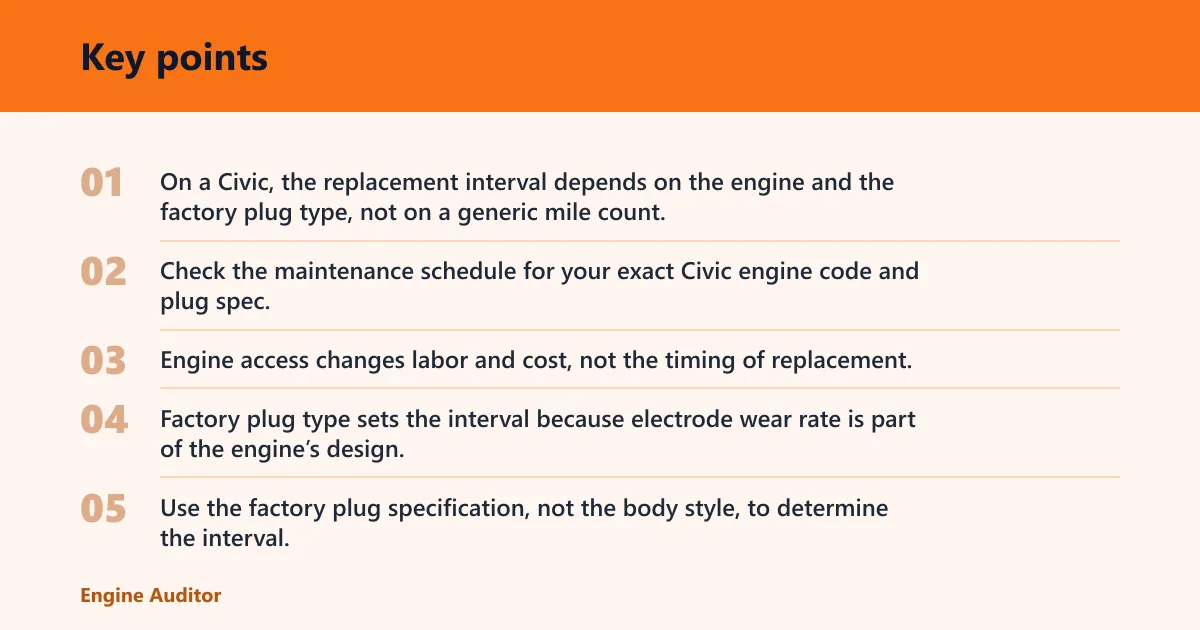


On a Civic, the replacement interval depends on the engine and the factory plug type, not on a generic mile count. Precious-metal electrodes hold their gap far longer than conventional ones, so Honda’s published interval is tied to the plug the engine was built around. Confirm the exact schedule in the Honda owner’s manual or maintenance schedule for your engine code; if the published interval is unclear, confirm by VIN/engine code.
Check the maintenance schedule for your exact Civic engine code and plug spec. If the manual lists a long-life plug, follow that schedule unless symptoms, repeated misfire history, or severe short-trip use point to earlier wear. When a plug spec or interval cannot be verified from the vehicle’s exact application, treat it as unknown rather than assuming the same part fits every trim.
Engine access changes labor and cost, not the timing of replacement. Some Civics are easy to service from the top with coil removal; others require extra disassembly, such as an intake manifold on certain layouts. That access difference does not change the service interval listed for the engine.
Why factory plug type matters
Factory plug type sets the interval because electrode wear rate is part of the engine’s design. An iridium or other precious-metal plug can last much longer than a conventional nickel plug, but that does not mean every iridium plug belongs in every Civic, or that every Civic gets the same mileage target. Use the factory plug specification, not the body style, to determine the interval.
Which Civic spark plug fits your engine?
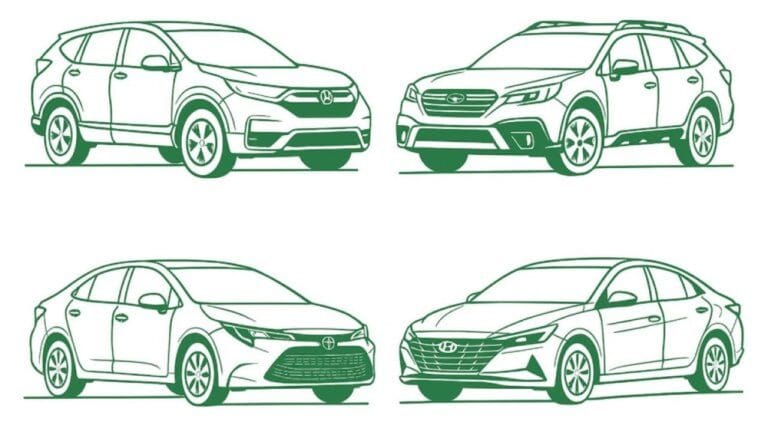
Check the model year and engine before you buy parts. Civic generations overlap with different engines, and the correct spark plug part number can change even within the same generation. The safest fitment rule is to match the exact engine code, then confirm the part number and gap in the application data.
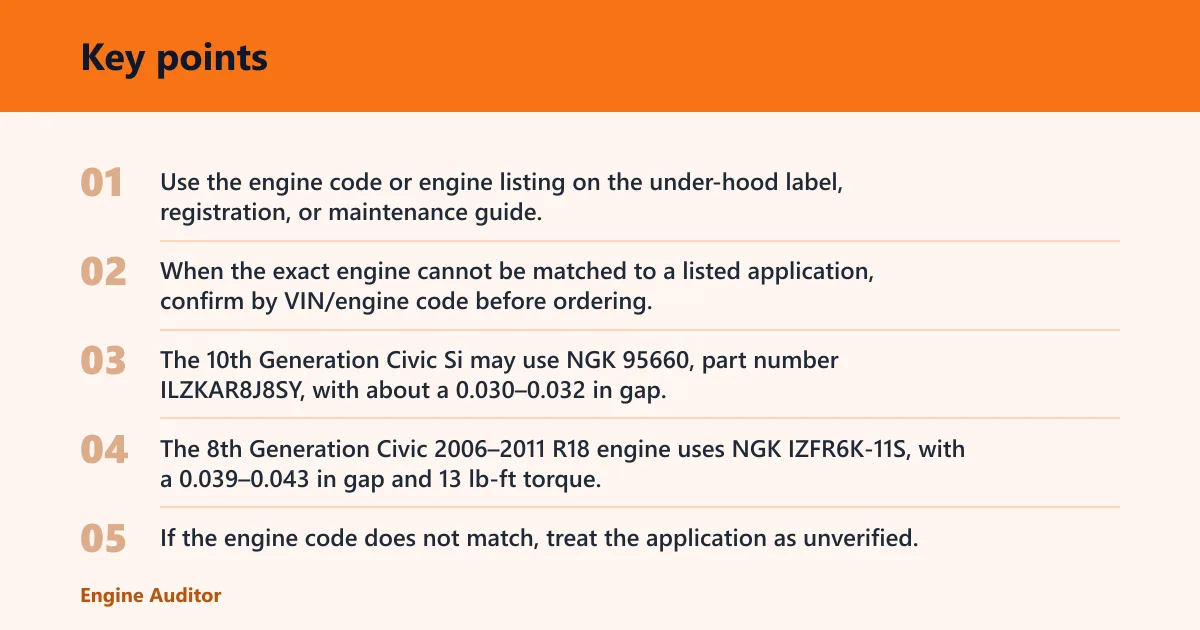
Use the engine code or engine listing on the under-hood label, registration, or maintenance guide. If the car has a turbo, a Si badge, or an older R18 engine, check the exact application instead of assuming the whole generation uses one plug. When the exact engine cannot be matched to a listed application, confirm by VIN/engine code before ordering.
Part number checks for common Civic engines
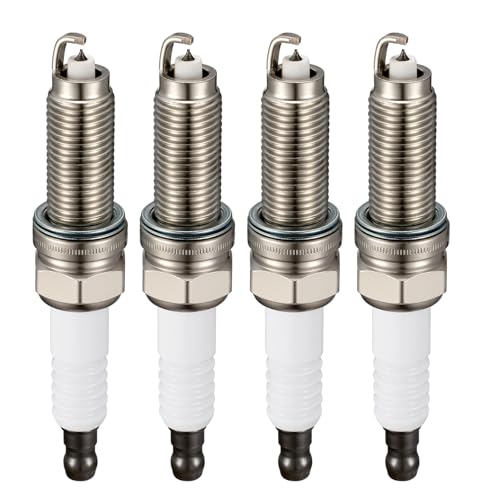
The 10th Generation Civic 2016–2021 1.5L Turbo Non-Si may use NGK 95112, part number ILZKAR8H8S, with about a 0.028–0.031 in gap and a 100,000-mile interval. The 10th Generation Civic Si may use NGK 95660, part number ILZKAR8J8SY, with about a 0.030–0.032 in gap. These applications should be verified by exact engine code because trim level alone is not enough.
The 8th Generation Civic 2006–2011 R18 engine uses NGK IZFR6K-11S, with a 0.039–0.043 in gap and 13 lb-ft torque. Those details matter because the wrong plug may fit poorly, run the wrong gap, or create a drivability complaint that looks like a fuel or ignition problem. If the engine code does not match, treat the application as unverified.
Turbo, Si, and older R18 examples
A turbo Civic may use a different factory plug and interval than a naturally aspirated Civic in the same generation. A Civic Si often uses a different plug than a non-Si model, even when the body style looks the same. Older R18 cars need their own check, because the published spec is not interchangeable with later long-life turbo engines.
Civic spark plug decision table
| Generation | Engine | Factory plug type | Published interval | Early-replacement triggers | Job access |
|---|---|---|---|---|---|
| 11th Gen 2022–present | Varies by engine | Confirm by engine code and manual | Check the maintenance schedule | Rough idle, misfire, longer cranking, reduced fuel economy, repeated short trips, prior misfire history | Varies; some are simple, some are access-heavy |
| 10th Gen 2016–2021 | 1.5L Turbo Non-Si | NGK 95112 (ILZKAR8H8S) | 100,000 miles | Rough idle, misfire under load, severe stop-and-go use, repeated misfire history | Usually moderate; coil removal is typical |
| 10th Gen 2017+ | Si | NGK 95660 (ILZKAR8J8SY) | Check the Si maintenance schedule | Misfire, longer cranking, reduced fuel economy, track-style or heavy load use | Usually moderate; access can be tighter |
| 9th Gen 2012–2015 | Varies by engine | Confirm by exact engine | Check the maintenance schedule | Short-trip use, rough idle, poor acceleration, repeated misfire history | Varies by engine layout |
| 8th Gen 2006–2011 | R18 | NGK IZFR6K-11S | Check the maintenance schedule | Rough idle, misfire, longer cranking, fuel economy loss | Can be more access-heavy depending on layout |
When should you replace them early?
You can replace Civic spark plugs before the scheduled interval when symptoms or use patterns point to earlier wear. Short trips, repeated stop-and-go driving, towing, heavy load use, and a history of misfire codes can shorten the useful life of a plug before the mileage number in the book. Honda’s schedule sets the baseline, but operating conditions and repeat faults can justify earlier service.
Early replacement is also smart after repeated misfire history, even if the plugs are not yet at the listed interval. A plug that has already started to misfire or foul is not a good candidate for “wait and see.” If the exact cause cannot be confirmed quickly, inspect the plugs rather than assuming the complaint will clear on its own.
-
Check the driving pattern.
If the Civic sees many short trips, long idle periods, or heavy load use, plan on earlier inspection. Those conditions can leave plugs cooler and dirtier than steady highway use. -
Look for repeat faults.
If the same cylinder has misfired more than once, or a scan tool keeps showing ignition-related codes, inspect the plugs sooner rather than waiting for the next service.A common first-timer mistake is clearing the code and assuming the problem is gone. If the plug is worn, the code often comes back under the same load or temperature conditions.
-
Match the decision to symptoms.
If the engine idles rough, cranks longer than normal, feels lazy on throttle, or drinks more fuel, move the job up. If the symptom is severe, treat it as an inspection now, not a future maintenance item.
What worn spark plug symptoms mean
Worn Civic spark plugs often show up as rough idle, misfire, longer cranking, poor acceleration, and reduced fuel economy. The key question is whether the symptom is mild enough to schedule service soon or severe enough to inspect now. In a Civic, repeated misfire is the clearest sign that the plug and ignition system need attention.
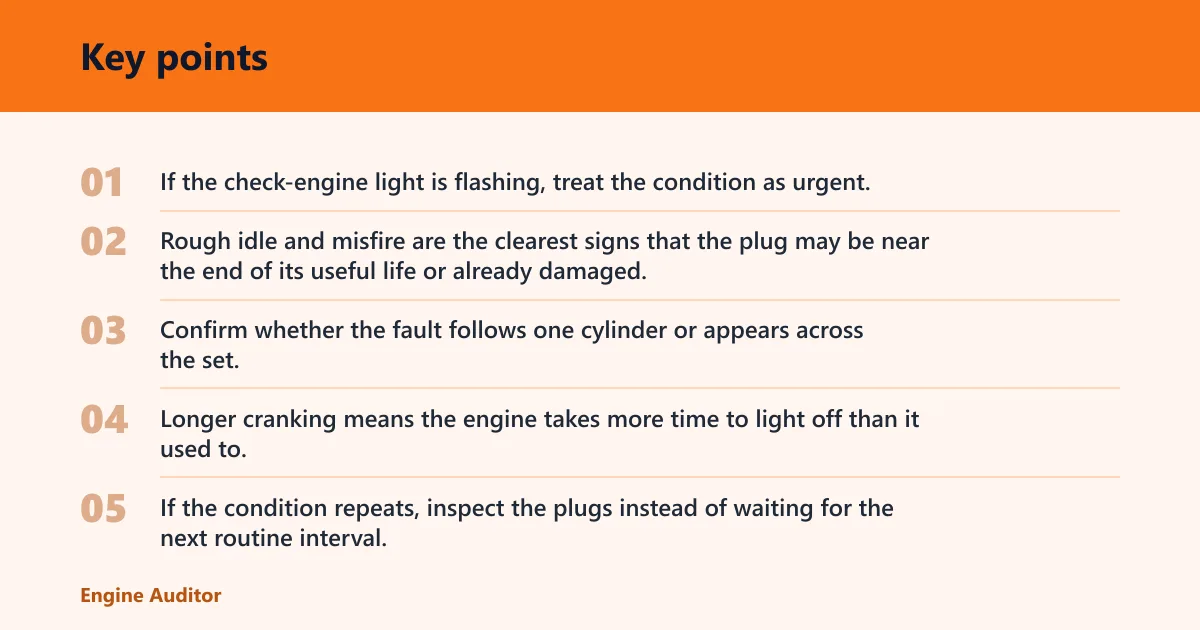
Do not wait for every symptom to stack up. A single repeated misfire or a hard-start complaint can justify earlier replacement, especially on an engine with a known long interval and a history of short-trip use. If the check-engine light is flashing, treat the condition as urgent.
Rough idle and misfire
Rough idle and misfire are the clearest signs that the plug may be near the end of its useful life or already damaged. If the engine shakes at idle, flashes a check-engine light, or stumbles under load, inspect the plugs and ignition system right away. Confirm whether the fault follows one cylinder or appears across the set.
Longer cranking and hard starts
Longer cranking means the engine takes more time to light off than it used to. That can happen when plug wear makes the spark weaker, especially on cold starts or after the car has sat for a while. If the condition repeats, inspect the plugs instead of waiting for the next routine interval.
Fuel economy and throttle response loss
Reduced fuel economy and lazy throttle response can be early clues that the plugs are no longer lighting the mixture cleanly. These symptoms are less dramatic than a misfire, but they still justify an inspection if the Civic is near its service interval. If the concern appears with a rough idle or longer cranking, treat it as more than a mileage complaint.
Honda civic spark plug table
| Symptom | Severity | What to do now | What can wait until next service |
|---|---|---|---|
| Minor fuel economy drop | Mild | Check mileage, confirm maintenance interval, inspect at the next planned visit | Yes, if there is no rough idle or misfire |
| Longer cranking | Moderate | Schedule inspection soon and confirm plug age and condition | Only if it is rare and the Civic is far from due |
| Rough idle | Moderate to severe | Inspect now; replace plugs if wear or fouling is present | No, not if the rough idle keeps returning |
| Misfire under load | Severe | Inspect now and avoid waiting for the next service interval | No |
Does generation change the interval?
Honda Civic spark plug intervals can change by generation because the engine and factory plug type may change. The 11th, 10th, 9th, and 8th generations do not share one universal plug schedule, so model year alone is not enough to buy the right parts or set the right service date. Always match generation, engine family, and plug specification.
11th generation 2022-present
The 11th Generation Civic can use different engines, so the plug interval should be checked by exact engine and the maintenance schedule. Do not assume it matches the 10th Generation turbo or Si engine, even if the service name sounds similar. If the engine code is not confirmed, mark the application as unknown until it is matched to the manual.
10th generation 2016-2021
The Si uses NGK 95660, so the part number check matters before ordering or scheduling service. These are not interchangeable just because both are 10th-generation cars.
9th generation 2012-2015
The 9th Generation Civic needs an engine-specific check rather than a blanket answer. If the car has been used for many short trips or has a history of misfire codes, inspect earlier than the paper interval suggests. If the engine code cannot be confirmed, do not generalize the fitment.
8th generation 2006-2011
The 8th Generation Civic R18 uses NGK IZFR6K-11S, with a 0.039–0.043 in gap and 13 lb-ft torque. That older engine does not follow the same long-life pattern as later turbo Civics, so the plug type and published schedule need to be confirmed together. The fitment is engine-specific, not generation-wide.
What happens if you wait too long?
Waiting too long can turn a simple plug job into a larger ignition or drivability problem. Worn plugs can increase misfire risk, and repeated misfire can stress ignition coils, which is how a maintenance item becomes a repair bill. The longer the misfire continues, the more likely the symptom spreads beyond the plugs.
Delayed replacement can also hurt catalytic-converter life if raw fuel keeps entering the exhaust during a misfire. That is why the safer call is to replace plugs when they are due, or sooner when the symptoms point that way. If the engine is already misfiring, the issue is no longer just routine maintenance.
-
Inspect before parts fail.
If the Civic is near its listed interval or showing symptoms, inspect the plugs before the condition spreads to coils or catalysts. Early inspection is cheaper than replacing extra parts later. -
Replace the full set.
Spark plugs wear as a set, so matching new plugs across all cylinders keeps firing behavior even. Mixed old-and-new plugs can make diagnosis harder if the engine still runs poorly afterward.
Say your 10th Generation Civic 1.5L Turbo Non-Si is at 92,000 miles and begins to idle rough after several weeks of short trips. That is a good case for inspection now, because the plug is close to its 100,000-mile interval and the driving pattern can shorten service life.
Suppose an 8th Generation Civic R18 starts taking longer to crank on cold mornings, but only after the odometer has climbed well past its normal service window. That symptom is strong enough to move the job ahead of the next routine visit, especially if the plugs have never been replaced.
Frequently asked questions
When should I replace spark plugs on a Honda Civic?
Replace Civic spark plugs at the interval listed for your exact engine and factory plug type, and move the job up if the car shows rough idle, misfire, longer cranking, or poor fuel economy. Long-life iridium plugs often last much longer than conventional plugs, but the manual still sets the schedule.
How many miles do Honda Civic spark plugs last?
There is no single mileage answer for every Civic. The correct figure depends on generation, engine, and the plug the engine was designed around.
Do iridium spark plugs really last 100,000 miles?
Often, yes, but only on engines and maintenance schedules built around that plug type. Iridium and other precious-metal electrodes wear more slowly than conventional ones, yet real-world life still changes with driving style, short trips, misfire history, and engine design. Verify the interval for the exact engine rather than assuming every iridium plug has the same service life.
What are the symptoms of worn spark plugs on a Civic?
Common symptoms include rough idle, misfire, longer cranking, poor acceleration, and reduced fuel economy. A mild fuel-economy drop can wait for the next service if nothing else is wrong, but a persistent misfire or hard-start problem calls for inspection now.
Does the Honda Civic spark plug interval change by generation?
Yes. The interval changes by generation because the engine family and factory plug type change. The 10th Generation Civic 1.5L Turbo Non-Si, the 10th Generation Si, the 8th Generation R18, and newer 11th Generation models do not share one universal schedule. Confirm by engine code if the exact application is not clear.
How do I know which spark plug part number fits my Civic?
Match the model year, engine, and factory plug specification before buying. If the engine code does not match, do not generalize the fitment.
Products related to this article
Sponsored / affiliate links. As an Amazon Associate I earn from qualifying purchases. I may earn additional commission from eligible campaigns.