Can You Reprogram A Transmission Control Module At Home?
Reprogramming a transmission control module (TCM) at home is generally not feasible for most car owners. It requires specialized tools, technical expertise, and access to manufacturer-specific software that is not readily available to the public. Attempting this without proper knowledge can lead to severe transmission damage and costly repairs.
What Is a Transmission Control Module (TCM)?
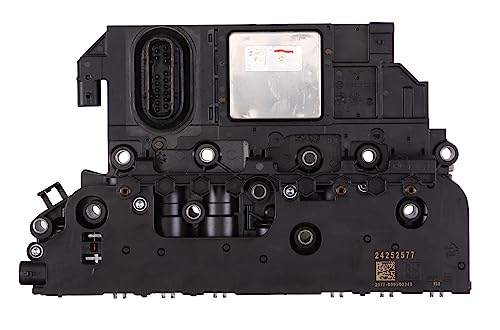
Think of your car’s transmission like its engine’s helper. It makes sure the engine power goes to the wheels the right way. The transmission control module, or TCM, is the brain of this operation.
It’s a small computer. It tells the transmission when to shift gears. It also controls how smoothly those shifts happen.
It uses data from many sensors. This data includes things like vehicle speed and engine load. It also uses driver input like how hard you press the gas pedal.
The TCM makes thousands of tiny decisions every minute. It works closely with the engine control module (ECM). They make sure everything runs well together.
A healthy TCM ensures good fuel economy and a comfortable ride. It’s a key part of your car’s modern transmission system. It helps manage complex gear changes in automatic transmissions.
It’s also vital for many newer manual transmissions with automated clutches.
Why Would Someone Want to Reprogram a TCM?
People often think about reprogramming a TCM for a few main reasons. Sometimes, a car might have transmission problems. Shifting can feel jerky or delayed.
It might not shift at all. In these cases, some think a software update could fix it. It’s like updating your phone’s operating system.
A newer software version might fix bugs or improve performance. This is known as a software reflash or update.
Other times, enthusiasts might want to change how the transmission behaves. They might want faster shifts for performance driving. Or they might want better fuel economy.
Aftermarket tuners sometimes offer TCM reprogramming. This lets them adjust shift points and line pressures. It’s about fine-tuning the transmission’s response.
This can make the car feel more powerful or efficient. However, these are advanced modifications.
The Real Deal: What “Reprogramming” Actually Means
When we talk about reprogramming a TCM, we’re usually talking about one of two things. The first is a software update or reflash. This is like installing a new version of the TCM’s operating system.
Manufacturers release these updates. They fix known issues or improve performance. This is usually done by a dealership.
They have the correct tools and software. They connect to the car’s diagnostic port.
The second meaning is custom tuning. This involves changing the TCM’s programming. It’s not just installing an update.
It means altering the shift maps. It can also change line pressures. It might even adjust torque converter lock-up strategies.
This is what performance shops do. They write custom software for specific needs. This is much more complex than a simple update.
DIY Tools and What They Can (and Can’t) Do
For the average car owner, getting access to the right tools is the first hurdle. You might see OBD-II scanners advertised. These are common for reading diagnostic trouble codes.
Some advanced scanners can do more. They can monitor live data. They can even perform basic resets.
But can they reprogram a TCM? For the most part, no.
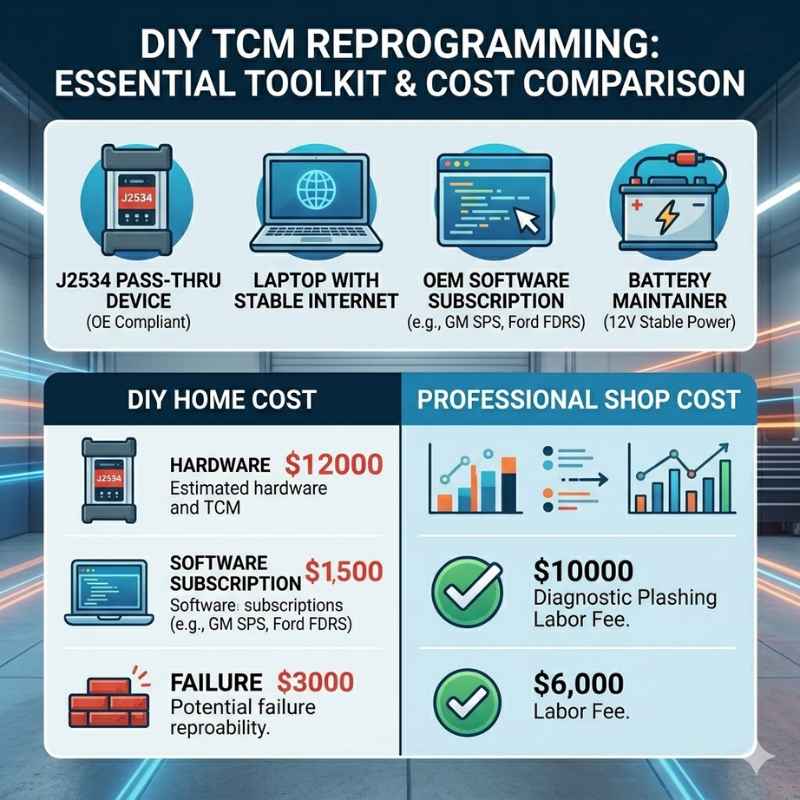
Reprogramming requires specific, often expensive, equipment. This includes professional-grade scan tools. These tools can communicate directly with the TCM.
They also need access to secure manufacturer software. This software contains the actual code to be flashed onto the module. Some enthusiasts might use devices like HP Tuners or EFI Live.
These are powerful tools. They are used for engine and transmission tuning. But they are not plug-and-play.
They require a deep understanding of how the systems work. They also come with a significant cost.
A simple OBD-II code reader will not be able to reprogram a TCM. These tools are designed for diagnostics. They read error codes.
They can clear them. They can show sensor data. They cannot write new software to a control module.
That requires a much more sophisticated connection.
The Experience of a DIY TCM Attempt
I remember a friend, Mark, who was determined to fix his truck’s transmission himself. It was an older model, but still had an electronic transmission. The shifts felt rough, especially when cold.
He’d read online that a TCM reflash might help. He bought what he thought was a good OBD-II scanner. It had a “module reset” function.
He plugged it in, hoping for magic.
He followed the scanner’s prompts. The screen showed it was communicating with the TCM. Then it asked him to confirm a reset.
He clicked ‘yes.’ Suddenly, his dashboard lit up like a Christmas tree. The truck wouldn’t shift out of first gear. The transmission warning light stayed on solid.
He felt a cold dread creep up his spine. Panic set in. He had hoped to save money.
Instead, he’d created a much bigger, more expensive problem. He ended up having it towed to a shop. The mechanic told him he’d essentially wiped the TCM’s memory.
It needed to be reprogrammed properly. That day taught him a hard lesson about modern car electronics.
Understanding Software Updates vs. Custom Tuning
It’s crucial to separate these two ideas. A software update is a official fix. Manufacturers release these to address issues.
Think of it like getting the latest iOS update for your iPhone. It’s designed to make things work better. It’s usually a stable, tested solution.
When a dealership performs a TCM update, they are loading this approved software. They use specialized tools that are authorized by the car maker.
Custom tuning is different. This is where someone modifies the existing software. They might change how the transmission shifts.
They could make it shift faster for racing. Or they might try to improve fuel efficiency. This is not an official update.
It’s a modification. It carries more risk. A poorly done custom tune can damage the transmission.
It can also void your car’s warranty. This is not something a typical DIYer should attempt.
Can You Actually Update a TCM at Home?
For the vast majority of car owners, the answer is a firm no. While you can buy OBD-II scanners that connect to your car, they usually can’t perform a TCM reflash. These updates require specific software.
This software is protected by the car manufacturers. It’s not something you can just download. It also requires a specific type of connection.
This connection can handle writing new data to the module. Standard scanners don’t have this capability.
There are some very advanced DIY tools out there. But they are expensive. They also require a lot of technical knowledge.
You need to understand what each setting does. You need to know the risks involved. For most people, trying to update a TCM at home is not a realistic option.
It’s best left to professionals.
Key Steps for a Professional TCM Update
1. Diagnosis: A mechanic will first use advanced diagnostic tools to confirm the TCM is the issue. They check for specific fault codes.
2. Software Check: They verify if a software update is available from the manufacturer for your car’s VIN.
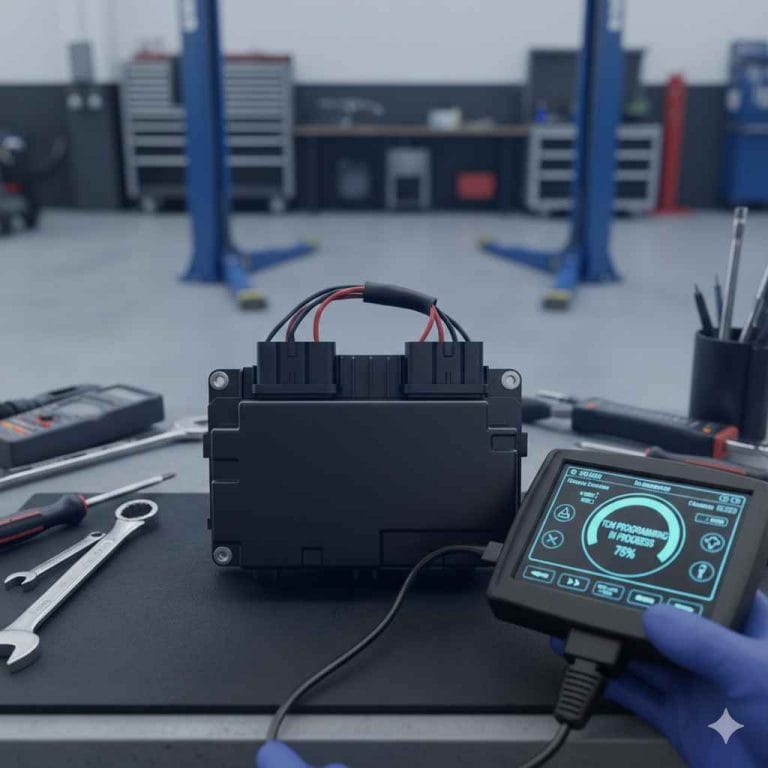
3. Connection: They connect a professional-grade tool to the car’s OBD-II port. This tool can communicate securely with the TCM.
4. Flashing: The authorized software is downloaded and carefully loaded onto the TCM. This process can take time.
5. Verification: After the flash, the system is checked to ensure it completed successfully. Test drives are often done.
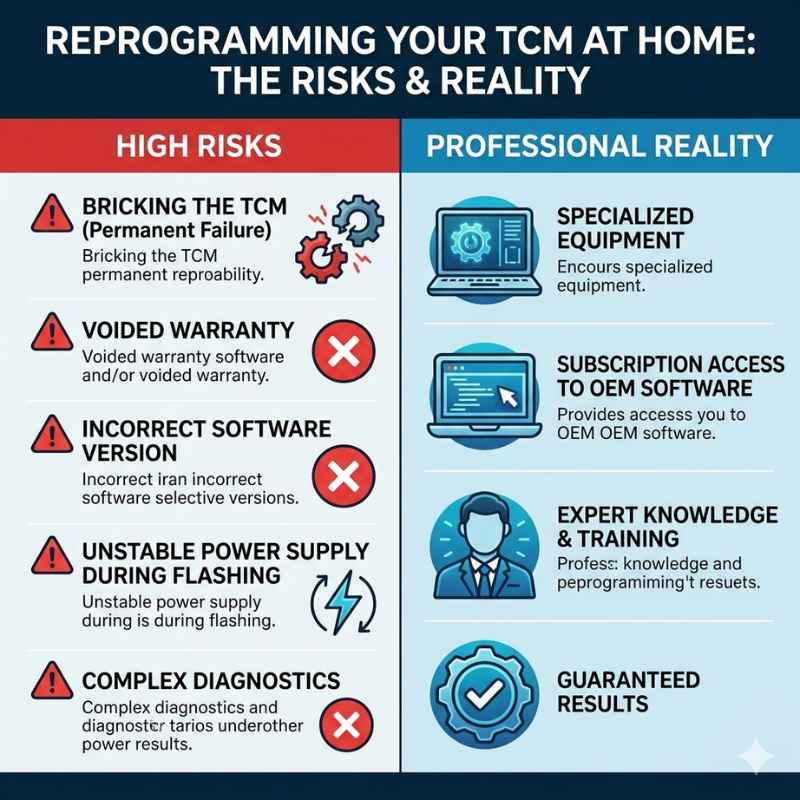
The Risks of DIY TCM Reprogramming
Trying to reprogram a TCM without the right knowledge and tools is risky. You can easily cause permanent damage. The transmission is a complex system.
The TCM controls it. If you load the wrong software, or interrupt the process, you can corrupt the TCM. This might mean it stops working altogether.
It could also lead to incorrect shifting. This can cause internal damage to the transmission itself. You might end up with a very expensive repair bill.
Sometimes, the transmission might be beyond repair.
Another risk is that you might void your car’s warranty. If a manufacturer finds out you tampered with the TCM, they may refuse to cover repairs. This could be very costly.
It’s important to consider these risks before attempting any DIY electronic module reprogramming.
When to Call the Professionals
If your car is showing transmission warning lights, or if you notice shifting problems, it’s time to call in the experts. A qualified mechanic or a dealership has the right tools. They have the necessary training.
They can diagnose the issue correctly. If a TCM update or reflash is needed, they can perform it safely. They have access to the manufacturer’s software.
They know how to use it without causing harm.
Attempting this yourself is often more expensive in the long run. It can also be dangerous. Don’t risk damaging your car’s transmission.
It’s a major component. Repairs are very costly. Trust the professionals for these types of repairs.
They have the experience to get it right the first time. This saves you time, money, and stress.
Signs Your TCM Might Need Attention
- Transmission Warning Lights: Any light on your dashboard related to the transmission.
- Harsh Shifting: Gears engaging with a jolt or thump.
- Delayed Shifting: The transmission takes too long to shift between gears.
- Slipping Gears: The engine revs, but the car doesn’t accelerate as it should.
- Not Shifting at All: The transmission stays in one gear.
- Check Engine Light: Sometimes TCM issues trigger the check engine light.
Can You “Tune” a Transmission Control Module at Home?
Tuning a TCM at home is even more complex than a simple software update. This is what enthusiasts do for performance. They use specialized tuning software.
These tools allow them to adjust parameters. They can change shift points. They can alter line pressure for firmer shifts.
They can even tweak torque converter lock-up. This requires a deep understanding of transmission hydraulics. It also needs knowledge of how the TCM controls these functions.
Tools like HP Tuners or professional tuning devices are needed. These are not cheap. They also come with a steep learning curve.
You need to understand engine management and transmission behavior. Incorrect tuning can easily damage the transmission. It can cause overheating.
It can lead to premature wear. For the average person, this is not a DIY project. It’s best left to professional tuners.
Real-World Context: Why Dealerships and Shops Do This
Dealerships and specialized transmission shops have a few key advantages. They have access to the latest diagnostic equipment. This equipment is specific to the car brands they service.
They also have subscriptions to manufacturer databases. These databases contain all the software updates. They know the exact procedures for flashing modules.
This ensures the process is done correctly.
Professional shops also have trained technicians. These technicians understand the complex electronic systems in modern cars. They know how to interpret diagnostic data.
They know how to avoid common pitfalls. When a TCM needs an update, they follow a set protocol. This protocol is designed to be safe and effective.
They have insurance and warranties. This gives customers peace of mind. They are equipped to handle problems if something goes wrong.
TCM Update vs. TCM Replacement
TCM Update: This involves loading new software onto an existing, functional TCM. It’s done to fix bugs or improve performance. It’s generally less expensive than replacement.
TCM Replacement: This means swapping out the entire module for a new or remanufactured one. This is necessary if the TCM itself is physically damaged or has failed electronically. After replacement, the new TCM often needs to be programmed or flashed to match the vehicle.
What This Means for Your Car
If your car is experiencing transmission issues, the first step is always proper diagnosis. Don’t jump to conclusions about reprogramming. A trained technician will check for fault codes.
They will assess the transmission’s physical condition. They will then determine the best course of action.
If a software update is available and recommended, they will perform it. This is a standard procedure for them. If the TCM itself is faulty, they will recommend replacement.
They will then program the new module. This ensures your transmission operates as it should. Understanding this process is key.
It helps you avoid unnecessary DIY attempts.
When It’s Normal to Not Need a TCM Reprogram
For many cars, the TCM works perfectly for the life of the vehicle. If your transmission shifts smoothly, and you don’t have any warning lights, there’s no need to worry about reprogramming. Manufacturers design these systems to be robust.
They aim for reliability.
A TCM reflash is usually only done to address specific problems. These problems are identified by the manufacturer. Or it might be done for performance tuning by professionals.
If your car is running fine, leave the TCM programming alone. Tampering with it unnecessarily can create issues.
When to Worry About Your TCM
You should worry about your TCM if you notice any of the symptoms we’ve discussed. These include harsh shifts, slipping gears, delayed engagement, or any transmission warning lights. These are signs that something is not right.
It could be a software glitch. It could be a hardware failure in the TCM itself. Or it could be a problem within the transmission that the TCM is trying to manage.
Ignoring these signs can lead to more severe damage. It’s always better to have the car inspected by a professional. They can pinpoint the exact cause.
They can then advise on the best repair strategy. Early detection often means less expensive repairs.
Simple Checks for Transmission Issues
1. Check Fluid Level and Condition: Low or dirty transmission fluid can cause shifting problems. Refer to your owner’s manual for how to check it.
2. Look for Leaks: Inspect under your car for any red or brown fluid leaks.
3. Listen for Unusual Noises: Grinding, whining, or clunking sounds when shifting can indicate a problem.
4. Observe Shifting Behavior: Pay attention to how the transmission shifts. Does it feel smooth or jerky?
Common Misconceptions About TCM Programming
One common idea is that a TCM can be easily reset like a home router. While some basic functions can be reset with an OBD-II scanner, a full reprogramming is different. It’s not a simple reboot.
Another misconception is that you can download generic TCM software online and flash it yourself. This is highly dangerous. Vehicle-specific software is required.
People also sometimes confuse engine control module (ECM) tuning with TCM tuning. While they work together, they are distinct. Tuning one without understanding the other can cause major issues.
The complexity of modern automotive electronics means that assumptions can be costly.
Frequently Asked Questions
Do I need special tools to reprogram a TCM?
Yes, reprogramming a TCM requires specialized diagnostic tools. These tools can communicate with the module and have the capability to write new software. Standard OBD-II scanners are usually not sufficient for this task.
Can a dealership reprogram my TCM?
Yes, dealerships are equipped to reprogram TCMs. They have access to manufacturer-specific software and the necessary tools. This is a common service they provide to fix transmission issues or perform recalls.
What happens if I use the wrong software to reprogram a TCM?
Using the wrong software can corrupt the TCM, rendering it inoperable. It can also lead to incorrect transmission shifting, causing internal damage. This can result in very expensive repairs or the need for transmission replacement.
Is TCM reprogramming covered by warranty?
TCM reprogramming performed by a dealership to fix a manufacturer-identified issue is typically covered by warranty. However, if the reprogramming is done by an unauthorized party, or for performance tuning, it will likely void the warranty.
How long does a TCM reprogramming take?
The time it takes to reprogram a TCM can vary. It typically takes between 30 minutes to a couple of hours. This includes the time for diagnostics, the flashing process itself, and verification.
Can I tune my car’s transmission for better performance at home?
Tuning a transmission control module for performance at home is very advanced. It requires specialized tuning software and a deep understanding of transmission operation. It is generally not recommended for DIYers due to the high risk of damage.
Conclusion
So, can you reprogram a transmission control module at home? For most car owners, the straightforward answer is no. While the idea of a quick software fix is appealing, the reality involves specialized tools and knowledge.
The risks of damaging your car’s transmission are significant. It’s best to trust this complex job to professionals at dealerships or reputable repair shops. They have the expertise and equipment to ensure your transmission runs smoothly and reliably.
See also how to control transmission performance like a pro tuner.
Products related to this article
Sponsored / affiliate links. As an Amazon Associate I earn from qualifying purchases. I may earn additional commission from eligible campaigns.