Automatic Transmission Not Shifting? Causes to Check
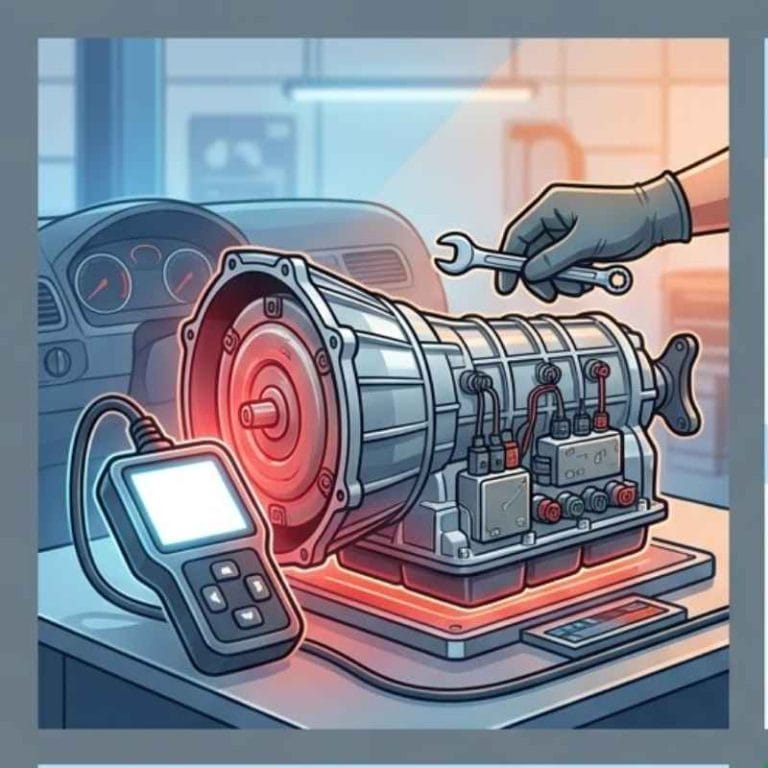
Start with fluid level and scan data: if line pressure, shift commands, and solenoid states disagree, the control system may be requesting a shift that pressure, wiring, or the solenoid circuit is not delivering; if they agree but shifts still fail, suspect hydraulic or internal damage. Ignoring a shift fault can burn clutches, trigger limp mode, or force a full rebuild. This guide separates control faults, wiring issues, pressure problems, and internal transmission failure so you can check the right cause first.
Symptoms to sort first


Do not treat every no-shift complaint as the same fault. A delayed upshift, a harsh jolt into gear, a transmission stuck in one ratio, or a warning light with limp mode all point in different directions.
Some symptoms point first to electrical control. Others point to fluid pressure loss. The pattern matters more than the guess.
Delayed upshifts, harsh shifts, and no shift at all
A transmission that won’t shift into high gear can feel stuck at high RPM on the highway. Delayed engagement can also show up as a 5-6 seconds wait before Reverse feels engaged, or as a strong jolt when shifted into Drive or Reverse.
If the delay appears across several gears, look first at voltage, fluid level, scan data, and solenoid control. If the problem is one gear only, the fault may be narrower and could involve a sensor, solenoid, valve body, or a mechanical issue in that gear’s circuit rather than a total failure.
Stuck in one gear or limp mode
When the transmission stays in one gear, the computer may have entered limp mode to protect the unit. Many cars stop shifting normally when the transmission computer detects a serious fault.
Limp mode can follow a bad sensor reading, a solenoid fault, low voltage, a wiring problem, or a hydraulic issue. It is a protection strategy, not a normal driving state.
Cold-only vs hot-only behavior
If the transmission works cold and fails hot, heat is changing the fault. That pattern often points to fluid breakdown, a valve body issue, an overheating control problem, or a sensor that drifts as temperature rises. CVTs may go into limp mode with reduced power after overheating, and their diagnosis can differ significantly from a step automatic because their ratio control and fault strategy are not the same.
If the complaint appears only cold, check fluid level and scan data before the unit warms up. Cold thick fluid can make a weak hydraulic system look worse, but it can also expose worn seals or a solenoid that sticks until warm.
Transmission control triage table
Use this table to separate likely control causes from hydraulic or internal faults. Start with the symptom, then check the easiest cause first.
| Symptom | Likely control cause | Quick check | Scan clue | Safe to drive? |
|---|---|---|---|---|
| Delayed upshift | Low fluid, bad shift solenoid, or speed sensor signal error | Check fluid at the correct temperature and look for leaks or burnt smell | Commanded shift occurs, but gear ratio does not change as expected | Short trip only if it still moves normally; avoid highway loading |
| Harsh shift into Drive or Reverse | TCM control issue, solenoid sticking, or valve body wear | Test battery voltage and charging-system output before replacing parts in harsh-shift cases. | High line pressure command or erratic shift solenoid duty data | Use caution; repeated jolt can stress mounts and clutches |
| Stuck in one gear | Limp mode from TCM, sensor failure, wiring fault, or hydraulic fault | Check for warning light or blinking “D” light and scan transmission codes | Failure code with one fixed gear or limited shift commands | Usually no; tow if acceleration is weak or traffic speed is unsafe |
| Cold-only complaint | Thick fluid, sticky solenoid, valve body wear, or marginal sensor signal | Repeat the same fluid check at the specified temperature range | Normal data cold, then delayed or incorrect ratio change as temperature rises | Maybe for a short test route, but do not keep driving long distances |
| Hot-only complaint | Fluid breakdown, overheating, valve body leakage, or TCM entering protection | Look for burnt fluid, cooler issues, or signs of overheating | Shift errors after warm-up, plus pressure or temperature-related codes | Often no; heat can turn a minor fault into a full failure |
| No forward move | Major hydraulic loss, internal clutch failure, or severe control fault | Check fluid level, leaks, and whether reverse works differently | Input speed changes without output movement, or no valid gear command | No; tow is the safer choice |
Why is my automatic transmission not shifting?
The usual split is electrical, hydraulic, or internal wear. Electrical faults affect the TCM, wiring, sensor data, and solenoids. Hydraulic faults involve low pressure, fluid loss, or a valve body problem. Internal wear means the clutches, bands, or hard parts can no longer hold the commanded gear.
Electrical control faults
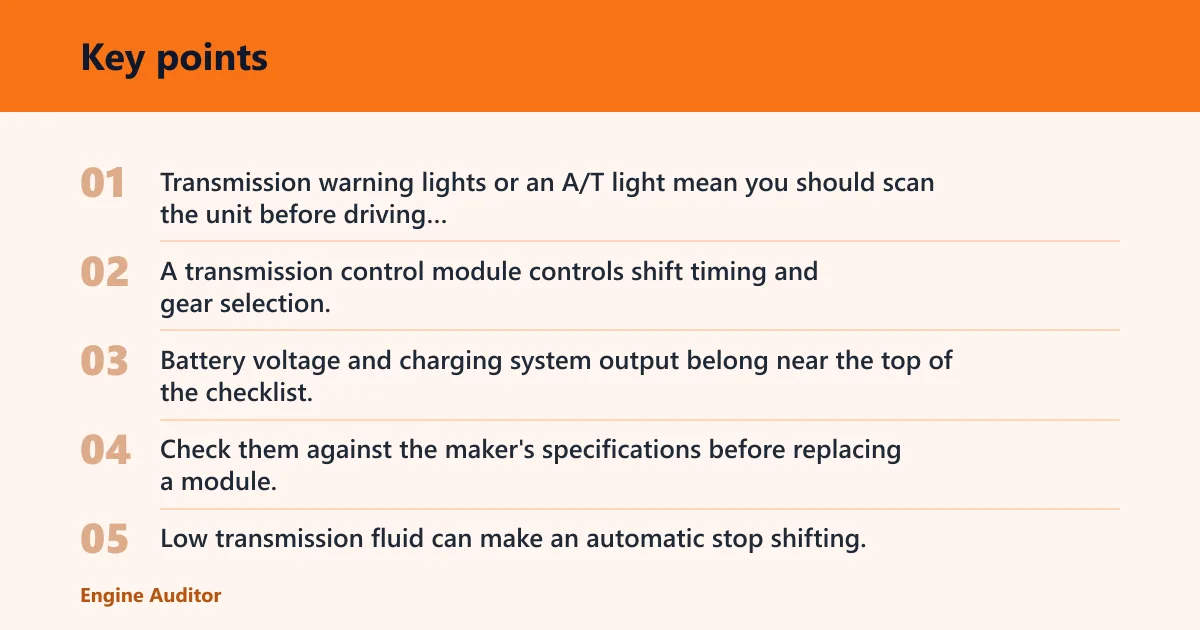
Transmission warning lights or an A/T light mean you should scan the unit before driving far. A transmission control module controls shift timing and gear selection, can fail and trigger warning lights or limp mode, and needs a scanner that can access transmission codes.
Battery voltage and charging system output belong near the top of the checklist. Check them against the maker’s specifications before replacing a module, because low voltage can create transmission control communication issues.
Hydraulic pressure problems
Low transmission fluid can make an automatic stop shifting. The fluid must be checked at the correct temperature and procedure, because low, burnt, or contaminated fluid can reduce hydraulic pressure and change shift quality. Some units are sealed or temperature-dependent, so the factory procedure matters; checking the fluid the wrong way can give you a false reading or lead you in the wrong direction.
Low fluid can keep the transmission from building the pressure needed for higher gears. A dirty or burnt transmission fluid sample should push diagnosis toward overheating, clutch wear, or other transmission damage.
Internal wear that needs deeper diagnosis
If the scan data, fluid level, and electrical checks look normal but the unit still slips or refuses to engage, internal wear moves up the list. Valve body wear or clogging can mimic module or solenoid problems, and worn clutches can fail without a simple code path.
Suppose a sedan shifts fine around town, then falls out of second gear under steady highway load. If the scan shows the TCM commanding the shift and the ratio never follows, that points away from a simple scan-tool reset and toward pressure loss or internal wear.
What transmission control causes should I check first?
Check battery voltage and charging system output first, then fluid level and condition, then TCM power, grounds, and wiring. That order separates the faults that can make a good transmission look bad from the faults that truly live inside the transmission.
Battery voltage and charging system
Low system voltage can create communication errors, strange shift timing, or false limp mode. A weak battery, poor alternator output, or corroded ground can all distort sensor and module data before the transmission has a chance to shift correctly.
Inspect the battery terminals, main grounds, and transmission wiring connectors for corrosion or looseness. If voltage is unstable, the TCM may misread inputs and the symptoms can look like a failed module.
Transmission fluid level and condition
Check fluid level only by the maker’s correct procedure. Some units require the engine running, the transmission in a specific range, and the fluid at a set temperature. Skipping that step can give you a false reading.
Look for low level, burnt odor, dark fluid, or contamination. Fluid condition affects shift quality and overheating, and a burned or contaminated sample can help explain high RPM before shifting and pressure loss in higher gears.
TCM, wiring, and grounds
The TCM controls shift timing and gear selection, but it relies on clean power and valid inputs. A connector issue, corroded ground, or broken wire can make the module seem bad when it is only missing voltage or a sensor signal.
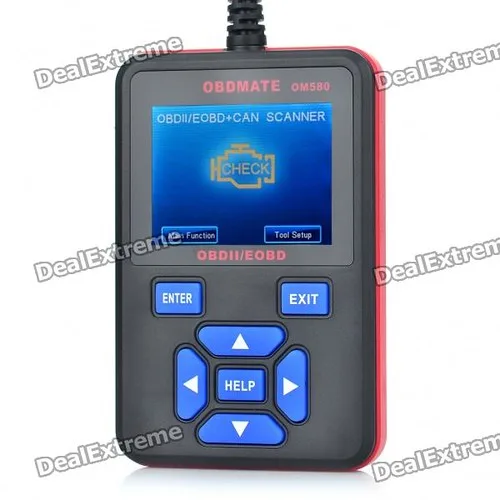
A basic engine code reader may miss transmission codes. Use a scanner that can read transmission data and see live shift commands, solenoid states, and input and output speed values.
How sensors, solenoids, and the valve body fit together
These parts work as one system. Speed sensors tell the TCM what the transmission is doing. The TCM decides when to shift. Shift solenoids control fluid flow and clutch engagement. The valve body routes hydraulic pressure to the right circuits.
Malfunctioning sensors and solenoids can give the TCM bad information. Transmission problems may arise from sensor miscommunication, so the scan tool matters as much as the wrench.
Speed sensors and incorrect shift decisions
What sensors can stop an automatic transmission from shifting correctly? Input and output speed sensors are first on the list. They provide data the TCM uses to verify gear changes and shift timing.
If the TCM sees impossible speed ratios, it may hold a gear, command a harsh shift, or enter limp mode. Look for mismatched input and output speed data, erratic readings, or a ratio that never changes when the gear changes.
Shift solenoids and fluid routing
Shift solenoids control fluid flow and clutch engagement. A sticking or failed shift solenoid can cause delayed, missing, or harsh shifts when the right circuit does not receive the right pressure at the right time.
A solenoid fault often shows up as one missing shift, one late shift, or a repeatable fault under the same load. That pattern is different from a total no-forward-move complaint.
Valve body wear or clogging
The valve body routes hydraulic pressure through the transmission. Wear, varnish, or clogging can block or bleed off pressure and imitate a bad module or a bad solenoid.
If the scan shows the TCM asking for a shift and the solenoids appear active, but the gear change is late or rough, the valve body moves higher on the list. Hydraulic leakage can look electronic from the driver’s seat.
Can a bad transmission control module cause limp mode?
Yes, a bad TCM can cause limp mode, but it is usually not the first thing to blame. Many cars stop shifting normally when the transmission computer detects a serious fault, and the module may limit gear changes to protect the unit.
What limp mode is meant to do
Limp mode may hold one gear or limit shifting after electrical or hydraulic faults. The goal is protection, not normal operation. It can reduce power, block some shifts, or lock the transmission into a fallback pattern.
That means limp mode is a symptom, not a diagnosis. A sensor, solenoid, pressure fault, or voltage problem can trigger the same response.
Scan clues that point to module trouble
If the TCM has communication faults, multiple unrelated codes, or no useful command data, module trouble becomes more likely. A scanner that can access transmission codes is needed here, because a basic reader may miss the problem entirely.
Watch for warning lights or a blinking “D” light, plus live data that no longer matches reality. If the module commands one thing and the transmission behaves another way, the fault may sit in the module, the wiring, or the power feed.
Why voltage problems can mimic module failure
Low voltage and bad grounds can make a healthy TCM look faulty. Before replacing the module, check battery condition, charging output, connector fit, and ground integrity. That order avoids a costly guess.
A common first-timer mistake is replacing the controller because the dash light came on, then finding the real issue was a corroded ground strap. The scan result matters, but so does the power supply feeding the module.
Can a basic OBD2 reader miss transmission control problems?
Yes. A basic OBD2 reader may miss some transmission codes, live data, and gear-command clues. That is why a scan-first approach works only if the scanner can read the transmission side, not just engine faults.
Why transmission-specific codes matter
Transmission codes can point to solenoids, speed sensors, pressure control, range signals, or module communication. An engine-only reader may miss those faults and make the problem look like a simple no-code issue.
If the car is in limp mode or the warning light is on, scan before driving far. Warning lights or a blinking “D” light should be checked before the car is driven farther.
Live-data mismatches to watch
Look for commanded gear versus actual gear, input speed versus output speed, shift solenoid state versus actual shift, and line pressure behavior. Those mismatches help separate sensor error from hydraulic failure.
If the TCM commands a shift but speed ratios never change, the issue may be hydraulic or internal. If the TCM never commands the shift, control logic, sensor input, or limp mode is more likely.
When a better scanner is needed
You need a scanner that can access transmission codes when the fault is intermittent, heat-related, or tied to limp mode. You also need live data if the symptom changes between cold and hot operation.
Picture a crossover that drives normally for 10 minutes, then stays in second gear with a warning light. A generic reader may show nothing useful, while a transmission-capable scanner can reveal sensor dropouts or a module command fault.
Frequently asked questions
Can low transmission fluid make an automatic stop shifting?
Yes. Low fluid can keep the transmission from building the pressure needed for higher gears and can cause delayed or missing shifts. It can also raise heat, which makes the problem worse. Check for leaks and fluid condition before assuming the transmission itself has failed.
What sensors can stop an automatic transmission from shifting correctly?
Input and output speed sensors are the key ones. Bad readings can cause harsh, delayed, or incorrect shifting because the TCM no longer trusts the gear ratio data. Range sensors and related wiring can also cause shift errors or limp mode if the signals do not match.
Should I keep driving if the transmission warning light comes on?
Do not keep driving far. The warning light or a blinking “D” light means the transmission needs a scan before more miles are added. If the car is stuck in one gear, slipping badly, or making a strong jolt into gear, towing is the safer choice.
Products related to this article
Sponsored / affiliate links. As an Amazon Associate I earn from qualifying purchases. I may earn additional commission from eligible campaigns.