Aftermarket vs OEM Transmission Control Modules Guide
Choose OEM when diagnosis is uncertain, VIN or security coding is required, or the cost of a wrong module is higher than the price gap. Choose aftermarket only with exact-fit confirmation and documented programming support. A bad pick can leave the transmission stuck in limp mode, add labor, and force a second replacement. This guide compares quality, programming burden, failure risk, and cost so you can choose the right TCM.
Aftermarket vs OEM transmission control modules: which one fits your diagnosis?


| Decision factor | Aftermarket | OEM transmission control modules | Winner |
|---|---|---|---|
| Upfront price | Usually lower | Usually higher | Aftermarket |
| Programming burden | May need cloning, coding, or relearn; support varies by supplier | May still need coding or relearn, but vehicle-specific calibration is more predictable | OEM transmission control modules |
| Compatibility risk | Higher, especially with platform-specific variants and budget suppliers | Lower when the part number and VIN match the vehicle | OEM transmission control modules |
| Warranty confidence | Varies widely by seller and remanufacturer | Usually clearer and easier to verify | OEM transmission control modules |
| Expected failure risk | Higher, especially on budget electronics | Lower on factory-spec parts | OEM transmission control modules |
Upfront price
Aftermarket usually wins on shelf price, and the gap can be large. One source says the price difference between versions of the same part can be 5x. That matters, but the cheaper module is not cheaper if it needs a second install, extra coding, or a return trip after a mismatch.
Programming burden
OEM and aftermarket both may require programming, VIN matching, or a shift-adaptation relearn. The difference is predictability: OEM transmission control modules are more likely to match the vehicle’s calibration path, while aftermarket units can add cloning or supplier-specific steps.
Compatibility risk
Compatibility is where many repairs go wrong. TCMs are often platform-specific, and the wrong calibration or connector variant can look fine on the bench but fail on the car. OEM parts reduce that risk because they are built around factory-spec replacement and vehicle-specific calibration.
Warranty confidence
Warranty language on aftermarket electronics is uneven, especially on budget parts and used units. OEM parts usually offer clearer coverage and fewer disputes over whether a coding step, a harness fault, or a prior repair caused the failure.
Expected failure risk
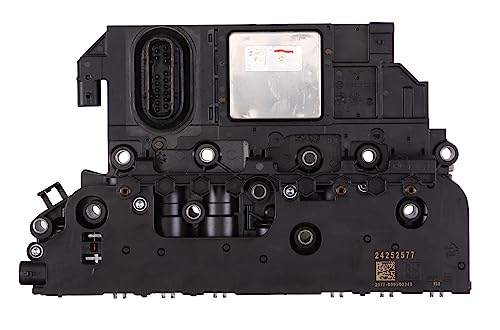
The failure-risk gap is why many technicians treat electronic transmission parts as high-risk aftermarket buys. The TCM is the electronic brain of the automatic transmission; it decides when to shift gears and how firmly to engage clutches. If the module is marginal, the repair can fail before the rest of the system is even fully verified.
What is the difference between aftermarket and OEM transmission control modules?
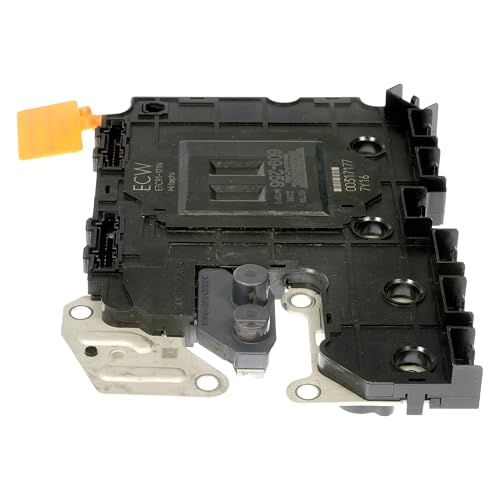
OEM means Original Equipment Manufacturer, so an OEM transmission control module is a factory-spec replacement tied to the vehicle’s original calibration path. Aftermarket modules are built by other suppliers and may be OE-spec, budget, used, or refurbished. The difference is not only price; it is also fit, programming support, and failure risk.
What OEM means versus OE-quality aftermarket versus budget aftermarket
In transmission parts, OEM can mean GM, Mopar, Ford Motorcraft, or Allison-branded parts. OE-quality aftermarket is the closest non-factory match: it aims to follow the original spec and may be acceptable when the supplier documents exact fit and calibration support. Budget aftermarket is the loose-fit category, where quality varies more and confidence drops fast.
Where the real trade-off sits
The real decision is not “OEM or cheaper.” It is diagnosis certainty, programming burden, and failure risk. If the fault code, wiring, and sensor checks point clearly to the module, aftermarket can be reasonable. If the diagnosis is still shaky, OEM is safer because it reduces the chance of stacking one unknown on top of another.

What a transmission control module does
The TCM controls shift timing and shift quality, and it also helps coordinate torque converter behavior and line-pressure commands. It processes speed, throttle, brake, and temperature inputs, then sends commands to solenoids and other transmission hardware. The module typically communicates with the ECM or PCM over the CAN bus.
Shift timing, shift quality, and torque converter control
The TCM decides when to upshift or downshift and how firmly to apply clutches. VehicleBar describes it as processing data in real time and executing thousands of gear changes per minute. That is why a fault can feel like a mechanical transmission problem even when the issue starts in the electronics.
Inputs and outputs: speed, throttle, brake, temperature, solenoids, and line pressure
The module relies on sensor data and then commands actuators. Speed sensors, pressure sensors, and fluid temperature sensors inform the control strategy, while solenoids and pressure control circuits carry out the shift. A bad input can mimic a bad module because the TCM can only act on the data it receives.
How the TCM talks to the ECM or PCM over the CAN bus
The TCM does not work alone. It exchanges data with the ECM or PCM over the CAN bus, and in many vehicles it also coordinates with ABS data. That communication path matters because a network fault, low-voltage event, or connector issue can set transmission codes without the module itself being defective.
PCM vs TCM: why the platform matters
Some vehicles use a standalone TCM, while others combine engine and transmission control in a PCM. That difference changes the diagnosis path, the replacement part, and the programming step. Treating the two layouts as interchangeable can send you down the wrong repair path.
Standalone TCM setups
With a separate TCM, the transmission side can often be isolated more cleanly. Scan data may point to one module, one harness branch, or one group of solenoids. That setup still demands careful checking, but it gives you a narrower target.
Combined PCM setups
When the PCM handles both engine and transmission functions, a module problem can look broader than it is. In those vehicles, a calibration mismatch or a software issue can affect shifting, fuel control, and warning lights at the same time. The wrong guess may lead to replacing the wrong box.
How the wrong module guess leads to a bad repair path
Suppose a 2014 crossover throws harsh 2-3 shifts and a limp-mode warning after a battery failure. A rushed diagnosis may blame the TCM, but a poor ground or corrupted adaptation data can be the real issue. Replacing the module first can waste money and still leave the transmission unhappy.
Do you need OEM or can aftermarket work?
Aftermarket can work when the module is exact-fit, the seller documents programming support, and the platform tolerates coding or relearn work. OEM is the safer choice when integration is critical, the calibration is vehicle-specific, or a bad match would cost more than the savings. Used and refurbished parts raise the risk further.
When OEM is the safer choice
Choose OEM when VIN matching matters, security coding is involved, or the vehicle is sensitive to calibration changes. That is especially true when the transmission electronics are tied tightly to the ECM or when the car has already shown multiple fault paths. We recommend OEM for electronic components unless there is a specific reason not to.
When OE-quality aftermarket can be acceptable
OE-quality aftermarket makes sense when the supplier can prove the correct part number, the connector style, and the calibration family. It is a reasonable path when you have already confirmed wiring integrity and the vehicle’s coding process is well documented. That keeps the savings without gambling on a loose-fit board.
When budget aftermarket, used, or refurbished parts raise too much risk
Budget aftermarket is hardest to defend when diagnosis is not airtight. Used modules can carry unknown history, and refurbished units depend heavily on the rebuilder’s test standard. If the vehicle needs reliable integration and the labor to access the module is high, the cheaper part can become the expensive choice.
What to check before you replace the module
Do not condemn the TCM until you have checked codes, live data, wiring, connectors, grounds, and the relevant solenoids and sensors. Corrosion, wrong wire gauge, a weak ground, or a failing speed sensor can mimic a dead module. That is why electronic diagnosis starts with the rest of the circuit, not the part number.
Scan codes and live data first
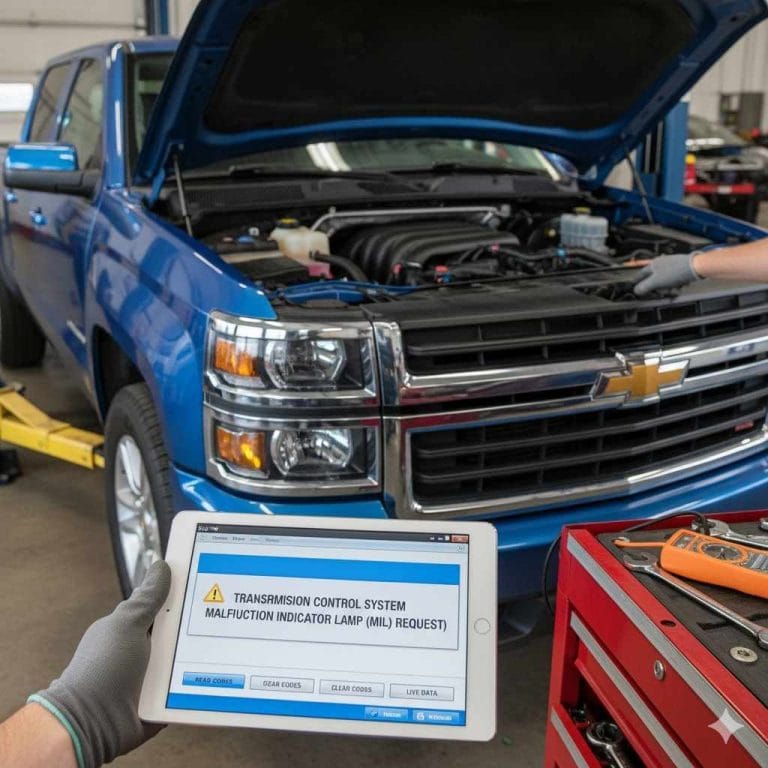
Read fault codes and compare requested gear, commanded shift, input speed, output speed, fluid temperature, and line-pressure data. If the numbers do not make sense, the fault may be in a sensor or circuit rather than the module. A scan tool is the first filter.
Inspect wiring harnesses, connectors, grounds, and corrosion
Transmission wiring harnesses and connectors deserve close inspection because corrosion and poor pin fit can mimic module failure. Wrong wire gauge can also create voltage drop or signal distortion. OEM is often the right answer for wiring harnesses and connectors because the electrical path matters as much as the control logic.
Check solenoids and sensor inputs before condemning the module
Solenoids, speed sensors, pressure sensors, and fluid temp sensors can produce the same hard-shift or limp-mode complaint you would expect from a bad TCM. OEM is often the right answer for solenoids as well. One source describes AC Delco solenoids as lasting 100,000+ miles, while aftermarket solenoids may fail in under a year.
Side-by-side replacement paths
The cleanest buying path is to match the part to diagnostic certainty. If the diagnosis is strong and the platform is picky, OEM is usually the lower-risk total repair. If the part is verified, the vehicle is tolerant of coding, and the supplier supports programming, OE-quality aftermarket can be a fair value play.
| Replacement path | Programming risk | Compatibility risk | Warranty confidence | Expected failure risk |
|---|---|---|---|---|
| OEM new | Low to moderate | Low | High | Low |
| OE-quality aftermarket | Moderate | Moderate | Moderate | Moderate |
| Budget aftermarket | Moderate to high | High | Low | High |
| Used | High | High | Low | High |
| Refurbished | Moderate to high | Moderate to high | Moderate | Moderate to high |
Short pre-buy diagnostic checklist
- Read transmission and network codes with a scan tool.
- Confirm whether the vehicle uses a standalone TCM or a PCM-based setup.
- Inspect wiring, connectors, grounds, and terminals for corrosion or damage.
- Verify speed, pressure, and fluid temperature sensor data against expected behavior.
- Check whether VIN matching, cloning, or relearn steps are required.
- Confirm the seller can support the exact part number and platform variant.
Do aftermarket transmission control modules need programming?
Often, yes. Aftermarket transmission control modules may need scan-tool coding, VIN matching, cloning, or a shift-adaptation relearn after installation. The exact requirement depends on platform and supplier support, so “plug-and-play” claims deserve skepticism unless the vehicle and part number are clearly documented.
VIN matching and module coding
Some vehicles tie the module to the VIN or security data. If the coding does not match, the module may set faults, refuse to adapt, or fail to communicate correctly with other controllers. That is why exact-fit confirmation matters before you buy.
Cloning and relearn requirements
Cloning copies data from the original module when that is possible and appropriate. A relearn then lets the transmission adapt clutch timing and pressure control after the swap. Skipping those steps can leave the vehicle shifting poorly even when the hardware is correct.
Why a scan tool matters after install
A scan tool is not optional on many modern transmissions. It lets you confirm communication, clear old faults, check live data, and perform the relearn routines that turn a fresh module into a usable repair. Without it, the job can stall at the final step.
Choose OEM if… / Choose aftermarket if…
Choose OEM if the vehicle needs exact calibration, security coding, or tight integration with other modules, and if the labor to revisit the repair is high. Choose aftermarket if the part is verified OE-quality, the platform is tolerant of coding or relearn, and you have confirmation that the seller supports the exact variant you need.
Choose OEM if…
- The diagnosis is not fully settled and you want the lowest compatibility risk.
- The vehicle uses VIN matching, security coding, or a picky calibration path.
- The TCM sits in a networked system where ECM, ABS, and transmission data all interact.
- The repair would be costly to repeat if the first module choice is wrong.
Choose aftermarket if…
- The part is OE-quality, not a loose budget substitute.
- The platform and supplier both document coding, cloning, or relearn support.
- You have already verified the wiring, connectors, grounds, and sensor inputs.
- The savings remain meaningful after programming and possible labor are included.
Which transmission parts should always be OEM?
Wiring harnesses, connectors, and many electronic control parts deserve OEM treatment more often than not. Solenoids are also a strong OEM candidate, and OEM speed sensors are described as lasting forever on GM vehicles. For these parts, the cost of a mismatch or failure usually outweighs the price gap.
How much does a transmission control module replacement cost?
Total cost varies by vehicle, but the real comparison should include the module, programming, relearn, and labor. A cheaper part can lose its edge once coding and a second visit are added. When the same part family can vary by 5x, the installed cost, not the shelf price, is the figure that matters.
What causes a TCM to fail after replacement?
A TCM that fails after replacement is often the victim, not the cause. Power supply issues, bad grounds, corroded connectors, wrong harness routing, a mismatched calibration, or an unrelearned adaptation can all make a new module look defective. Sensor faults can do the same thing.
How do I know if my transmission problem is the module or something else?
Start with codes, then compare live data and inspect the circuit. If the transmission shows hard shifts, delayed engagement, limp mode, or warning lights, that still does not prove the module is bad. Faulty solenoids, speed sensors, pressure sensors, fluid temp sensors, or wiring damage can create the same symptoms.
Frequently asked questions
Is an OEM transmission control module better than aftermarket?
OEM is usually the safer choice when the vehicle is sensitive to calibration, coding, or communication issues. Aftermarket can be fine when the part is verified OE-quality and the platform is tolerant of relearn or cloning. The better choice depends on how exact the repair has to be.
Can you use a used transmission control module?
Yes, but used modules are risky because history, wear, and compatibility are unknown. A used unit may also need programming or cloning, and it may carry data that does not match the vehicle. Used parts make the most sense only when the platform and supplier requirements are clear.
Products related to this article
Sponsored / affiliate links. As an Amazon Associate I earn from qualifying purchases. I may earn additional commission from eligible campaigns.