Signs Your Brake Caliper Is Sticking and How to Spot It
A sticking brake caliper may show a hot wheel, brake drag, and uneven pad wear; check for a collapsed hose, seized slide pins, or bent hardware before replacing the caliper. Ignoring it can overheat the rotor, cook the pads, waste fuel, and damage the hub or wheel bearing. This guide shows a symptom-to-cause check you can use to tell caliper drag from hose or hardware faults.
What you’ll need


- Non-contact infrared thermometer
- Jack stands
- Wheel chocks
- Lug wrench or socket set
- Gloves
- Flashlight or work light
- Basic hand tools for wheel removal
What a sticking brake caliper feels like
A brake caliper should press the pads against the rotor during braking, then release completely. If it sticks, the piston or slide pins can hold pad pressure after you lift off the pedal, so that corner drags while you are driving, coasting, or parked.
The first clues usually are a pull under braking, a hotter wheel, a burning smell after driving, noise, and uneven pad wear. A soft or unusual pedal does not point to one fault by itself, but it matters if the symptom started after recent brake work or fluid service.
Symptoms that point to drag instead of normal wear
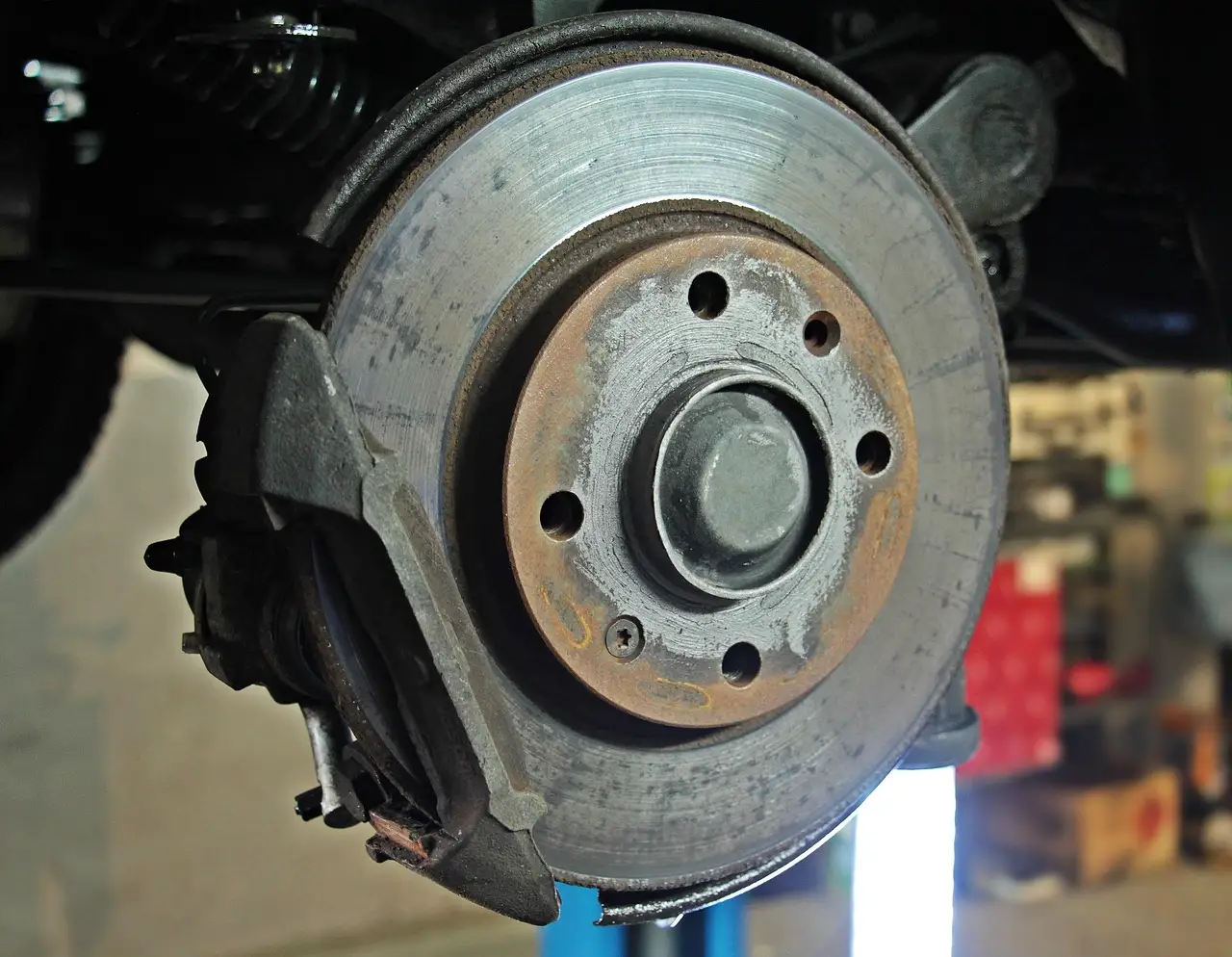
Normal pad wear happens slowly and fairly evenly. Drag leaves one hotter corner, a wheel that is harder to turn by hand, and pad wear that does not match the other side. A rotor may also show blue or purple heat marks if the drag has been severe.
When a pull, smell, or noise matters most
One warning sign is that the car pulls to one side when braking, but pulling can also come from a collapsed brake hose or non-brake causes. Treat the pull as a clue, not the diagnosis. A burning smell after a short drive, grinding, or repeated noise from one wheel can make brake drag much more likely.
Brake drag diagnosis matrix
| Symptom | Likely cause | Quick at-home check | Stop-driving threshold |
|---|---|---|---|
| One wheel is much hotter than the others | Sticking caliper piston, seized slide pins, or a hose that will not release pressure | Compare all four corners with a non-contact infrared thermometer after a normal drive | Stop if the hot wheel is smoking, smells burned, or is far hotter than the rest |
| Pulls when braking | Sticking caliper, collapsed brake hose, or brake hardware that is dragging unevenly | Brake lightly in a straight line, then recheck the same corner for heat | Stop if the pull is strong, repeated, or paired with heat or noise |
| Burning smell or hot brake odor | Constant pad contact, glazed pads, or rotor overheating | Walk around the car after parking and compare odor at each wheel | Stop immediately if smoke, discoloration, or a sharp burn smell appears |
| Grinding, scraping, or squeal from one wheel | Pad hardware drag, worn pads, or a caliper that is not releasing | Look through the wheel for pad dust, rotor scoring, and torn boots | Stop if grinding is constant or the pad is likely down to metal |
| Inner pad much thinner than outer pad | Slide pins or piston binding | Remove the wheel and compare both pads on the same caliper | Stop if the inner pad is near backing plate thickness or uneven wear is extreme |
| Wheel is hard to turn by hand on jack stands | Drag from caliper, hose, or pad hardware | Lift one corner safely and spin the wheel by hand | Stop if the wheel barely moves or will not turn freely |
| Caliper, hose, slide pins, or hardware all remain possible | Fault depends on which symptom leads the diagnosis | Use heat first, then wheel drag, then pad wear, then hose release testing | Stop when heat, smoke, or a locked wheel is present |
How to check each wheel safely
- Park on level ground, set the parking brake only if the rear brakes are not the suspect corner, and let the brakes cool.
- Chock the opposite wheels and loosen the lug nuts slightly before lifting.
- Raise one corner and support it with jack stands; never rely on the jack alone.
- Spin the wheel by hand and compare resistance with the matching wheel on the other side.
- Measure rotor or wheel temperature with the infrared thermometer, then compare all four corners.
If one wheel is clearly hotter, has more drag, and shows odor or wear at the same corner, the brake fault moves to the top of the list. If heat is even but the car still pulls, look harder at the hose, hardware, tire condition, or rear brake mechanism before replacing the caliper.
What the wear pattern says about the fault
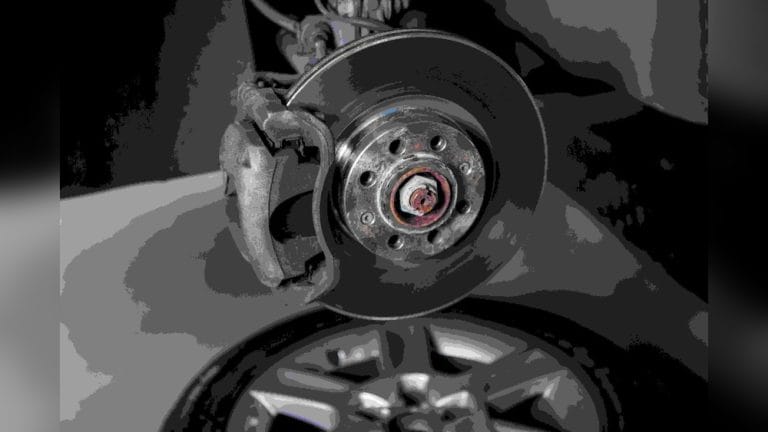
Uneven brake pad wear is a common sign of a stuck caliper. A caliper piston pushes the inner pad toward the rotor, while the slide pins let the floating caliper move so both pads release. If either part binds, the wear pattern gives you the next clue.
Inner pad worn more than outer pad
One inner pad can be much thinner than the outer pad on the same caliper. That pattern points toward a piston that is not retracting normally, a torn piston seal, or slide pins that do not let the caliper float back. Rust, road salt, and humidity are common stressors.
Both pads worn but one corner runs hot
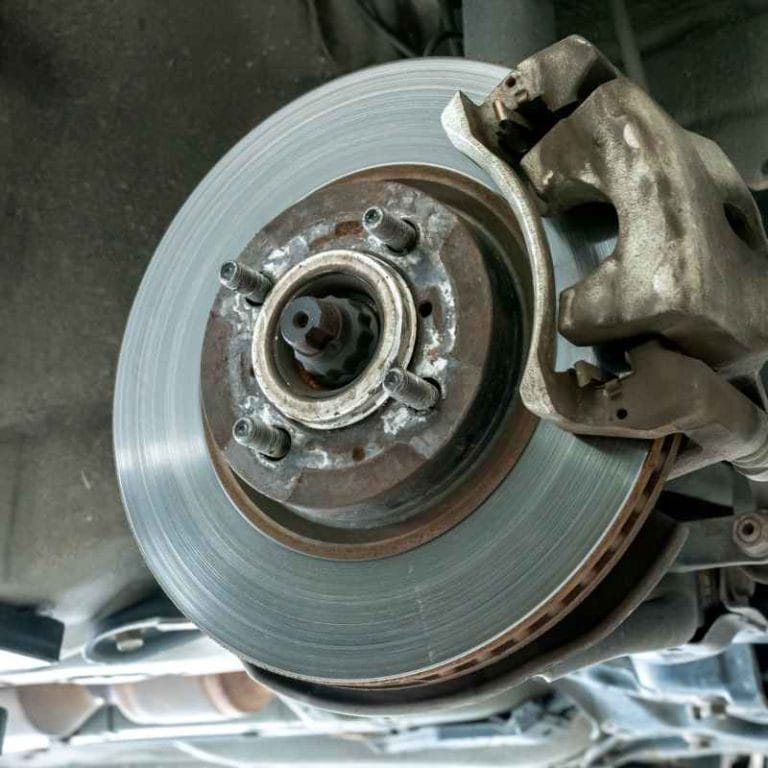
If both pads are thin at one wheel and that corner runs hot, the drag has likely continued long enough to heat the rotor and pad material. The rotor may discolor, warp, or develop hot spots. Blue or purple spots on the rotor point to heat damage.
Rotor discoloration and heat damage signs
Heat damage is not subtle. Look for blue or purple marks, a dark blue ring on the rotor, cracked pad edges, glazed pad faces, or a wheel bearing area that seems hotter than the others. Continued drag can shorten wheel bearing life because the heat transfers into the hub.
Can a collapsed brake hose act like a bad caliper?
A collapsed brake hose can trap pressure and mimic a sticking caliper. The pedal may feel normal, the caliper may look fine, and the wheel still drags because pressure cannot return through the hose. That is why a pull alone is not enough to condemn the caliper.
Pressure that does not release
After a brake application, a bad hose may hold pressure in the caliper line. The wheel heats up, then stays tight until the system cools or the pressure slowly bleeds off. Vehicle pulling can also be caused by a collapsed brake hose, so the hose has to stay in the diagnosis path.
How to spot hose-related drag after braking
Picture a front-left wheel that is hot after a 10-minute drive, but the pads and caliper hardware look normal. If the wheel frees up only after cracking the bleeder or opening the line during service, the hose becomes a stronger suspect than the piston. That pattern is different from a dry slide pin, which usually leaves uneven pad wear.
What usually sticks after a brake job?
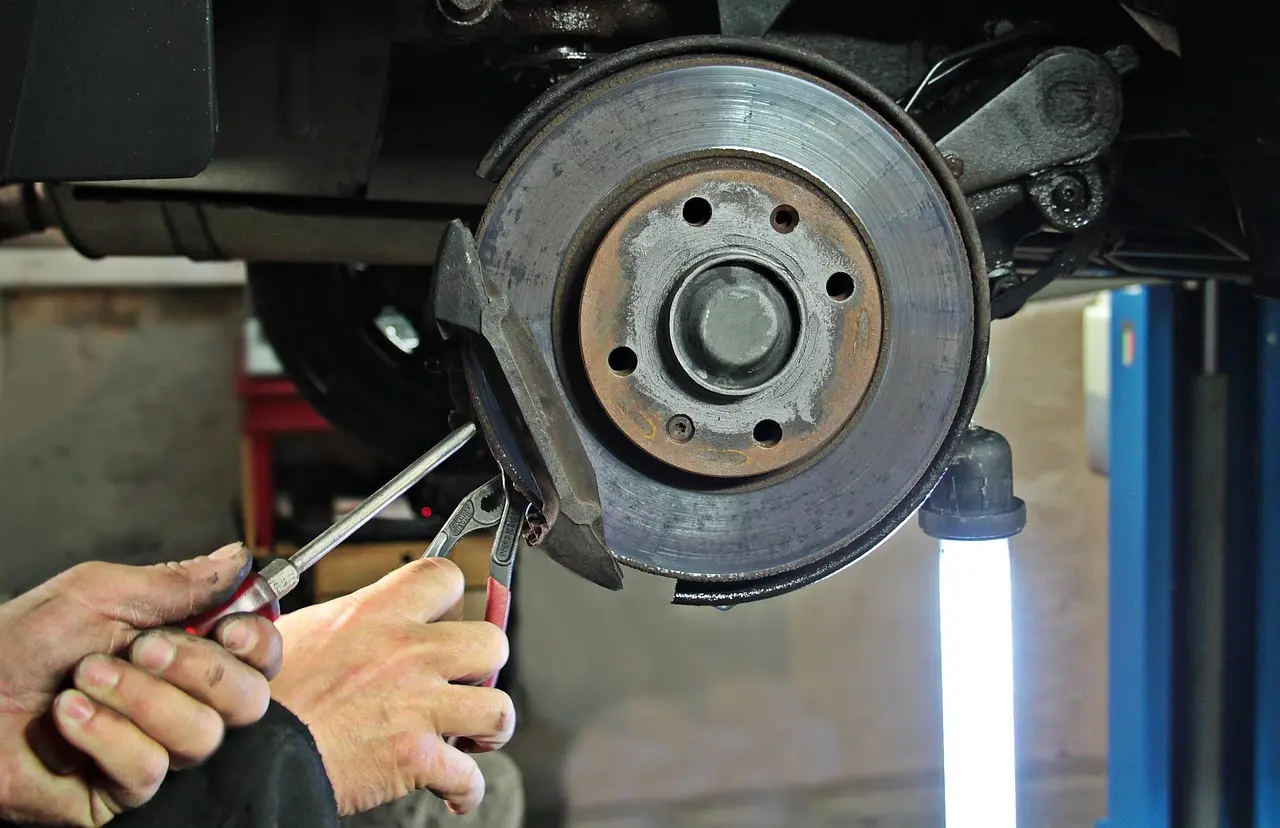
Brake work can leave a corner dragging if the slide pins were installed dry, the boots were torn, the pad hardware was bent or misinstalled, or the caliper was pushed back without proper inspection. Old or contaminated brake fluid can also contribute to corrosion inside the caliper or hose.
Dry or seized slide pins
Caliper slide pins need smooth movement and lubrication. If grease dried out or a boot split, the floating caliper cannot center itself and the outer or inner pad may drag. Rear calipers can be trickier because parking brake mechanisms may share space with the brake hardware.
Misinstalled pad hardware or anti-rattle clips
Misplaced clips, bent shims, or hardware that sits out of square can hold a pad against the rotor. A common first-timer mistake is assuming the caliper is bad when the pad ears are hanging up in the bracket. Remove the wheel and inspect the pad fit before replacing major parts.
Torn boots, rusty pistons, and contaminated fluid
A torn boot lets moisture and debris reach the piston. Over time, brake fluid can absorb moisture, and old or contaminated fluid can contribute to internal corrosion. If the piston surface is rusty or the seal is damaged, the caliper may not retract normally after braking.
Suppose a rear-right corner pulls only after highway driving and the parking brake is hard to release. That pattern can point to rear brake hardware or parking brake mechanism drag rather than a front caliper issue, so do not swap front parts first.
What happens if you keep driving with brake drag?
Brake drag keeps heat in the rotor and pad, and the damage can spread. The pads can glaze, grind, or wear down fast. The rotor can overheat, discolor, or warp, and the hub or wheel bearing can suffer shortened life from the extra heat.
Fuel economy can drop too, because a dragging caliper wastes energy every mile. If the corner smokes, the wheel will not turn by hand, or the rotor shows blue or purple heat marks, stop driving and have the car towed or repaired before more damage builds.
Common mistakes
- Replacing the caliper before checking the slide pins, hose, and pad hardware.
- Using pull alone as proof of a bad caliper.
- Skipping the wheel-spin check on jack stands.
- Comparing only two wheels instead of all four corners.
- Ignoring a hot rotor because the brake pedal still feels normal.
- Reusing corroded clips, dry pins, or damaged boots after brake service.
A practical prevention step is to inspect slide-pin boots, pad clips, and rotor color any time you service brakes. If the fluid looks old or contaminated, plan a proper brake-fluid service with the correct bleeding procedure for that vehicle.
Frequently asked questions
How can I tell if my brake caliper is sticking?
Compare wheel heat first, then pad wear, then wheel drag. A corner that runs hotter, smells burned, and resists spinning by hand points to drag. If the wheel is only slightly warm and wear is even, look beyond the caliper before replacing parts.
What does a sticking brake caliper feel like while driving?
It often feels like a pull when braking, extra drag when you lift off the pedal, or a car that seems reluctant to roll. You may also hear light scraping or smell a hot brake odor after a short trip, especially from one corner.
Can a sticking caliper make one wheel hotter than the others?
Yes. One wheel can run hot because the pad keeps touching the rotor even after braking stops. Compare all four corners with a non-contact infrared thermometer. A single hot outlier matters more than the exact number on the gauge.
Why does my car pull when braking but not all the time?
Heat, hose behavior, and road conditions can change the symptom from drive to drive. A sticky caliper, a collapsing hose, tire differences, or rear brake hardware can all make the pull intermittent. That is why the heat check and pad inspection come before parts replacement.
Is it safe to drive with a sticking brake caliper?
Only if the symptom is mild and the wheel is not overheating. Stop driving if you see smoke, grinding, strong burning odor, or a wheel that will not turn freely by hand. Severe drag can damage pads, rotors, and the wheel bearing fast.
How do I know if the caliper, hose, or slide pins are the real problem?
Use the sequence: heat comparison, wheel-spin check, pad wear inspection, then hose release testing during service. Uneven inner-pad wear points toward the piston or slide pins. A wheel that frees up after pressure is released points more toward the hose.
Products related to this article
Sponsored / affiliate links. As an Amazon Associate I earn from qualifying purchases. I may earn additional commission from eligible campaigns.