Do Hybrid Engines Need Different Oil in Cold Weather?
Hybrid engines usually follow the OEM viscosity recommendation in winter. Cold-weather oil changes matter mainly if your manual allows a lower winter grade, or if you face repeated subfreezing starts. Stop-start use raises short-run wear risk more than in many non-hybrids. Ignoring the spec can mean slow oil flow, harder starts, extra wear, and lost fuel economy in cold weather. This guide explains when to stay with factory oil, when a winter-grade option is justified, and how hybrid stop-start operation changes the risk.
Owner’s manual beats generic winter oil tips
The right winter choice for a hybrid is still the oil grade and approval listed in the owner’s manual, often 0W-20 or, in some late-model designs, 0W-16. Cold weather changes how quickly oil flows, but it does not create a new oil category for hybrids.
Why the answer starts with the owner’s manual
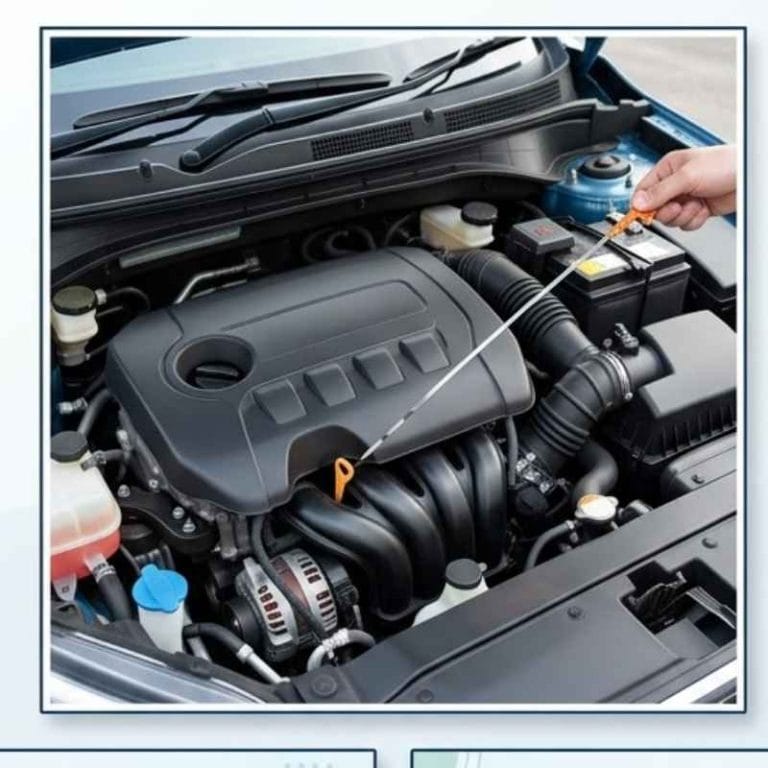
Check the manual first. It is the source for viscosity grade, API grade, and any ILSAC approval. If the manual calls for API SP and ILSAC GF-6A or GF-6B, that approval matters more than a generic winter tip. Start with the listed grade, then choose a winter-safe oil that still meets those approvals.
How stop-start operation changes the oil question
Hybrids shut the engine off often, then restart it under load. That means oil circulation has to happen quickly after each restart, when wear is highest. A hybrid does not usually need special oil beyond the factory spec, but it is less forgiving of slow-flow oil during repeated cold starts.
When winter conditions matter most
Cold weather matters most when the car sees short trips, subfreezing starts, and long idle gaps between engine runs. Those conditions thicken oil, slow circulation, and raise moisture and fuel-dilution risk. That is where the manual-approved low-viscosity grade becomes more important, not less.
What cold weather changes in hybrid oil behavior
Cold air makes engine oil thicker, so it moves more slowly through passages and reaches critical parts later. In a hybrid, that slowdown matters more because the engine may stop and restart many times in one drive, and each restart begins with a brief cold-start wear period.
Why oil thickens at low temperature
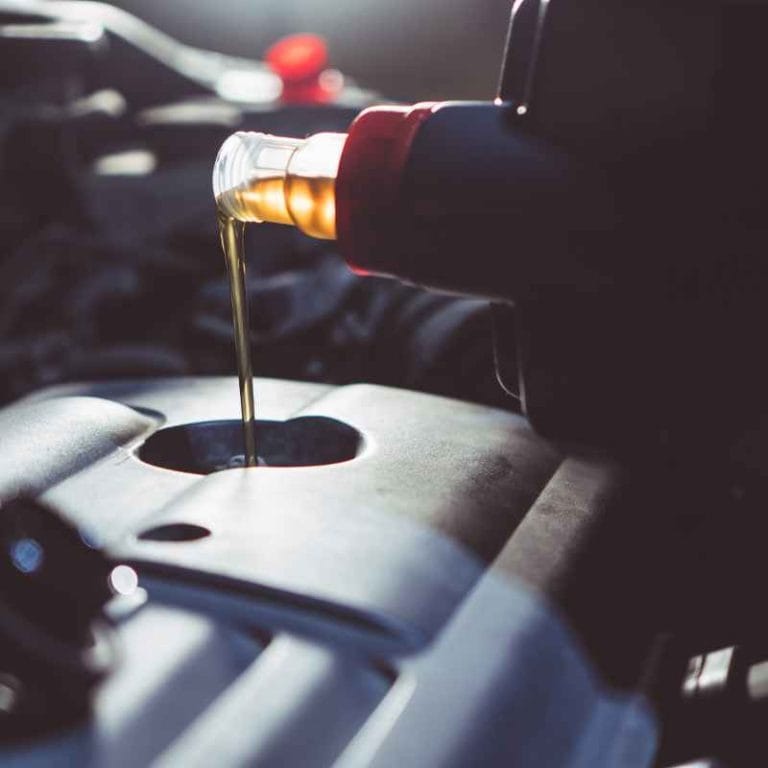
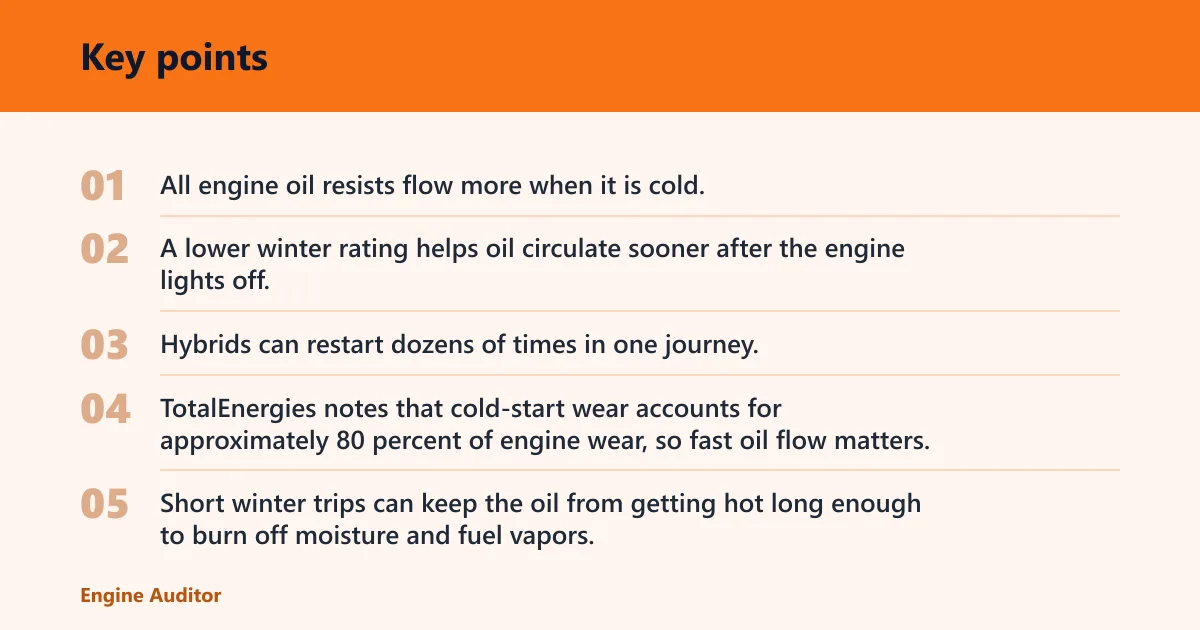
All engine oil resists flow more when it is cold. The lower the temperature, the more the oil can slow at startup, which is why low-viscosity grades such as 0W-20 and 0W-16 are used in many hybrid applications. A lower winter rating helps oil circulate sooner after the engine lights off.
Why repeated restarts raise cold-start wear
Hybrids can restart dozens of times in one journey. That repeated restart pattern puts more stress on the first seconds after ignition, when oil film is still rebuilding on bearings, cams, and other parts. TotalEnergies notes that cold-start wear accounts for approximately 80 percent of engine wear, so fast oil flow matters.
How short trips add moisture and fuel dilution risk
Short winter trips can keep the oil from getting hot long enough to burn off moisture and fuel vapors. VehicleBar links hybrid oil concerns to fuel dilution and moisture accumulation, and that risk grows when the engine runs briefly, shuts off, then cools again. PHEVs can be more exposed to that pattern.
Say your hybrid starts at 10°F, runs 4 miles to work, and shuts off before full warmup. That pattern is harder on oil than one long highway drive, even if the odometer barely moves. The issue is not mileage alone; it is repeated cold operation without enough heat to clear moisture.
Which oil grades are usually right for hybrids?
For many hybrids, 0W-20 is the common winter-safe choice, and 0W-16 is right only when the manual allows it. Do not move to 5W-30 just because temperatures drop. If the engine is calibrated for a lower-viscosity oil, thicker oil can hurt cold-start flow and economy.
0W-20 in common hybrid applications
0W-20 is widely specified for many newer hybrid engines. It is also a common answer for winter because it supports quicker flow at low temperature. One competitor also notes that 0W-20 helps with cold starts at very low temperatures.
0W-16 in late-model designs that allow it
0W-16 is used in some newer, highly efficient engines, especially where the manual calls for it. This grade is tied to fuel-economy-focused hybrid designs and is commonly associated with ILSAC GF-6B in competitor guidance. Use it only when the vehicle specifically approves it.
When 5W-30 is not the right winter answer
5W-30 is not a universal cold-weather fix. Unless the manual lists it as an allowed grade for your exact engine, it can slow cold-start flow and work against the low-viscosity calibration the engine was built around. In a hybrid, that tradeoff matters because restarts are frequent.
- Check the manual first. Look for the listed viscosity, then confirm the required API and ILSAC approval. If it calls for API SP and ILSAC GF-6A or GF-6B, stay inside that spec before you think about winter changes.
- Match the climate band. If winter lows are above freezing, the factory grade usually stays the right choice. If you see regular subzero starts, a lower winter grade only helps when the manual already allows it.
- Confirm the hybrid type. Conventional hybrids and plug-in hybrids can face different duty cycles. A plug-in model that runs the engine less often may need more attention to moisture and interval control than a regular hybrid.
- Look for interval warnings. Short trips, long idle periods, or visible oil contamination mean the interval may need to stay shorter. Do not extend service just because the oil is synthetic.
Why full synthetic oil is often the better winter fit
Full synthetic oil is often the better fit for hybrids in cold weather because it flows better at low temperature and resists oxidation longer under stop-start duty. Many hybrids use full synthetic or synthetic-blend oils, but the manual still decides which one is acceptable.
Low-temperature flow
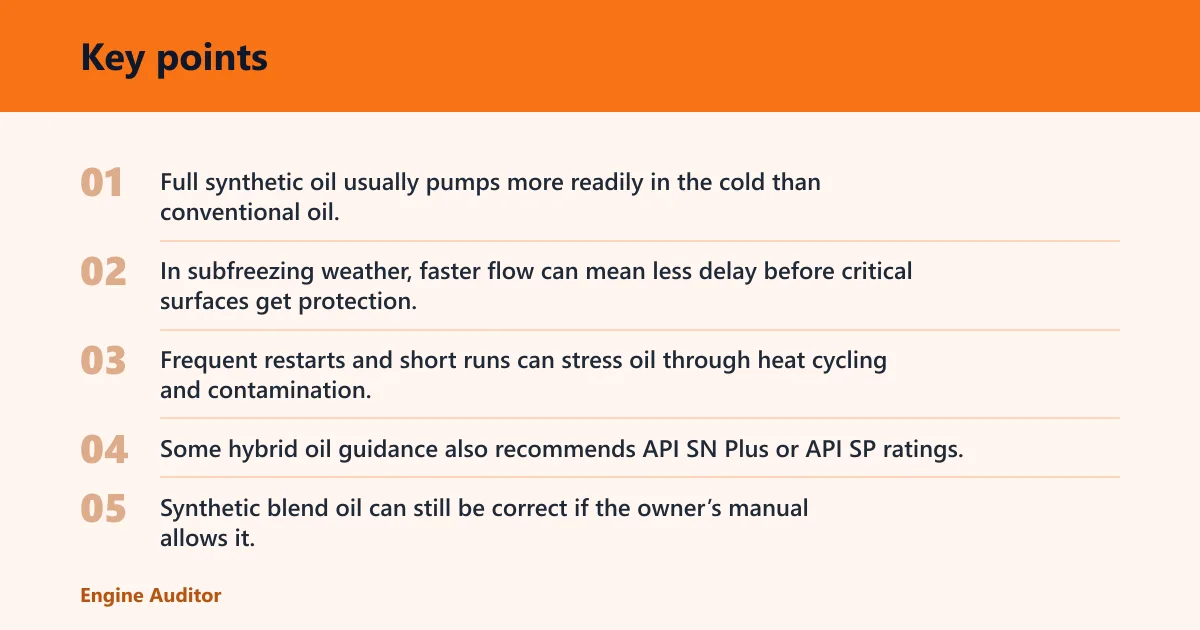
Full synthetic oil usually pumps more readily in the cold than conventional oil. That helps when the engine starts, stops, and starts again before it has fully warmed. In subfreezing weather, faster flow can mean less delay before critical surfaces get protection.
Oxidation resistance during stop-start duty
Frequent restarts and short runs can stress oil through heat cycling and contamination. Full synthetic oil is often better at resisting oxidation in that use pattern, which is one reason many hybrid owners see it listed in factory maintenance schedules. Some hybrid oil guidance also recommends API SN Plus or API SP ratings.
When synthetic blend oil still fits the manual
Synthetic blend oil can still be correct if the owner’s manual allows it. A blend may be used in some hybrid applications, but it should meet the required viscosity and performance standard. The rule is simple: choose the approved oil, not the cheapest oil that sounds winter-ready.
Suppose a late-model hybrid calls for 0W-16 and the owner is tempted to switch to 5W-30 after a cold snap. That change does not solve a winter problem if the engine was designed around 0W-16. It can create a new problem by slowing cold oil flow when the engine restarts repeatedly.
Winter oil decision checklist
This checklist turns the winter oil choice into a simple decision rule. Use it with the manual, the ambient temperature, and your trip pattern. The goal is not to chase the thickest oil available, but to keep the factory-approved grade when it already covers the climate.
| Climate band | Hybrid type | Yes/no trigger | What to do |
|---|---|---|---|
| Above freezing most days | Regular hybrid | No short-trip pattern | Stay with specified 0W-20 or 0W-16, if approved. |
| Above freezing most days | PHEV | Engine runs often enough to warm fully | Follow the manual and keep the normal interval. |
| Regular subfreezing mornings | Regular hybrid | Manual allows lower winter grade | Verify 0W-16 approval or stay with specified 0W-20. |
| Regular subfreezing mornings | PHEV | Many short electric trips | Inspect for moisture and fuel dilution before extending intervals. |
| Deep cold, below 0°F range | Regular hybrid | Frequent cold starts | Use the factory-approved low-viscosity oil only; do not thicken it. |
| Deep cold, below 0°F range | PHEV | Engine sits for long periods | Shorten service timing if oil sees little heat and many restarts. |
- If ambient lows stay moderate. Keep the manual-approved grade and normal service timing unless the engine sees severe short-trip use.
- If subzero starts are common. Confirm whether the manual allows 0W-16 or calls for 0W-20 with API SP and ILSAC GF-6A or GF-6B.
- If trips are very short. Treat moisture and fuel dilution as real risks and avoid stretching the interval.
- If the engine sits for days. Check oil condition sooner on PHEVs, especially when winter drives are brief and infrequent.
What winter oil symptoms mean for service timing
Winter symptoms can point to oil issues, but they can also point to battery, fuel, or charging problems. The key is to separate signs of moisture and dilution from unrelated hybrid faults. If the oil itself looks contaminated, service timing deserves attention before any interval extension.
Moisture signs
Milky residue under the oil cap, repeated short-trip use, or signs of condensation in the crankcase point toward moisture buildup. That does not mean the engine is failing, but it does mean the oil may need attention sooner. Winter driving that never fully warms the engine makes this more likely.
Fuel-dilution signs
Fuel smell in the oil, oil level that rises instead of falls, or oil that feels unusually thin can point to fuel dilution. Hybrids can be prone to this when the engine starts often and shuts off before full heat soak. In that case, a shorter interval is safer than a generic mileage target.
When to inspect before stretching the interval
Do not extend the interval just because the oil is full synthetic. If the vehicle sees many short winter trips, long engine-off periods, or obvious contamination, inspect the oil first. Many hybrids can run 7,500–10,000 miles or more with synthetic oil, but that range depends on duty cycle.
Do plug-in hybrids need the same oil care as regular hybrids?
Not always. Plug-in hybrids can need more attention to oil age and contamination because the engine may sit longer and run less often, which raises moisture and fuel-dilution concerns on short, infrequent runs. The viscosity rule still comes from the manual, but the service timing can be different.
Longer engine-off periods
When a PHEV spends more time in electric mode, the engine may go many days without reaching full temperature. That can let condensation stay in the crankcase longer. The result is a higher chance that the oil ages by time and moisture, not only by miles.
More short-run moisture risk
If the engine starts briefly to support heating or battery state management, then shuts off again, it may never clear water vapor from the oil. That is why PHEVs often deserve closer attention to winter service timing than a regular hybrid driven daily on longer routes.
Why charging habits can change maintenance timing
Charging often can reduce engine use, which is good for fuel use but can leave oil sitting longer. If the car covers most miles electrically, the engine may not cycle enough to burn off moisture. That can justify earlier oil inspection even when total mileage is low.
Frequently asked questions
Do hybrid engines need different oil in cold weather?
Usually, no. Hybrid engines still need the viscosity and approval listed in the owner’s manual, often 0W-20 or sometimes 0W-16. Cold weather mainly changes how important fast oil flow becomes during repeated restarts and short trips, not the basic rule that the factory spec comes first.
What oil viscosity is best for a hybrid in winter?
The best winter viscosity is the one the manual approves for your exact engine. For many hybrids, that is 0W-20; for some late-model designs, it is 0W-16. Do not pick a thicker grade unless the manual specifically allows it for your vehicle and climate.
Is 0W-20 better for hybrid cold starts?
For many hybrid engines, yes. 0W-20 is widely specified and is a common winter-safe grade because it supports faster flow at low temperature. That matters when the engine restarts often and cold-start wear is a bigger part of the duty cycle than it is in many non-hybrids.
Can I use 5W-30 in a hybrid during winter?
Only if the owner’s manual lists it as an approved grade for that engine. Otherwise, 5W-30 can slow cold-start flow and reduce the low-viscosity benefit the engine was designed around. In a hybrid, that can matter more because the engine restarts often and needs quick lubrication.
How often should hybrid oil be changed in winter?
Use the manual’s interval, then shorten it if the vehicle sees many short winter trips, long engine-off periods, or signs of moisture or fuel dilution. Some hybrids with synthetic oil can run 7,500–10,000 miles or more, but winter duty cycle can make time and contamination more important than mileage alone.
Products related to this article
Sponsored / affiliate links. As an Amazon Associate I earn from qualifying purchases. I may earn additional commission from eligible campaigns.
 ECOGARD X10023 Cartridge Engine Oil Filter for Conventional Oil - Premium Replacement | Fits 2018-2023 Volkswagen Atlas 3.6L; 2020-2023 Atlas Cross Sport 3.6L
 ECOGARD X10040 Cartridge Engine Oil Filter for Conventional Oil - Premium Replacement | Fits 2011-2026 Jeep Grand Cherokee, Dodge Durango 3.6L; 2012-2026 Wrangler 3.6L; 2014-2022 Cherokee 3.2L