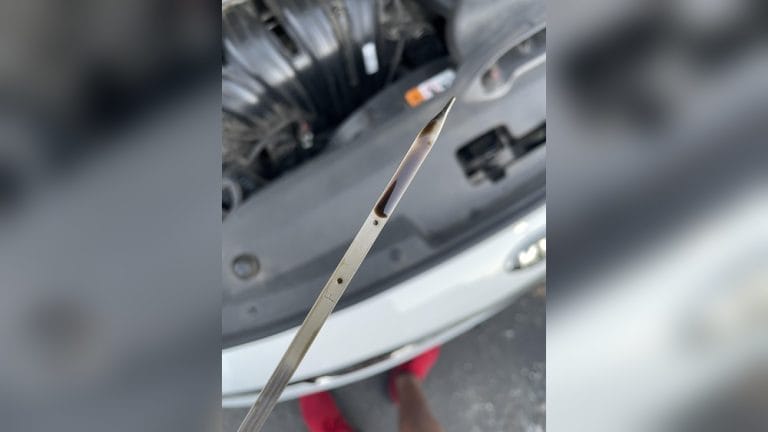
Why Winter Short Trips Can Contaminate Engine Oil Faster
Short winter trips contaminate engine oil faster because cold starts add fuel and condensation, and the engine may never stay hot long enough to boil them off. If most drives are under about 15 to 20 minutes, earlier oil changes often make sense. Left unchecked, that moisture and fuel can thin the oil, speed sludge formation, and raise wear on cold-start parts. This guide explains the contamination chain, the warning signs, and when shorter service intervals make sense.
Winter short-trip risk matrix



This matrix gives a practical rule for drivers who rack up miles in short winter bursts. It separates gasoline and diesel behavior because the contamination pattern is different, and it ties the response to trip pattern, not mileage alone.
| Drive pattern | Gasoline engine risk | Diesel engine risk | Likely symptoms | Maintenance response threshold |
|---|---|---|---|---|
| 5-mile errands | High | High to very high | Fuel smell on the dipstick, milky residue under the cap, oil that looks dark sooner than expected | Consider earlier service if most trips stay this short through winter; test or change sooner if symptoms show up |
| 10-15 minute commutes | Moderate to high | High | Rising oil level, rough cold starts, lingering condensation after shutdown, sootier oil on diesels | Shorten the interval if this is the normal pattern, especially with repeated cold starts and stop-and-go traffic |
| Mixed city driving | Moderate | Moderate to high | Oil that never looks fully cleaned up, more crankcase moisture, more idle time in traffic | Watch the pattern over a season; if trips stay short and traffic-heavy, move the service forward rather than waiting for normal mileage |
Say your daily pattern is a 4.8-mile school run, a 6-mile grocery trip, and a return drive with long traffic lights. The car may reach coolant temperature, yet the oil still may not stay hot long enough to shed moisture and fuel. That is the kind of pattern that justifies earlier oil service.
Why short winter trips contaminate oil faster?
Short winter trips contaminate engine oil faster because the engine gets hit with the dirtiest part of operation over and over: cold starts, delayed oil circulation, and a warm-up that ends too soon. The oil can collect moisture and fuel before it reaches the temperature needed to drive them off, so contamination builds from one trip to the next.
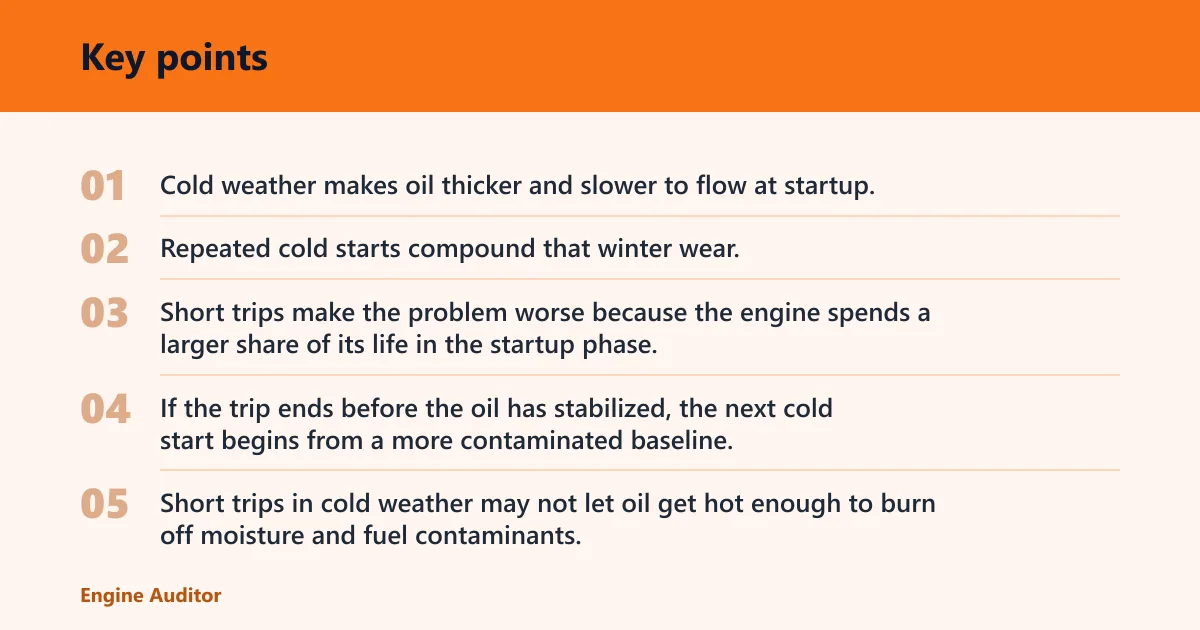
Cold starts delay full oil circulation
Cold weather makes oil thicker and slower to flow at startup. That matters because the first moments after starting are when the engine needs lubrication most, yet oil still has to move through galleries, bearings, and other parts before full protection arrives. Repeated cold starts compound that winter wear.
Short trips make the problem worse because the engine spends a larger share of its life in the startup phase. If the trip ends before the oil has stabilized, the next cold start begins from a more contaminated baseline.
Short drives end before moisture boils off
Short trips in cold weather may not let oil get hot enough to burn off moisture and fuel contaminants. Moisture can collect inside the engine when a vehicle is driven for short distances, and incomplete warm-up leaves that water in the crankcase instead of venting it out.
That is why winter short trips are more than a wear issue. They are a contamination cycle. The oil gets worked, but heat never clears it fully.
What happens to oil before it warms up?
Before oil warms up, it is thicker, slower to circulate, and less able to protect moving parts at the same rate it can once it is fully hot. Coolant may reach a usable temperature sooner, but that does not mean the oil has reached the same state. The gap between the two is where contamination tends to stick around.
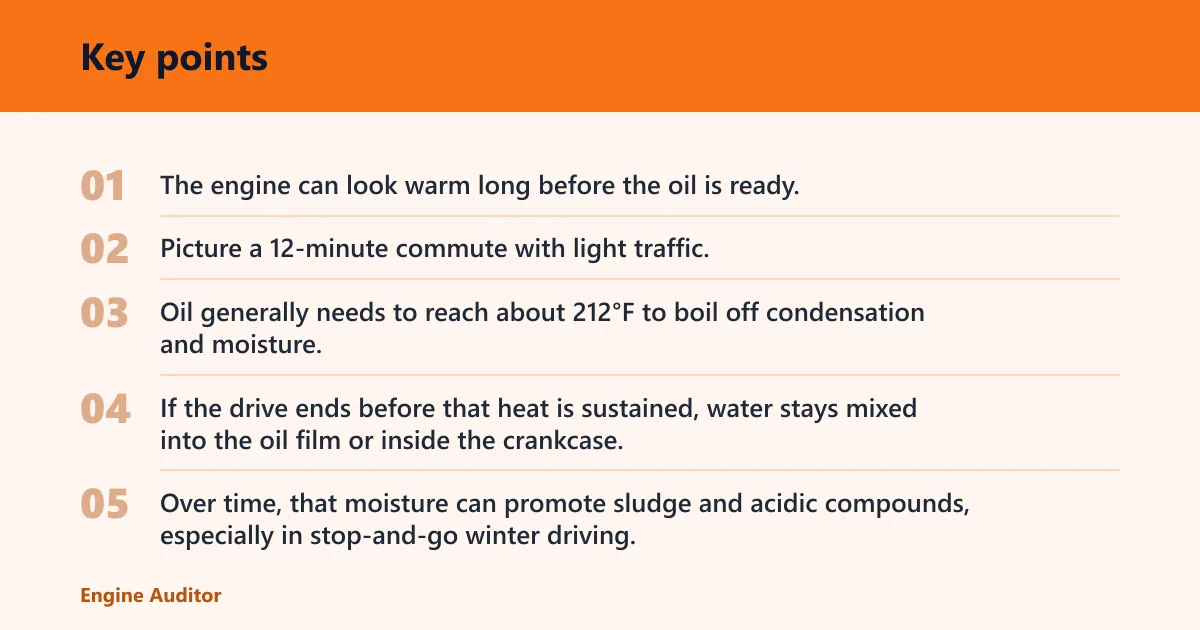
Oil temperature lags behind coolant temperature
Coolant typically reaches operating range within 5 to 10 minutes, while motor oil can take 15 to 20 minutes of sustained driving to reach optimal temperature. That lag is easy to miss because a dash gauge or temperature light often reflects coolant, not oil. The engine can look warm long before the oil is ready.
Picture a 12-minute commute with light traffic. The heater may feel normal and the gauge may look settled, but the oil can still be below the heat needed to dry out the crankcase. The driver sees a warm dash. The oil sees a short trip.
Why moisture stays in the crankcase
Oil generally needs to reach about 212°F to boil off condensation and moisture. If the drive ends before that heat is sustained, water stays mixed into the oil film or inside the crankcase. Over time, that moisture can promote sludge and acidic compounds, especially in stop-and-go winter driving.
That is why a car can seem fine while the oil is not. The engine may run normally, yet the oil can still be carrying water that has not had time or temperature to leave.
How fuel dilution and condensation build up
Fuel dilution and condensation build up when cold operation repeats faster than the engine can clean itself out. Short winter drives leave extra moisture behind, and cold combustion can also put unburned fuel into the oil film. The result is thinner oil, more sludge risk, and less stable lubrication.
Condensation from incomplete warm-up
Condensation forms when water vapor from combustion and ambient air cools inside the engine. In winter, short trips and stop-and-go traffic make that more likely because the oil may never stay hot long enough to carry the moisture away. Water then sits in the crankcase and can contribute to corrosion and acidic byproducts.
Stop-and-go winter driving stretches the low-heat phase. The engine keeps cycling between load and idle, but the oil does not get the long, steady heat it needs to dry out.
Fuel entering the oil during cold operation
Fuel dilution occurs when fuel enters crankcase oil, which can happen during cold starts and repeated cold combustion. Frequent cold starts can cause fuel dilution in the crankcase, and richer cold-running mixtures can leave more fuel behind before the engine warms fully. That fuel weakens the lubrication film.
A gasoline engine usually shows this as a fuel smell on the dipstick or a rising oil level. A diesel engine can show a different contamination pattern, because soot and cold operation often ride along with the fuel issue instead of replacing it.
How long does oil need to get hot enough?
Oil usually needs more time than many drivers expect. A useful rule is that coolant can warm up in minutes while oil often needs 15 to 20 minutes of sustained driving, and about 212°F is the temperature commonly needed to boil off moisture. Short trips end before that point, which leaves contamination in place.
Why 212°F matters for moisture removal
That temperature matters because it is high enough for water in the oil system to leave as vapor rather than linger as liquid. Below that, condensation can remain in the crankcase, especially if the drive includes traffic lights, idling, or low-speed neighborhood travel. The oil may circulate, but not clean itself out.
Why a dash gauge can mislead you
A dash gauge often reflects coolant behavior, not oil temperature. Since coolant typically reaches operating range within 5 to 10 minutes, drivers can assume the engine is fully warm when the oil still is not. That false sense of warmth is one reason short winter trips are so hard on oil condition.
- Check your drive pattern. Count how many winter trips fall under 10 miles or under 15 minutes. Those are common short-trip markers, and either one can keep oil from reaching the temperature needed to dry out moisture.
- Watch for repeated cold starts. Two or more cold starts in the same day can raise the chance that fuel and moisture stay in the oil. The more often the engine restarts cold, the more the contamination cycle repeats.
- Match service to use. If most winter driving is short, stop-and-go, or idle-heavy, shorten the oil change interval instead of waiting on mileage alone. Seasonal maintenance can reset contaminated oil before it piles up further.
What changes for gasoline and diesel engines?
Gasoline and diesel engines both suffer from short winter trips, but the contamination pattern differs. Gasoline engines are more likely to show fuel dilution and moisture-related oil thinning. Diesel engines often add soot and other contamination on top of the same cold-operation problem, so the service threshold can be sooner.
Gasoline engines: fuel dilution and condensation
In gasoline engines, cold starts and rich cold running can leave extra fuel in the crankcase oil. Combine that with incomplete warm-up and you get more condensation, thinner oil, and a higher chance of sludge if the pattern repeats all winter. A fuel smell or rising oil level should get your attention.
Diesel engines: soot, contamination, and cold operation
Diesel short-trip operation can be more prone to soot and contamination patterns that differ from gasoline engines. Short trips and low-heat operation can leave soot and moisture in the oil longer, and diesel engines may need attention sooner when the pattern is mostly city driving or errands in cold weather. The risk is not identical; it is often worse in a different way.
Suppose a diesel SUV spends the week on 8-mile store runs and school pickups. The oil can darken quickly, and that does not automatically prove a problem. But if the oil also smells burnt or the level changes without an oil top-off, that pattern deserves testing or earlier service.
Signs your oil may need attention
These clues do not prove the oil is bad by themselves, but they are useful signals that winter short trips may have left moisture or fuel behind. If more than one shows up, earlier oil service or oil testing makes sense. A clean-looking engine can still have contaminated oil.
- Fuel smell on the dipstick. A sharp gasoline or diesel odor can point to fuel dilution in the oil film.
- Milky residue under the cap. Water droplets or a pale, creamy film can indicate moisture that has not been boiled off.
- Oil level that rises. A higher-than-expected dipstick reading without adding oil can suggest fuel dilution or water contamination.
- Oil that looks tired early. Darkening sooner than normal, especially after a winter of short trips, can mean the oil is carrying more soot and contamination than usual.
- Rough cold starts. Hard starting or uneven running right after startup can be part of the same cold-operation pattern that leaves contamination in the crankcase.
- Check the dipstick cold. Look for fuel odor, unusual dilution, or a level that has crept up. Do this on level ground before the next drive so the reading is easier to compare.
- Inspect under the oil cap. A milky film or droplets can point to moisture buildup. A small amount of winter condensation is possible, but repeated residue should not be ignored.
- Compare against your routine. If the oil looks worse far sooner than your normal interval, shorten the service plan. The driving pattern matters more than the odometer alone in winter.
Frequently asked questions
Why do short winter trips contaminate engine oil faster?
Short winter trips contaminate engine oil faster because the engine spends more time cold, the oil circulates more slowly at startup, and the drive may end before the oil gets hot enough to drive out moisture and fuel. That leaves condensation and fuel dilution in the crankcase, where they can build from one trip to the next.
How long does it take engine oil to get hot enough to burn off moisture?
Motor oil can take 15 to 20 minutes of sustained driving to reach optimal temperature, and about 212°F is commonly needed to boil off moisture. Coolant often warms sooner, so a warm gauge does not mean the oil is ready. Short winter trips often stop short of that heat window.
Can short trips cause fuel dilution in engine oil?
Yes. Frequent cold starts can cause fuel dilution in the crankcase, especially when the engine runs rich during cold operation and does not stay hot long enough to clear the excess fuel. Gasoline engines are especially likely to show this pattern, though diesel engines can have their own contamination issues too.
What counts as a short trip in cold weather?
A common short-trip definition is under 10 miles, and another common rule is less than 15 minutes. In cold weather, either benchmark can be enough to leave the oil below moisture-burning temperature, especially if the route includes idle time, traffic lights, or multiple cold starts.
Why is oil worse after winter even if the car seems fine?
Because the engine can run normally while the oil still carries moisture, fuel, and soot from repeated cold operation. That contamination may not trigger a drivability problem right away, but it can thin the oil, increase sludge risk, and leave the crankcase in poorer condition than the dash or engine feel suggests.
Should I change my oil sooner if I mostly drive short distances in winter?
Usually yes. If most winter driving is under about 15 to 20 minutes, or under about 10 miles, a shorter oil change interval is often sensible. The right interval should reflect the driving pattern, not mileage alone, because short winter trips can leave contaminated oil behind even when the odometer looks modest.
Products related to this article
Sponsored / affiliate links. As an Amazon Associate I earn from qualifying purchases. I may earn additional commission from eligible campaigns.
 RVS Technology G6 Engine oil Treatment; For Gasoline Engines with a Motor oil capacity up to 6 quarts; Save fuel, Boost Power and Safely Restore and protect your Car, Truck, and all other engines
 ACROPIX Engine Oil Level Indicator Dipstick for Ford Fusion 2010-2012 for Ford Escape 2010-2012 for Ford Fusion 2006-2007 No.6E5Z6750AC Car Parts