How to Tell the Difference Between Oil Leak and Oil Burn
If oil leaves spots under the car, smells burnt from the engine bay or exhaust, and the dipstick drops between checks, you likely have an external leak or internal burning; blue smoke and a clean parking spot usually point to burning, while puddles point to leakage. Ignore either problem, and you can starve the engine, foul plugs, and turn a cheap seal job into a major repair. This guide shows the fast three-way check: where the oil appears, what it smells like, and how the dipstick changes over time.
Spotting leaks versus burns: smoke, stains, and dipstick
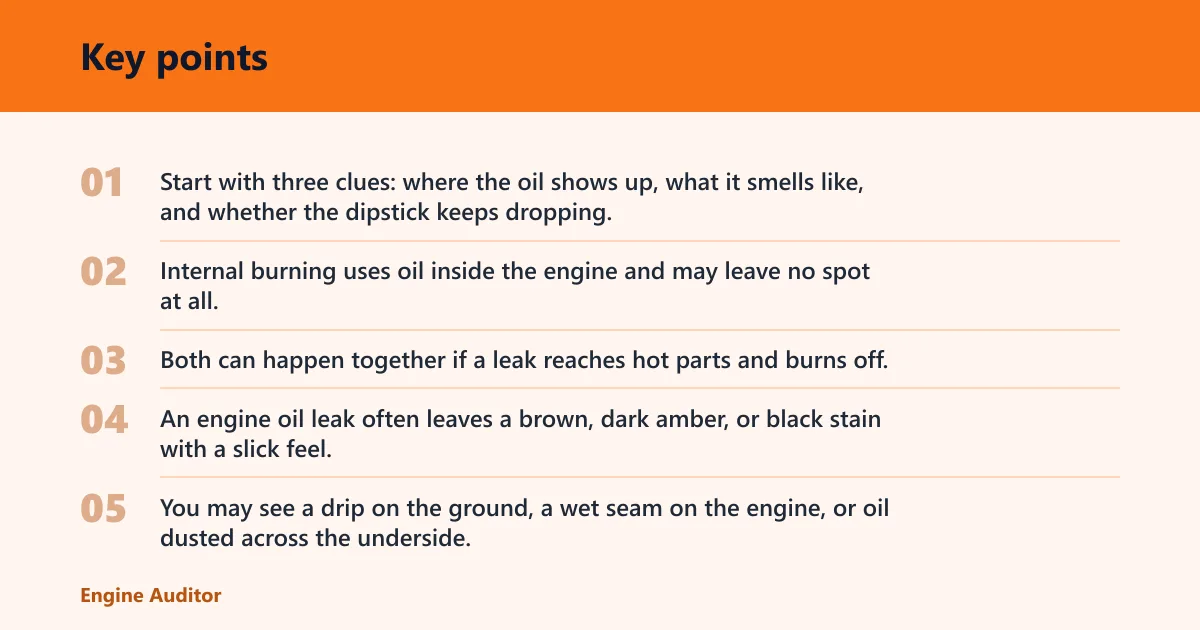


Start with three clues: where the oil shows up, what it smells like, and whether the dipstick keeps dropping. External leaks leave oil outside the engine. Internal burning uses oil inside the engine and may leave no spot at all. Both can happen together if a leak reaches hot parts and burns off.
External leak clues
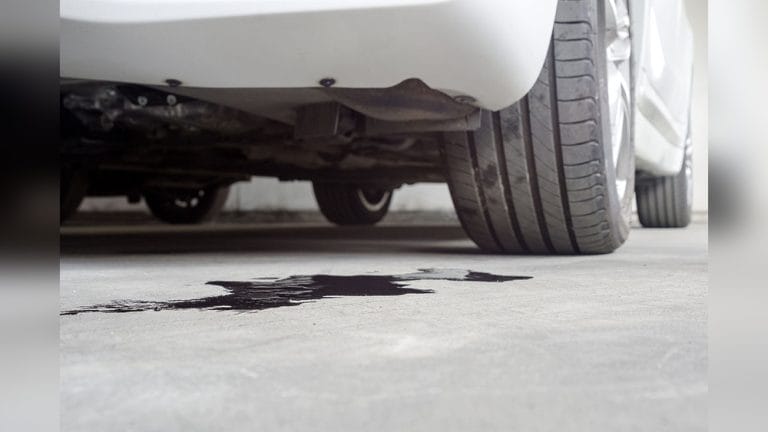
An engine oil leak often leaves a brown, dark amber, or black stain with a slick feel. You may see a drip on the ground, a wet seam on the engine, or oil dusted across the underside. A leak does not always mean the engine will fail right away, but it does mean you should find the source before the level gets low.
Internal burn clues
Oil burning inside the engine usually shows up as blue exhaust smoke, a low dipstick reading, or a burnt-oil smell after driving. It may not leave a ground stain. Worn internal engine parts are a common cause, and the oil can drop even when the driveway stays clean.
When both can happen
Some cars leak oil onto hot exhaust or engine parts, then burn the oil before it reaches the ground. That can produce smell or smoke without a big puddle. In that case, the issue begins as an external leak and becomes a burn clue because heat changes where the oil ends up.
What the oil spot tells you
The spot itself gives the first filter. Color, texture, and placement can separate oil from coolant, transmission fluid, and water. The leak may still be farther up than the drip on the ground, so treat the spot as a clue, not the final answer.
Color and texture
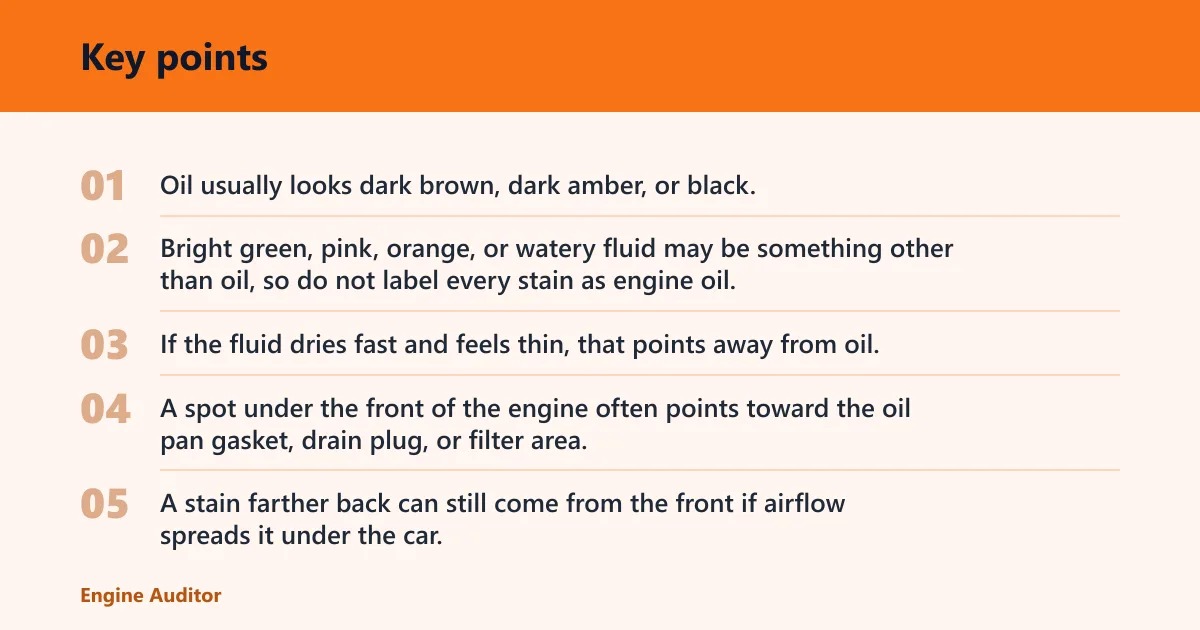
Oil usually looks dark brown, dark amber, or black. It also feels slick. Bright green, pink, orange, or watery fluid may be something other than oil, so do not label every stain as engine oil. If the fluid dries fast and feels thin, that points away from oil.
Where the spot forms
A spot under the front of the engine often points toward the oil pan gasket, drain plug, or filter area. A stain farther back can still come from the front if airflow spreads it under the car. The spot location is useful, but the true source may be above it or ahead of it.
Why the drip may not match the source
Oil can run along a cover, frame rail, or undertray before it drips. Airflow while driving can move fresh oil rearward, and vibration can shake it loose in a different place from where it started. That is why a crankshaft seal or timing cover leak may appear away from the actual drip point, and why underside inspection matters.
A common first-timer mistake is checking a spot only after a hot drive and assuming the stain started there. Suppose the oil pan gasket seeps at the rear corner, then air pushes the oil along the pan edge. The puddle may appear several inches behind the true leak, while the source stays hidden until you look underneath.
What the smell and smoke mean
A burning oil smell often means oil is hitting a hot exhaust or engine part. Blue smoke means oil is entering the combustion side or burning off in the exhaust stream. Smell and smoke together are stronger clues than either one alone, especially if the dipstick also falls.
Burning oil smell after driving
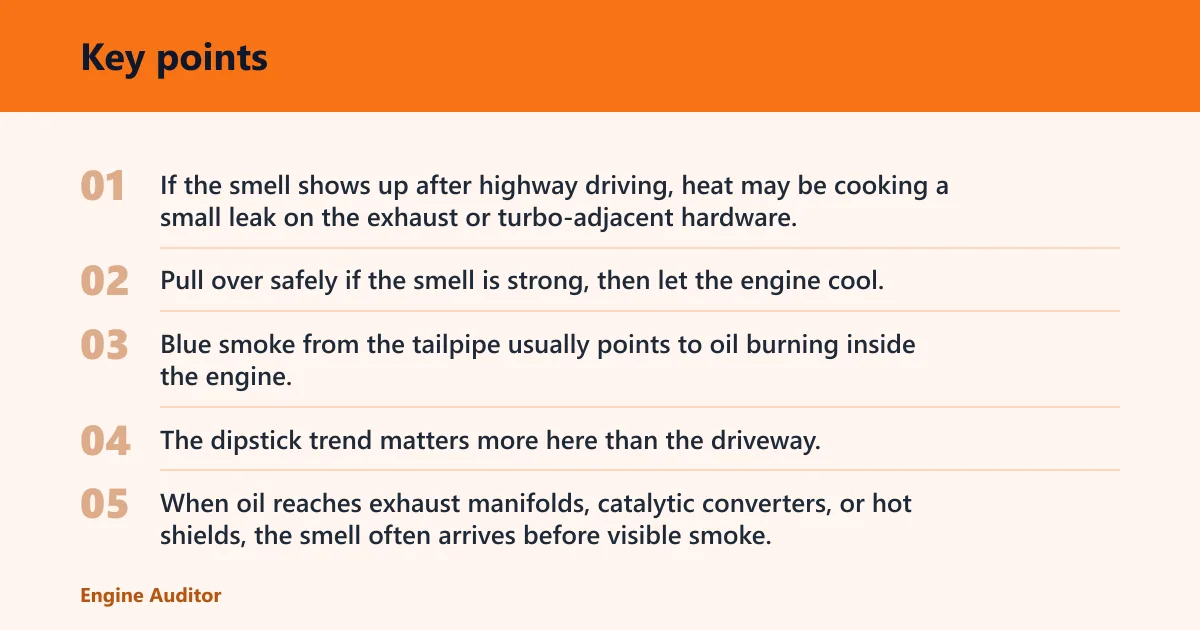
If the smell shows up after highway driving, heat may be cooking a small leak on the exhaust or turbo-adjacent hardware. Pull over safely if the smell is strong, then let the engine cool. A hot, burnt-oil smell may mean oil is dripping onto a hot engine part or exhaust component, which is a safety concern and can come before smoke.
Blue exhaust smoke
Blue smoke from the tailpipe usually points to oil burning inside the engine. That can happen with worn internal engine parts, and it may show more clearly on startup, after idling, or under load. A clean parking spot does not rule this out. The dipstick trend matters more here than the driveway.
Oil on hot exhaust
When oil reaches exhaust manifolds, catalytic converters, or hot shields, the smell often arrives before visible smoke. That pattern strongly supports an external leak with hot-surface contact. A valve cover gasket leak is a common example, because it can drip onto hot parts and create a burnt smell without a large ground puddle.
How to check the dipstick
The dipstick is the low-drama truth teller. Check it on level ground with the engine cool, wipe and reinsert the stick, then read it again. If the level keeps falling between checks, you need to separate a leak from oil burning inside the engine before the low level turns into pressure loss.
-
Park on level ground.
Let the engine cool first so the reading is stable and safe to reach. A cool engine reduces splash and keeps the result easier to trust. -
Pull and wipe the stick.
Remove the dipstick, wipe it clean, and reinsert it fully. The first pull is only for cleanup, not for reading. -
Read the level again.
Pull the dipstick a second time and note where the oil line sits. Compare it with the full and low marks, then repeat the check after a short drive or the next morning if you are tracking a drop. -
Record the trend.
Check again after a few days or a week, under the same conditions. A steady decline often suggests an active leak or internal consumption, while a level that holds steady points away from a serious loss.
If the level is low and there is no visible spot, do not dismiss the problem. Oil burning inside the engine can lower the dipstick without leaving a puddle. A falling level with a clean floor is still a real fault, just one that is harder to see.
Oil leak decision table
This table uses amount, speed, and symptoms as the quickest way to sort the problem. Treat the pattern, not just the stain, because the same oil can signal a minor seep, a hot-surface leak, or a tow-now failure.
| Symptom pattern | Likely diagnosis | Most likely source area | Safe next step | Urgency |
|---|---|---|---|---|
| Dark brown or black spot under the car; slick feel | External oil leak | Oil pan gasket, drain plug, or filter area | Check level, place cardboard overnight, inspect underside | Monitor if small; schedule soon if it grows |
| No spot, but blue exhaust smoke | Internal oil burning | Worn internal engine parts | Check dipstick and watch the smoke pattern | Schedule soon; urgent if smoke is heavy |
| Burning smell after highway driving | Oil hitting hot parts | Valve cover gasket or upper engine leak | Pull over, cool down, inspect for fresh wet oil | Stop driving now until cooled and checked |
| Oil wet on exhaust or shield | External leak with heat contact | Valve cover gasket, timing cover, or nearby seal | Inspect from above and below; confirm the dipstick level | Schedule soon; stop if smoke appears |
| Fresh leak right after an oil change | Service-related leak | Drain plug or oil filter | Recheck the filter and drain plug at once | Stop driving if the drip is steady |
| Low oil with no visible leak | Possible oil burning | Internal engine wear | Track the dipstick over several days | Schedule soon |
| Rapid oil loss with warning light | Severe leak or pressure loss | Large external leak, pump issue, or major internal fault | Shut the engine off and arrange towing | Tow now |
| Spot appears far from the front of the engine | Oil carried away from source | Crankshaft seal or timing cover | Inspect the underside and trace upward | Schedule soon |
| Light haze after startup, then clears | Possible oil burn | Valve seals or worn internal parts | Watch the dipstick and smoke frequency | Schedule soon |
| Oil smell with no floor stain | Small leak burning off | Valve cover gasket or upper engine leak | Look for wetness near hot exhaust parts | Schedule soon; stop if smoke starts |
| Oil pressure warning light stays on | Low oil pressure | Low oil, pump issue, or major leak | Stop the engine at once | Tow now |
Common leak points to inspect
Common leak zones include the valve cover gasket and oil pan gasket, plus the drain plug, oil filter, crankshaft seal, and timing cover. These parts can leak in different ways, and the source may not drip straight down where the stain appears. A quick underside check often narrows the trail fast.
Valve cover gasket
This is a common leak point near the top of the engine. It can drip onto hot exhaust parts and cause a burning oil smell. If the smell is strongest after driving, and the upper engine looks oily, this gasket belongs near the top of the suspect list.
Oil pan gasket
The oil pan gasket is a common undercar leak point and can worsen with age. It often shows up as a drip or wet seam on the lowest part of the engine. If the stain forms under the center or rear of the engine, this area deserves a close look.
Crankshaft seal
The crankshaft seal can leak while the engine is running and may throw oil away from the true source. That means the spot on the ground can be misleading. Underside inspection matters here because the leak path may trace forward or rearward before it drops.
Oil filter and drain plug
After an oil change, the filter and drain plug are common first places to inspect. They can be improperly seated or not sealed as they should be, and a fresh leak right after service deserves special attention. Look for oil around the filter base, drain plug threads, and the first few miles of the underside.
When is it safe to drive?
Use four levels: monitor, schedule soon, stop driving now, and tow now. A small seep with a steady dipstick may be manageable for a short time, but smoke, fast loss, or an oil pressure warning light moves the problem into the urgent zone. The warning light is especially urgent.
Monitor and recheck
Choose this when the spot is small, the smell is mild or absent, and the dipstick barely changes. Place cardboard under the car overnight, then check the stain size and level again. If the pattern stays small and stable, you can monitor while planning repair.
Schedule repair soon
Use this when the oil smell is repeatable, the dipstick is trending downward, or you see a leak from a common source like the valve cover gasket, oil pan gasket, filter, or drain plug. The car may still move under its own power, but the problem should not be left to grow.
Stop driving now
Stop driving if smoke appears, the smell gets strong, or oil starts dripping onto hot parts. Pull over, cool the car, and confirm the level before going farther. Burning oil can turn from a smell into visible smoke quickly, and that changes the risk.
Tow now
If the oil pressure warning light stays on, or comes back on after starting, shut the engine off. AAA advises shutting off the engine if that light stays on or returns. A rapid oil loss with a warning light usually means towing is the safer move, since continued running can damage the engine quickly.
What should you check after an oil change?
After an oil change, look first at the filter, drain plug, and the area around the service work. Fresh oil underneath deserves special attention because the source is often close to the service point. If the leak starts immediately, the filter or drain plug is a more likely culprit than an old gasket far away.
-
Inspect the filter base.
Look for oil around the oil filter and the block face where it seats. A wet ring or drip at the base points to a sealing problem. -
Check the drain plug.
Trace the lowest point of the pan and inspect the plug threads and washer area. A loose or poorly sealed plug often leaves a fresh drip directly below the pan. -
Look for fresh splatter.
Check the subframe, splash shield, and nearby exhaust for new oil. Fresh splatter after service suggests the leak began during or right after the change. -
Recheck the level.
Read the dipstick with the engine cool and on level ground. If the level drops quickly after service, stop driving and correct the leak before more oil is lost.
If the driveway stays clean, but the dipstick falls from full to half in about a week and a blue haze appears only after a long highway run, the pattern points more toward oil burning than a simple ground leak. That pattern points more toward oil burning than a simple ground leak, so the next check should focus on smoke, consumption, and internal wear instead of the floor.
Frequently asked questions
How can I tell if the oil on the ground is a leak or just burning oil?
Oil on the ground points to a leak; a burning oil problem may leave no spot at all. Use all three clues together: stain, smell, and dipstick trend. If the floor is clean but the oil level keeps dropping and blue smoke appears, burning is more likely than a puddle leak.
What does a burning oil smell mean in a car?
A burning oil smell often means oil is dripping onto a hot engine part or exhaust component. That can happen with a valve cover gasket leak or another upper-engine leak. Treat it as a safety concern, pull over if the smell is strong, and let the engine cool before inspecting.
Is it safe to drive with a small oil leak?
A small leak is not always an immediate stop, but it should not be ignored. If the dipstick stays steady and the leak is minor, you may monitor it briefly. If the leak grows, smells burnt, smokes, or lowers the oil level quickly, the risk changes fast.
How fast should oil level drop before I worry?
Any steady drop deserves attention, but the speed matters most. If the level falls between checks over days or a week, schedule a repair. If it drops quickly enough to trigger the oil pressure warning light, stop the engine at once. That is no longer a monitor situation.
Can a valve cover gasket leak smell like burning oil?
Yes. A valve cover gasket leak can drip onto hot exhaust parts and create a burnt-oil smell without leaving a large puddle. If the smell is strongest after driving and the upper engine looks oily, that gasket is a common source worth checking first.
When does an oil leak become a tow-now problem?
It becomes tow-now when the oil pressure warning light stays on, returns, or the oil level falls fast with smoke or heavy dripping. That means the engine may not be getting safe oil pressure. Shut it off and arrange towing rather than risking damage from continued driving.
Products related to this article
Sponsored / affiliate links. As an Amazon Associate I earn from qualifying purchases. I may earn additional commission from eligible campaigns.
 ACROPIX Engine Oil Level Indicator Dipstick for Ford Fusion 2010-2012 for Ford Escape 2010-2012 for Ford Fusion 2006-2007 No.6E5Z6750AC Car Parts
 DongJinK Engine Oil Level Gage Dipstick Compatible with Toyota 4Runner 1984-1995 for Toyota Celica 1984-1985 for Toyota Pickup 1984-1995 Replace# 15301-35020 1530135020