How to Stop Oil From Leaking Onto the Exhaust
If oil is dripping onto a hot exhaust manifold or pipe, stop driving and fix the leak before you run the engine again. If it only seeps nearby, clean the area and trace the source first. Left alone, it can smoke, stink, stain nearby parts, and create a fire hazard. Fire-safety guidance from vehicle and fire authorities is clear: oil and other combustible fluids should not contact hot exhaust parts.
What should you check first?


Start with the hottest, most dangerous area: the exhaust manifold, nearby heat shields, and any fresh oil trails above them. A burning smell after shutdown often points to oil on hot metal, while smoke from the tailpipe points to a separate engine-burn symptom. The goal is to separate an external leak from internal oil burning.
What you’ll need
- Gloves and eye protection
- Flashlight or inspection light
- Degreaser or brake cleaner
- Shop rags or paper towels
- Cardboard or absorbent paper for overnight spotting
- UV leak detection dye
- UV lamp
- Basic hand tools for covers, clamps, and shields
- Replacement gasket, seal, washer, drain plug, or oil filter as needed
Is it oil on the exhaust, or smoke from the tailpipe?
If the smell or smoke starts from the engine bay, assume oil is touching a hot part until you prove otherwise. Oil on an exhaust manifold can burn off after shutdown, at idle, or after highway driving. Blue or gray smoke from the tailpipe usually means the engine is burning oil internally, not leaking oil onto the exhaust from outside.
What signs tell the difference?
- Park on level ground and let the engine cool. Hot exhaust parts can ignite fresh oil and make the leak harder to read.
- Look for smoke from the engine bay, not the tailpipe. Engine-bay smoke means something is burning on a hot surface.
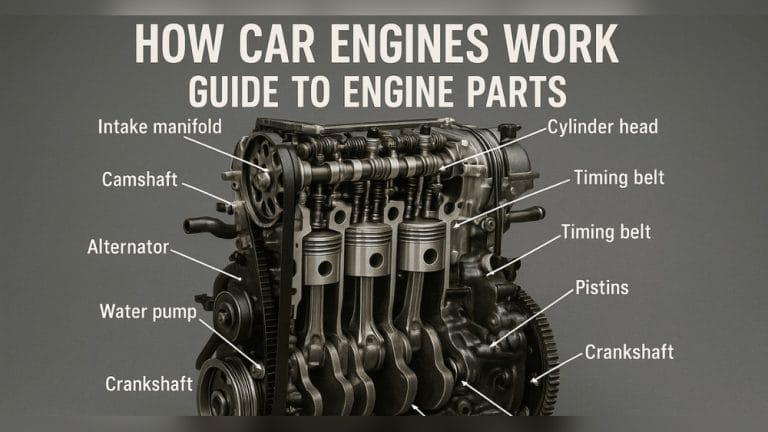
- Check for fresh oil near the valve cover, manifold, timing cover, oil filter housing, and bell housing. Oil often drips from above the place where you notice it.
- Note when the smell starts. A burning-oil smell often appears after highway driving or when idling at a light, which can help narrow the leak path.
What does the triage table say?
This table links the symptom to the most likely source so you can decide whether the car needs an immediate stop or a careful inspection. The key clue is location: oil on the manifold is usually an external leak from above, while oily tailpipe smoke points toward internal oil burning. A low-oil warning is a stop-driving event.
| Symptom pattern | Likely leak source | Urgency |
|---|---|---|
| Burning smell after shutdown | Oil dripping onto exhaust manifold or heat shield | Inspect now; stop driving if oil is actively hitting hot parts |
| Smoke at idle | Valve cover gasket or oil filter housing gasket above the exhaust | High; oil may be landing on a hot manifold |
| Smoke after highway driving | Oil is blowing rearward or onto hot parts after airflow changes | Medium to high; trace before another long drive |
| Oil on manifold | Valve cover gasket, upper engine gasket, or leaking seal above the manifold | High; fire risk rises with direct contact |
| Oil under the car | Oil pan gasket, drain plug, oil filter, or lower engine leak | Medium; check level and source soon |
| Oil near timing cover | Front crankshaft seal or timing cover area | Medium to high; inspect before belt contamination spreads |
| Oil near bell housing | Rear main seal | High; usually needs major labor |
| Post-oil-change leak | Loose oil filter, stripped drain plug, double-gasketed filter, or missing washer | High; recheck immediately |
| Oil near valve cover bolts | Valve cover gasket or damaged sealing washers | Medium; often a straightforward repair |
| Oil dripping down the block | Oil filter housing gasket or O-ring, common on some European vehicles | High; can dump oil fast |
| Oil on belts or plastic covers | Any upper leak that has spread downward | High; secondary damage can follow |
| Oil light or low oil pressure warning | Possible severe leak or oil supply problem | Do not drive |
| Tailpipe smoke with oil consumption | Internal oil burning in the engine | High; diagnose the engine, not the exhaust exterior |
| Oil smell only after a long stop | Residual oil on hot exhaust parts | Medium; confirm whether the leak is still active |
How do you find the leak source?
Clean the oily area before you recheck it. Old residue can hide the fresh trail, and airflow can move oil away from the real source. If the leak path is not obvious, UV leak detection dye can be added to engine oil and checked with a UV lamp. UV dye use is a standard diagnostic method when the source is hidden.
How should you trace the leak upward?
- Wipe the manifold, heat shields, block, and lower engine with degreaser and rags.
- Add UV leak detection dye to the engine oil if the source is still unclear.
- Run the engine briefly, then inspect with a UV lamp for the first wet point.
- Check nearby belts, O2 sensor wiring, heat shields, and plastic covers for soak or heat damage.
- Use cardboard under the car overnight if the leak only shows after parking.
If a car leaves a small spot under the front of the engine while the exhaust manifold stays dry, that can point more toward an oil pan gasket, drain plug, or filter issue than a valve cover leak. If the back of the valve cover is wet and the hot smell appears after a short drive, suspicion shifts upward toward the top-end gasket area and nearby exhaust contact points.
What repairs usually fix oil on the exhaust?
Match the repair to the source, not the spot where the drip lands. A valve cover gasket can be one gasket on an inline engine or two on a V6 or V8, and it can harden, shrink, and crack with heat and age. A valve cover gasket job is often the first repair to check when oil is landing on the manifold.
Which repair matches which source?
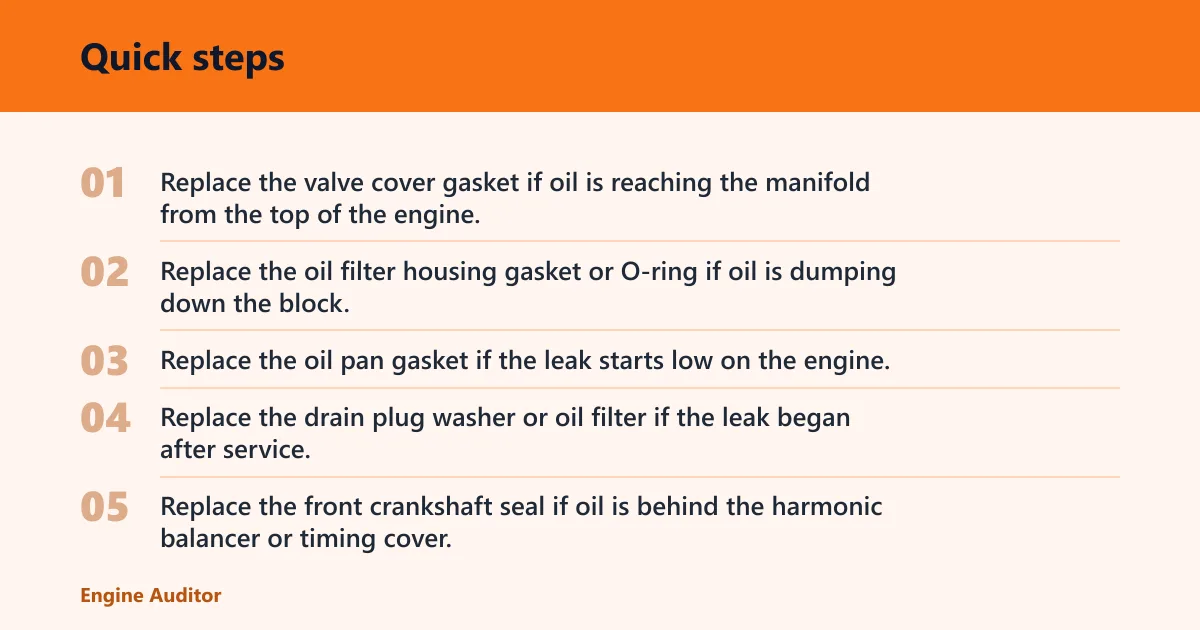
- Replace the valve cover gasket if oil is reaching the manifold from the top of the engine.
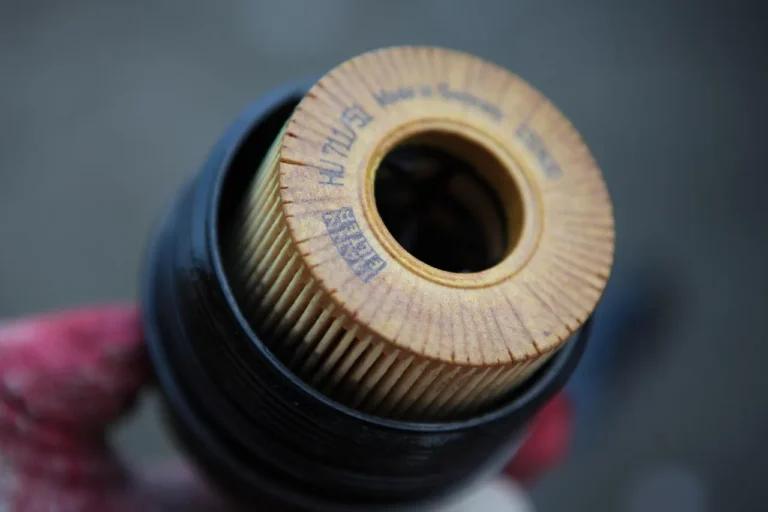
- Replace the oil filter housing gasket or O-ring if oil is dumping down the block; a leaking housing gasket can move oil quickly.
- Replace the oil pan gasket if the leak starts low on the engine. Access can be difficult on some AWD or subframe-heavy layouts, and labor can vary widely by vehicle.
- Replace the drain plug washer or oil filter if the leak began after service. Check for loose, stripped, double-gasketed, or missing-washer problems first.
- Replace the front crankshaft seal if oil is behind the harmonic balancer or timing cover. On belt-driven engines, this may be handled with timing service.
- Plan for rear main seal repair if oil shows at the bell housing. This is typically a major-labor job because the transmission must be removed.
A valve cover gasket leak is not the same as an oil pan leak. The valve cover sits high on the engine and can drip onto the exhaust manifold, while the oil pan sits low and usually leaves spots under the car. The repair method, access, and risk are different.
Can oil on the exhaust cause a fire?
Yes. Oil on a hot exhaust manifold can smoke, flare, or ignite, especially if the leak is active and the exhaust surface is coated. A light seep that only leaves residue is less urgent than oil that drips or sprays onto hot metal. If the oil light or low oil pressure warning comes on, stop driving immediately.
When should you not drive?
Do not drive if oil is actively dripping onto the exhaust manifold, the smoke grows quickly, or the smell returns within minutes after cleanup. That is the line between a nuisance leak and a heat-and-fire problem. If the leak is only nearby and not contacting hot parts, clean, trace, and repair before the next long trip.
How do you fix oil leaking into the exhaust?
Fix the source first, then clean the exhaust and nearby parts. Residual oil can keep smoking after the leak is repaired, so the cleanup step matters. If the smoke keeps returning after a correct repair, look for oil soaked into heat shields, wiring, or plastic covers rather than assuming the repair failed.
What should you do after the repair?
- Retorque or replace any damaged sealing hardware before reassembly.
- Clean the manifold, shields, and adjacent surfaces with degreaser.
- Run the engine at idle and watch for fresh oil at the repaired joint.
- Recheck after a short drive, because heat and airflow can reveal a remaining seep.
Picture a rear-wheel-drive car with oil on the manifold and the valve cover edge. After the gasket is replaced, the exhaust may still smoke for one drive because residue soaked into the heat shield. That smoke should fade as the cleaned parts burn off remaining film, not keep growing from a fresh leak.
If that didn’t work, what should you check next?
If the obvious gasket or filter fix does not stop the leak, move to the next harder access point. The point is to avoid chasing the wrong part while oil keeps reaching hot exhaust surfaces. UV dye helps here, because it shows where oil travels before it drips.
What is the next inspection order?
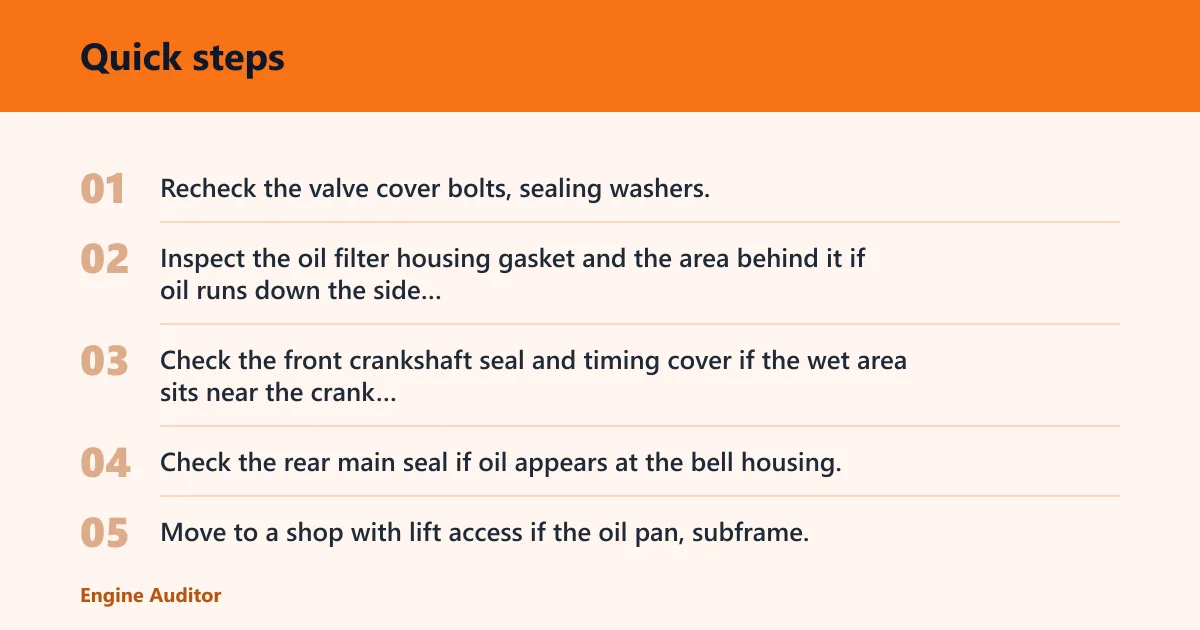
- Recheck the valve cover bolts, sealing washers, and mating surface if the leak is still at the top of the engine.
- Inspect the oil filter housing gasket and the area behind it if oil runs down the side of the block.
- Check the front crankshaft seal and timing cover if the wet area sits near the crank pulley.
- Check the rear main seal if oil appears at the bell housing.
- Move to a shop with lift access if the oil pan, subframe, or transmission has to come out for the repair.
Stop-leak additives may help minor rubber seal leaks, but results vary by product and condition of the seal. They are not a fix for a cracked gasket, damaged washer, stripped thread, or failed filter seal. If the leak is active enough to reach the exhaust, treat additives as a temporary aid at most, not a repair.
What common mistakes should you avoid?
The biggest mistake is assuming every burning smell means the exhaust pipe is leaking oil. Another is checking only the drip point and missing the source above it. Heat, airflow, and vehicle layout change where oil ends up, so the visible stain may be far below the failed seal.
Which mistakes cause the most confusion?
- Do not keep driving if oil is dripping onto a hot manifold.
- Do not ignore oil on belts, O2 sensor wiring, heat shields, or plastic covers.
- Do not replace parts before checking the drain plug and oil filter after an oil change.
- Do not skip cleanup, or leftover oil will keep smoking and confuse the diagnosis.
- Do not treat stop-leak additives as a cure for hard, cracked, or loose hardware.
Why does my car smell like burning oil after driving? Because hot exhaust parts can burn off leaked oil after highway speeds, then smell stronger when you stop at a light or shut the engine off. The smell often points to oil on the outside of the engine, not oil coming from the tailpipe.
Frequently asked questions
How do you stop oil leaking onto the exhaust manifold?
Find the source above the manifold, not just the burned area. Clean the engine, inspect the valve cover gasket, oil filter housing gasket, and nearby seals, then repair the failing part. If oil is actively dripping onto hot metal, do not drive until the leak is fixed and the exhaust is cleaned.
Can oil leak from exhaust?
Oil does not normally leak from the exhaust pipe itself. If you see oily smoke from the tailpipe, that points to an engine burning oil internally or another engine problem. If oil is on the outside of the exhaust manifold, the source is usually above or beside the exhaust, not inside it.
What should you check first if oil is dripping onto the exhaust?
Check the valve cover area first, then the oil filter housing, timing cover, and nearby seals. Wipe the area clean, look for fresh oil, and use UV dye if the source is hidden. Also check the drain plug and oil filter if the leak started after an oil change.
Can I keep driving if oil is hitting the exhaust?
No. If oil is actively hitting the exhaust manifold, stop driving and repair it before the next trip. A hot manifold can smoke, stink, and ignite oil. If the oil light or low oil pressure warning comes on, stop driving immediately and check the oil level and leak source.
Products related to this article
Sponsored / affiliate links. As an Amazon Associate I earn from qualifying purchases. I may earn additional commission from eligible campaigns.
 DongJinK Engine Oil Level Gage Dipstick Compatible with Toyota 4Runner 1984-1995 for Toyota Celica 1984-1985 for Toyota Pickup 1984-1995 Replace# 15301-35020 1530135020
 Suifaqi Engine Oil Dipstick Oil Level Dipstick - Replace Part 120 589 07 21 00, 120589072100 - Compatible with Mercedes-Benz CLS55 AMG 2006(2026 NEW)