What Happens If You Drive with an Oil Leak?
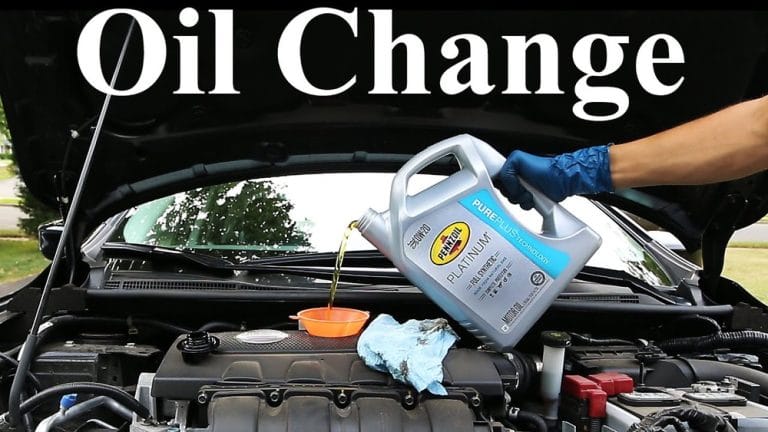
If the leak is dripping, the oil level stays above MIN, and the oil-pressure light stays off, you can usually drive only to a repair shop. If oil is pouring, smoking, or the light comes on, stop the engine now. The risk depends on how fast oil is leaving, whether it is reaching hot parts, and whether engine temperature is rising. This guide breaks the situation into the next about 10 minutes, 10 miles, and 100 miles, with clear stop-driving thresholds.
Oil leak triage table
| Symptom | Likely severity | Immediate action | Driving risk window |
|---|---|---|---|
| Small seep, a few spots after sitting overnight | Low for now, but worth monitoring | Check the dipstick, note the spot size, and plan a repair visit | Safe to drive briefly if oil stays above MIN |
| Steady drip | Moderate and worsening | Top off if needed, then head straight to a nearby shop | Drive only to a nearby shop |
| Burning oil smell | Higher risk, often from hot exhaust contact | Pull over, inspect for smoke, and avoid long driving | Drive only to a nearby shop if no light is on and no stream is visible |
| Visible stream or large puddle bigger than a dinner plate | Severe | Shut the engine off and arrange a tow | Stop and tow |
| Oil level at or below the minimum mark | Serious warning | Do not treat this as normal; add oil only if the engine is off and then recheck | Drive only to a nearby shop after the level is corrected, if no warning light is on |
| Oil pressure light on while driving | Emergency | Pull over safely and shut the engine off | Stop and tow |
| Engine temperature rising or overheating warning | High risk, especially if oil is low or leaking onto hot parts | Pull over, shut the engine off, and let it cool before any inspection | Stop and tow if the temperature keeps rising or the leak is active |
| Smoke from under the hood | Emergency if it is thick, growing, or paired with a burning smell | Stop, shut the engine off, and avoid opening the hood right away | Stop and tow unless the smoke is clearly minor and fully resolved after shutdown |
“Safe to drive briefly” means only enough to reach a nearby shop with no warning light, no smoke, and no rising temperature. It is not permission to keep using the car as normal.
Engine oil does three jobs at once: it lubricates moving parts, helps cool internal components, and carries away debris and contaminants. When a leak gets worse, those jobs fail in sequence. Friction rises first, heat follows, and severe loss can end in seizure.
What happens in the next 10 minutes?
In the next 10 minutes, the question is not whether the leak exists. It is whether the leak is still small enough to leave the oil level in the safe range and keep pressure stable. A seep can stay a seep. A pressure loss cannot.
What the first signs mean
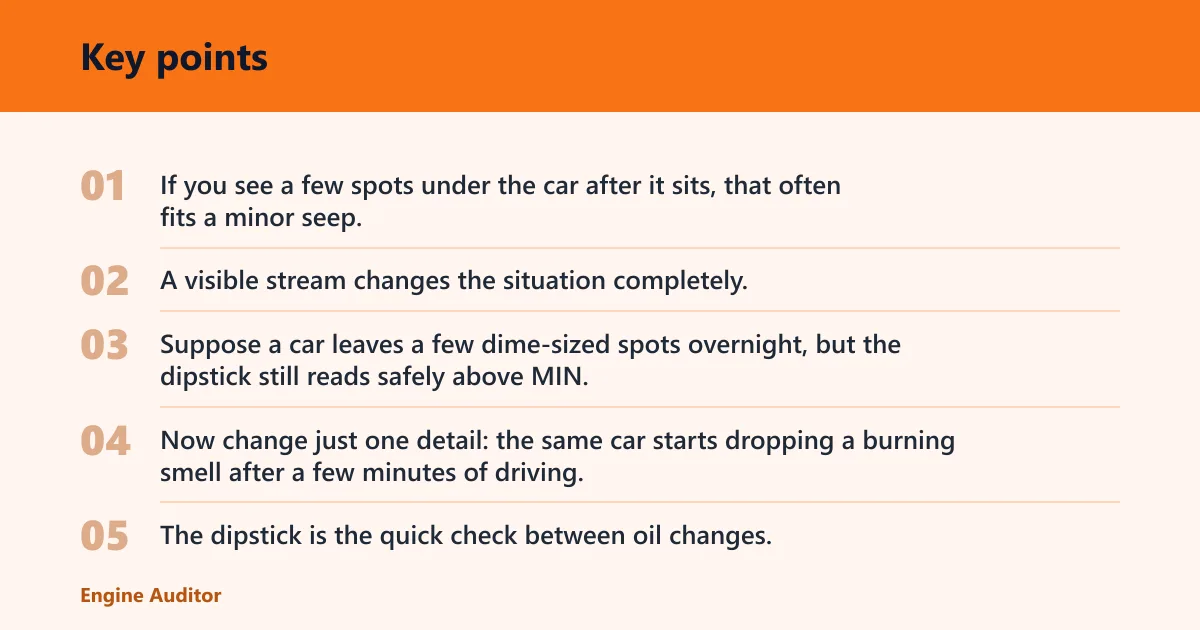
If you see a few spots under the car after it sits, that often fits a minor seep. If the spot becomes a drip while idling, or the smell of burning oil starts inside or around the cabin, the leak is now touching hot parts and needs faster action. A visible stream changes the situation completely.
Suppose a car leaves a few dime-sized spots overnight, but the dipstick still reads safely above MIN. That is still a repair item, not a road-trip green light. Now change just one detail: the same car starts dropping a burning smell after a few minutes of driving. That points toward oil hitting a hot surface, often the exhaust manifold or turbo housing.
What to watch on the gauge and dipstick
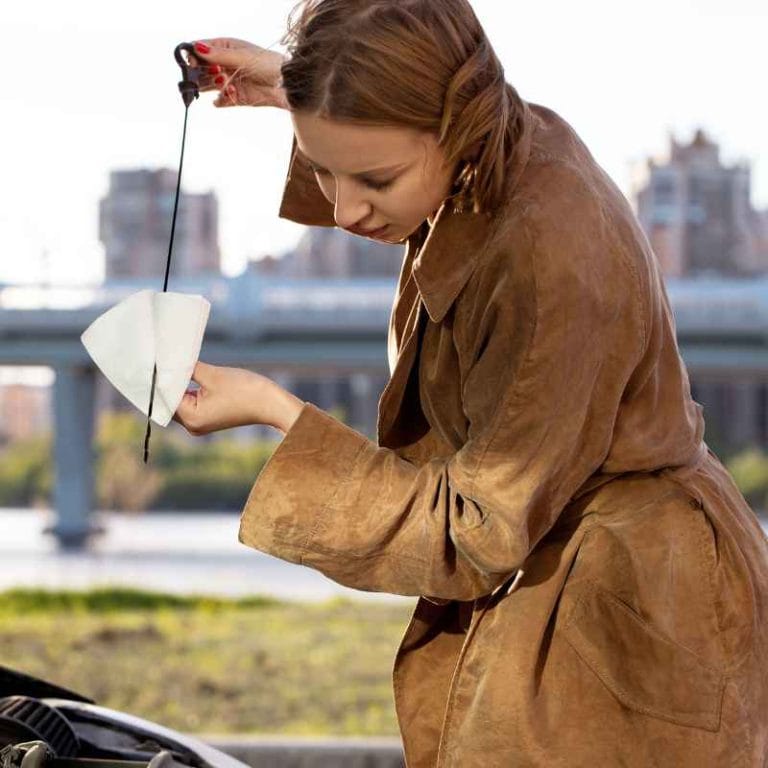
The dipstick is the quick check between oil changes. The safe range is above the minimum mark. On the dipstick, the oil level at or below the minimum mark is a serious warning sign, because the reserve is gone and any further loss pushes the engine toward friction and heat buildup. The oil level is the best simple check for whether a short drive is still reasonable.
The oil pressure warning light usually means oil pressure has dropped to a dangerous level. If it comes on, pull over safely and shut the engine off. Manufacturer guidance generally treats oil pressure loss as an immediate stop condition, because continued running can quickly turn a lubrication problem into engine damage.
Next 10 minutes
If the leak is only a seep, the oil level remains above MIN, and there is no smell, smoke, or warning light, the next 10 minutes are for monitoring and deciding whether a short hop is still possible. If the oil-pressure light comes on, the temperature rises, or smoke appears, stop the engine now and do not keep driving.
What happens over 10 miles and 100 miles?
Over 10 miles, a leak can move from nuisance to damage if the level is dropping or the smell grows stronger. Over 100 miles, the risk is less about the stain on the driveway and more about running the engine low enough to starve bearings, overheat parts, or seize the engine.
Why distance matters less than oil loss
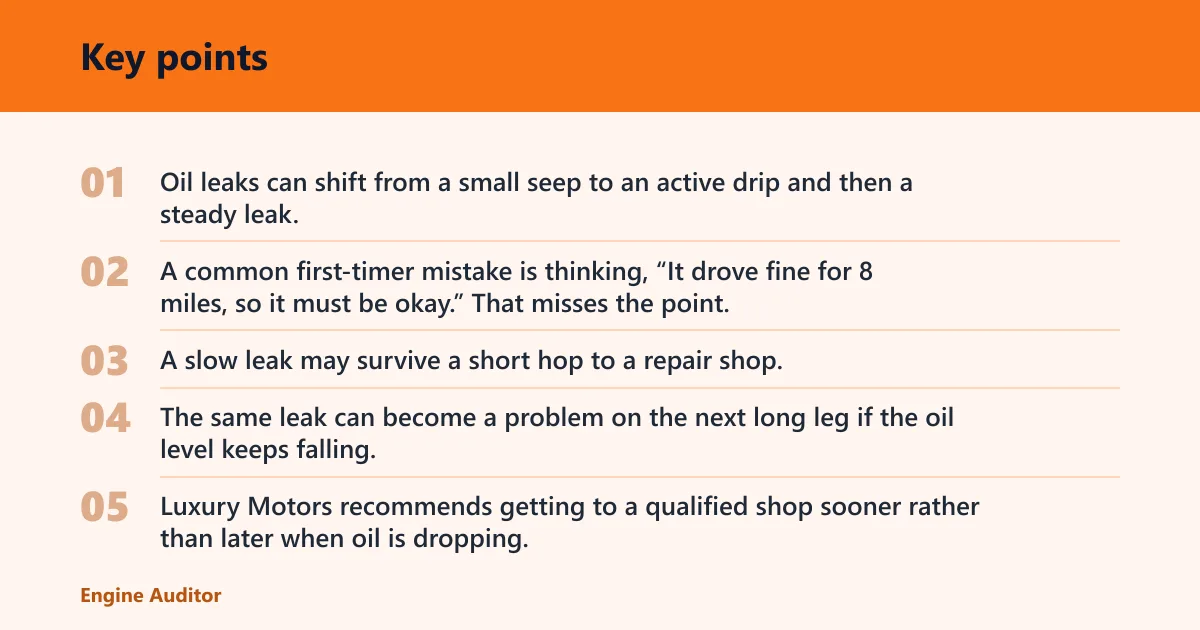
Oil leaks can shift from a small seep to an active drip and then a steady leak. That progression matters more than the odometer reading. If the oil level drops noticeably between checks, the situation becomes more urgent, even if the car still drives normally for the moment.
A common first-timer mistake is thinking, “It drove fine for 8 miles, so it must be okay.” That misses the point. Low oil damage starts with increased friction between moving metal parts, then heat buildup from reduced heat transfer, and severe loss can end in engine seizure.
What 100 miles can do to a weak system
A slow leak may survive a short hop to a repair shop. The same leak can become a problem on the next long leg if the oil level keeps falling. By the time the leak is active enough to leave a steady drip, the engine may already be running with less margin than it had at the start of the trip.
Luxury Motors recommends getting to a qualified shop sooner rather than later when oil is dropping. FIXD says a small oil leak may be driven on with monitoring and top-offs. That advice only fits a leak that stays small, stays off the exhaust, and leaves the oil pressure light off.
Next 10 miles
If the level is stable and the leak is still just a seep, the next 10 miles can be enough to reach a nearby shop. If the drip is steady, the smell is getting stronger, or the level is falling, stop using the car for anything beyond a very short route to service.
Next 100 miles
Over the next 100 miles, even a leak that starts small can become a serious risk if the engine is hot, the loss rate increases, or the oil reaches the exhaust. If the leak is active enough to need repeated top-offs, do not treat long-distance driving as safe; tow it instead.
Which leak signs mean stop driving?
Stop driving if the oil pressure light comes on, if oil is visibly pouring out, or if burning oil smoke appears. These signs point to pressure loss or oil landing on hot surfaces. A low dipstick reading is also serious, especially if the level is at or below MIN.
Oil pressure warning light
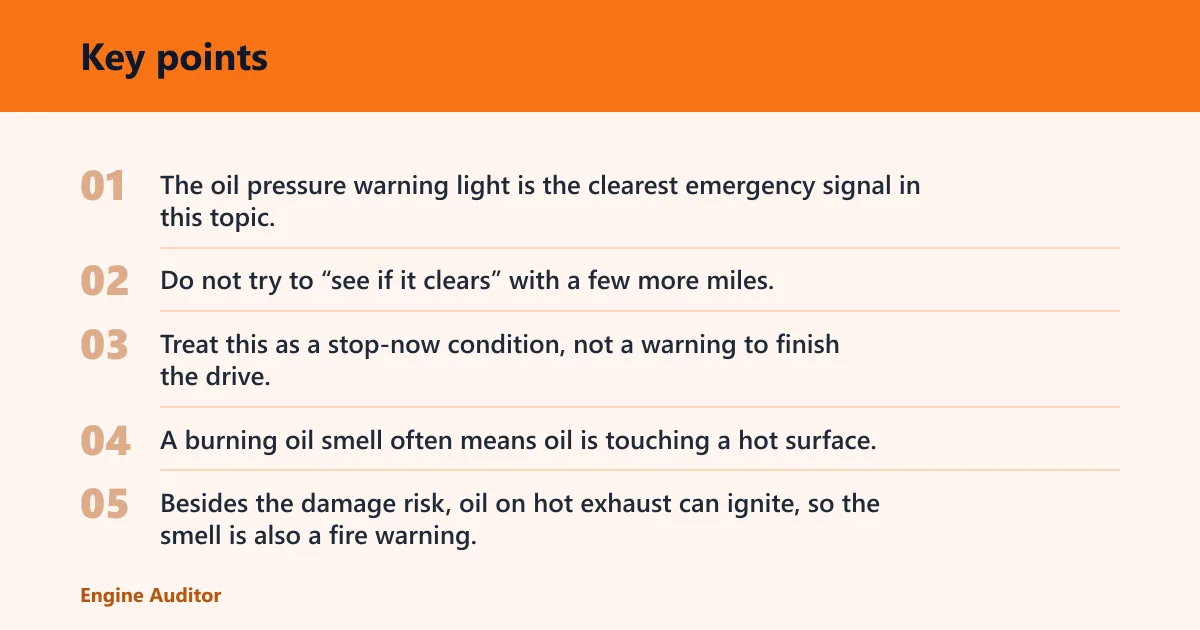
The oil pressure warning light is the clearest emergency signal in this topic. It means oil pressure has dropped to a dangerous level. Pull over safely and shut the engine off. Do not try to “see if it clears” with a few more miles. Treat this as a stop-now condition, not a warning to finish the drive.
Burning oil smell
A burning oil smell often means oil is touching a hot surface. That can mean a leak is dripping onto the exhaust manifold or turbo housing. Besides the damage risk, oil on hot exhaust can ignite, so the smell is also a fire warning. If the smell is strong or paired with smoke, stop driving and shut the engine off.
Visible stream or heavy drip
A visible stream or a large puddle about the size of a dinner plate is generally a same-day concern. That is no longer a watch-and-wait leak. It is an active loss of oil that can empty the crankcase faster than most drivers expect, especially if the engine is hot or the leak worsens under pressure.
Oil level at the minimum mark
At the minimum mark, the engine has little room for further loss. If the leak is still active, the next few miles matter. Top off only with the engine off, then recheck the level. If it drops again quickly, the car needs service, not another long drive. On the dipstick, MIN is a floor, not a target.
Which leak sources are most common?
Leak location changes the risk. Some sources are mostly messy and slow. Others are expensive because of access. A few become more dangerous because they land on hot parts or only leak while the engine is running.
Valve cover gasket
The valve cover gasket is a common slow seep source. It often leaks down the side of the engine and can drip onto hot exhaust components. That makes it a common reason for a burning oil smell without a massive puddle.
Rear main seal
The rear main seal is an expensive common leak location between the engine and transmission. It can be hard to spot because the oil may collect at the back of the engine and appear lower than the source. The repair cost is often driven by access, not just the part.
Oil pan gasket
The oil pan gasket is a common center-under-engine leak source and can create puddles under the car. Because the pan sits low, drips often show up first as spots on the ground before the driver notices a smell or gauge change.
Crankshaft seal
The crankshaft seal can leak only when the engine is running, which makes it a pressure-driven leak source. That matters because a parked inspection may miss it. If a leak appears only after startup or under load, a rotating seal is one place to look.
Can a small oil leak be driven on briefly?
Yes, but only in the narrow case where it is a small seep, the dipstick stays above MIN, there is no burning smell, and the oil-pressure light stays off. That means a short drive to a nearby shop, not normal use for days or weeks.
-
Check the oil level.
Read the dipstick on level ground with the engine off. If the level is at or below MIN, do not assume the trip is safe just because the car still starts. -
Look for fresh signs.
Check for new drips, wet oil around the valve cover, oil pan, or the rear of the engine, and any smoke near the exhaust. Fresh wetness means the leak is active, not historic. -
Top off only if needed.
Add the correct oil in small amounts and recheck. This is a temporary move to reach service, not a fix for a pressure problem or a large leak. -
Drive straight to repair.
Keep the route short and avoid hard acceleration or long highway speeds. If the level drops again, the smell returns, or a warning light appears, stop and tow.
Do not treat topping off as permission to keep driving after a pressure warning. Low oil can let the engine seize from friction, and FIXD warns that a small oil leak may be driven on only with monitoring and top-offs. The line changes fast once the leak grows.
What should you do right away?
Act based on where you are. On a road trip, the goal is to prevent a stranded breakdown. In a garage or parking lot, the goal is to avoid fire risk and avoid leaving oil on the floor. Far from a shop, the goal is to decide whether the car can move at all.
If you are on the road
If the oil-pressure light comes on, pull over safely and shut the engine off. If there is a burning smell or visible stream, do the same. If the leak seems small and the light is off, add oil only if needed, then drive to the nearest repair shop with the shortest practical route.
If you are in a garage or parking lot
If you are parked in a garage, treat smoke or a strong burning smell as urgent. Oil on hot exhaust can ignite, and enclosed spaces raise the stakes. Shut the engine off, move the car only if it can be done safely, and avoid idling to “check one more thing.”
If you are far from a shop
If you are far from a shop and the leak is more than a few spots overnight, the safest move is often to stop driving and arrange a tow. Laws vary by jurisdiction, but a visible leak can create compliance or inspection problems and should not be treated as harmless. That is especially true if oil is reaching the exhaust or the level is falling fast.
Picture a driver about 40 miles from the nearest town with a steady drip and a dipstick just above MIN. That car might make the short distance to a repair point if the light stays off and the temperature stays normal. Change one detail, an oil-pressure light, and the answer changes immediately: stop now.
Frequently asked questions
What happens if you drive with an oil leak?
If the leak is small and the oil level stays above MIN, you may be able to drive briefly to a repair shop. If the leak grows, friction rises, heat builds, and the engine can overheat or seize. A leak that reaches hot exhaust parts can also create a fire hazard.
What happens if you keep driving with an oil leak?
Keeping driving with an active leak can turn a manageable repair into engine damage. As oil drops, lubrication worsens first, then cooling gets weaker, and metal parts run hotter. If the level falls far enough, the engine can seize. A burning smell or warning light means the risk is already high.
Is driving with an oil leak dangerous?
Yes, because the danger depends on how fast oil is leaving and where it is going. A seep under the car is different from oil on the exhaust or low oil pressure. The dangerous cases are the ones that reduce pressure, raise temperature, or put oil near hot surfaces.
How long can you drive with an oil leak?
There is no universal mileage answer. A small seep may be driven only long enough to reach a shop if the dipstick stays in the safe range. A visible stream, low oil level, or pressure warning changes that to “stop now.” Distance matters less than the oil level trend.
Is it illegal to drive with an oil leak?
There is no single rule that covers every place. Laws vary by jurisdiction, but a visible leak can create inspection, safety, or compliance problems. Even where it is not immediately illegal, it should not be treated as harmless if it is dripping, smoking, or lowering the oil level.
What happens if oil pressure light comes on while driving?
Pull over safely and shut the engine off. The oil pressure warning light means oil pressure has dropped to a dangerous level. Do not keep driving to “get home” or to finish a trip. Even a mile of driving with no oil pressure can destroy an engine.
Products related to this article
Sponsored / affiliate links. As an Amazon Associate I earn from qualifying purchases. I may earn additional commission from eligible campaigns.
 ACROPIX Engine Oil Level Indicator Dipstick for Ford Fusion 2010-2012 for Ford Escape 2010-2012 for Ford Fusion 2006-2007 No.6E5Z6750AC Car Parts
 DongJinK Engine Oil Level Gage Dipstick Compatible with Toyota 4Runner 1984-1995 for Toyota Celica 1984-1985 for Toyota Pickup 1984-1995 Replace# 15301-35020 1530135020