Why Does My Car Smell Like Burning Oil After Driving?
A burning oil smell after driving usually means oil is leaking onto hot exhaust parts, or less often the engine is burning oil internally; if the smell comes with smoke or a falling oil level, stop driving and inspect it now. A small leak can become smoke, damage, or a fire risk if you keep running the car. This guide shows how to narrow the cause by when the smell appears and where it comes from.
Why the smell appears after driving

The timing matters. A smell that grows after shutdown often points to heat soak, where hot parts keep cooking oil after the engine stops. If the odor is strongest near the engine bay after parking, think valve cover seepage, spilled service oil, or a leak landing on the exhaust manifold or catalytic converter.
Heat soak and why the odor grows after shutdown
When the car stops, airflow drops but the exhaust and nearby metal stay hot. That trapped heat can make a thin oil film smell stronger for several minutes. Short trips can smell worse than long ones because the engine reaches operating temperature, but the oil has less time to burn off or dry before shutdown.
The odor can get stronger for about five to ten minutes after parking. That pattern fits oil on a hot surface more than a purely internal oil-use problem, especially if the smell is strongest near the hood line or front wheel arch.
Burning oil smell diagnostic matrix
| Symptom pattern | Likely source | Simple check | Urgency |
|---|---|---|---|
| After driving, strongest after shutdown | Valve cover gasket leak, spilled oil, or oil on exhaust parts | Look for oily residue on engine top, exhaust shields, or manifold heat shields | Monitor if small and dry; inspect soon if repeat smell or residue grows |
| While idling, smell builds at a stoplight | Oil dripping onto hot parts, often valve cover gasket or oil pan edge | Check for fresh wet oil at the top or lower edge of the engine | Inspect soon, sooner if the odor gets stronger at each idle |
| After an oil change | Loose oil filter, damaged filter seal, spilled oil, or drain plug / crush washer leak | Check the filter, drain plug, and undercarriage for fresh wet oil | Inspect right away if the smell is strong or oil is dripping |
| Only on highway drives | Leak exposed to airflow, oil blowing rearward, or internal oil use that shows up under load | Look for misted oil on subframe, undertray, or rearward spray pattern | Inspect soon, especially if oil level drops between checks |
| With visible smoke | Oil burning on exhaust or active leak reaching a hot surface | Check where the smoke rises from and confirm oil level on the dipstick | Stop driving if smoke is active or repeated |
Where do you smell it?
The location helps narrow the path. Engine bay odor points to oil on top-end parts or the exhaust side of the engine. Cabin odor can mean fumes are being pulled through the HVAC intake or firewall area. Undercarriage odor usually points to a lower leak, service issue, or oil reaching hot parts below the engine.
Engine bay smell clues
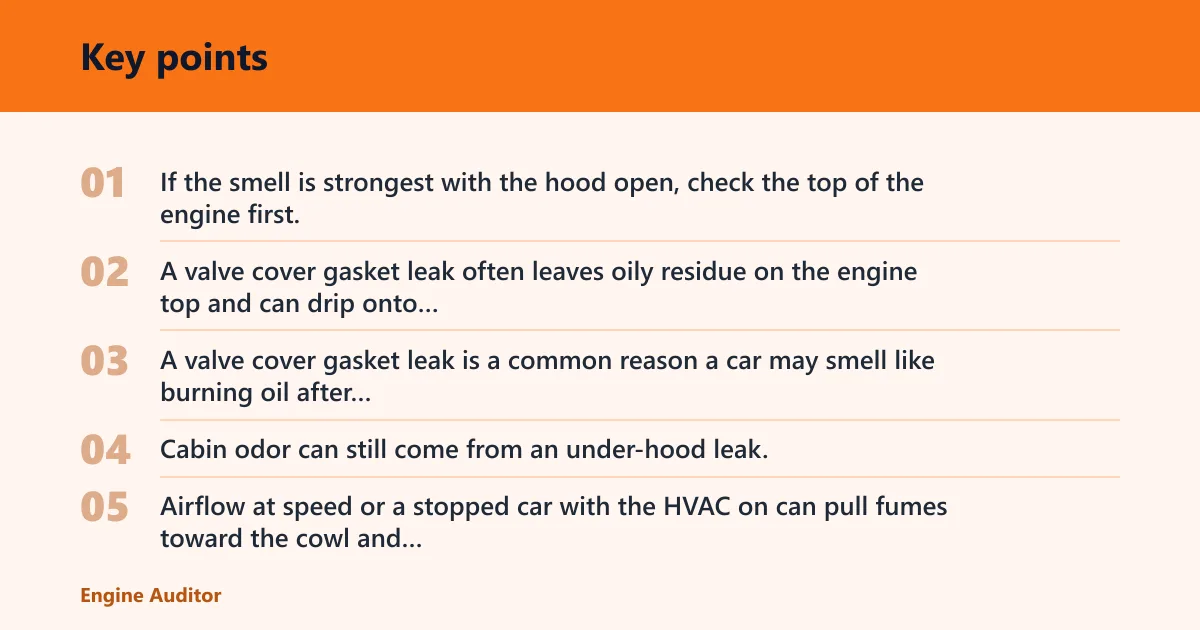
If the smell is strongest with the hood open, check the top of the engine first. A valve cover gasket leak often leaves oily residue on the engine top and can drip onto hot exhaust parts below. A valve cover gasket leak is a common reason a car may smell like burning oil after driving.
Cabin smell clues
Cabin odor can still come from an under-hood leak. Airflow at speed or a stopped car with the HVAC on can pull fumes toward the cowl and vents. If the smell enters the cabin while driving but is stronger near the windshield base than under the car, inspect for oil near the rear of the engine bay and any shielded hot parts.
Undercarriage smell clues
An undercarriage smell often points to the oil filter, drain plug / crush washer, or oil pan gasket. A loose filter or damaged seal can leak after a recent oil change. A drain plug leak may only show up while driving because airflow spreads the oil, then the oil burns off on the exhaust or subframe.
Smell plus oily residue on shields or pipes
Oily residue is a useful clue because it shows the path the oil took. Look for wet edges around the oil pan seam, shiny spots on heat shields, or dark film on exhaust pipes. Residue on a shield often means the leak is small but has enough heat contact to smell dramatic.
Common external leak sources
External leaks are the first thing to rule out. Oil on hot parts usually comes from a gasket, seal, or service point that is leaking outward. The smell can be intense even if the leak volume is small, because the exhaust side of the engine is hot enough to burn a thin film fast.
Valve cover gasket leak
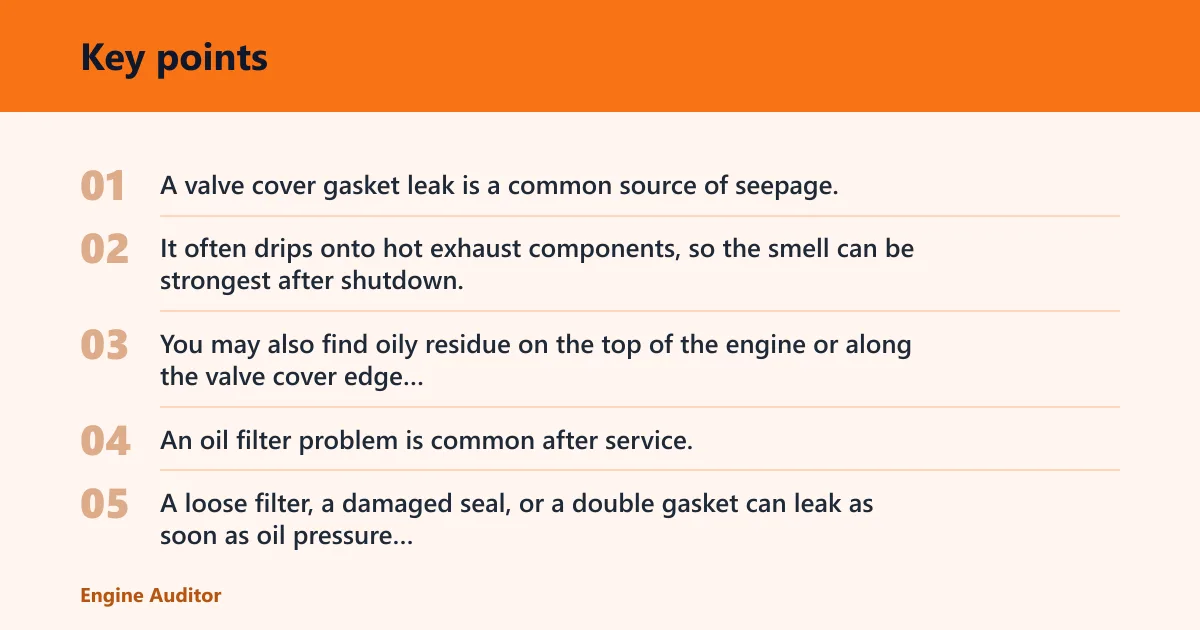
A valve cover gasket leak is a common source of seepage. It often drips onto hot exhaust components, so the smell can be strongest after shutdown. You may also find oily residue on the top of the engine or along the valve cover edge before you see any puddle on the ground.
Oil filter and seal problems
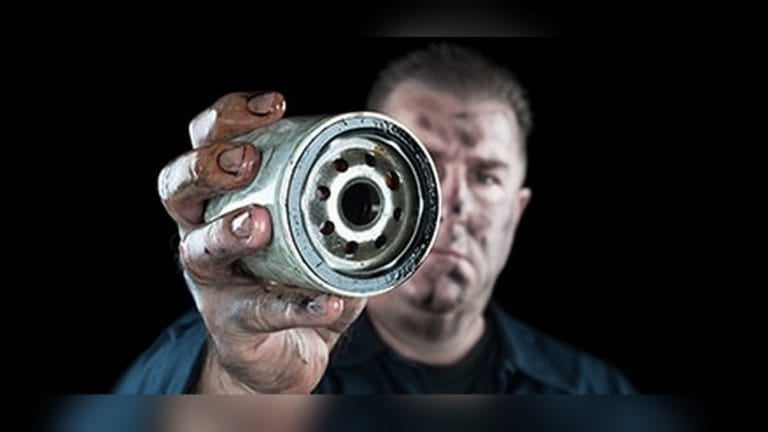
An oil filter problem is common after service. A loose filter, a damaged seal, or a double gasket can leak as soon as oil pressure builds. The odor often comes from below the engine, and the car may smell like burning oil while driving because wind carries the vapor under the floorpan.
Drain plug and crush washer leaks
The drain plug and crush washer are frequent service-related leak points. A plug that is not seated correctly or a reused washer can seep only while driving, when oil sloshes and airflow spreads it. Check the plug area and the first few inches of the oil pan for fresh wetness.
Oil pan gasket seepage
An oil pan gasket leak is usually low on the engine, so it can drip onto the subframe or a hot lower surface. The edge of the pan may look wet before the leak becomes large enough to leave a spot on the ground. This source often smells more from underneath than from the top of the engine.
Could it be burning on the exhaust?
Yes. Oil that reaches the exhaust manifold or catalytic converter burns quickly and smells much worse than oil on a cooler surface. That is why a small leak can seem severe after a highway drive or a short stop. The hotter the part, the faster the oil burns and the sharper the odor.
Exhaust manifold and catalytic converter heat
The exhaust manifold and catalytic converter run very hot. If oil touches them, the smell can appear quickly and then linger after the engine is shut off. A tiny amount can create a strong odor, so a dramatic smell does not always mean a major leak.
What smoke or residue means here
Blue smoke usually suggests oil burning. White smoke is often more consistent with coolant or condensation than with oil. Oily residue on exhaust shields, pipes, or the underside of the hood means the leak path is active and the smell is coming from a real source, not just a passing vapor. (Wikipedia)
Could the engine be burning oil internally?
It can. If there is no clear external leak, the engine may be consuming oil through the PCV path or from wear inside the engine. That path often shows up as oil use between dipstick checks, blue smoke under acceleration, or a smell that returns without an obvious wet spot outside.
PCV system faults and oil vapor ingestion
The PCV system includes the PCV valve, hoses, and breather paths. If those parts are restricted or misrouting vapor, the engine can pull more oil mist into the intake and burn it. That can cause oil consumption with little or no visible leak on the outside.
Oil viscosity and manufacturer spec
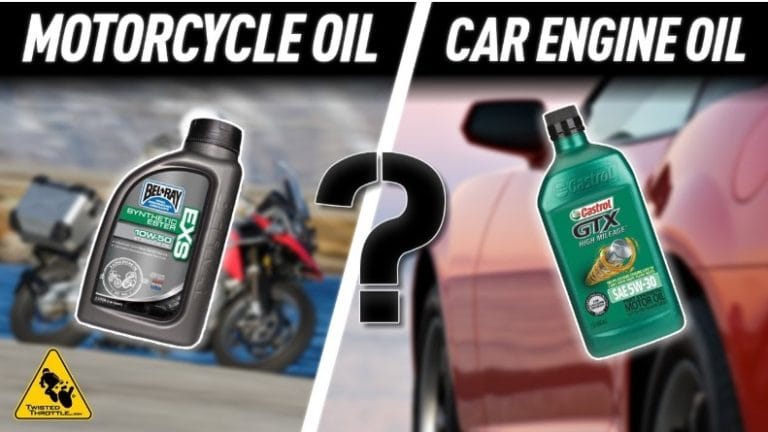
The oil grade matters. Use the manufacturer-spec viscosity, often listed as an SAE grade such as 5W-30 or 0W-20. The wrong viscosity can worsen seepage in some engines or increase oil use, especially if the engine was designed around a thinner grade.
Blue smoke versus other smoke colors
Blue smoke is the key clue for oil burning. White smoke usually points elsewhere, so it should not be treated as proof of an oil problem. If the smoke is blue and the dipstick level drops, suspect internal oil use or an external leak that is reaching a hot surface.
Suppose a 120,000-mile engine smells like hot oil only on long highway drives, but the engine bay stays dry. That pattern makes a PCV issue or internal oil use more likely than a simple valve cover leak, especially if the dipstick level keeps falling between checks.
Check the oil level first
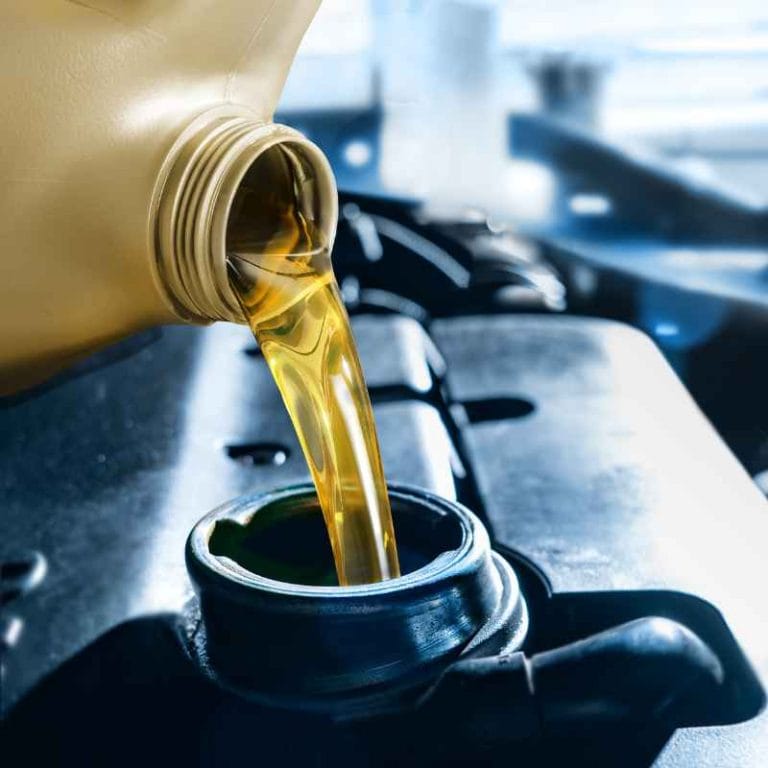
Before you drive farther, confirm the oil level. Check the dipstick on level ground with the engine off and cooled. A low reading helps separate a true oil-loss problem from a brief smell after service or a one-time spill. Recheck after a short drive if the level is near the low mark.
- Park on level ground.
- Shut the engine off and let it cool enough to handle safely.
- Pull the dipstick, wipe it clean, and insert it fully.
- Pull it again and read the level against the marks.
- Look for fresh oil at the filter, drain plug, pan seam, and valve cover area.
When low oil becomes an urgent issue
If the oil is below the safe mark, do not assume the smell is harmless. Add the correct oil only if needed to reach the proper level, then inspect the car. Active dripping, visible smoke, or a level that keeps falling means the car should be inspected right away.
What repeated loss tells you
Repeated loss narrows the diagnosis. A drop after a recent oil change points toward service errors like the filter or drain plug. A slow but steady decline with no puddles points more toward internal consumption, a PCV fault, or a seepage path that burns off before it reaches the ground.
Frequently asked questions
Why does my car smell like burning oil after driving?
That smell usually means oil is hitting a hot part, then cooking harder after you stop and heat soak sets in. The most common sources are the valve cover gasket, oil filter, drain plug, or oil pan gasket. If smoke or a dropping oil level appears, inspect it right away.
Why does my car smell like burning oil while driving?
If the smell shows up while driving, airflow is likely pushing oil vapor or smoke from a leak toward the cabin or undercarriage. Look for a loose filter, drain plug seepage, or oil dripping onto the exhaust. A smell that rises with speed deserves prompt inspection.
Can an oil leak smell worse after I stop driving?
Yes. The smell often peaks after shutdown because hot metal keeps burning the oil even when the engine is off. That heat soak effect is a strong clue for oil on the exhaust manifold, catalytic converter, or a nearby shield, especially after short trips.
Is it safe to drive if I smell burning oil?
Only briefly, and only if the smell is mild, the oil level is normal, and there is no smoke or active dripping. If the odor is strong, the level is low, or smoke is visible, stop driving and inspect it. Oil on hot exhaust parts can become a fire risk.
Could a valve cover gasket cause a burning oil smell?
Yes. A valve cover gasket leak is one of the most common causes. It can seep onto hot exhaust parts, smell strongest after shutdown, and leave oily residue on the engine top. If that area is wet and the smell repeats, the gasket deserves close inspection.
Could oil leaking onto the exhaust cause the smell?
Absolutely. Oil on the exhaust manifold or catalytic converter burns quickly and smells much stronger than a cooler leak. A small amount can produce a sharp odor, visible smoke, or residue on heat shields. That pattern usually points to an external leak rather than internal oil use.
Products related to this article
Sponsored / affiliate links. As an Amazon Associate I earn from qualifying purchases. I may earn additional commission from eligible campaigns.
 ACROPIX Engine Oil Level Indicator Dipstick for Ford Fusion 2010-2012 for Ford Escape 2010-2012 for Ford Fusion 2006-2007 No.6E5Z6750AC Car Parts
 DongJinK Engine Oil Level Gage Dipstick Compatible with Toyota 4Runner 1984-1995 for Toyota Celica 1984-1985 for Toyota Pickup 1984-1995 Replace# 15301-35020 1530135020