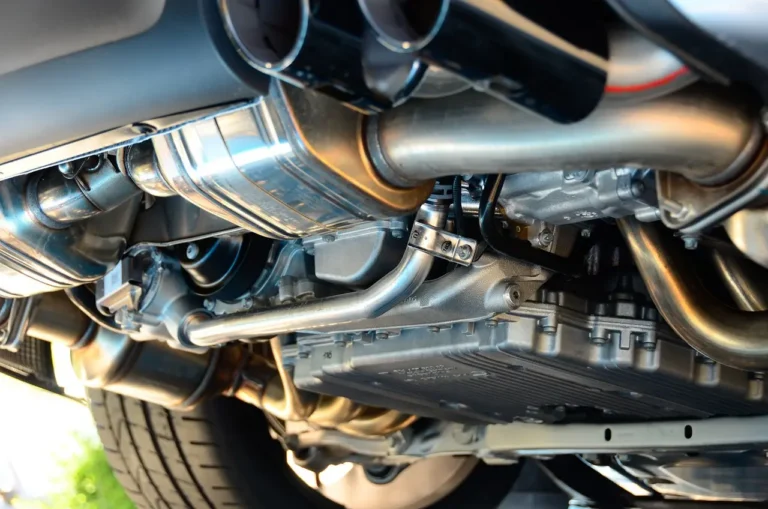
How Many Transmissions Does a Vehicle Have? Simply Explained
When you hear someone talk about a car’s “transmission,” what do you picture? For most people, it’s a single mechanical part that helps the car move. But is that the whole story? Is there just one transmission in every vehicle, or can there be more?
This question seems simple, but the answer depends on how vehicles work and what types of vehicles we’re talking about. Today, transmissions come in different shapes, sizes, and even numbers—thanks to changing technology. Understanding how many transmissions a vehicle has is more than trivia.
It can help you buy the right car, maintain your vehicle better, and even save money on repairs. Let’s explore this topic in clear, simple language, so you can truly understand how your car gets power to its wheels.
What Is A Transmission?
Before we talk about how many transmissions a vehicle can have, let’s quickly explain what a transmission does. The transmission is a mechanical system that takes power from the engine and delivers it to the wheels. It helps control the speed and torque (rotational force) of your car. Without a transmission, your car’s engine would only be able to run at a fixed speed, making driving impossible.
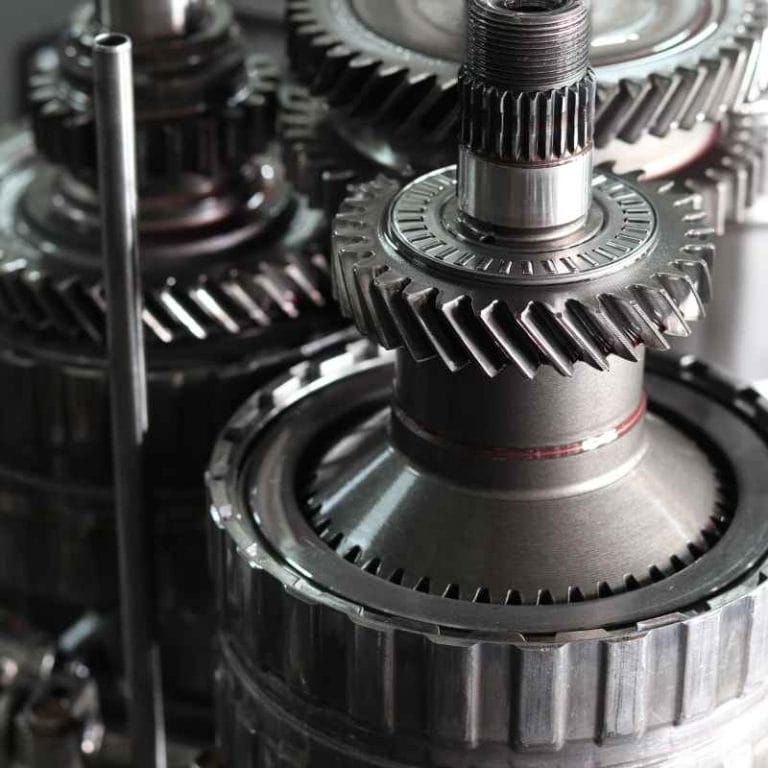
Most people think of the transmission as one big unit, but it’s actually made up of several parts. These may include gears, shafts, clutches, and sometimes even electronic controls. The main job of the transmission is to help you start, stop, and control your car’s speed smoothly.
The Basic Answer: Most Vehicles Have One Transmission
For most standard vehicles on the road—cars, SUVs, and light trucks—there is typically one main transmission. This is true whether your car has a manual or automatic transmission. In these vehicles, the transmission sits between the engine and the driveshaft. Its job is to manage gear shifts and make sure the right amount of power gets to the wheels.
Manual Vs. Automatic Transmissions
- Manual transmission: The driver shifts gears using a clutch pedal and a gear stick.
- Automatic transmission: The car changes gears automatically, using hydraulic or electronic systems.
Both types serve the same purpose, and both are usually the only transmission in a typical passenger vehicle.
Exceptions: When Vehicles Have More Than One Transmission
While most cars have one transmission, there are exceptions. Some vehicles—especially larger or more complex ones—use more than one transmission or have extra gear systems that act like a second transmission. Here are some examples.
Heavy-duty Trucks
Large trucks (such as those used for commercial hauling) sometimes use two transmissions. These are usually called a main transmission and an auxiliary transmission. The auxiliary transmission helps manage extra torque and speed, especially when carrying heavy loads or driving on steep hills.
All-wheel Drive And Four-wheel Drive Vehicles
Some vehicles, especially 4x4s and all-wheel drive (AWD) cars, have an additional transfer case. The transfer case splits power between the front and rear wheels. While not a transmission in the traditional sense, it acts like one by managing how power is delivered, especially off-road or in difficult conditions.
Specialized And Off-road Vehicles
Certain off-road vehicles, tractors, and construction equipment may use multiple gearboxes. These can include a primary transmission, an auxiliary gearbox, and sometimes a power take-off (PTO) system. In some cases, each axle might even have its own set of gears.
How Transmissions Work Together
It’s important to note that when a vehicle has more than one transmission or gearbox, these work together as a system. The driver may use controls to switch between different gear ranges, or the vehicle may do this automatically. Here’s an example:
- In a heavy-duty truck, the main transmission might offer 5 or 6 gears, while the auxiliary transmission adds extra ranges. This combination can give the driver more than 10 gear choices, which is useful for hauling very heavy loads.
Types Of Transmissions: A Quick Overview
There are several major types of transmissions used in vehicles today. Each type affects how many transmissions or gear systems your vehicle might have.
1. Manual Transmission
- Also called “stick shift”
- Driver chooses gears manually
- Simple design, usually one per vehicle
2. Automatic Transmission
- Changes gears without driver input
- Most common in modern cars
- Usually one per vehicle
3. Continuously Variable Transmission (cvt)
- Uses belts and pulleys instead of gears
- Can change through an infinite number of ratios
- Found in some modern cars and hybrids
4. Dual-clutch Transmission (dct)
- Uses two clutches for faster gear changes
- Common in sports cars and some luxury vehicles
5. Automated Manual Transmission (amt)
- Mix of manual and automatic
- Uses an electronic system to shift gears
6. Semi-automatic Transmission
- Driver can choose to shift gears or let the car do it
7. Direct Drive Transmission
- No traditional gears; used in some electric vehicles
8. Auxiliary Transmission
- Extra gearbox found in trucks, off-road vehicles, and some old cars
Transmission Layouts: Front, Rear, And All-wheel Drive
The location of the transmission can also affect how power flows through your vehicle.
- Front-wheel drive (FWD): Transmission is combined with the differential in a unit called a transaxle, usually just one.
- Rear-wheel drive (RWD): Separate transmission and differential; usually one main transmission.
- All-wheel drive (AWD) / Four-wheel drive (4WD): Main transmission plus transfer case, sometimes considered a second transmission.
How Electric Vehicles Are Different
Electric vehicles (EVs) change the rules. Most EVs use single-speed transmissions because electric motors provide instant torque over a wide range of speeds. However, a few high-performance EVs have two-speed gearboxes to help with acceleration and top speed.
Some hybrid vehicles combine an electric motor and a gasoline engine, using complex hybrid transmissions. These can include planetary gears, electric motor drives, and sometimes a CVT.
Real-world Examples: Transmission Setups In Popular Vehicles
To see how this works in real life, let’s look at some popular vehicles and their transmission setups.
| Vehicle | Type | Number of Transmissions | Special Features |
|---|---|---|---|
| Toyota Camry | Passenger Car | 1 | Standard automatic or manual |
| Ford F-150 (4×4) | Pickup Truck | 1 + Transfer Case | Selectable 4WD |
| Tesla Model S | Electric Car | 1 | Single-speed reduction gear |
| Freightliner Cascadia | Semi-Truck | 2 (main + auxiliary) | Multiple gear ranges |
| Jeep Wrangler Rubicon | Off-Road SUV | 1 + Transfer Case | Low-range gearing for off-road |

Credit: hackaday.com
Why Most Vehicles Only Need One Transmission
Car engines operate best within a certain speed range. The transmission lets the engine stay in that “sweet spot” while your car goes faster or slower. For most passenger vehicles, one transmission is enough to do this job. Adding more transmissions would make the car heavier, more complex, and more expensive—without much benefit for normal drivers.
However, in vehicles that need to handle more power, more gears, or more types of driving (like off-road or hauling big loads), extra gear systems make sense.
Common Misunderstandings About Transmissions
Many people get confused by terms like transaxle, differential, transfer case, and gearbox. Here’s how they’re different:
- Transmission: The main system that manages gear changes.
- Transaxle: Combines the transmission and differential into one unit (common in FWD cars).
- Differential: Allows wheels to turn at different speeds, especially while turning.
- Transfer case: Transfers power to both front and rear axles in AWD/4WD vehicles.
A vehicle may have a transmission, a differential, and a transfer case—but these are separate systems, even if they work together.
Credit: www.csselectronics.com
How Many Gears Does A Transmission Have?
Another common question is about the number of gears inside a transmission, not the number of transmissions. Most modern cars have between 5 and 10 gears in their main transmission. Some older cars have just 3 or 4. Trucks and sports cars may have even more.
Here’s a look at how gear numbers have changed over time:
| Decade | Typical Number of Gears | Example Vehicle |
|---|---|---|
| 1970s | 3-4 (automatic), 4 (manual) | Chevrolet Impala |
| 1990s | 4-5 (automatic), 5 (manual) | Honda Accord |
| 2010s | 6-8 (automatic), 6 (manual) | Ford Fusion |
| 2020s | 8-10 (automatic), CVT, 6 (manual) | Toyota Camry, Nissan Altima |
Why Some Vehicles Need Multiple Transmissions
Let’s look at why a vehicle might need more than one transmission or gearbox:
- Heavy loads: Trucks carrying big weights need more gear choices to manage speed and power.
- Off-road driving: 4WD vehicles need a transfer case to shift between normal and low-range gears.
- Multiple axles: Some vehicles have many axles, each with its own set of gears.
- Hybrid/Electric systems: Complex powertrains may need extra gearboxes to manage both engine and electric motor power.
A beginner might overlook that some “extra” gear systems are not used every day. For example, a Jeep’s low-range transfer case is only used off-road or in very slippery conditions.
How To Tell How Many Transmissions Your Vehicle Has
If you want to know how many transmissions your vehicle has, check your owner’s manual or the manufacturer’s website. For most cars, the answer is simple: just one. For trucks, SUVs, or off-road vehicles, look for details about transfer cases or auxiliary gearboxes.
Another clue is the number of shifters inside the car. Most vehicles have just one gear shifter. If you see two or more (especially in old trucks or 4x4s), there may be an extra gearbox or transfer case.
Transmission Maintenance: What You Should Know
No matter how many transmissions your vehicle has, maintenance is key. Transmissions are expensive to repair or replace. Here’s what you can do to keep them working smoothly:
- Check transmission fluid regularly (if your car has a dipstick for it)
- Change transmission fluid as recommended
- Listen for unusual noises or slipping gears
- Use the right type of fluid—using the wrong kind can cause damage
- For trucks and 4WD vehicles, check transfer case and auxiliary gearbox fluids too
Many beginners miss the fact that some modern cars have “sealed” transmissions with no dipstick. For these, only a qualified mechanic can check or change the fluid.
The Future: Transmissions In Modern And Upcoming Vehicles
As electric vehicles become more popular, the role of the transmission is changing. EVs often don’t need traditional multi-speed transmissions. Instead, they use single-speed reduction gears, which are simpler and more reliable. However, as battery and motor technology improves, we may see more two-speed or even multi-speed gearboxes in electric cars to improve efficiency at high speeds.
Hybrid cars use special transmissions (such as eCVT) that combine electric and mechanical power in complex ways. These systems are designed for maximum efficiency, not just speed.
Non-obvious Insights For Beginners
- Not all gearboxes are transmissions: Beginners often think any box with gears is a transmission, but things like transfer cases and differentials play different roles.
- Electric cars can break the rules: Some high-performance EVs, such as the Porsche Taycan, use two-speed transmissions for better acceleration and top speed, even though most EVs use just one.
- Transaxles are common but often overlooked: In many front-wheel-drive cars, the transaxle combines the functions of the transmission and the differential, but it’s still considered “one transmission.”
- Auxiliary gearboxes are rare in cars, common in trucks: Unless you’re driving a heavy truck or a classic vehicle, you probably don’t have an auxiliary gearbox.
- Transfer cases are not just for off-road: Some AWD cars use them to improve handling on wet or icy roads, not just for rugged terrain.

Credit: www.youtube.com
Frequently Asked Questions
How Many Transmissions Does A Regular Car Have?
Most regular cars—sedans, hatchbacks, and small SUVs—have just one transmission. This is true for both manual and automatic models. Some exceptions exist in hybrid or performance vehicles.
Do Trucks Have More Than One Transmission?
Some heavy-duty trucks, especially those used for towing or hauling, use two transmissions: a main transmission and an auxiliary transmission. This setup gives more gear choices for handling heavy loads.
What Is A Transfer Case, And Is It A Transmission?
A transfer case is a special gearbox found in four-wheel-drive and all-wheel-drive vehicles. It is not a transmission in the strict sense but works with the main transmission to send power to both the front and rear axles.
How Do I Know If My Car Has More Than One Transmission?
Check your owner’s manual or look for multiple gear shifters inside your car. Most passenger cars have just one transmission, but trucks and 4WD vehicles may have additional gearboxes or transfer cases.
Are Electric Cars Different When It Comes To Transmissions?
Yes, most electric cars use single-speed transmissions because their motors deliver power differently. Some high-performance electric cars, however, use two-speed gearboxes to improve acceleration and efficiency at high speeds. For more on how
Products related to this article
Sponsored / affiliate links. As an Amazon Associate I earn from qualifying purchases. I may earn additional commission from eligible campaigns.