Digital vs Analog Tire Pressure Gauges: Which Is Better?
A good digital gauge is often the better pick for home cold-pressure checks if it has a suitably tight rating; a quality analog can sometimes match it, but inexpensive spring gauges may drift and misread more often. Bad readings cost tire life, grip, and fuel economy. This guide compares failure modes, spec labels, and which gauge fits garage, driveway, or roadside use.
This guide is part of our Car tire maintenance guide series.
Digital vs analog tire pressure gauges: which is better for home checks?
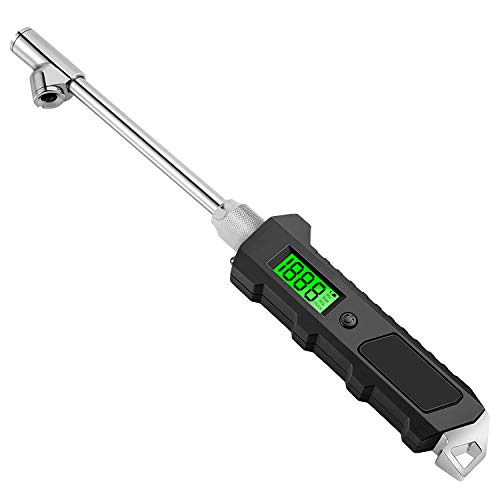
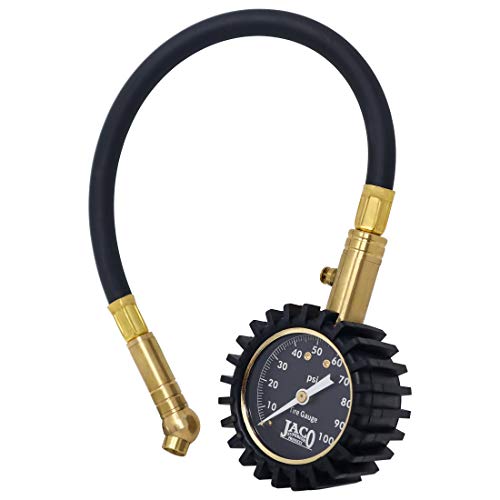
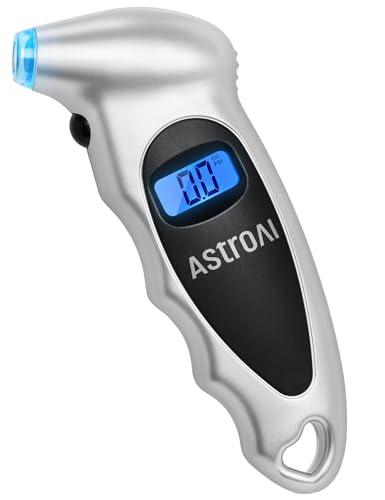
Neither format wins by display alone. For home cold-pressure checks, the better tool is usually the one with a reasonably tight published accuracy tolerance, a clean seal on the valve stem, and repeatable readings on the same tire. Digital is easier to read, analog can be just as useful if the movement is sound.
| Decision factor | Digital | Analog Tire Pressure Gauges: Which Is Better | Winner |
|---|---|---|---|
| Readability | Numeric screen, often backlit | Needle on a printed dial | Digital |
| Power dependence | Battery-dependent | Battery-free | Analog Tire Pressure Gauges: Which Is Better |
| Common failure mode | Battery fade, dead screen, sensor drift | Parallax error, sticking movement, pointer damage | Tie |
| Precision reading under poor light | Usually easier | Harder unless the dial is large and clear | Digital |
| Repeatability on cold tires | Depends on seal and sensor quality | Depends on seal and movement condition | Tie |
Digital tire pressure gauge: where it wins
Digital gauges win on readability. The screen cuts guesswork in dim garages and pre-dawn parking lots, and the numeric display is easier to read than a needle against a scale. That matters most when the tire is checked quickly and you want to avoid reading a thin pointer against a busy face.
Analog dial tire pressure gauge: where it wins
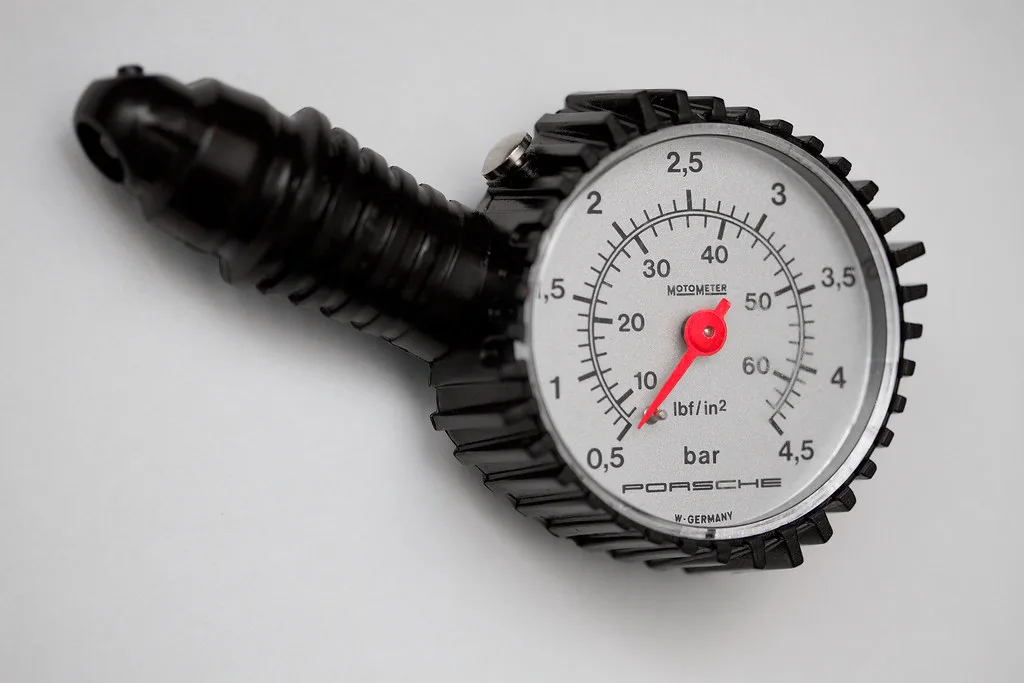
Analog dial gauges win on simplicity. They are battery-free and can sit in a glove box for years without a dead cell, which makes them dependable as a mechanical backup. The trade-off is that the user has to read the dial straight on, or parallax error can change the reading.
Pencil or stick tire pressure gauge: where it fits
Pencil gauges are the compact backup format. They are inexpensive, battery-free, and easy to stash, but the sliding scale is harder to read in fine steps. They are useful when space matters more than fast, exact interpretation.
What matters more than gauge type for accuracy?

Published accuracy tolerance matters more than whether the gauge is digital or analog. A digital gauge may show 0.1 PSI while still not being that accurate, and display resolution is not the same as verified accuracy. The seal on the valve stem and repeatability matter just as much.
Published accuracy tolerance beats decimal-place marketing
Read the spec sheet for stated tolerance first. That number tells you what the maker claims about measurement error, and it is far more useful than a screen full of small digits. A tight tolerance is what keeps a gauge honest, not the number of decimals it displays.
Display resolution is not true measurement quality
Resolution is only the smallest increment shown. It does not prove the sensor is that exact. A gauge that flashes 0.1 PSI increments can still be off enough to matter if the underlying sensor, movement, or spring is out of spec.
Valve stem seal quality changes the reading
A clean chuck seal may matter more than many buyers expect. If the head leaks on the valve stem, some air loss during the check can distort the result before the reading settles. That is why a quality gauge should have a clean valve seal and a head shape that seats squarely.
Repeatability is the real practical test
Two readings on the same cold tire should land close together if the tool is stable. Repeatability is what lets a driver compare front to rear pressures over time without guessing whether the gauge changed or the tire did. If one gauge wanders, it is less trustworthy than a simpler one that repeats cleanly.
How to read a spec sheet without getting fooled
Start with pressure range, accuracy tolerance, and resolution, in that order. Range tells you whether the gauge covers normal passenger-car pressures without living at the top end. Tolerance tells you how far off the reading may be. Resolution is last.
- Find the published accuracy tolerance and look for a number you can live with.
- Check the pressure range to confirm it covers the vehicle without crowding the top of the scale.
- Note the resolution, but do not treat extra decimals as proof of quality.
- Inspect the chuck design and head shape for a clean seal on the valve stem.
- Check whether the display is readable in darkness only after the accuracy basics are met.
What to look for in the chuck and head shape
A straight, well-seated chuck is worth more than a fancy display. The head should fit the valve stem without needing awkward angle changes. If the chuck is loose or awkward to align, the reading will vary from one tire to the next.
Why darkness readability matters, but not first
Backlighting helps when the check happens at night or in a garage with poor lighting. Digital gauges may be backlit, which makes them easier to use in those conditions. Still, a bright screen does not rescue a gauge that seals poorly or lacks a trustworthy tolerance.
Which is more accurate, analog or digital tire gauge?
Neither style is automatically more accurate. A high-quality digital gauge and a high-quality analog dial gauge can both give dependable readings, while cheap versions of either can mislead you. The better question is whether the specific gauge has a published tolerance you trust and a seal that holds steady.
Digital failure cases in real ownership
Digital gauges can fail from battery fade, dead screens, rough handling, and sensor drift. Drop one hard enough and the display or internal sensor can stop giving stable readings. A unit that looks precise on the screen is not useful if it will not read the same way twice.
Analog failure cases in real ownership
Analog gauges can suffer from parallax error, sticking movement, worn internals, and a bent pointer. The needle can also lose smooth travel if the mechanism is damaged or dirty. Battery-free does not mean failure-free.
Pencil gauge failure cases in real ownership
Pencil gauges are compact, but the sliding bar is harder to judge in fine steps. That makes them a weaker choice when you care about small differences between tires. They are best treated as a backup, not the tool for the most careful home check.
Which gauge is most likely to mislead you in real use?
The most misleading gauge is usually the one with the worst combination of seal quality and wear, not the one with the “wrong” display style. In real use, a damaged digital unit, a sticky analog movement, or a cheap pencil gauge can all produce believable but bad numbers. The problem is failure mode, not category.
How digital gauges mislead drivers
Digital gauges can look authoritative because the number is crisp. That can hide sensor drift or a weak battery until the reading starts wandering. A backlit screen may make the gauge easier to use, but it does not protect against bad internals.
How analog gauges mislead drivers
Analog dials can be misread if the user looks at the face from an angle. That parallax error is a common source of disagreement between two otherwise decent tools. A sticky needle can add another layer of false confidence.
How pencil gauges mislead drivers
Pencil gauges are often the least precise to read in the exact range most drivers care about. Their scales are harder to compare one check to the next, and that makes them poor for tracking small changes over time. They still beat having no gauge at all.
Choose digital if… / Choose analog if… / Choose pencil if…
Choose the format that fits the job you actually do. The right answer for a daily commuter is different from the right answer for a roadside kit or a garage shelf. Accuracy tolerance and seal quality still lead the decision.
Choose digital if…
- You want the easiest read in low light.
- You prefer a numeric display over a needle.
- You will check pressures regularly and can replace batteries when needed.
- You want a gauge that is simple to read quickly on cold tires.
Choose analog if…
- You want a battery-free tool.
- You like simple mechanical operation.
- You are comfortable reading a dial straight on.
- You want a gauge that can sit in a kit without power concerns.
Choose pencil if…
- You need a compact backup for the glove box or tool roll.
- You want the lowest-bulk option.
- You can live with coarser readings.
- You mainly want a spare, not your primary accuracy tool.
How to check tire pressure correctly when tires are cold
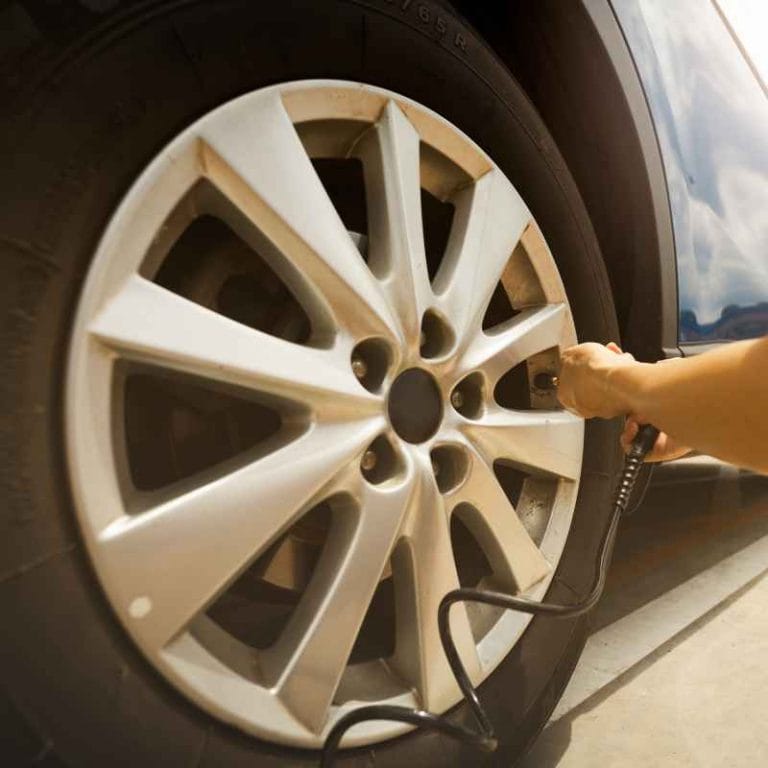
Use the driver-side door placard or the owner’s manual as the target, and check pressures when the tires are cold. The sidewall number is not the normal inflation target. TPMS is useful for warning about major underinflation, but it does not replace monthly checks.
- Park the vehicle and let the tires cool after driving.
- Find the door placard on the driver side or check the owner’s manual.
- Ignore the sidewall number as your routine target.
- Seat the gauge squarely on the valve stem for a clean seal.
- Record each tire and compare it to the placard pressure.
- Use TPMS as a warning system, not as the full check.
Why cold tires matter
Heat can change air pressure. That means a tire checked right after a drive can read higher than the same tire at rest. Cold checks give the most useful baseline for setting pressures that match the placard.
Use the proof asset to compare two gauges before you buy
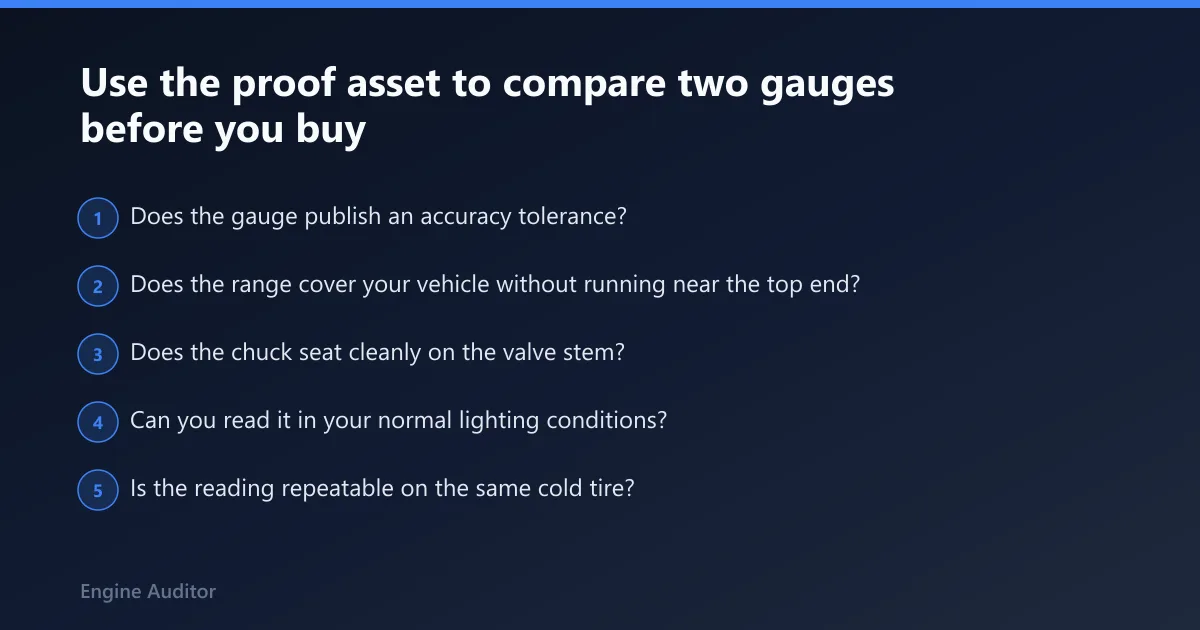
Compare two actual gauges on paper before you buy one. A short checklist keeps the decision centered on tolerance, range, sealing, readability, and repeatability, which are the things that matter when you check cold tires at home. It also makes it easier to compare two tools on the same valve stem.
One-page decision checklist
- Does the gauge publish an accuracy tolerance?
- Does the range cover your vehicle without running near the top end?
- Does the chuck seat cleanly on the valve stem?
- Can you read it in your normal lighting conditions?
- Is the reading repeatable on the same cold tire?
- Will battery dependence be a problem for your use case?
- Does the format fit your storage space and habits?
Side-by-side spec worksheet
| Spec | Gauge A | Gauge B | What to decide from it |
|---|---|---|---|
| Published accuracy tolerance | Fill in the maker’s stated tolerance | Fill in the maker’s stated tolerance | Choose the tighter verified tolerance |
| Pressure range | Fill in the stated range | Fill in the stated range | Pick the one that covers your vehicle cleanly |
| Chuck design | Fill in head shape and seal quality | Fill in head shape and seal quality | Prefer the cleaner valve-stem seal |
| Readability in darkness | Fill in backlit yes/no or dial visibility | Fill in backlit yes/no or dial visibility | Choose the one you can read in your real lighting |
| Battery dependence | Fill in yes/no | Fill in yes/no | Prefer no batteries if it suits your storage habits |
| Repeatability | Check whether it repeats closely on the same tire | Check whether it repeats closely on the same tire | Keep the gauge that stays consistent |
How to test two gauges on the same valve stem
Use one cold tire and take several readings with both gauges. If one gauge keeps landing close to the same number while the other drifts, the repeatable one is the safer choice. If the two disagree, re-seat the chuck before blaming the display style.
Frequently asked questions
Are digital or analog tire pressure gauges better?
For most home users, digital is easier to read, while analog is useful when battery-free storage matters. Better does not mean more advanced. It means the gauge has the right tolerance, a clean seal, and stable repeat readings on cold tires.
Are digital or analog tire pressure gauges more accurate?
Either can be accurate if the specific gauge is well made and properly rated. Accuracy comes from the published tolerance and the condition of the mechanism, not from the display type. A bad digital gauge can be worse than a good analog one.
Which is more accurate, analog or digital tire gauge?
Neither format wins by default. A quality digital gauge and a quality analog dial gauge can both be good enough for home use, while cheap versions of both can miss the mark. Check tolerance first, then seal quality and repeatability.
Tire pressure gauge digital vs analog: which should I buy?
Buy digital if you want easy reading, especially in low light. Buy analog if you want a battery-free tool with simple storage. If you want a compact spare, pencil gauges make sense, but they are harder to read with fine precision.
Are digital tire pressure gauges more accurate?
Not automatically. Digital gauges are easier to read, which cuts user error, but the screen can hide poor sensor quality or drift. Look for a stated tolerance and a solid valve-stem seal before you assume the digital format is better.
What matters more than gauge type for accuracy?
The published accuracy tolerance matters most, followed by valve seal quality and repeatability. Display resolution is secondary, because a gauge can show extra decimals without measuring more precisely. Use the placard pressure, check cold tires, and verify that two readings agree.
Products related to this article
Sponsored / affiliate links. As an Amazon Associate I earn from qualifying purchases. I may earn additional commission from eligible campaigns.