What Is Vehicle Type N1? Definition And Classification
Understanding Vehicle Type N1: Definition And Classification
Across the global automotive industry, precise vehicle classifications are critical for regulation, safety, environmental standards, and commerce. One of the most significant and widely recognized categories is Vehicle Type N1, a classification that directly impacts manufacturers, fleet operators, logistics providers, and regulatory bodies. For businesses and individuals seeking clarity on commercial vehicle standards, understanding N1’s definition, classification, and regulatory significance is essential.
Vehicle Type N1 stands at the intersection of commercial utility and regulatory oversight. It encompasses light-duty goods vehicles, influencing everything from emissions compliance to road safety requirements. Whether you’re considering fleet expansion, planning for regulatory changes, or simply aiming to ensure your vehicle meets legal standards, a thorough grasp of N1’s scope and implications will empower informed decisions and operational excellence.

Credit: www.researchgate.net
Key Takeaways
- Vehicle Type N1 refers to light commercial vehicles with a maximum mass not exceeding 3.5 tons, primarily designed for transporting goods.
- N1 classification is standardized across the European Union and recognized globally, impacting regulations, taxes, and operational requirements.
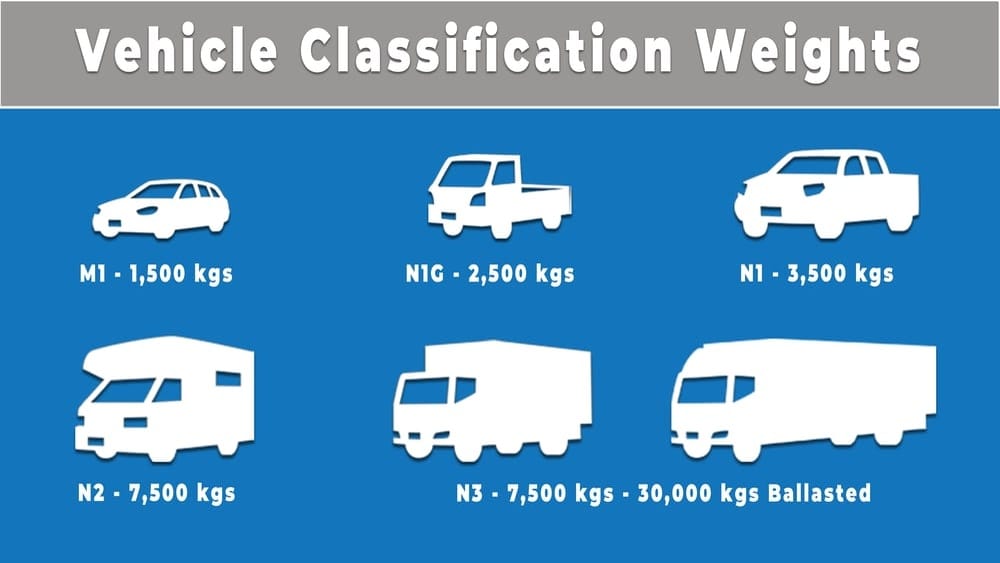
- The category includes vans, pickups, and certain chassis-cab models, distinct from passenger cars (M1) and heavier goods vehicles (N2, N3).
- Compliance with N1 standards affects emissions, safety, insurance, and fiscal incentives for businesses.
- Real-world examples highlight how N1 classification shapes fleet purchasing decisions and regulatory compliance strategies.
- Understanding N1 helps optimize operations, reduce costs, and avoid legal pitfalls for businesses reliant on light commercial transport.

Credit: atgaccess.com
Definition Of Vehicle Type N1
The Vehicle Type N1 classification is foundational in automotive and transport regulation, particularly within the European Union and countries that align with EU standards. Its definition is rooted in legal texts, technical standards, and practical implications for vehicle design and usage.
Legal Definition And Regulatory Basis
According to Regulation (EU) 2018/858 and the United Nations Economic Commission for Europe (UNECE) standards, Vehicle Type N1 is defined as:
> “A motor vehicle designed and constructed primarily for the carriage of goods, having a maximum mass not exceeding 3. 5 tonnes. “
This definition is codified in both EU and UN vehicle regulations, serving as a benchmark for homologation (vehicle type approval), taxation, and commercial operations.
Distinction From Other Vehicle Types
Vehicle Type N1 is distinct from:
- M1: Passenger vehicles (cars) designed for the transport of people.
- N2/N3: Medium and heavy goods vehicles, with maximum masses above 3.5 tonnes.
- O: Trailers and semi-trailers.
| Vehicle Type | Purpose | Max Mass | Examples |
|---|---|---|---|
| M1 | Passenger transport | Any | Sedan, SUV |
| N1 | Goods transport | ≤ 3.5 tonnes | Van, Pickup, Chassis-cab |
| N2 | Goods transport | 3.5-12 tonnes | Medium truck |
| N3 | Goods transport | > 12 tonnes | Heavy truck |
Technical Specifications
Key technical parameters for N1 vehicles include:
- Maximum mass: ≤ 3,500 kg (including payload)
- Engine type: Can be internal combustion, hybrid, or electric
- Body types: Panel van, pickup, chassis-cab, minibus (when converted for goods)
- Seats: Usually one or two rows, but primarily cargo-focused
These criteria ensure that N1 vehicles serve the commercial sector efficiently, balancing payload, maneuverability, and regulatory compliance.
Regulatory Implications
N1 classification dictates:
- Type approval: Vehicles must pass safety and emissions standards specific to N1.
- Fiscal treatment: Taxation, incentives, and insurance often differ from passenger vehicles.
- Usage restrictions: Certain urban areas restrict N1 vehicle access based on emissions or weight.
The definition’s clarity enables consistent enforcement and operational planning across jurisdictions.
Classification Criteria For Vehicle Type N1
Vehicle Type N1 is not a catch-all for light commercial vehicles; rigorous criteria govern its classification, ensuring only eligible vehicles receive the designation.
Weight And Payload
The maximum permissible mass is the core criterion. This includes:
- Vehicle weight (kerb weight)
- Maximum payload (cargo capacity)
- Fuel, fluids, and accessories
To qualify as N1, the total must not exceed 3,500 kg. Manufacturers must certify this during type approval, and authorities may verify during inspections.
Design And Construction
N1 vehicles must be designed and constructed primarily for goods transport. This is assessed by:
- Cargo area configuration (separate from passenger seats)
- Accessibility (rear or side doors for loading)
- Absence of rear passenger seats (in panel vans)
- Chassis-cab variants intended for specialized bodies (e.g., refrigerated units, flatbeds)
Intended Usage
Regulators consider intended usage, whether the vehicle is marketed and sold for goods transport, not passenger service. For instance:
- Vans converted to minibuses generally lose N1 classification.
- Dual-purpose vehicles (e.g., pickups with rear seats) are scrutinized for cargo-to-passenger ratio.
Real-world Classification Examples
Example: The Ford Transit Custom panel van, with a maximum mass of 2,800 kg, is classified as N1. However, the Ford Transit minibus variant, configured for passenger transport, falls under M1 or M2.
Example: The Mercedes-Benz Sprinter chassis-cab, designed for mounting custom cargo bodies, remains N1 if the completed vehicle’s mass is ≤ 3,500 kg.
Certification And Compliance
Manufacturers must:
- Submit vehicle specifications for type approval
- Affix compliance plates indicating N1 status
- Maintain records for regulatory audits
Pro Tip: Always verify the Certificate of Conformity for any commercial vehicle purchase to ensure legitimate N1 classification.

Credit: www.alke.com
Regulatory Standards And Impact
The N1 classification carries significant regulatory implications, shaping vehicle design, sales, and operational use across the EU and beyond.
Safety Standards
N1 vehicles must meet safety requirements distinct from passenger cars, including:
- Enhanced cargo restraint systems
- Side impact protection
- Electronic stability control (ESC)
- Seatbelt and airbag configurations for driver/passenger
These standards reduce accident risk and improve cargo security.
Environmental Regulations
Stringent emissions standards apply to N1 vehicles. As of 2026, EU regulations mandate:
- Compliance with Euro 6d emission limits
- CO₂ emissions reporting for fleet operators
- Incentives for electric and hybrid N1 vehicles
According to the European Environment Agency, commercial vans account for approximately 8% of total road transport CO₂ emissions, underscoring the importance of N1 regulation (EEA Source).
Fiscal And Taxation Effects
N1 vehicles benefit from:
- Reduced vehicle excise duty in many EU countries
- VAT reclaim for business purchases
- Depreciation allowances for fleet owners
However, improper classification can lead to tax penalties and loss of benefits.
Insurance And Liability
Insurance providers treat N1 vehicles differently, focusing on:
- Commercial use risk
- Cargo value and liability
- Driver qualification requirements
Operators must disclose accurate vehicle classification to avoid claim disputes.
Urban Access And Restrictions
Many cities, including London and Paris, impose Low Emission Zone (LEZ) rules on N1 vehicles. Non-compliant models may face:
- Access bans
- Congestion charges
- Fines for unauthorized entry
These restrictions drive demand for electric and compliant N1 vehicles.
Common Types And Examples Of N1 Vehicles
N1 vehicles span a diverse range of body types and use cases, from urban delivery vans to rural pickups.
Panel Vans
Panel vans are the quintessential N1 vehicle, offering:
- Enclosed cargo space
- Minimal passenger seating
- Rear and/or side loading doors
Example: The Volkswagen Transporter, widely used for logistics and trades, is classified as N1.
Pickups
Pickups, with open cargo beds and limited rear seating, are popular in construction and agriculture.
Example: The Toyota Hilux, with a maximum mass under 3,500 kg, qualifies as N1 in its commercial variants.
Chassis-cab Models
Chassis-cabs enable custom body installation:
- Flatbed trucks
- Refrigerated units
- Tippers
Example: The Iveco Daily chassis-cab is a frequent choice for specialized fleet operations.
Compact Cargo Vehicles
Smaller N1 vehicles suit urban environments:
- Fiat Fiorino (panel van)
- Renault Kangoo (compact van)
These models prioritize maneuverability and fuel efficiency.
Real-world Case Study: Fleet Procurement
A European logistics firm selected Ford Transit Custom panel vans for urban deliveries. N1 classification enabled VAT reclaim, access to LEZ zones, and compliance with Euro 6d emissions. The fleet achieved lower operating costs and regulatory risk compared to non-compliant alternatives.
| Model | Body Type | Max Mass (kg) | N1 Status |
|---|---|---|---|
| Ford Transit Custom | Panel Van | 2,800 | Yes |
| Toyota Hilux | Pickup | 3,250 | Yes |
| Iveco Daily Chassis-cab | Chassis-cab | 3,500 | Yes |
| Mercedes-Benz Sprinter Minibus | Minibus | 3,200 | No |
Pro Tip
When purchasing a commercial vehicle, always request documentation confirming N1 status, especially for custom builds.
Differences Between N1 And Other Vehicle Types
Understanding the nuances between N1 and adjacent vehicle types is essential for compliance, operational planning, and fiscal optimization.
N1 Vs. M1 (passenger Cars)
Purpose:
- N1: Goods transport
- M1: Passenger transport
Regulations:
- N1: Commercial standards, stricter cargo safety
- M1: Passenger safety, emissions
Fiscal treatment:
- N1: VAT reclaim, lower excise duty
- M1: Higher personal use taxation
Example: A Mercedes-Benz Vito panel van (N1) is taxed and regulated differently from a Mercedes-Benz Vito Tourer (M1).
N1 Vs. N2/n3 (medium/heavy Goods Vehicles)
Weight:
- N1: ≤ 3,500 kg
- N2: 3,500, 12,000 kg
- N3: > 12,000 kg
Driver qualifications:
- N1: Standard driver’s license (EU B category)
- N2/N3: Commercial license (C, C1 categories)
Operational scope:
- N1: Urban and regional deliveries
- N2/N3: Long-haul, bulk transport
N1 Vs. Dual-purpose Vehicles
Some vehicles straddle the line between commercial and passenger use. Regulatory bodies assess:
- Cargo-to-passenger ratio
- Marketing intent
- Structural design
Example: The Nissan Navara double-cab pickup, with substantial rear seating, may require additional scrutiny for N1 status.
Comparison Table: N1 Vs. M1 Vs. N2/n3
| Criteria | N1 | M1 | N2/N3 |
|---|---|---|---|
| Maximum Mass | ≤ 3.5 tonnes | Any | 3.5, 12 / >12 tonnes |
| Primary Use | Goods transport | Passenger transport | Goods transport |
| Driver License | B category | B category | C/C1 category |
| Taxation | Business-friendly | Personal use | Commercial rates |
| Urban Access | LEZ restrictions | Fewer restrictions | Strict restrictions |
N1 Vehicle Certification And Type Approval
Obtaining and maintaining N1 status involves rigorous certification and ongoing compliance.
Eu Type Approval Process
Manufacturers must undergo the EU type approval process, which includes:
- Submission of technical documentation
- Testing for emissions, safety, and construction standards
- Inspection by accredited authorities
Successful approval results in a Certificate of Conformity, which is required for registration and sale.
National Registration
After EU approval, vehicles must be registered in individual member states. Authorities verify:
- Mass and payload compliance
- Cargo area configuration
- Documentation integrity
Periodic Inspections
N1 vehicles undergo periodic technical inspections, focusing on:
- Cargo safety equipment
- Emission controls
- Structural integrity
Non-compliance can result in fines, registration suspension, or insurance invalidation.
Conversion And Modification
Modifying an N1 vehicle (e.g., installing a custom body) may impact its classification. Owners must:
- Submit modifications for approval
- Re-certify mass and design compliance
- Update registration documents
Warning: Unapproved modifications can void N1 status and lead to legal consequences.
Economic And Operational Significance Of N1 Vehicles
N1 vehicles are the backbone of urban logistics, small business operations, and municipal services. Their classification influences costs, efficiency, and regulatory risk.
Market Data And Trends
According to the European Automobile Manufacturers Association (ACEA), over 2 million new N1 vehicles are registered annually across the EU (ACEA Source). The segment is growing due to:
- E-commerce boom
- Urban delivery demand
- Environmental regulation shifts
Cost Optimization
Businesses leverage N1 vehicles for:
- Lower purchase and operational costs
- Fiscal incentives (VAT reclaim, depreciation)
- Flexibility in fleet management
In my experience, selecting N1-compliant models enabled significant savings for a mid-size delivery company, especially when accessing tax breaks and urban zones.
Environmental Impact
N1 vehicles play a central role in emission reduction strategies. Transitioning to electric N1 models helps:
- Meet LEZ standards
- Reduce fuel costs
- Enhance corporate sustainability profiles
Case Study: Electric N1 Fleet Transition
A courier service in Amsterdam adopted electric N1 vans, qualifying for local incentives and LEZ access. Their operational costs dropped by 18% after switching from diesel models, and customer satisfaction improved due to eco-friendly branding.
Operational Challenges
Despite benefits, N1 vehicles face:
- Regulatory complexity (multi-jurisdictional compliance)
- Rapid technology evolution (electric, hybrid)
- Maintenance and resale value concerns
Fleet managers must stay updated on changing regulations and technology to maintain competitiveness.
Global Perspective On N1 Classification
While N1 classification is standardized in the EU and UNECE, its influence extends globally, affecting import/export, multinational fleets, and cross-border regulation.
International Standards
Countries outside the EU often adopt similar classifications for light commercial vehicles, including:
- UNECE Regulation No. 83 (emissions)
- Harmonized safety and construction standards
This facilitates global trade and regulatory alignment.
North America: Equivalent Classification
In the United States, N1 equivalents are:
- Class 1 and Class 2 trucks (up to 3,500 kg / 7,716 lbs)
- Used for commercial vans and pickups
Differences exist in emissions and safety standards, but operational and fiscal impacts are similar.
Asia-pacific: Adoption And Variations
Japan, Australia, and South Korea use comparable classifications for light commercial vehicles, though local modifications apply.
- Japan: Kei trucks and vans fall below N1 mass limits
- Australia: Light commercial vehicles are regulated similarly, with additional environmental criteria
Cross-border Fleet Management
Multinational companies manage fleets across jurisdictions, requiring:
- Harmonized compliance documentation
- Adaptation to local regulations
- Strategic procurement to optimize N1 status
Example: A global courier company standardizes N1-compliant vans for EU operations, while adapting to US and Asia-Pacific equivalents.
Import And Export Considerations
Exporting N1 vehicles requires:
- Certification to destination country standards
- Compliance with emissions and safety
- Documentation for customs and registration
Global harmonization simplifies logistics but demands careful attention to detail.
Frequently Asked Questions
What Is The Main Advantage Of N1 Vehicle Classification For Businesses?
The primary advantage is fiscal optimization. Businesses can reclaim VAT on N1 vehicle purchases, access lower excise duties, and benefit from depreciation allowances. Additionally, N1 vehicles often qualify for special incentives, such as grants for electric models, and can access regulated urban areas with fewer restrictions compared to heavier vehicles.
Can N1 Vehicles Be Used For Passenger Transport?
N1 vehicles are not intended for passenger transport. They are designed and constructed primarily for the carriage of goods. If an N1 vehicle is modified or used mainly for passenger transport (e.g., converting a panel van to a minibus), it may lose its N1 classification and be reclassified as M1 or M2, affecting taxation and compliance.
Are Electric N1 Vehicles Subject To The Same Regulations As Diesel Models?
Yes, electric N1 vehicles must meet the same type approval and safety standards as diesel or petrol models. However, they benefit from additional incentives, such as grants, reduced taxation, and exemption from certain urban restrictions. Emissions standards differ, with electric models inherently compliant with Euro 6d and similar regulations.
How Do I Verify If A Used Van Is Truly N1 Classified?
To verify N1 status on a used van, check the Certificate of Conformity (CoC) issued by the manufacturer. The CoC should indicate N1 classification and list technical details. Also, inspect registration documents and compliance plates. If unsure, contact the manufacturer or local regulatory authority for confirmation.
What Happens If I Modify An N1 Vehicle Beyond The Approved Mass Or Design?
If modifications cause the vehicle’s mass to exceed 3,500 kg or alter its cargo configuration, it may lose N1 classification. You must submit modifications for re-approval and update registration documents. Operating a non-compliant vehicle can result in fines, loss of insurance, and legal penalties.
The N1 classification is more than a technical label, it’s a gateway to regulatory compliance, operational efficiency, and fiscal advantage for businesses and fleet operators. Understanding its definition, classification criteria, real-world examples, and global implications empowers smarter purchasing, safer operations, and strategic planning.
Staying informed about regulatory changes and leveraging N1 vehicles’ benefits will ensure long-term success in commercial transport and logistics.
Products related to this article
Sponsored / affiliate links. As an Amazon Associate I earn from qualifying purchases. I may earn additional commission from eligible campaigns.