How to compare luxury cars vs mainstream brands for value
Compare luxury cars vs mainstream brands by separating badge value from ownership math: if a luxury model costs noticeably more to buy and to own, mainstream often wins on value. Ignore that, and you may pay for status while depreciation and insurance do the damage. This guide compares comfort, tech, reliability, depreciation, and total cost of ownership across new and used options.
| Factor | How to compare luxury cars | mainstream brands | Winner |
|---|---|---|---|
| Purchase price | Usually have a higher starting price, especially once packages and options are added. | Usually have a lower starting price with more price-sensitive trim ladders. | mainstream brands |
| Standard equipment | More features are included at the base level, and many desirable items come standard earlier in the lineup. | More feature gaps until you move up trims or add option packages. | How to compare luxury cars |
| Comfort and cabin isolation | Often quieter, with better seat support and more sound deadening; daily fatigue can be lower. | Can be excellent, but usually has less isolation at the same price point. | How to compare luxury cars |
| Ownership cost | Usually higher depreciation, tire, brake, and labor costs; dealer labor rates can hit hard after the sale. | Usually lower service and replacement-part costs. | mainstream brands |
| Value after a few years | Entry-level luxury models can lose value quickly and may not hold resale as well as stronger nameplates. | Often have better trim walk value and steadier resale on popular models. | mainstream brands |
| Tech and driver aids | Tend to include more driver-assistance tech earlier in the lineup, with more standard content at lower trims. | Can match individual features, but often package them behind higher trims or option groups. | How to compare luxury cars |
| Maintenance | Maintenance often costs more because parts and labor are pricier; larger tires and brake hardware can widen the gap. | Service and replacement-parts costs are usually lower. | mainstream brands |
| Performance / testing comparison | Comparisons should use the exact build, plus repeatable instrumented testing for apples-to-apples checks. | Also should be compared using the same test source and method, not brochure impressions. | Tie |
| Best-fit use | May be the better fit if you value quietness, seat support, and high-speed comfort. | May be the better fit if you value cargo flexibility, easier loading, and lower ownership cost. | Tie |
Luxury cars vs mainstream brands: what you are really paying for
The badge premium is real, but it is only part of the bill. Luxury cars usually add quieter cabins, better seats, more standard equipment, and more advanced driver assistance at lower trims, while mainstream brands often ask you to move up several trims to match that content.
That is where value comparison starts to matter. A lower base sticker can mislead if the mainstream car needs options, while the luxury car already includes the features you wanted. The reverse happens too: a high-entry luxury model can lose its value edge fast if the same money buys a well-equipped mainstream car with lower depreciation and operating costs.
Where the badge premium shows up first
It also shows up in ownership math, because luxury models often need larger tires, pricier brakes, and dealer labor rates that hit hard after the sale.
Car shoppers should compare trim content line by line. A mainstream car at a mid trim can beat a base luxury car on equipment, yet still lose on noise control or seat comfort.
According to Popular Car Comparisons — Car and Driver’s comparison tool includes roughly 200 data points per vehicle. (source)
What do luxury cars have that mainstream brands usually don’t?
Luxury cars usually bring more standard equipment, better sound isolation, and stronger seat adjustment from the base trim up. Mainstream brands can match individual features, but they often package them behind trim steps or option groups that raise the real transaction price.
Standard equipment versus optional packages
This is where trim walk value matters. If a mainstream car needs two trims and a package to match a luxury car’s standard heated seats, upgraded audio, and driver aids, the “cheaper” car may no longer be cheaper. Buyers should compare the exact build they would buy, not the brochure base model.
Cabin quiet, seat support, and materials
Luxury cars often pay off in daily fatigue reduction. Quiet cabins matter on rough pavement and at highway speed, and supportive seats matter more than fancy stitching when the drive stretches past an hour. Materials help, but the bigger gain is usually in isolation and seat shape.
Driver assistance and infotainment content
Luxury brands tend to include more driver-assist tech earlier in the lineup. The useful question is whether features are standard or package-only, because a mainstream car can advertise the same system name while charging extra for the camera, radar, or highway assist you actually want.
How do comfort and ride quality compare?
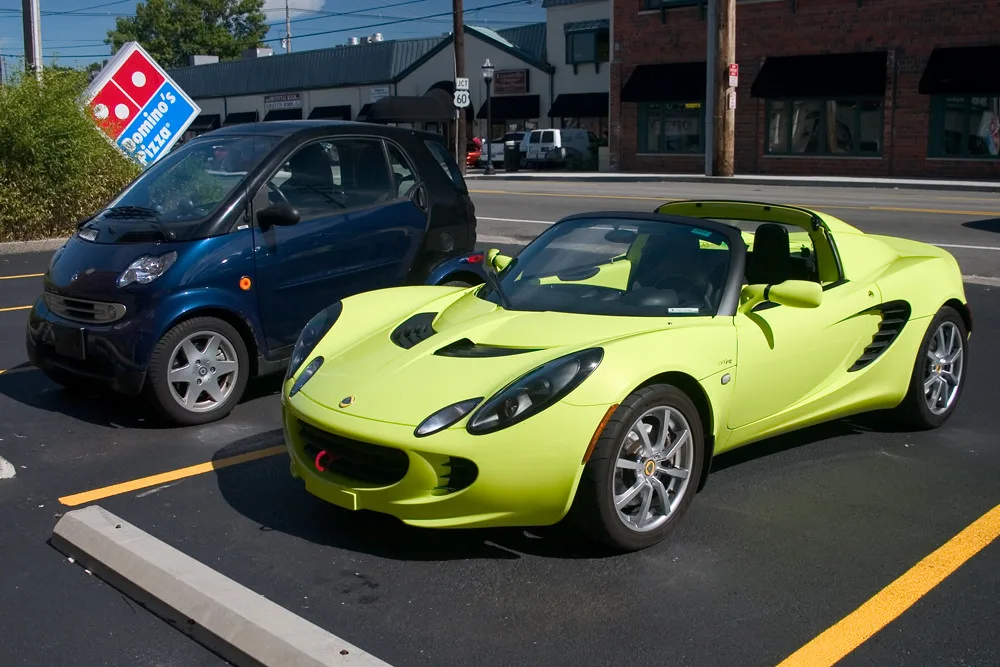
Luxury cars usually win on ride comfort because they are tuned to cut road noise, impact harshness, and seat fatigue. Mainstream cars can still ride well, but they more often trade isolation for cost control, handling crispness, or lower wheel and tire expense.
Road noise, suspension tuning, and impact harshness
A good luxury car should sound calmer over coarse pavement and send fewer sharp impacts from expansion joints and potholes. The difference is not universal, though. Some mainstream cars with compliant suspension tuning can feel nearly as pleasant on smooth roads while still giving up quietness on bad pavement.
Seat shape, adjustability, and long-trip fatigue
Seat support is one of the few luxuries that stays useful after the novelty fades. Look for thigh support, lumbar range, cushion length, and how naturally the seat holds the torso. A fancy dashboard does not fix a seat that creates back or leg fatigue.
How to judge this on a test drive
- Drive both cars on the same road surface, including rough pavement and highway speeds.
- Turn off the radio and listen for tire hiss, wind noise, and suspension thumps.
- Adjust the seat for a 30-minute drive position, not a showroom pose.
- Note whether the steering, brake pedal, and seat feel calm after a longer loop.
How do tech, safety, and driver aids compare?

Luxury cars often offer more tech and more driver-assistance content, but the key comparison is standard versus optional equipment. Safety ratings also need context, because a strong score does not tell you whether the feature set comes standard or only appears on expensive trims.
Safety ratings and what the score does and does not tell you
Use the crash-test score as one input. A rating source can tell you how a vehicle performed in a specific test, but it does not tell you whether the car you are buying includes the same driver-assist suite, emergency braking coverage, or blind-spot monitoring standard.
Standard versus optional safety gear
This is where mainstream and luxury cars split hard. Luxury brands often include more active safety tech earlier in the lineup, while mainstream brands may reserve it for upper trims or options packages. The right comparison is the exact VIN-equivalent trim content, not the marketing page.
Using instrumented testing and comparison tools for apples-to-apples checks
Car and Driver’s comparison tool includes roughly 200 data points per vehicle and covers acceleration, fuel economy, cargo room, and safety rating. It compares vehicles from different brands, not only trim levels, and the goal is to inform and simplify car-buying research. That matters because repeatable instrumented testing gives the same-test methodology you need for fair cross-model comparisons.
Use that kind of tool when the two vehicles come from different classes or price bands. It cuts brochure noise and keeps the comparison tied to measured performance, not showroom impressions.
What does ownership really cost over time?

Luxury cars can be expensive to buy and expensive to keep. The biggest long-run costs are usually depreciation, tires, brakes, scheduled service, and dealer labor rates, while fuel economy differences depend heavily on powertrain and EPA ratings versus real-world use.
Fuel economy and real-world variation
Compare city, highway, and combined mpg, then check how much the powertrain changes the result. Turbo engines, larger wheels, and all-wheel drive can pull real-world efficiency away from the EPA number, especially in stop-and-go driving or cold weather.
Maintenance cost: service intervals, tires, brakes, and labor
Luxury maintenance often costs more because the parts and labor do. Longer service intervals can help, but they do not erase higher tire prices, larger brake hardware, or higher dealer hourly rates. If the luxury car wears larger tires and performance brake pads, the ownership gap can widen quickly.
Depreciation and resale risk
Entry-level luxury models can be the worst place to spend extra money, because they often take the first luxury hit without holding resale as well as stronger nameplates. Mainstream models with broad demand usually age better in percentage terms, especially when the higher-trim luxury car starts close to the price of a better-equipped mainstream rival.
How do I compare a luxury sedan against a mainstream SUV fairly?
Compare them by use case, not by body style alone. A luxury sedan may win on quietness, seat support, and high-speed comfort, while a mainstream SUV may win on cargo flexibility, easier loading, and lower ownership cost. The fair comparison is what each vehicle does for your daily routine.
Cargo room and passenger compromise
Look at rear cargo volume, usable shape, and seat-fold flexibility rather than the biggest number in the brochure. An SUV often gives more practical cargo room, but some of that comes from a boxier body that affects fuel economy and handling. A sedan can lose on raw volume and still win if the trunk opening and rear seat fold are easier to live with.
Same-test methodology matters
Use the same test source or the same test method for acceleration, fuel economy, cargo room, and safety. If one vehicle is measured by a different publication or at a different trim, the comparison becomes slippery fast. Cross-brand data is useful only when the measurement context matches.
Side-by-side workflow
Tools with side-by-side view help keep the trim content honest. Draftable offers a side-by-side view, a single page redline-style view, and PDF export, while Diffchecker.io says its tool is free and runs in the browser and offers split and unified comparison modes. Text Compare! highlights additions, deletions, and modifications, which is useful when a trim sheet changes feature availability across years.
Decision matrix: compare a luxury car against a mainstream car the right way
A good matrix separates feelings from measurable value. Weight the categories that matter to the buyer, then score the exact cars being considered, using the same trim level and the same equipment assumptions on both sides.
| Category | Weight | What to measure | Luxury car score | Mainstream car score |
|---|---|---|---|---|
| Comfort | 30% | Cabin quiet, seat support, ride isolation | 9 | 7 |
| Tech | 20% | Standard driver aids, infotainment, charging, audio | 8 | 6 |
| Warranty | 10% | Coverage length and confidence in ownership risk | 6 | 7 |
| Maintenance | 15% | Service intervals, tires, brakes, labor | 5 | 8 |
| Depreciation | 15% | Expected resale risk and entry-level luxury exposure | 4 | 8 |
| Standard equipment | 10% | What is included before options | 8 | 6 |
How to read the matrix: multiply each score by the weight, then add the totals. In this sample, the luxury car wins comfort, tech, and standard equipment, while the mainstream car wins warranty confidence, maintenance, and depreciation. That is the split most shoppers need to see before they pay a badge premium.
Sample filled-in comparison for one sedan
For a sedan buyer, the luxury choice tends to win if the commute is long, road noise matters, and the buyer wants higher standard equipment without hunting through option packages. The mainstream sedan tends to win if the buyer wants lower tire and brake costs, lower depreciation exposure, and fewer expensive surprises after the sale.
Sample filled-in comparison for one SUV
For an SUV buyer, the luxury option often makes sense when passenger comfort and a quieter cabin matter more than maximum cargo efficiency. The mainstream SUV usually wins if the buyer needs a practical family hauler and wants to keep total ownership cost under control without paying extra for a premium badge.
Choose luxury cars if… / choose mainstream brands if…
Choose luxury cars if the extra money buys something you will feel every day: quieter highways, better seats, more standard safety and tech, or a trim that already includes the equipment you want. Choose mainstream brands if the luxury premium mostly buys status, while depreciation, tire size, brake cost, and labor rates drag the math the wrong way.
Choose luxury cars if…
- You care most about cabin quiet and long-trip comfort.
- The luxury trim includes the tech and safety gear you would otherwise pay extra for.
- You keep cars long enough that comfort matters more than resale risk, or you can absorb it.
- The mainstream rival needs multiple options or trims to match the same equipment.
Choose mainstream brands if…
- You want the lower starting price and lower total cost of ownership.
- You are sensitive to tire, brake, and dealer service bills.
- You are cross-shopping a used luxury car against a new mainstream car and want fewer repair surprises.
- Resale value and trim walk value matter more than brand cachet.
Frequently asked questions
Is a luxury car worth it compared with a mainstream car?
It is worth it when the extra cost buys measurable gains you will use: quieter cruising, better seats, more standard tech, and fewer option-package compromises. If the luxury model costs much more up front and then keeps costing more through tires, brakes, and depreciation, mainstream usually wins on value.
What do luxury cars have that mainstream brands usually don’t?
Luxury cars often include more standard equipment, better cabin insulation, stronger seat support, and more advanced driver aids earlier in the trim ladder. Mainstream cars can match many of those features, but often only after moving up trims or adding packages that narrow the price gap.
How much more does maintenance cost on a luxury car?
It varies by model, but the usual pressure points are tires, brakes, and dealer labor rather than oil changes alone. Larger wheels and more performance-oriented parts tend to cost more to replace, and luxury dealerships often charge higher labor rates than mainstream shops.
Do luxury cars actually have better safety ratings or features?
Sometimes they do, but the score and the features are different questions. A good crash-test rating source tells you how the car performed in specific tests; it does not guarantee the exact trim you want includes all driver-assist equipment standard, so the trim sheet still matters.
Which matters more: brand prestige or total cost of ownership?
Total cost of ownership matters more for most buyers because prestige does not stop depreciation, tire wear, or service bills. If the brand badge is the goal, that is a lifestyle choice. If the car has to fit a budget over years, ownership math should lead.
What should I check before buying a used luxury car instead of a new mainstream car?
Check service records, tire age, brake wear, warranty coverage, and whether expensive options were actually maintained. Then compare that used-luxury total against a new mainstream car with the equipment you need. A worn luxury car can become more expensive than a new mainstream one very quickly.
How do ride quality and handling differ between luxury and mainstream cars?
Luxury cars usually trade a little sharpness for calmer ride quality and lower noise, while mainstream cars often aim for a firmer, simpler setup. Some mainstream models handle well enough to close the gap, but the luxury car is more likely to feel composed over broken pavement and long highway runs.
Products related to this article
Sponsored / affiliate links. As an Amazon Associate I earn from qualifying purchases. I may earn additional commission from eligible campaigns.