Car Price Comparison (2025 Price Guide)
Thinking about buying a car and wondering how prices stack up between India and Pakistan? It can feel a bit tricky for folks just starting to look. You might see different numbers and not know why.
But don’t worry, it’s simpler than it seems. We’ll break down the Car Price Comparison: India vs Pakistan Explained step-by-step. Get ready to see a clear picture of what to expect.
Understanding Car Price Factors India Pakistan
This section looks at the big reasons why cars cost what they do in India and Pakistan. Many things influence these prices, from taxes to local manufacturing. We will explore how these elements create the differences you see.

Donkey Auto Products
was/Now Price Mirror Hang Tags (50 per…
- Was $___, Now $____ Mirror Hang Tags
- Printed on Heavy Stock
- Packaged 50 per Shrink-wrapped Pack
As an Amazon Associate I earn from qualifying purchases.
Understanding these core factors is key to grasping the whole picture of car prices in both countries.
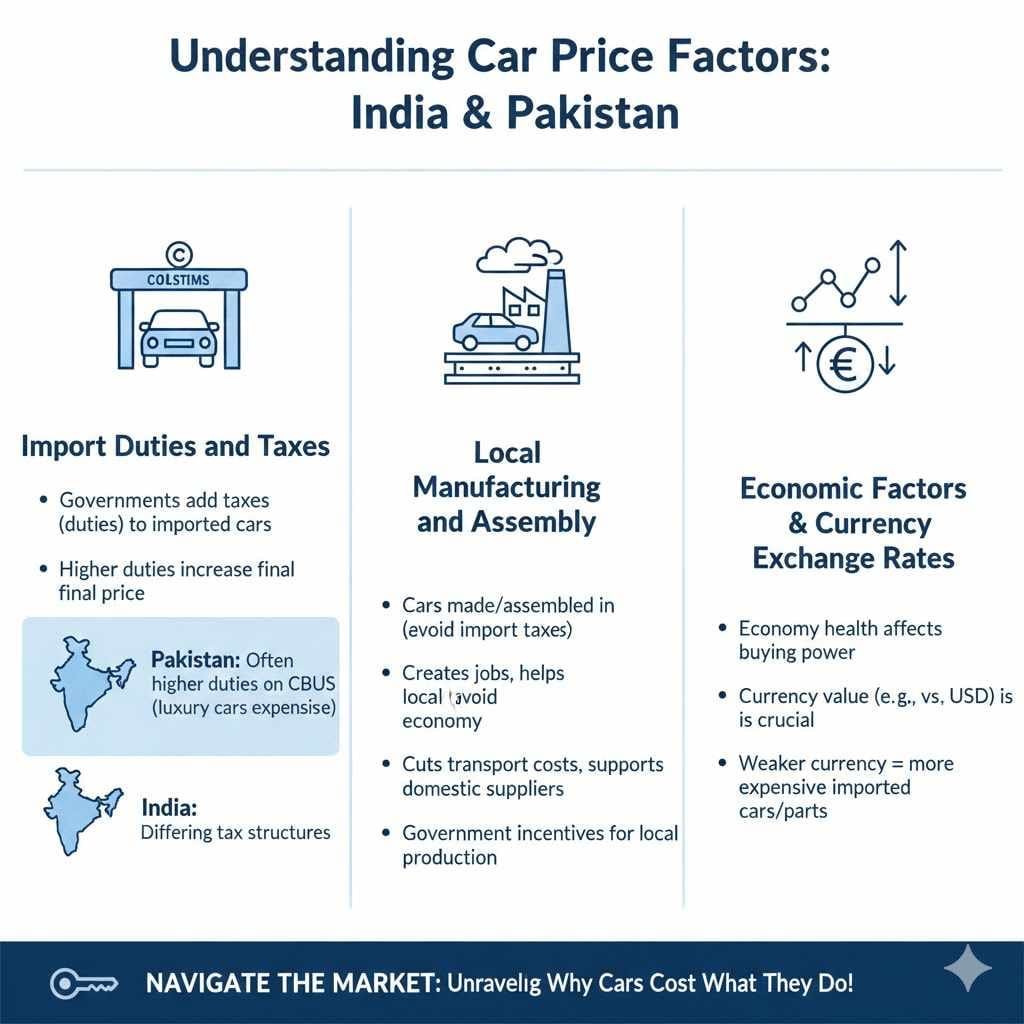
Import Duties and Taxes
When cars are brought into a country, governments often add taxes and fees. These are called import duties. Higher duties mean the imported car becomes more expensive for the buyer.
Different countries have different rules about how much they charge for imported vehicles. This is a major reason why the same car might cost a lot more in one place than another.
For example, Pakistan often has higher import duties on completely built units (CBUs). This makes imported cars, especially luxury ones, very expensive there. India also has import duties, but the structure and rates can differ significantly.
These taxes directly affect the final price tag you see at the dealership.
Local Manufacturing and Assembly
If a car is made or put together right there in the country, it usually costs less. This is because the maker doesn’t have to pay those big import taxes. Local factories also create jobs and help the local economy.
Companies often prefer to build cars where they sell them if possible.
Both India and Pakistan have strong automotive manufacturing sectors. Many global car brands have factories or assembly plants in these countries. This local production helps to keep prices more affordable for many popular models.
The presence of local production facilities is a huge factor in the car price comparison.
- Local production cuts down on transportation costs. When cars are made closer to home, the money spent on shipping them across oceans or long distances is saved. This saving is often passed on to the customer in the form of a lower price. It makes the car more accessible to a wider range of buyers.
- Local manufacturing supports domestic industries. Car companies often work with local suppliers for parts. This creates a network of businesses that benefit from car production. It also means that spare parts might be easier to find and cheaper to buy when a car is manufactured locally.
- Governments often offer incentives for local manufacturing. They might lower taxes or provide other benefits to car companies that build factories in their country. These incentives encourage more production and can lead to lower prices for consumers as companies pass on their cost savings.
Economic Factors and Currency Exchange Rates
The overall health of a country’s economy plays a big role in car prices. When an economy is doing well, people have more money to spend on big purchases like cars. The value of a country’s money compared to other currencies also matters a lot, especially for imported parts or cars.
For instance, if Pakistan’s currency weakens a lot against the US dollar, cars and imported parts become much more expensive. This directly impacts the price of vehicles that rely on imported components. India faces similar issues, though the specific economic conditions and currency movements will create unique pricing scenarios for its market.
Key Differences in Car Pricing India vs Pakistan
When we directly compare car prices in India and Pakistan, some clear patterns emerge. These differences are shaped by the factors we just discussed, leading to distinct pricing for similar vehicles. Let’s break down these common distinctions to get a clearer picture.
Affordable Car Segments Comparison
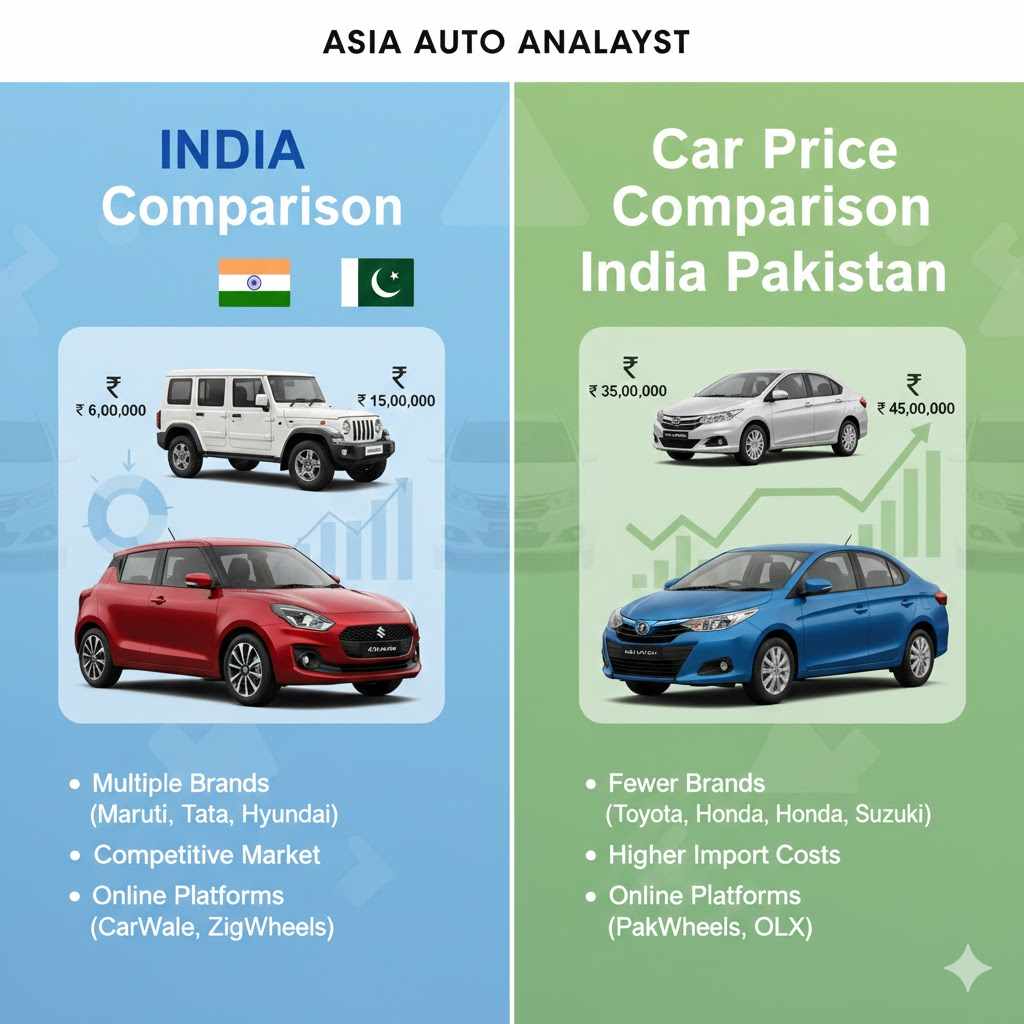
The most popular cars in both countries are often the small, fuel-efficient ones. These are built for everyday use and are designed to be as budget-friendly as possible. India has a very strong market for these “hatchbacks” and small sedans.
Many global and local manufacturers focus heavily on this segment to capture a large market share.
In Pakistan, while these cars are also popular, their prices can sometimes be higher due to import duties or fewer local production options for certain models. However, for locally assembled popular models, prices can be quite competitive. For example, a small hatchback like the Suzuki Alto or Suzuki Cultus (known as Wagon R in some markets) might have comparable pricing when locally produced, but imported versions will tilt the scale.
The availability of a wider range of truly mass-market, aggressively priced small cars in India often makes the entry-level segment more accessible. This is partly due to India’s massive automotive industry scale and fierce competition among manufacturers focused on this segment.
Luxury and Performance Car Pricing
When we look at luxury cars, the picture changes significantly. Pakistan tends to have much higher prices for these vehicles. This is mainly due to higher import duties and taxes on premium and luxury segments.
These cars are often imported as completely built units (CBUs), which incurs the highest levels of taxation.
India also has high taxes on luxury cars, but the sheer size of the market and the presence of several luxury car manufacturers with local assembly operations can sometimes lead to slightly more competitive pricing compared to Pakistan. Even with local assembly, the base price of luxury vehicles is high, and taxes still add substantially to the final cost. However, the gap might not be as wide as it appears for fully imported luxury cars in Pakistan.
For instance, a Mercedes-Benz C-Class or a BMW 3 Series, if imported as a CBU into Pakistan, will likely carry a significantly higher price tag than a locally assembled version of the same model in India. This is a direct reflection of the import tax structures in place.
| Car Segment | India Pricing Trend | Pakistan Pricing Trend |
|---|---|---|
| Budget Hatchbacks | Generally More Affordable, Wide Variety | Affordable if Locally Assembled, Higher if Imported |
| Mid-Size Sedans | Competitive Pricing, Good Local Production | Higher than India, Dependent on Import Status |
| SUVs (Compact & Mid-Size) | Strong Local Production, Competitive | Higher, especially if Imported, Growing Local Assembly |
| Luxury Sedans & SUVs | High Base Price, High Taxes, Some Local Assembly | Very High Prices, Primarily Imported, Very High Duties |
Used Car Market Differences
The used car market in both countries reflects the new car pricing. In Pakistan, due to high new car prices, a well-maintained used car can also command a good price. The scarcity of affordable new options can drive up demand for used vehicles.
India has a very vibrant and large used car market. The sheer volume of new cars sold means there’s a constant influx of good quality used cars. This often leads to more competitive pricing in the pre-owned segment, making it a very attractive option for budget-conscious buyers.
Factors Influencing Car Prices in India
India’s car market is one of the largest globally. Several factors come together to shape the prices of vehicles sold here. The sheer scale of production and the diverse range of manufacturers create a dynamic pricing environment.
Let’s look at what makes the Indian car market tick.
Government Policies and Regulations
Government policies are huge influencers of car prices in India. These include various taxes like Goods and Services Tax (GST), customs duties on imported parts and vehicles, and automotive sector promotion policies. The government’s stance on promoting local manufacturing versus imports directly impacts pricing.
For example, India has historically promoted local manufacturing through policies like “Make in India.” This encourages carmakers to set up production facilities, leading to more competitive pricing. Customs duties on imported parts are also carefully managed to balance cost of production with encouraging local development.
- GST (Goods and Services Tax): This is a major tax applied to the sale of goods and services in India, including cars. The GST rate on cars varies depending on the vehicle’s size, engine capacity, and type, adding a significant portion to the final on-road price.
- Customs Duties: While India promotes local manufacturing, it still levies customs duties on imported vehicles and components. These duties are crucial for protecting domestic industries but also increase the cost of imported cars or parts used in local assembly. The rates can vary widely, affecting the final price.
- Automotive Mission Plan: This is a long-term vision document that guides the growth of the Indian automotive industry. It often includes strategies to boost manufacturing, exports, and research and development, all of which indirectly influence car prices by fostering a competitive and efficient market.
Market Competition and Consumer Demand
India has a very competitive automotive market. With numerous domestic and international brands vying for customers, companies are pushed to offer attractive pricing and value. High consumer demand, especially for budget-friendly options, also keeps prices in check.
When many companies sell similar cars, they have to compete on price and features. This benefits the buyer. If one brand sets its price too high, consumers will simply look at a competitor.
This dynamic keeps the price of popular car segments, like compact SUVs and hatchbacks, relatively stable and competitive.
Real-life Example: In the compact SUV segment, brands like Maruti Suzuki, Hyundai, and Tata Motors offer compelling products. Their intense competition means that prices for models like the Maruti Brezza, Hyundai Venue, and Tata Nexon are often closely matched, giving consumers plenty of choice at competitive price points. This pressure ensures that manufacturers must offer great value for money.
Infrastructure and Logistics
The cost of moving cars and parts around India also affects prices. While India has a vast road network, logistics can still add to the final cost. efficient transportation systems help keep prices lower.
Good infrastructure means that cars manufactured in one part of the country can be transported to dealerships in other parts without excessive delays or costs. This reduces the overall supply chain expenses. Conversely, poor infrastructure can lead to higher costs.
Factors Influencing Car Prices in Pakistan
Pakistan’s automotive market has its own set of unique challenges and advantages that shape car prices. The country’s economic situation and trade policies play a particularly significant role in determining how much consumers pay for vehicles.
Import Policies and Trade Restrictions
Pakistan’s import policies are a primary driver of car prices. Historically, Pakistan has imposed high duties and restrictions on imported vehicles. This is often done to protect the local automotive industry and encourage domestic production.
However, it results in significantly higher prices for cars that are not locally manufactured or assembled.
For vehicles that are imported as completely built units (CBUs), the combined effect of customs duties, sales tax, and other levies can easily double or even triple the base price of the car. This makes luxury and performance vehicles exceptionally expensive in Pakistan. Even for parts used in local assembly, import duties can add to the manufacturing cost.
Statistic: Reports often indicate that import duties on vehicles in Pakistan can range from 30% to over 100% depending on the vehicle’s value and type. This heavy taxation directly inflates the final price for consumers.
Local Production and Assemblers
Despite import restrictions, Pakistan has a growing automotive sector with several major players assembling cars locally. Companies like Suzuki, Toyota, and Honda have significant presence, assembling popular models. The prices of these locally assembled cars are generally more competitive than imported ones.
However, the scale of local production in Pakistan is smaller compared to India. This means fewer options and potentially higher costs for components if they are still imported. The reliance on imported parts, even for local assembly, can still make prices higher than in countries with fully localized supply chains.
- Protection of Local Industry: Government policies in Pakistan are often designed to shield local assemblers from direct competition with fully imported vehicles. This protection allows local players to operate, but it can also mean higher prices for consumers if competition within the local market is limited.
- Limited Model Availability: Due to import restrictions and smaller market size, the range of car models available in Pakistan is often more limited compared to India. This lack of variety can reduce competition and allow existing players to maintain higher price points.
- Currency Fluctuations: Pakistan’s economy has often faced currency devaluation. When the Pakistani Rupee weakens against foreign currencies, the cost of imported parts, machinery, and even royalty payments for technology increases. This directly translates into higher production costs and, consequently, higher car prices for consumers.
Economic Conditions and Affordability
The economic situation in Pakistan significantly impacts car affordability. Higher inflation rates and economic instability can reduce people’s purchasing power. This means fewer people can afford to buy new cars, and the demand for affordable used cars increases.
When the economy is struggling, the demand for new vehicles tends to drop. Car manufacturers might then need to adjust prices or offer incentives to attract buyers. However, the underlying costs of production, heavily influenced by import duties and currency rates, can limit how much prices can be reduced.
Scenario: Imagine a family in Pakistan saving for a small car. If the local currency devalues significantly, the cost of that car, even if locally assembled, might increase because key components were imported. This could delay their purchase or force them to consider an older, more basic used model.
Car Price Comparison: India vs Pakistan Explained
Now that we have looked at the individual factors for India and Pakistan, let’s bring it all together for a direct comparison. This section will highlight the main areas where prices differ and why, using the understanding built so far. This is where the Car Price Comparison: India vs Pakistan Explained truly comes into focus.
Overall Price Trends for Similar Models
Generally, for the same car model that is locally produced or assembled in both countries, India often offers more competitive pricing. This is due to the sheer scale of India’s automotive industry, the intense competition, and more diversified local supply chains for components.
In Pakistan, the same locally assembled model might be priced higher. This is largely because of higher import duties on raw materials and components, smaller production volumes, and a less competitive market structure. The primary reason for this difference is the protective trade policies in Pakistan aimed at fostering its nascent domestic automotive industry.
For imported vehicles, especially luxury and performance cars, Pakistan’s prices are almost always significantly higher than India’s. This is primarily driven by substantially higher import duties and taxes levied on CBUs (Completely Built Units) in Pakistan compared to India, even though India also taxes imported vehicles heavily.
Impact of Government Policies on Consumer Costs
Government policies have a profound and direct impact on what consumers pay. In India, policies like GST and customs duties are structured to balance revenue generation with promoting local manufacturing. While these taxes add to the price, the competitive market ensures that the final cost remains relatively controlled for mass-market vehicles.
In Pakistan, the government’s focus on protecting and developing its local auto industry through high import barriers means consumers often pay a premium for vehicles. These policies aim to encourage local investment but result in higher prices for the end buyer, especially for cars that are not yet produced locally in large numbers.
- Indian Market Approach: India’s approach has been to foster a massive domestic industry through incentives for local production and a competitive market. While taxes exist, the scale of operation and competition help manage final prices for consumers.
- Pakistan Market Approach: Pakistan’s approach has historically been more protectionist, using high import tariffs to shield its developing local auto sector. This can lead to higher prices for consumers but aims to build a domestic manufacturing base over time.
- Consumer Choice vs. Protection: This creates a trade-off for consumers. In India, there’s often more choice at competitive prices due to open competition. In Pakistan, while local brands are encouraged, choice can be limited, and prices can be higher due to protectionist measures.
Sample Scenario: A mid-size sedan like a Honda City is a popular choice in both countries. In India, with multiple manufacturers and strong local production, its price is more competitive. In Pakistan, where Honda Atlas (the local assembler) faces less direct competition and higher import costs for certain components, the same model might be priced higher, reflecting the different market dynamics and regulatory environments.
Exchange Rate Volatility Effects
Both countries are subject to exchange rate fluctuations, but their impact can be more pronounced in Pakistan due to higher reliance on imported components. A weaker Pakistani Rupee makes imported parts, machinery, and royalty payments more expensive, directly pushing up the cost of locally assembled cars.
While India also relies on imported components, its larger domestic manufacturing base and more stable currency can sometimes buffer these effects. However, significant global currency shifts can still influence prices in India, particularly for high-end vehicles or specialized components.
Navigating the Car Market in Each Country
Knowing these differences helps buyers make informed decisions. Whether you are in India or Pakistan, understanding these market dynamics is your best tool for finding a good deal. This section provides practical advice for buyers.
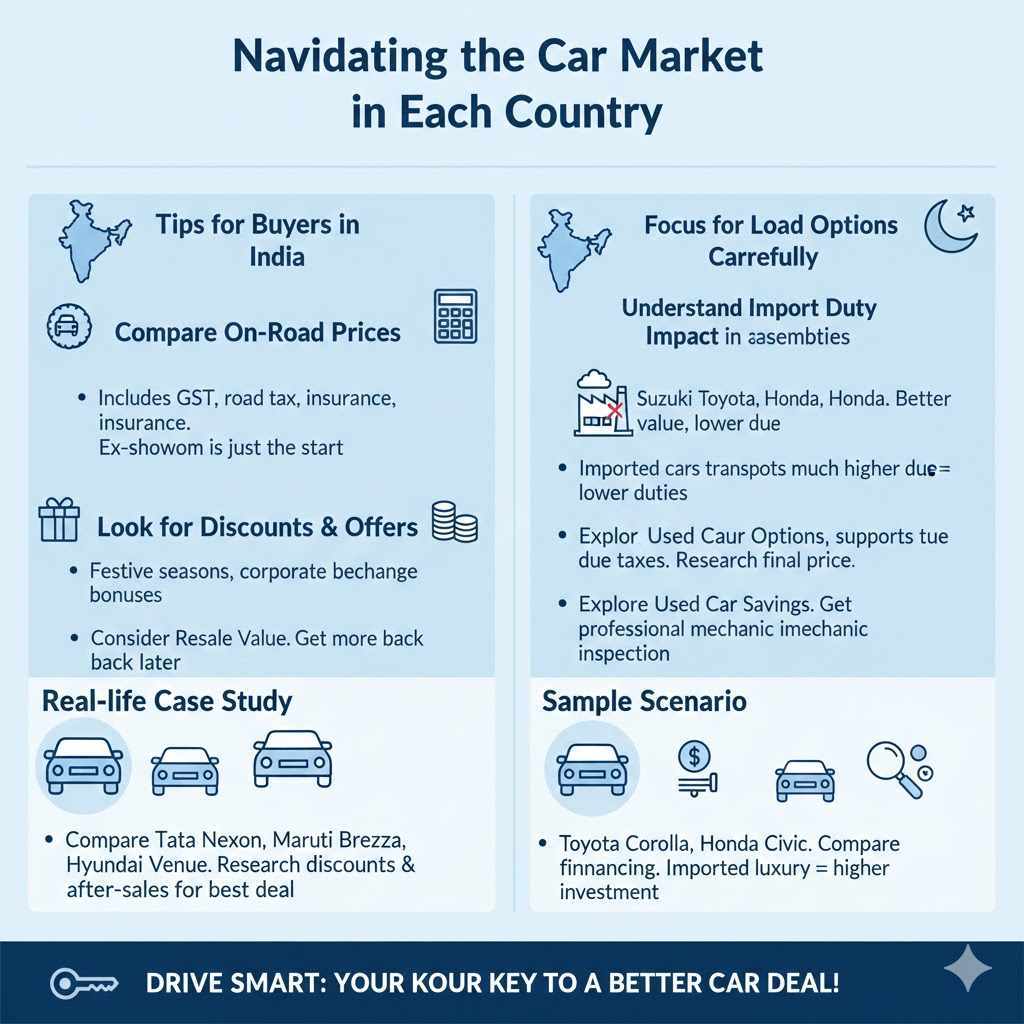
Tips for Buyers in India
India offers a wide array of choices. Focus on your needs and budget. Compare prices from different dealerships for the same car, as offers can vary.
Look for manufacturer discounts and special schemes, especially during festive seasons.
Research the total on-road price, which includes taxes, insurance, and registration fees, not just the ex-showroom price. Don’t forget to check out the used car market for even greater savings. Online comparison tools and auto review websites are great resources.
- Compare On-Road Prices: Always ask for the complete on-road price. This includes GST, road tax, insurance, and any other charges. The ex-showroom price is just the starting point. Different states have different road taxes, so prices can vary even for the same car.
- Look for Discounts and Offers: Manufacturers and dealerships frequently offer discounts, corporate benefits, or exchange bonuses. These can significantly reduce the final price. Keep an eye on automotive news and dealership websites for current promotions.
- Consider Resale Value: When buying a new car, it’s wise to consider its future resale value. Brands like Maruti Suzuki and Hyundai are known for good resale value in India, meaning you’ll get more money back when you decide to sell it later.
Real-life Case Study: A buyer looking for a compact SUV in India might compare the Tata Nexon, Maruti Brezza, and Hyundai Venue. By researching current discounts, negotiating with multiple dealers, and considering their preferred brand’s after-sales service and resale value, they can secure the best possible deal for their chosen vehicle.
Tips for Buyers in Pakistan
In Pakistan, local assembly is usually the key to better pricing. Prioritize locally manufactured or assembled models if budget is a primary concern. Be prepared for higher prices on imported vehicles.
Research the models available from the major local assemblers. Understand the financing options available, as interest rates can significantly impact the total cost. The used car market is also a strong option for affordability, but thorough inspection is critical.
Sample Scenario: A Pakistani buyer interested in a sedan might look at locally assembled options like the Toyota Corolla or Honda Civic. They would compare current offers from authorized dealerships, understand the warranty terms, and explore financing plans. If they consider an imported luxury car, they must be prepared for a significantly higher investment due to import duties.
- Focus on Local Assemblers: For most buyers in Pakistan, focusing on cars that are locally assembled by established companies like Suzuki, Toyota, or Honda will offer the most value. These vehicles typically have more accessible pricing due to lower import duties and local manufacturing costs.
- Understand Import Duty Impact: If considering an imported vehicle, thoroughly research the applicable import duties and taxes. This will give you a realistic understanding of the final price, which will likely be much higher than the car’s original price in its home country.
- Explore Used Car Options Carefully: The used car market in Pakistan can offer significant savings. However, it’s crucial to get a professional mechanic to inspect any used car thoroughly before purchasing. A well-maintained used car can be a smart buy, saving you a lot compared to a new one.
Frequently Asked Questions
Question: Are cars generally cheaper in India or Pakistan?
Answer: Generally, entry-level and mid-range cars are often more affordable in India due to larger production volumes, intense competition, and more developed local supply chains. Luxury and imported cars tend to be much more expensive in Pakistan due to higher import duties.
Question: Why are imported cars so expensive in Pakistan?
Answer: Pakistan imposes very high import duties and taxes on completely built units (CBUs) to protect its local automotive industry and manage foreign exchange. This significantly increases the final price of imported vehicles.
Question: Does India have high taxes on cars?
Answer: Yes, India has taxes like GST and customs duties that add to the price of cars. However, the large competitive market and strong local manufacturing help to keep the final prices of mass-market cars more manageable compared to some other countries.
Question: What is the impact of currency exchange rates on car prices?
Answer: When a country’s currency weakens, imported parts and vehicles become more expensive. This can lead to higher car prices in both India and Pakistan, but it can be more impactful in Pakistan due to a higher reliance on imported components and greater currency volatility.
Question: Which country offers a wider variety of car models?
Answer: India typically offers a much wider variety of car models across all segments, from budget hatchbacks to luxury SUVs, due to its larger market size, more foreign investment, and established manufacturing base.
Conclusion
Comparing car prices between India and Pakistan reveals distinct market dynamics. India often presents more affordable options in popular segments due to its massive, competitive auto industry. Pakistan’s prices, especially for imported vehicles, are higher, reflecting its protective trade policies and focus on developing local assembly.
Understanding these factors empowers buyers in both nations.
Related pick: Check today's price on Amazon
Products related to this article
Sponsored / affiliate links. As an Amazon Associate I earn from qualifying purchases. I may earn additional commission from eligible campaigns.