How to Compare Car Sound Systems Before You Buy
When you’re searching for a new car, the sound system might not be the first thing on your mind. But when you start driving your new vehicle every day, you’ll quickly notice how much music quality and audio clarity matter. A car’s sound system can make your commute enjoyable or turn it into a noisy, frustrating experience. However, comparing car sound systems is not simple — especially with so many technical terms, brands, and features.
If you want to make the best choice for your ears and your budget, you need to know what really matters and how to test it. This guide will walk you through every important point, offering clear steps and expert advice to help you compare car sound systems before you buy.
Understanding The Basics: What Makes A Good Car Sound System?
Before diving into comparisons, it’s important to know what a car sound system is made of and what makes it sound good. A typical system includes several parts:

PIONEER
Pioneer A-Series Plus TS-A1681F 6.5" 4-Way Coaxial…
- 4-Way Design - Enhance your car accessories with this 4-way design speaker, meaning they have separate drivers for reproducing dif…
- Power Handling - Maximum power handling of 350 watts and a continuous power handling of 80 watts, these speakers deliver dynamic s…
- Frequency Response - Receive a rich and immersive sound reproduction across different music genres. This car audio speaker contain…
As an Amazon Associate I earn from qualifying purchases.
- Head unit (the stereo or receiver)
- Amplifiers
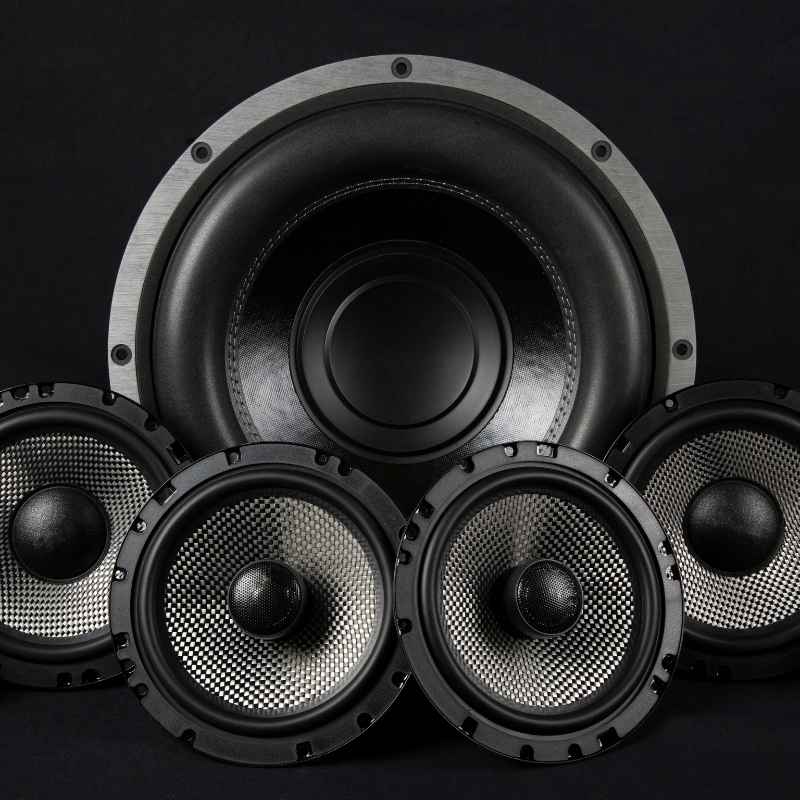
- Speakers (woofers, tweeters, midrange)
- Subwoofers
- Cables and wiring
Each component plays a role in delivering quality audio. For example, the head unit controls your music source, while the amplifier boosts the audio signal. Speakers convert electrical signals into sound, and subwoofers handle deep bass.
A good system will have:
- Clear, distortion-free sound at all volumes
- Balanced bass, midrange, and treble
- Even sound coverage throughout the car
- Easy controls and compatibility with your devices
Many buyers focus only on brand names or how many speakers a car has. But more speakers don’t always mean better sound. The quality of each part and how they work together is what truly matters.
Factory Vs Aftermarket Systems
When comparing car sound systems, you’ll see two main types: factory (OEM) systems and aftermarket systems.
Factory systems come pre-installed by the car manufacturer. They are designed for the specific model’s shape and size, often with a balance between cost and quality.
Aftermarket systems are upgraded parts or complete packages installed after you buy the car. Brands like Bose, Bang & Olufsen, JBL, and Harman Kardon often work with carmakers to create premium options.
Here’s a quick side-by-side comparison:
| Feature | Factory (OEM) System | Aftermarket System |
|---|---|---|
| Sound Quality | Varies (usually balanced for most drivers) | Often higher (customizable) |
| Integration | Perfect fit, seamless controls | May require adapters, sometimes less seamless |
| Cost | Included in car price (or as an upgrade) | Extra cost (parts + installation) |
| Customization | Limited | High (choose your own parts) |
| Warranty | Covered by car warranty | May affect car warranty |
Non-obvious insight: Sometimes, a factory “premium” system is just a rebranded version of the standard one with a few tweaks. Always check the specifications, not just the logo.
Key Features To Compare
When you’re ready to compare car sound systems, focus on these main features:
Number And Placement Of Speakers
More speakers can mean better sound coverage, but only if they’re placed well. Look for:
- Tweeters (for high frequencies) usually near the dashboard or pillars
- Woofers (for bass) in doors or rear
- Midrange speakers for vocals and instruments
- Subwoofer for deep bass, often in the trunk or under the seat
A luxury sedan may have 12+ speakers, but a well-tuned 6-speaker setup can sound better than a poorly designed 16-speaker system.
Practical tip: Sit in both the driver’s and passenger’s seats and listen to how the sound feels. Coverage should be even, not focused in one spot.
Amplifier Power
The amplifier boosts audio signals. Power is measured in watts RMS (continuous power). Don’t be fooled by “peak power” numbers — they are less important.
- Higher RMS means the system can play louder without distortion.
- 20-50 watts RMS per channel is typical for standard cars.
- Premium systems may deliver 100 watts RMS or more.
However, more power isn’t always better if the speakers can’t handle it.
Frequency Response
This tells you which frequencies (from bass to treble) the system can reproduce.
- Wider frequency response (for example, 20 Hz to 20,000 Hz) covers more of the audible range.
- Human hearing is roughly 20 Hz (bass) to 20,000 Hz (treble).
Some systems boost bass but lose clarity in the mid or high range. Listen for balance.
Signal-to-noise Ratio (snr)
This measures how much audio signal stands out from background noise.
- Higher SNR (like 90 dB or more) means cleaner sound.
- Lower SNR can make music sound muffled or “hissy.”
Supported Audio Sources And Connectivity
Modern systems offer many ways to play music:
- AM/FM radio
- CD player (less common today)
- USB ports
- Bluetooth
- Apple CarPlay / Android Auto
- AUX input
- Satellite radio
Think about which sources you use most. Some factory systems lock out certain features when driving for safety.
Equalizer And Sound Adjustment Options
An equalizer lets you adjust bass, midrange, and treble to your taste. Some systems offer:
- Simple bass/treble/fader controls
- Multi-band graphic or parametric equalizers
- Preset modes (Rock, Jazz, Pop, etc.)
The more control you have, the easier it is to tune the sound for your car and music style.
Non-obvious insight: Many systems sound good in the showroom but feel weak when you use your phone as a source. Always test with your own music and device if possible.
How To Test Car Sound Systems Before Buying
Reading specs is helpful, but nothing replaces actually listening. Here’s how to test sound systems properly:
Bring Your Own Music
Test with songs you know well. Choose tracks with:
- Deep bass (to check subwoofer performance)
- Clear vocals and instruments (for midrange and treble)
- Different genres (classical, rock, pop, electronic)
Streaming quality can vary, so use high-bitrate files or CDs if possible.
Listen At Different Volumes
Some systems sound clear at low volumes but distort when loud. Try:
- Low, medium, and high volumes
- Quiet passages and loud crescendos
- Both front and back seats
Check if the sound stays clear and balanced.
Pay Attention To Soundstage And Imaging
A good system creates a sense of space — you should feel like the instruments are spread out, not all coming from one spot.
- Can you “place” vocals, drums, or guitars in different parts of the car?
- Does the sound feel like it’s coming from eye level, not the floor?
Check For Rattles And Vibrations
High bass can make car panels or mirrors rattle. This is a sign of poor installation or cheap parts.
- Play a bass-heavy track and listen for buzzing.
- Tap on door panels to see if they vibrate.
Evaluate Controls And Usability
Complicated menus or small buttons can be distracting and even dangerous.
- Can you easily adjust volume, skip tracks, or change sources?
- Are controls on the steering wheel or touch screen?
Try using the system without looking — you should be able to adjust settings by feel.
Compare With A Reference
If possible, listen to a car with an aftermarket system or a more expensive factory upgrade. This gives you a benchmark.
Comparing Sound System Brands And Packages
Car makers often offer multiple sound system “levels.” For example:
- Basic (standard, usually 4-6 speakers)
- Premium (branded, 8-12 speakers, more power)
- Ultra-premium (brand name, 12+ speakers, subwoofer, advanced processing)
Here’s a comparison of popular premium brands:
| Brand | Known For | Typical Features | Car Brands Using |
|---|---|---|---|
| Bose | Balanced sound, clear vocals | Active noise cancellation, custom tuning | GM, Nissan, Mazda |
| Bang & Olufsen | High clarity, luxury | 3D sound, aluminum speaker grilles | Audi, Ford, BMW |
| JBL | Strong bass, lively sound | 10+ speakers, subwoofers | Toyota, Lexus |
| Harman Kardon | Rich, full sound | Surround sound, Logic 7 processing | BMW, Mercedes, Kia |
| Mark Levinson | Very high-end, audiophile quality | 15+ speakers, ultra-low distortion | Lexus |
Don’t assume a system is best just because of the brand. Some “premium” systems are just a bit louder than standard ones. Always compare specs and listen in person.
Important Specifications Explained
Many buyers feel overwhelmed by technical terms. Here’s what some common specifications really mean, in simple words:
Watts (rms Vs Peak)
- RMS watts: The true continuous power the system can handle.
- Peak watts: The maximum power in a very short burst (not as useful).
Focus on RMS for a real idea of performance.
Sensitivity
This measures how efficiently a speaker turns power into sound.
- Higher sensitivity (90 dB or above) means the speaker plays louder with less power.
- Lower sensitivity needs more power to reach the same volume.
Impedance (ohms)
Most car speakers are 4 ohms. Lower impedance means more power, but not all amplifiers are built for 2-ohm loads.
Crossover
A crossover splits sound into high, mid, and low frequencies and sends them to the right speakers (tweeters, woofers, etc.).
- Good crossovers prevent distortion and improve clarity.
- Some premium systems use active crossovers for better tuning.
Total Harmonic Distortion (thd)
Shows how much unwanted noise or distortion is added to the sound.
- Lower THD (like 0.01%) is better.
- High THD makes music sound “muddy.”
Comparing Sound Systems In New Vs Used Cars
The process of comparing sound systems is different for new and used cars.
New Cars
- You can often pick between different system levels (standard, premium, etc. ).
- Try to test each system side by side at the dealership.
- Ask for a detailed spec sheet — don’t rely just on brochures.
- Check if upgrades require buying a more expensive trim level.
Used Cars
- Test all sources and speakers (some may not work properly).
- Look for signs of aftermarket installation (cut panels, loose wires).
- Ask if previous owners upgraded the system.
- Check if the car has a “premium” system or just standard.
Important: Some used cars with aftermarket systems can have hidden problems, like electrical issues or missing features.
Considering Your Needs And Preferences
Not everyone wants or needs the most expensive sound system. Consider these questions:
- What kind of music do you listen to? Heavy bass fans will need a subwoofer, while talk radio listeners may care more about clear vocals.
- How much time do you spend in your car? Daily commuters may want higher quality; occasional drivers can settle for less.
- Do you care about resale value? Factory premium systems may boost value more than aftermarket ones.
- How much do you want to spend? Premium systems can add $500–$3000 to the car’s price. Aftermarket upgrades vary widely.
Real-world Example: Comparing Two Popular Midsize Sedans
Let’s compare the sound systems in a 2026 Toyota Camry XSE and a 2026 Honda Accord Touring.
| Feature | Camry XSE (JBL) | Accord Touring (Bose) |
|---|---|---|
| Speakers | 9 | 12 |
| Subwoofer | Yes | Yes |
| Total Power | 800 watts | 450 watts |
| Supported Sources | AM/FM, USB, Bluetooth, SiriusXM, Android Auto, Apple CarPlay | AM/FM, USB, Bluetooth, SiriusXM, Android Auto, Apple CarPlay |
| Unique Feature | Clari-Fi music restoration | Centerpoint surround sound |
Observation: The Camry offers more power, but the Accord has more speakers for greater coverage. Listening in person will reveal which system you prefer.
Common Buyer Mistakes To Avoid
Even experienced buyers sometimes make these mistakes:
- Judging by speaker count only. More isn’t always better.
- Trusting the brand name over your own ears. Sound quality is subjective.
- Skipping the test drive. Always listen before you buy.
- Ignoring compatibility. Make sure your devices connect easily.
- Forgetting about car noise. Road and engine noise can ruin great audio.
- Assuming all premium packages are equal. Features and quality vary widely.
- Not checking for distortion at high volume. Some systems sound good only at low levels.
Upgrading Your Sound System Later
If you’re not happy with the factory system, upgrading is possible. Here’s what to know:
- Head unit upgrades: Adds new features (Bluetooth, CarPlay, etc. ), but may be hard in cars with integrated controls.
- Speaker upgrades: Can improve clarity and bass.
- Adding an amplifier or subwoofer: Boosts power and bass depth.
- Professional installation: Recommended for complex systems to avoid damaging car electronics.
Upgrades can cost from $200 for simple speakers to $2,000+ for full systems.
Pro tip: Some cars are harder to upgrade due to proprietary wiring or unique dashboard shapes. Research your model before buying.
How Road Noise And Car Interior Affect Sound
Your car’s interior shape and materials make a big difference in sound quality. For example:
- Hard plastic panels reflect sound, sometimes making music harsh.
- Thick carpets and soft seats absorb sound, improving clarity.
- Hatchbacks and SUVs may have more road noise, which can “cover” music.
If you want the best sound, consider adding sound-deadening materials under carpets or inside doors.
The Impact Of Streaming Quality
Many people use Spotify, Apple Music, or other streaming services in their cars. However, not all streams are equal:
- Standard streaming is usually 128–256 kbps (compressed, lower quality).
- High-res streaming (320 kbps or lossless) offers better clarity.
If you upgrade your sound system but stream low-quality music, you won’t hear the full benefit. Try downloading high-quality tracks or using CDs for testing.
How To Make A Final Decision
After you’ve compared specs, listened to different systems, and thought about your needs, it’s time to decide. Here’s a simple checklist:
- Did you test the system with your own music?
- Does it sound clear at all volumes?
- Are all your devices compatible?
- Do the controls feel safe and easy to use?
- Is there any unwanted noise or rattle?
- Does the system fit your budget and preferences?
If you answer “yes” to all, you’ve found the right system.
Frequently Asked Questions
What Is The Most Important Part Of A Car Sound System?
The speakers are usually the most important part. Even the best head unit or amplifier can’t fix poor speakers. Good speakers reproduce sound clearly and handle a wide range of frequencies.
How Do I Know If A Car Sound System Is “premium”?
Premium systems often have a brand name (like Bose or JBL), more speakers, a subwoofer, and extra features like surround sound or advanced equalizers. Always check the specifications and listen in person, as some “premium” badges are just marketing.
Can I Upgrade My Factory Car Sound System?
Yes, most cars can be upgraded with new speakers, amplifiers, or head units. However, some modern cars have integrated systems that are harder to change. It’s best to consult a professional installer before buying upgrades.
Does A Better Sound System Increase Resale Value?
A factory premium system can improve resale value, especially in luxury or high-end cars. Aftermarket systems add less value and can sometimes lower it if not installed professionally.
Where Can I Find More Technical Details About Car Audio?
You can find in-depth information on car audio technology and industry standards on Wikipedia.
A great car sound system can make every drive more enjoyable. Take your time to compare, listen, and ask questions. Let your ears — and not just the numbers — guide your decision. With the right approach, you’ll find a system that brings your favorite music to life every time you hit the road. See also which car reviews are the most trusted in the uk . See also car ratings comparison how top models stack up in 2026.
Related pick: Check today's price on Amazon
Products related to this article
Sponsored / affiliate links. As an Amazon Associate I earn from qualifying purchases. I may earn additional commission from eligible campaigns.