
How Many Miles Do Most Cars Last? Expert Answer
So, you’re wondering, How Many Miles Do Most Cars Last? Expert Answer can be a bit tricky to pin down, right? It’s a super common question, especially when you’re thinking about buying a car or trying to figure out when yours might be on its last leg.
Lots of people find it confusing because there isn’t just one simple answer. But don’t worry, we’re going to break it all down in a way that’s easy to follow. We’ll look at what makes cars last longer and what factors can shorten their life.
Get ready for some clear steps to help you understand your car’s lifespan.
The Average Lifespan Of Cars
This section looks at how long cars typically last. We will explore the common mileage ranges and what affects these numbers. Understanding this helps set expectations for car owners.
Siless
Siless Liner 157 (4 mm) mil 36…
- Closed Cell Foam: OIL and Waterproof LINER closed-cell polyethylene foam is the best for car, Siless with an adhesive layer 100% e…
- Heat Blocker and Vibration Deadener: Effectively blocks 98% of radiant heat transfer. Siless Liner is a very versatile insulation…
- Lightweight, Waterproof: It is a waterproof light-weight thermal deadener with highly compressible closed cell foam formulation, i…
As an Amazon Associate I earn from qualifying purchases.
It’s the starting point for knowing how long your vehicle might serve you well.
Typical Mileage For Cars
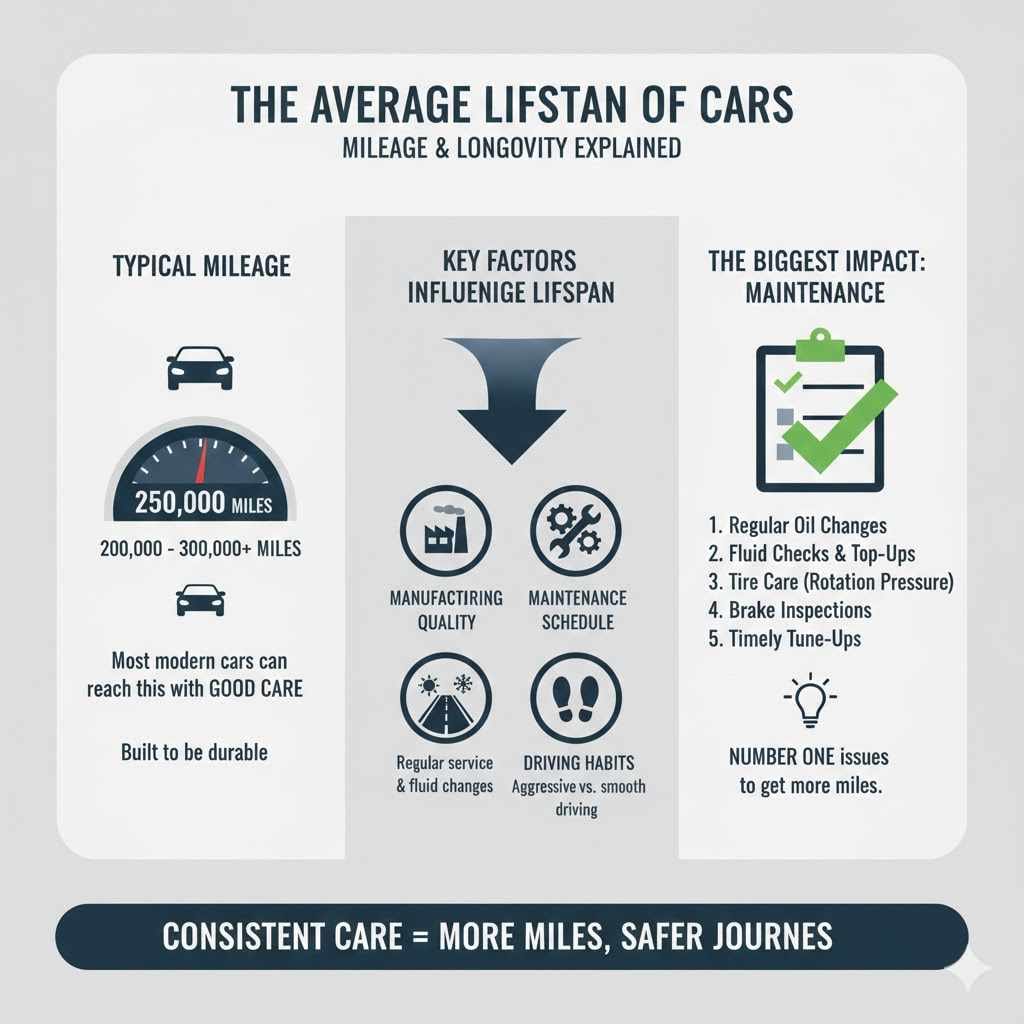
Most cars can last for a good long time if they are cared for properly. Experts often say that a well-maintained car can easily reach 200,000 miles. Some even go much further, hitting 300,000 miles or more.
This is a big number and shows that modern cars are built to be durable. It’s not unusual to see cars on the road with well over 150,000 miles on the odometer.
The exact number of miles a car lasts can change based on many things. The make and model of the car play a big role. Some brands are known for being more reliable and lasting longer.
Also, how the car was driven and the type of driving it did matters a lot. City driving with lots of stops and starts can be harder on a car than steady highway driving.
When we talk about the average car lifespan, we’re often thinking about both the age and the mileage. A car might be old but have low miles, or it might have high miles but still be relatively new. Both factors contribute to its overall life.
For many people, the mileage is the bigger concern when it comes to a car’s potential to keep running.
- The average car can reach 200,000 to 300,000 miles with good care. This is thanks to better engineering and materials used in car manufacturing today. It means your car can be a reliable companion for many years.
- Factors like the car’s brand, model, and how it’s used significantly influence its lifespan. Luxury cars might have more advanced features, but some economy cars are built for pure durability and longevity. Driving habits are also key.
- Regular maintenance is the most important thing you can do to extend a car’s life. Following the recommended service schedule ensures that small issues are caught before they become big, costly problems. This is the number one way to get the most miles out of your vehicle.
Factors Influencing Car Lifespan
Several key elements determine how long a car will last. These include the quality of the car’s construction, its maintenance history, and the driving conditions it experiences. A car built with durable parts and put together well will naturally last longer than one that is not.
It’s like building a house; better materials and construction lead to a longer-lasting home.
Maintenance is perhaps the single most critical factor. Think of it like going to the doctor for regular check-ups. If you do, potential health problems can be found and treated early.
The same applies to cars. Regular oil changes, fluid checks, and tune-ups keep the engine and other parts running smoothly. This prevents wear and tear that can lead to premature failure.
Driving conditions also play a large part. A car driven mostly on smooth, well-maintained highways will likely last longer than one driven daily on rough, unpaved roads or in areas with harsh weather like heavy snow or extreme heat. Frequent stop-and-go traffic in a city also puts more stress on the engine and transmission than consistent speed driving.
- Manufacturing Quality The initial design and build quality of a car set its potential lifespan. Cars from manufacturers known for reliability often use higher-quality components that resist wear and tear better over time. This makes them less prone to unexpected breakdowns.
- Maintenance Schedule Adherence Following the manufacturer’s recommended maintenance schedule is crucial. This includes everything from oil changes and filter replacements to checking brake pads and tire pressure. Neglecting these simple tasks can lead to major mechanical issues down the line. For instance, never changing the oil can cause severe engine damage.
- Driving Environment and Habits Where and how you drive your car impacts its longevity. Harsh climates, like extreme cold or heat, can accelerate the deterioration of certain car parts. Aggressive driving, such as rapid acceleration and hard braking, also puts extra strain on the engine, transmission, and brakes, reducing their lifespan.
Understanding Car Maintenance For Longevity
This part is all about keeping your car running for as long as possible. We’ll go over what maintenance really means and why it’s so important. Think of this as your guide to making sure your car stays healthy and happy, mile after mile.
We’ll cover the essential tasks that make a big difference.
Routine Maintenance Explained
Routine maintenance includes the services recommended by your car’s manufacturer at specific mileage or time intervals. These are the bread and butter of keeping a car in good shape. They are designed to prevent problems before they start and to keep the vehicle running efficiently.
The most common routine service is an oil change. Motor oil lubricates the engine’s moving parts, reduces friction, and helps keep the engine cool. Over time, oil breaks down and gets dirty, losing its effectiveness.
Changing it regularly, typically every 5,000 to 7,500 miles, is vital for engine health.
Other routine services include replacing air filters, cabin air filters, and checking or topping off all essential fluids like coolant, brake fluid, and power steering fluid. Inspecting tires for wear and proper inflation is also part of it. These seemingly small tasks work together to keep your car’s systems running smoothly.
- Oil and Filter Changes This is the most critical routine service. Fresh oil keeps your engine’s internal components properly lubricated, reducing friction and heat buildup. Old, dirty oil can lead to increased wear, overheating, and eventual engine failure. Most cars need an oil change every 5,000 to 7,500 miles, but check your owner’s manual.
- Tire Rotations and Pressure Checks Properly inflated tires improve fuel efficiency and wear evenly. Tire rotations, usually done every 5,000 to 8,000 miles, ensure that your tires wear down at the same rate, extending their life and improving vehicle handling.
- Fluid Checks and Top-Offs Cars have many fluids essential for operation, including coolant for the engine, brake fluid for stopping, and transmission fluid for gear changes. Regularly checking these levels and topping them off as needed prevents overheating, ensures proper braking, and keeps the transmission shifting smoothly.
Preventive Care vs. Reactive Repairs
There’s a big difference between taking care of your car before something goes wrong and waiting for a problem to happen and then fixing it. Preventive care is like visiting the dentist for a cleaning twice a year. It helps avoid cavities and gum disease.
Reactive repairs are like going to the dentist only when you have a terrible toothache.
Preventive care involves the routine maintenance we discussed. It’s about scheduled checks and services that keep parts in good condition. For example, replacing worn brake pads before they damage the rotors is preventive.
It’s usually less expensive and less time-consuming than fixing the rotor after it’s ruined.
Reactive repairs happen when a part breaks or a system fails. These can be much more costly and inconvenient. A car might need to be towed to a shop, and the repair itself might be extensive.
Focusing on preventive care saves money and stress in the long run. It’s the smarter approach to extending a car’s life.
- Cost Savings Preventive maintenance is almost always cheaper than reactive repairs. A $50 oil change every few months is far less expensive than a $3,000 engine rebuild caused by a lack of oil changes. Addressing small issues early prevents them from snowballing into major, costly problems.
- Reduced Downtime When you regularly service your car, it’s less likely to break down unexpectedly. This means fewer inconvenient trips to the mechanic and more reliable transportation. You won’t have to worry as much about being stranded on the side of the road.
- Extended Vehicle Life The primary goal of preventive care is to maximize your car’s lifespan. By keeping its components in optimal condition, you can push its mileage well beyond what it might achieve with neglect. This allows you to get more value from your vehicle before needing to replace it.
When To Seek Professional Help
While many basic maintenance tasks can be done by car owners, some jobs require specialized tools, knowledge, and safety equipment. Knowing when to hand the job over to a professional mechanic is a sign of smart car ownership. It ensures that repairs are done correctly and safely.
Complex repairs, such as engine diagnostics, transmission work, or suspension system issues, are best left to professionals. These systems involve many intricate parts that can be easily damaged if not handled properly. A qualified mechanic has the training and experience to diagnose and fix these problems effectively.
Also, if you notice any unusual sounds, smells, or warning lights on your dashboard, it’s wise to get it checked out. Ignoring these signs can lead to more significant damage. A professional can accurately identify the source of the problem and recommend the best course of action.
- Complex Mechanical Issues If you encounter problems with your car’s engine, transmission, brakes, or suspension system that you don’t fully understand, it’s time to call a professional. These are critical safety components, and improper repairs can be dangerous.
- Diagnostic Trouble Codes (DTCs) When your check engine light comes on, it’s usually accompanied by a DTC. While some auto parts stores can read these codes, interpreting them and performing the correct repair requires expertise. A mechanic can accurately diagnose the issue and fix it.
- Safety-Related Systems Any work on safety systems like airbags, anti-lock brakes (ABS), or advanced driver-assistance systems (ADAS) should be done by certified professionals. These systems are highly technical and require specialized knowledge to ensure they function correctly.
Factors That Can Shorten A Car’s Life
Sometimes, even with good intentions, certain things can cause a car to wear out faster than it should. This section explores those common pitfalls. Understanding these can help you avoid them and keep your car on the road for longer.
We’ll look at bad habits and environmental issues.
Neglecting Regular Maintenance
This is probably the biggest culprit when it comes to shortening a car’s life. When you skip oil changes, ignore filter replacements, or put off fluid checks, you are essentially letting your car’s vital systems slowly break down. It’s like not drinking water; eventually, your body will suffer.
For instance, not changing the engine oil allows metal particles and debris to build up. This increases friction between moving parts, leading to overheating and accelerated wear. Over time, this can cause severe engine damage, potentially requiring a costly rebuild or replacement.
Similarly, a clogged air filter restricts airflow to the engine, making it work harder and potentially damaging it. A dirty cabin filter can make your air conditioning system less effective and may even lead to mold growth. These are all examples of how neglecting simple maintenance can have serious consequences.
- Engine Damage from Old Oil Failing to change engine oil leads to increased friction, heat, and wear on critical engine components. This can result in a premature engine failure, a very expensive repair. Clean oil is the lifeblood of your engine.
- Transmission Problems Neglecting transmission fluid changes can cause it to break down and lose its lubricating properties. This can lead to overheating and excessive wear on transmission gears and clutches, potentially leading to a complete transmission failure.
- Cooling System Failure If the coolant in your car is not flushed and replaced periodically, it can become less effective at preventing overheating. A compromised cooling system can cause the engine to overheat, leading to warped cylinder heads or other severe damage.
Harsh Driving Conditions And Habits
How and where you drive your car has a significant impact on its longevity. Driving aggressively, with frequent hard accelerations and sudden stops, puts a lot of stress on the engine, transmission, brakes, and tires. This kind of driving wears these parts out much faster.
Think about the difference between running a marathon at a steady pace versus sprinting as fast as you can for the entire distance. The steady pace is much less taxing on your body. Cars are similar; consistent, smooth driving is much better for their long-term health than constant hard use.
Driving in harsh environments also takes a toll. Extremely cold or hot weather, driving on salt-treated roads in winter, or off-roading can all accelerate wear and tear. Salt, for instance, can cause rust and corrosion on the car’s undercarriage and frame, weakening its structure over time.
- Aggressive Driving Rapid acceleration and hard braking cause excess wear on the engine, transmission, brakes, and tires. This style of driving significantly reduces the lifespan of these components and can lead to more frequent repairs.
- Short Trips Frequent short trips where the engine doesn’t have a chance to warm up properly can lead to moisture buildup and sludge in the engine oil. This can also cause incomplete combustion, reducing fuel efficiency and increasing emissions.
- Extreme Weather Exposure Cars constantly exposed to extreme heat or cold can suffer from accelerated material degradation. For example, extreme heat can damage rubber hoses and seals, while extreme cold can make plastics brittle. Driving in snow and ice, especially with road salt, can lead to rust and corrosion.
Ignoring Warning Signs
Cars are designed to communicate with their drivers. Dashboard warning lights, strange noises, unusual smells, or changes in performance are all signals that something is not right. Ignoring these signs is like ignoring a persistent cough or a strange mole; it can lead to much bigger problems down the line.
For example, a slight grinding noise when you brake might indicate worn brake pads. If left unaddressed, this can lead to the brake pads grinding down to the metal, damaging the rotors. Now, instead of just replacing pads, you might need to replace both pads and rotors, a more expensive repair.
Similarly, a check engine light could indicate a minor issue with an oxygen sensor or a more serious problem with the catalytic converter. It’s crucial to have these lights investigated promptly. A professional can diagnose the exact cause and prevent a small issue from becoming a major, costly failure.
- Dashboard Warning Lights Lights like the check engine light, oil pressure light, or brake warning light are important alerts. They indicate that a system in your car is not functioning correctly and needs attention. Ignoring them can lead to severe damage or safety hazards.
- Unusual Noises Squealing, grinding, clunking, or humming sounds that are not normal for your car should be investigated. These noises often signal worn parts, loose components, or issues within various systems that could worsen over time.
- Changes in Performance If your car starts to feel sluggish, experiences rough idling, or its fuel economy suddenly drops, it’s a sign of a problem. These performance changes often indicate an issue with the engine, fuel system, or exhaust system that needs prompt attention.
Maximizing Your Car’s Lifespan With Smart Practices
Now that we’ve talked about what can hurt a car’s life, let’s focus on what helps it thrive. This section is about practical tips you can use every day to make your car last as long as possible. We’ll cover everything from driving habits to simple checks you can do yourself.
Driving Habits For Longevity
The way you drive has a direct impact on how long your car lasts. Adopting a smoother, more gentle driving style is one of the best things you can do. This means avoiding rapid acceleration and hard braking whenever possible.
Instead, try to anticipate traffic and adjust your speed gradually.
When starting your car, especially in cold weather, give the engine a minute or two to warm up before driving off. This allows the oil to circulate properly and lubricate all the moving parts. Driving gently during the warm-up period is also beneficial.
Also, try to combine shorter trips into longer ones when possible. This allows the engine to reach its optimal operating temperature, which is better for it in the long run. Smooth driving saves fuel and reduces wear and tear on almost every component of your car.
- Smooth Acceleration and Braking Avoid flooring the gas pedal or slamming on the brakes. Gradual acceleration and anticipating stops help reduce stress on the engine, transmission, and brakes, extending their life and improving fuel efficiency.
- Allow Engine Warm-Up Especially in colder weather, let your engine run for a minute or two before driving. This allows the oil to reach all parts of the engine for better lubrication and reduced wear during the initial miles.
- Maintain Steady Speeds on Highways Consistent highway driving is less stressful on a car than stop-and-go city traffic. When possible, utilize cruise control on highways to maintain a steady speed and reduce unnecessary engine strain.
Simple Checks You Can Do At Home
You don’t need to be a mechanic to perform some basic checks that can help keep your car in good shape. These are simple tasks that take just a few minutes but can alert you to potential problems early on. It’s like checking your own health indicators.
Checking your tire pressure regularly is a prime example. Underinflated tires wear out faster, reduce fuel economy, and affect handling. Overinflated tires can also cause uneven wear.
Most car doors have a sticker with the recommended tire pressure.
You can also check your fluid levels, like the engine oil, coolant, and windshield washer fluid. Most cars have easy-to-access dipsticks and reservoirs. Checking these levels periodically and topping them up if needed can prevent serious issues.
For example, low coolant can lead to engine overheating.
- Tire Pressure Check Proper tire pressure is crucial for safety, fuel efficiency, and tire longevity. Check your tires with a tire gauge at least once a month, and always when they are cold, to ensure they are inflated to the recommended levels found on the sticker inside your driver’s side doorjamb.
- Fluid Level Inspection Regularly check engine oil, coolant, brake fluid, power steering fluid, and windshield washer fluid levels. Low fluid levels can indicate a leak or system malfunction and can lead to serious damage if not addressed promptly.
- Wiper Blade and Light Check Ensure your windshield wipers are clearing the windshield effectively and that all your car’s lights (headlights, taillights, brake lights, turn signals) are working correctly. This is a safety issue and helps you spot problems early.
The Importance Of Following The Owner’s Manual
Your car’s owner’s manual is a treasure trove of information. It’s written by the people who built your car and knows its specific needs better than anyone. It outlines the recommended maintenance schedule, fluid types, tire pressures, and other vital details.
The maintenance schedule in the manual is key. It tells you when to get oil changes, when to replace filters, and when to have other services performed. Following this schedule ensures that you are taking care of your car according to its design and needs.
Skipping these can lead to issues.
Using the correct types of fluids and parts is also essential. The manual specifies the exact type of oil, coolant, or transmission fluid your car needs. Using the wrong kind can cause damage.
Think of it like using the wrong type of fuel in a sensitive engine.
- Maintenance Schedule The owner’s manual provides a detailed schedule of when specific maintenance tasks should be performed. Adhering to this schedule is the best way to ensure your car receives the necessary care to prevent problems and maximize its lifespan.
- Fluid Specifications It lists the precise types and specifications of all fluids your car requires, such as engine oil viscosity and coolant type. Using the correct fluids ensures optimal performance and prevents damage to the engine and other systems.
- Troubleshooting and Features The manual also contains valuable information on the car’s features, how to operate them, and basic troubleshooting tips for common issues. It’s your go-to resource for understanding your vehicle.
Case Studies: Real Cars And Their Mileage Milestones
Let’s look at some real-world examples. Seeing how other cars have lasted can be really inspiring and give us a better idea of what’s possible. These stories highlight the importance of care and consistency.
Example 1 A Well-Maintained Sedan
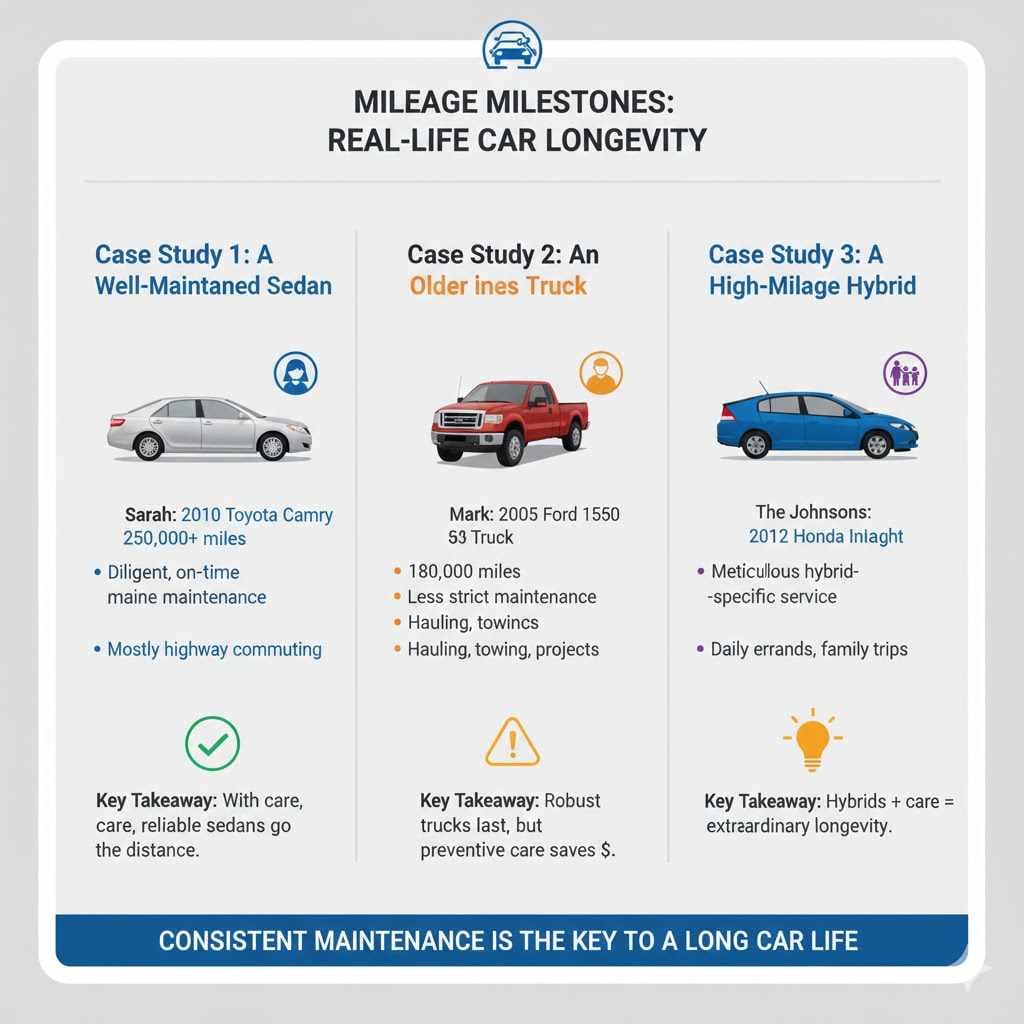
Sarah has a 2010 Toyota Camry that she bought new. She’s been very diligent about its maintenance, always getting oil changes on time and taking it for regular check-ups at the dealership or a trusted independent mechanic. She mostly uses it for commuting to work, which involves steady highway driving.
Today, her Camry has over 250,000 miles on it. It still runs smoothly, and she hasn’t had any major mechanical breakdowns. The only significant repairs have been routine
Her experience shows that a reliable sedan, when properly cared for, can easily surpass the 200,000-mile mark and continue to be a dependable vehicle for many more years. This is a testament to both the car’s inherent quality and Sarah’s commitment to its upkeep.
Example 2 An Older Pickup Truck
Mark owns a 2005 Ford F-150 that he uses for various tasks, including hauling materials for home projects and occasional towing. He’s not as strict with maintenance as Sarah, sometimes stretching oil change intervals a bit. However, he does ensure major issues are addressed promptly.
His truck is currently at 180,000 miles. It’s had a few more repairs than Sarah’s Camry, including a transmission service and some work on the suspension. Mark acknowledges that if he had been more diligent with routine maintenance, he might have avoided some of these issues.
Mark’s truck is still functional, but it requires more attention. This case illustrates how even with less-than-perfect maintenance, a robust truck can still last a long time. However, it also shows that more attention to preventive care could have saved him money and potential headaches.
Example 3 A High-Mileage Hybrid
The Johnson family has a 2012 Honda Insight hybrid that has traveled an impressive 320,000 miles. They live in a suburban area and use the car for daily errands, school runs, and regular family trips. They’ve been meticulous with its maintenance, following the hybrid-specific service recommendations.
The hybrid system in their Insight has proven to be very durable. While they’ve had to
Their Insight is a prime example of how advanced technology, combined with consistent care, can lead to extraordinary longevity. It highlights that hybrids, despite their complexity, can be just as long-lasting as traditional gasoline cars, if not more so, with proper attention.
Frequently Asked Questions
Question: How many miles do most cars last on average?
Answer: Most cars, with proper maintenance, can last between 200,000 and 300,000 miles. Some can even go beyond that with excellent care and good manufacturing quality.
Question: What is the most important factor for a car’s longevity?
Answer: The most critical factor is consistent and proper maintenance, including regular oil changes, fluid checks, and adherence to the manufacturer’s service schedule.
Question: Does driving aggressively shorten a car’s life?
Answer: Yes, aggressive driving, characterized by rapid acceleration and hard braking, puts significant stress on a car’s components and will shorten its overall lifespan compared to gentle driving.
Question: Are hybrid cars as durable as gasoline cars?
Answer: Yes, hybrid cars can be very durable, often lasting for hundreds of thousands of miles. While they may require specific maintenance for the hybrid system, their overall lifespan can be comparable or even exceed that of traditional gasoline cars with good care.
Question: How often should I change my car’s engine oil?
Answer: Most modern cars require an engine oil change every 5,000 to 7,500 miles. However, you should always consult your car’s owner’s manual for the most accurate recommendation for your specific vehicle.
Conclusion
Most cars can last for a very long time, often reaching 200,000 to 300,000 miles. This is achievable through consistent, preventive maintenance and smart driving habits. Paying attention to your car’s needs will keep it running strong for years to come.
Related pick: Check today's price on Amazon
Products related to this article
Sponsored / affiliate links. As an Amazon Associate I earn from qualifying purchases. I may earn additional commission from eligible campaigns.
 WYNEX Car Sun Visor Organizer MOLLE Panel Fit Most Cars | Small-11.8x6.3", Visor Storage Pouch for Small Tools, Glasses & Docs, Fit Sedan Suvs Vans
 DOKIKO 50 Pcs Car Windshield Washer Fluid concentrate Tablets,Windshield Wiper Fluid,1 Pack Makes 52.5 Gallons,1 Piece Makes 1.05 Gallons(Winter: Use With De-icer or Methanol)