What Does Vehicle Type AU Mean?
Simply put, “AU” as a vehicle type often denotes an “Apportioned Vehicle” for interstate commerce, indicating it operates across multiple jurisdictions and is registered under an agreement like the International Registration Plan (IRP). It signifies a commercial vehicle used for hauling goods or passengers between states, requiring specific licensing and compliance.
Key Takeaways
- Vehicle type AU most commonly stands for “Apportioned Vehicle,” used for commercial trucks and buses operating in multiple states under the International Registration Plan (IRP).
- It signifies a vehicle engaged in interstate commerce, requiring specific registration and compliance with regulations in each jurisdiction it travels.
- Understanding “AU” is crucial for accurate insurance, proper tax remittance, and avoiding penalties related to commercial vehicle operations.
- The “AU” designation is distinct from standard state-specific vehicle registrations and involves a more complex process managed by motor vehicle departments and interstate commerce commissions.
Understanding the AU Vehicle Type Designation
The “AU” designation for a vehicle type isn’t universally applied or defined across all automotive contexts. However, in specific regulatory and commercial settings, it has a clear and significant meaning. Most commonly, “AU” signifies an “Apportioned Vehicle.” This term is integral to the framework governing commercial vehicles that operate across state lines within the United States and Canada.
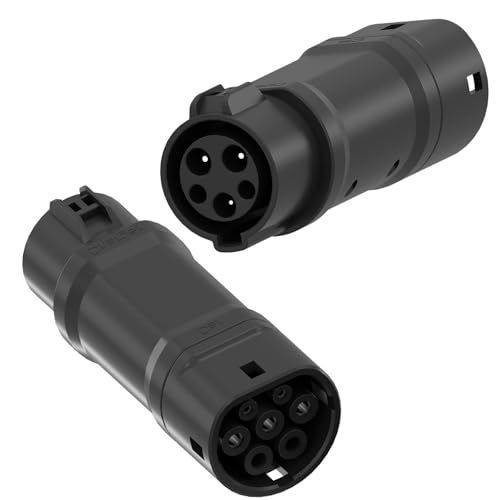
YIGPAIPO
YIGPAIPO Type 1(J1772) to Type 2 EV…
- ADAPTER TYPE: Type 1 to Type 2 EV charging adapter designed for converting charging connections between different electric vehicle…
- Seamless Charging Solution: The EV Charging Adapter effortlessly converts Type 1 connectors to Type 2, enabling hassle-less chargi…
- CONNECTOR DESIGN: Features Type 1 female inlet and Type 2 male outlet configuration in durable black housing for reliable charging…
As an Amazon Associate I earn from qualifying purchases.
An apportioned vehicle is one that is registered in accordance with the International Registration Plan (IRP). The IRP is an agreement among U.S. states, the District of Columbia, Canadian provinces, and Mexican states that aims to simplify the registration of commercial vehicles operating in multiple jurisdictions.
Instead of registering in every single state or province where a vehicle travels, an IRP-registered vehicle is issued a single license plate and registration card by its base jurisdiction.
This system allows commercial carriers to pay registration fees based on the total mileage operated in each jurisdiction, rather than a flat fee in each. The “AU” code often appears on registration documents or vehicle identification records to denote this specific type of interstate commercial registration. It’s a critical identifier for authorities tasked with ensuring compliance with transportation laws, safety regulations, and tax obligations.

What is the International Registration Plan (IRP)?
The International Registration Plan (IRP) is the cornerstone of understanding the “AU” vehicle type. It’s a reciprocity agreement that simplifies the commercial motor vehicle registration process for carriers who operate in multiple jurisdictions. Before the IRP, a commercial truck or bus traveling through several states would have to obtain separate registration permits from each one, a logistical and financial burden that significantly hampered interstate commerce.
Under the IRP, a carrier establishes a base jurisdiction (usually their home state or province). They then apply for an apportioned license plate and registration credentials from that base jurisdiction. These credentials allow the vehicle to operate legally in all other IRP member jurisdictions.
The registration fees are calculated based on the proportion of total fleet mileage that is operated in each member jurisdiction.
This apportionment of fees ensures that each jurisdiction receives registration fees in direct relation to the use of its roadways by commercial vehicles. The “AU” designation is often the specific code used by state motor vehicle departments to classify these IRP-registered vehicles within their systems. It signals that the vehicle is compliant with the IRP and its associated mileage reporting and fee payment requirements.
Why is the AU Designation Important for Commercial Carriers?
For commercial carriers, correctly identifying and managing vehicles with the “AU” type designation is paramount for legal operation and financial compliance. This classification is not merely a bureaucratic label; it carries significant operational and financial implications. Proper handling of “AU” vehicles ensures that carriers can move goods and passengers across state lines without interruption.
One of the primary reasons for its importance is tax remittance. The IRP system is designed to collect fuel and registration taxes proportionate to mileage. Carriers operating “AU” vehicles are required to meticulously track their mileage in each jurisdiction and report it accurately to their base jurisdiction.
Failure to do so can lead to substantial fines, audits, and penalties. The “AU” code serves as a flag for regulatory agencies to ensure these mileage reports are submitted and taxes are paid.
Furthermore, insurance requirements are often tied to vehicle type and operational scope. Commercial auto insurance policies for apportioned vehicles are typically more comprehensive and costly due to the increased risk associated with interstate travel and the volume of goods or passengers transported. Insurers need to know the “AU” status to provide appropriate coverage and to assess risk accurately.
Without this designation, a carrier might be underinsured, leaving them vulnerable to catastrophic financial losses in the event of an accident.
| Aspect | Impact of AU Designation |
|---|---|
| Registration | Requires IRP apportionment, not single-state registration. |
| Mileage Reporting | Mandatory detailed tracking of miles driven in each state/province. |
| Fee Payment | Fees are prorated based on mileage operated in each jurisdiction. |
| Insurance | Requires specialized commercial auto insurance for interstate operations. |
| Compliance | Ensures adherence to regulations governing interstate commercial vehicle movement. |
This table summarizes the critical considerations that come with operating a vehicle classified as “AU” or apportioned.
How to Register an Apportioned Vehicle (AU Type)
Registering a vehicle as an “AU” type, meaning an apportioned vehicle, involves a multi-step process managed by your base jurisdiction’s motor vehicle department or transportation authority. This is a more involved procedure than registering a vehicle for purely intrastate use. It requires careful attention to detail and accurate record-keeping from the outset.
The first step is to determine your base jurisdiction, which is typically where your business is located or where the majority of your mileage originates. Once this is established, you will need to complete an application for IRP registration. This application will require detailed information about your business, the vehicles you intend to apportion, and their intended operational scope.
You will also need to provide proof of ownership, such as a title or bill of sale, and potentially a U.S. Department of Transportation (USDOT) number if you are operating commercial vehicles.
Next, you will need to calculate your estimated mileage for the upcoming registration period in each IRP member jurisdiction. This estimation is crucial as it forms the basis for your registration fees. Many jurisdictions provide mileage estimation worksheets or software to assist with this process.
Once the application is submitted and approved, you will receive your apportioned license plate and registration credentials. It is vital to maintain accurate daily trip logs to substantiate your reported mileage for audits and future renewals.
- Determine Base Jurisdiction: Identify the state or province where your primary business operations are located or where the greatest proportion of your fleet’s miles are driven.
- Obtain USDOT Number: If you are operating a commercial motor vehicle in interstate commerce, you will likely need a U.S. DOT number from the Federal Motor Carrier Safety Administration (FMCSA).
- Complete IRP Application: Fill out the official IRP application form provided by your base jurisdiction’s motor vehicle department, providing all required business and vehicle details.
- Estimate Mileage: Project the total miles your vehicle(s) will travel in each IRP member jurisdiction for the registration year.
- Calculate Registration Fees: Based on estimated mileage, calculate the prorated registration fees due to each jurisdiction.
- Submit Application and Fees: Send the completed application, supporting documents, and required fees to your base jurisdiction.
- Receive Credentials: Upon approval, you will be issued an apportioned license plate and registration card.
- Maintain Records: Keep meticulous records of all trips, including starting point, destination, and mileage, to support your reporting.
This structured approach ensures that your “AU” vehicle is legally registered for interstate commerce.
Common Mistakes When Dealing with AU Vehicle Types
Operating vehicles classified as “AU” or apportioned vehicles comes with specific compliance demands. Many carriers, especially those new to interstate commerce, fall into common pitfalls that can lead to costly penalties, operational disruptions, and legal issues. Awareness of these common mistakes is the first step in avoiding them.
A frequent error is inaccurate or incomplete mileage reporting. The IRP relies on carriers to track and report every mile driven in each jurisdiction. Omitting miles, miscalculating distances, or failing to keep proper trip logs are all red flags for auditors.
This can result in back taxes, interest, and significant penalties. Another mistake is neglecting the renewal process. IRP registrations are typically renewed annually, and missing the deadline can result in a vehicle being declared unregistered, halting operations until compliance is re-established.
Furthermore, many carriers fail to update their fleet information promptly. If a vehicle is added to or removed from the fleet, or if its operational characteristics change, this information must be reported to the base jurisdiction. Failing to do so can lead to incorrect fee assessments and compliance issues.
Lastly, misunderstanding insurance requirements is a common problem. Commercial auto insurance must meet specific minimum coverage limits for interstate operations, and an “AU” classification signifies a higher risk profile that requires adequate coverage to protect the carrier.
Warning: Failure to maintain accurate trip logs and submit timely mileage reports for your “AU” vehicle type can lead to severe penalties, including significant fines and potential revocation of operating authority.
Other Potential Meanings of “AU” Vehicle Type
While “Apportioned Vehicle” is the most common interpretation of “AU” in the context of vehicle types, especially in commercial transportation, it’s worth noting that specific governmental or organizational systems might use this abbreviation differently. In some niche contexts, “AU” could refer to other classifications, though these are far less prevalent in general automotive parlance.
For example, in certain fleet management systems or specialized vehicle registration databases, “AU” might be an internal code for a particular category of auxiliary equipment, an autonomous vehicle test platform, or a specific type of government-owned or leased vehicle not covered by standard classifications. These are typically internal to the organization using the code and not part of a widely recognized national or international standard like the IRP.
However, if you encounter the “AU” designation on official documents such as registration renewals, insurance policies, or citations, the overwhelming probability is that it refers to an Apportioned Vehicle under the IRP. If there is any ambiguity, it is always best to consult the issuing authority or your fleet management provider for a definitive explanation within your specific operational context.
AU Vehicle Type vs. Other Commercial Registrations
Understanding how the “AU” designation fits within the broader landscape of commercial vehicle registrations is crucial. While “AU” signifies an apportioned vehicle operating interstate, other classifications exist for vehicles with different operational scopes and regulatory needs. Differentiating these is key for compliance.
A standard single-state registration, for instance, applies to vehicles that operate exclusively within the borders of one state. These vehicles do not need the complex mileage reporting and multi-jurisdictional fee calculations required by the IRP. Similarly, vehicles used solely for intrastate commerce within a state may have specific intrastate permits and plates that are distinct from the “AU” designation.
Furthermore, there are specific types of commercial vehicles that might have unique registration requirements, regardless of their operational scope. For example, vehicles carrying hazardous materials often require special placards and permits. Oversized or overweight vehicles will need special trip permits for each movement.
The “AU” designation specifically addresses the administrative simplification of registering vehicles that regularly cross state or provincial borders for commercial purposes.
| Registration Type | Operational Scope | Key Requirement |
|---|---|---|
| Apportioned (AU) | Interstate (multiple states/provinces) | IRP registration, mileage-based fees, trip logs. |
| Single-State | Intrastate (within one state only) | Standard state registration plate and fees. |
| Trip Permit | Temporary interstate operation for unregistered vehicles. | Issued for short-term travel in a state where not fully registered. |
| Oversize/Overweight Permit | Interstate or Intrastate for non-standard dimensions/weight. | Specific permits required for each movement based on dimensions and weight. |
The “AU” classification is designed for efficiency in long-haul commercial trucking and passenger transport.

Frequently Asked Questions
What is the primary meaning of vehicle type AU?
The primary meaning of vehicle type AU is an “Apportioned Vehicle,” which is registered under the International Registration Plan (IRP) for commercial vehicles operating in multiple U.S. states, Canadian provinces, and Mexican states.
Do all commercial vehicles need an AU registration?
No, only commercial vehicles that operate in two or more IRP jurisdictions require an AU or apportioned registration. Vehicles operating solely within a single state will have a different type of registration.
What documentation is needed for an AU vehicle?
For an AU vehicle, you’ll need your apportioned license plate, registration card, and typically detailed trip logs documenting mileage in each jurisdiction. Proof of commercial auto insurance is also mandatory.
Can I get an AU registration for a personal vehicle?
No, the AU designation is exclusively for commercial vehicles engaged in interstate commerce. Personal vehicles are registered under different classifications and do not fall under the IRP.
What happens if I don’t register my interstate commercial vehicle as AU?
Operating a commercial vehicle interstate without proper apportioned (AU) registration can lead to significant fines, impoundment of the vehicle, and potential suspension of operating authority. You may also be liable for back registration fees and penalties.
Final Thoughts
Understanding what vehicle type AU means is vital for anyone operating commercial vehicles across state or provincial lines. It signifies an “Apportioned Vehicle” compliant with the International Registration Plan, designed to simplify registration and fee payment for interstate commerce. By correctly identifying, registering, and managing your “AU” vehicles, you ensure legal compliance, avoid costly penalties, and keep your business moving efficiently across borders.
See also best car tyres in india for every road and budget. See also types of cars according to size which one fits you .
Related pick: Check today's price on Amazon See also how many vehicle models exist today a comprehensive look.
Products related to this article
Sponsored / affiliate links. As an Amazon Associate I earn from qualifying purchases. I may earn additional commission from eligible campaigns.