How to Fix Your Front Car Light Easily at Home
Fixing your front car light is a common automotive task that can seem daunting, but it’s often quite manageable with the right guidance. Knowing how to troubleshoot and repair a faulty headlight or taillight ensures your vehicle remains safe and legal on the road. This guide will walk you through the common issues and steps to get your front car lights shining brightly again.
In short, fixing a front car light typically involves checking the bulb, fuse, and wiring. Most often, a burnt-out bulb is the culprit and can be replaced by accessing it through the engine bay or wheel well. If the bulb is fine, inspect the fuse and then the wiring for any visible damage.
Key Takeaways
- Fixing your front car light can save you money and ensure your vehicle’s safety.
- Most common issues are caused by burnt-out bulbs, blown fuses, or loose wiring connections.
- Replacing a headlight bulb often requires accessing it from behind the headlight assembly in the engine bay.
- Always disconnect the battery before working on electrical components to prevent shorts or injury.
- If unsure, consult your vehicle’s owner’s manual or seek professional assistance.
What is a Front Car Light and Why It Matters
Your front car lights, commonly referred to as headlights, are critical safety components. They are designed to illuminate the road ahead in low-light conditions, such as at night or during inclement weather like fog, rain, or snow. Proper illumination is not just about visibility for you, the driver; it’s also about making your vehicle visible to other road users.
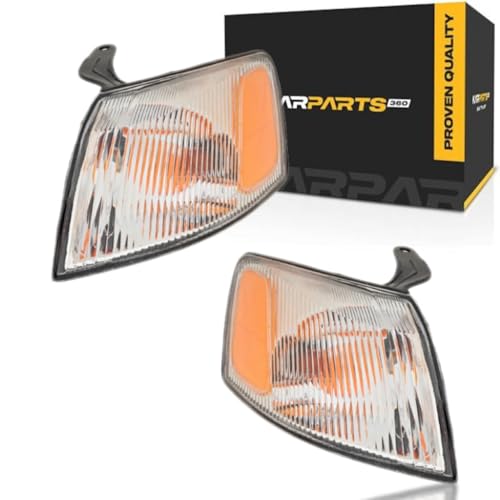
KarParts360
For Toyota Camry 1997 1998 1999 Turn…
- OEM Number: 81520AA010, 81510AA010
- Partslink number: TO2530126, TO2530126C, TO2531126, TO2531126C
- Position: Driver and Passenger Side
As an Amazon Associate I earn from qualifying purchases.
This includes pedestrians, cyclists, and other vehicles, significantly reducing the risk of accidents.
Beyond standard headlights, your front car lighting system also includes turn signals (indicators) and parking lights. Turn signals communicate your intentions to change direction, while parking lights are used when parked on a road where it’s permitted and necessary for visibility. A malfunctioning front car light system can lead to traffic citations, decreased safety, and an overall diminished driving experience.
Therefore, understanding how to address common issues is an essential skill for any car owner.
The complexity of modern car lighting systems varies significantly by make and model. Some vehicles use traditional halogen bulbs, while others have adopted more advanced technologies like High-Intensity Discharge (HID) or Light Emitting Diode (LED) systems. Each type has its own specific maintenance and replacement procedures, though the fundamental troubleshooting steps often remain similar.
Common Front Car Light Issues and Causes
Several issues can cause your front car lights to fail. The most frequent culprit is a burnt-out bulb. Like any incandescent filament, headlight bulbs have a finite lifespan and will eventually fail.
This can happen suddenly due to vibration or wear, or gradually as the filament thins out.
Another common cause is a blown fuse. Each electrical component in your car is protected by a fuse, a small safety device designed to melt and break the circuit if too much current flows through it. A fuse can blow due to a short circuit, an overload, or sometimes just due to age and wear.
If a fuse blows, the circuit it protects, including your headlights, will cease to function.
Wiring issues are less common but can be more complex to diagnose and fix. Corroded connectors, frayed wires, or loose connections can interrupt the flow of electricity to the lights. These problems can be caused by exposure to moisture, road salt, or physical damage to the wiring harness.
- Bulb Failure: The filament inside the bulb burns out.
- Fuse Blown: Excessive electrical current has caused the fuse to break.
- Wiring Problems: Corroded, loose, or damaged wires and connectors.
- Faulty Socket: The connector where the bulb plugs in may be damaged or corroded.
- Ballast Failure (HID systems): The ballast ignites the HID bulb and regulates voltage; it can fail.
- LED Driver Issues (LED systems): The driver controls the power to LED lights and can malfunction.
How to Diagnose a Faulty Front Car Light
Before you start fixing your front car light, you need to pinpoint the exact problem. The first step is a visual inspection. Turn on your headlights and observe which lights are out.
Is it one bulb, both bulbs, or perhaps just the parking lights or turn signals? If only one headlight is out, it’s highly likely to be a bulb issue. If both are out, it could be a fuse, a switch, or a more widespread wiring problem.
If a bulb appears to be the issue, the next step is to check the fuse. Consult your vehicle’s owner’s manual to locate the fuse box (there’s usually one under the dashboard and another in the engine bay) and identify the specific fuse for your headlights. Pull out the fuse using a fuse puller or a pair of needle-nose pliers and inspect it.
A blown fuse will have a broken or melted wire inside. If you find a blown fuse, replace it with a new one of the exact same amperage rating.
If the fuse is intact and the bulb appears fine (or you’ve replaced it with a new one and it still doesn’t work), the problem likely lies with the wiring or the socket. Check the wiring harness leading to the headlight assembly for any signs of damage, such as cuts, fraying, or melting. Ensure the bulb is seated correctly in its socket and that the socket’s terminals are clean and free of corrosion.
Sometimes, simply wiggling the connector can temporarily restore the connection, indicating a loose connection that needs proper repair.
| Symptom | Likely Cause | Next Step |
|---|---|---|
| One headlight out | Burnt-out bulb | Replace bulb |
| Both headlights out | Blown fuse, faulty switch, or wiring issue | Check fuse, then wiring |
| Headlight flickers | Loose connection, failing bulb, or ballast (HID) | Check connections, replace bulb/ballast |
| Dim headlights | Old bulbs, voltage issue, dirty lens | Replace bulbs, check voltage, clean lens |
This table provides a quick overview to help narrow down the potential causes of your front car light issue.
How to Replace a Headlight Bulb
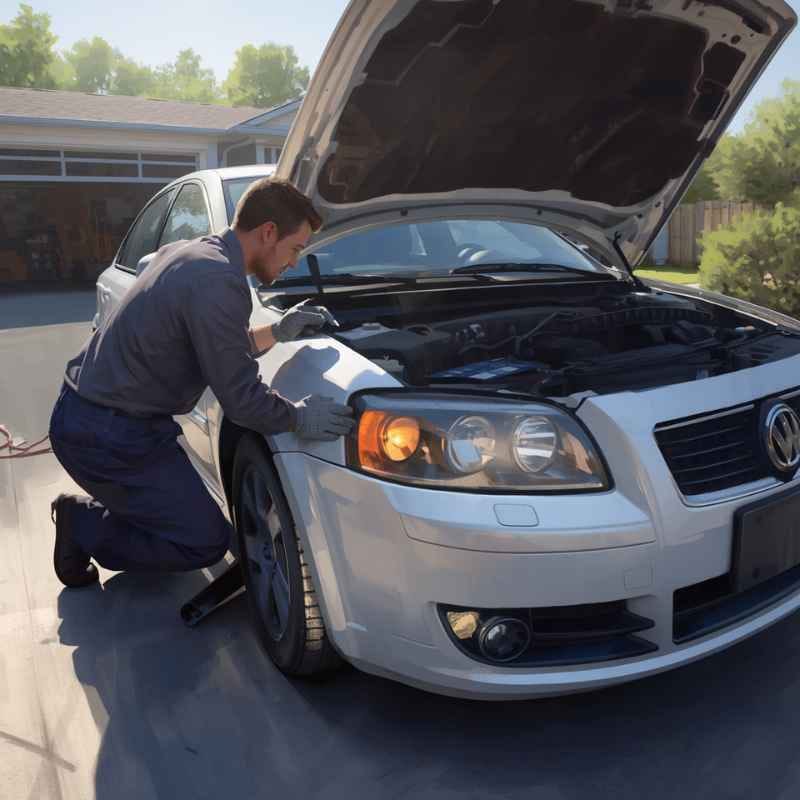
Replacing a headlight bulb is a common DIY repair. The process can vary significantly depending on your car’s make and model. In many vehicles, access is gained from under the hood, requiring you to identify the back of the headlight assembly.
In other cases, you might need to remove the front tire or a splash guard for better access.
First, ensure your car is parked on a level surface with the engine off and the headlights switched off. For safety, it’s a good practice to disconnect the negative terminal of your car battery. Locate the headlight bulb you need to replace.
You’ll typically see a plastic cap or cover on the back of the headlight assembly. Remove this cap, which might twist or have clips.
Once the cap is off, you’ll see the bulb connector. This connector usually has a clip or lock that needs to be released to pull the connector off the bulb. After disconnecting the wiring harness, you can remove the old bulb.
Bulbs are usually held in place by a spring clip or a retaining ring. Carefully release this mechanism and pull the bulb straight out. When installing the new bulb, avoid touching the glass part with your bare fingers, as oils from your skin can cause it to overheat and fail prematurely.
Use a clean cloth or glove. Insert the new bulb, secure it with the clip or ring, reconnect the wiring harness, and replace the plastic cap. Finally, reconnect the battery and test the new bulb.
- Park on a level surface, turn off the engine, and switch off headlights.
- Disconnect the negative battery terminal (optional but recommended).
- Locate the back of the headlight assembly and remove the protective dust cover.
- Disconnect the electrical connector from the old bulb.
- Release the retaining clip or ring holding the bulb in place.
- Gently pull the old bulb straight out of the housing.
- Insert the new bulb, ensuring it’s oriented correctly. Handle the glass with a cloth or gloves.
- Secure the new bulb with the retaining clip or ring.
- Reconnect the electrical connector firmly.
- Replace the dust cover and reconnect the battery terminal if disconnected.
- Turn on the headlights to test the new bulb.
Warning: If your car uses High-Intensity Discharge (HID) or LED headlights, replacement can be more complex and may involve ballasts or drivers. It’s often best to consult a professional for these types of lights. Always use the correct bulb type specified for your vehicle.
Replacing a Blown Fuse for Your Car Lights
Replacing a fuse is typically a straightforward process. First, you need to consult your vehicle’s owner’s manual to find the fuse box diagram. This diagram will show you which fuse corresponds to your headlights or other front lights.
There are usually multiple fuse boxes – one inside the cabin (often under the dashboard) and another in the engine compartment.
Once you’ve located the correct fuse, you need to check if it’s blown. Fuses are designed with a small metal wire inside that connects the two prongs. If this wire is broken or looks melted, the fuse is blown.
You can often see this visually. If it’s not clear, you can use a multimeter set to continuity mode to test the fuse. If the fuse is blown, you must replace it with a new one of the exact same amperage rating.
Using a fuse with a higher rating can cause damage to your car’s electrical system, while a lower rating will blow prematurely.
To replace the fuse, use a fuse puller tool (often found in your car’s fuse box kit) or needle-nose pliers to gently pull the old fuse straight out. Then, insert the new fuse firmly into the correct slot. Ensure it is seated properly.
After replacing the fuse, reconnect the battery if you disconnected it, and then test your headlights. If the new fuse blows immediately, it indicates a short circuit or a more significant electrical problem that requires professional diagnosis.
- Locate Fuse Box: Refer to owner’s manual for location (cabin or engine bay).
- Identify Correct Fuse: Use the diagram to find the headlight fuse.
- Inspect Fuse: Look for a broken or melted wire inside.
- Remove Fuse: Use a fuse puller or pliers.
- Replace Fuse: Install a new fuse of the exact same amperage.
- Test Lights: Turn on headlights to confirm the fix.
- Troubleshoot Further: If the new fuse blows, seek professional help.
Checking Wiring and Connectors
If a new bulb and a good fuse don’t solve the problem, the issue might be with the wiring or connectors. This is where things can get a bit more complex, as it might involve tracing wires back from the headlight assembly to the fuse box or even the headlight switch.
Begin by visually inspecting the wiring harness that leads to the headlight bulb socket. Look for any signs of damage, such as cracked insulation, frayed wires, or areas that look melted or scorched. Pay close attention to where the wires enter the headlight assembly and where they connect to the socket.
Moisture, road salt, and heat can degrade the insulation over time.
Next, examine the bulb socket itself. The metal terminals inside the socket where the bulb connects can become corroded or loose. You can often clean these terminals gently with a wire brush or electrical contact cleaner.
Ensure the connector that plugs into the socket is also clean and free of debris or corrosion. If the connection feels loose, you might need to gently crimp the terminals for a tighter fit, but be very careful not to overdo it, as they are delicate.
For a more thorough check, you can use a multimeter. With the battery disconnected, you can test for continuity along the wires to ensure there are no breaks. You can also test for voltage at the socket when the light should be on to see if power is reaching it.
This requires a basic understanding of using a multimeter and automotive electrical systems.
When to Seek Professional Help
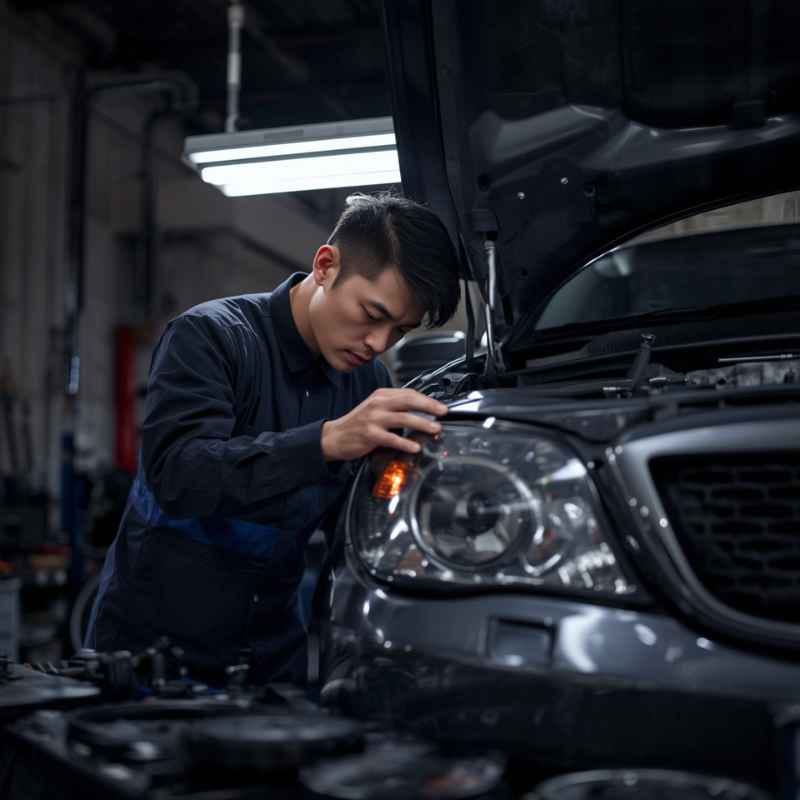
While many front car light issues are relatively simple DIY fixes, there are times when it’s best to leave the job to the professionals. If you’ve tried replacing the bulb and checking the fuse, and the light still doesn’t work, it’s a strong indicator of a more complex problem, such as internal wiring damage, a faulty headlight switch, or an issue with the car’s Body Control Module (BCM) which controls many electronic functions.
Vehicles equipped with advanced lighting systems like Xenon HID or LED headlights often require specialized tools and knowledge. Replacing components like ballasts or LED drivers is not as straightforward as changing a traditional bulb. Furthermore, if you’re uncomfortable working with automotive electrical systems, or if you simply don’t have the time or the right tools, a professional mechanic can diagnose and repair the issue quickly and efficiently.
Attempting complex repairs without proper expertise can lead to further damage to your vehicle’s electrical system, potentially resulting in more costly repairs down the line. It’s also important for safety: malfunctioning lights can lead to accidents. If you’re in doubt at any stage of the troubleshooting process, err on the side of caution and contact a qualified auto repair shop.
They have the diagnostic equipment and experience to pinpoint and fix the problem correctly.
- Your vehicle has HID or LED headlights.
- You’ve replaced the bulb and checked the fuse, but the light still doesn’t work.
- You notice signs of melted or severely damaged wiring.
- You are uncomfortable working with electrical components or lack the necessary tools.
- The problem seems to affect multiple lights or other electrical systems.
- You’ve consulted your owner’s manual and still can’t identify the issue.
Frequently Asked Questions
What type of bulb does my car use?
The type of bulb your car uses is specified in your owner’s manual. It will usually be listed as a designation like H4, H7, 9005, or an LED/HID type. Using the wrong bulb can lead to improper fit, poor light output, or even damage to the headlight housing.
How long should a headlight bulb last?
The lifespan of a headlight bulb varies depending on the type and manufacturer, but typically, halogen bulbs can last anywhere from 400 to over 1,000 hours of use. LED and HID bulbs are designed to last much longer, often for the lifetime of the vehicle.
Can I upgrade my headlights to LED or HID?
While it’s possible to upgrade, ensure you use complete conversion kits designed for your specific vehicle and that they comply with local regulations. Non-compliant or poorly installed kits can cause glare for other drivers and may be illegal.
What does it cost to have a headlight replaced by a professional?
The cost can vary widely based on your location, the car model, and the type of bulb. For a standard halogen bulb replacement, you might expect to pay anywhere from $50 to $150. HID or LED replacements can cost significantly more, sometimes $200-$500 or higher, due to the complexity and cost of the bulbs themselves.
What are the legal requirements for front car lights?
Most regions have laws requiring both headlights to be operational at all times when visibility is reduced. They must be aimed correctly to provide adequate illumination without blinding other drivers. Turn signals and parking lights also have specific operational requirements.
Final Thoughts
Learning how to fix your front car light is a valuable skill that can save you time and money. By systematically checking the bulb, fuse, and wiring, you can often resolve common issues yourself. Remember to prioritize safety by disconnecting the battery when necessary and always consult your owner’s manual for vehicle-specific instructions.
If at any point you feel uncertain or the problem seems complex, don’t hesitate to seek professional help to ensure your vehicle is safe and road-ready.
See also better car lighting company is it worth your money . See also which light is best for your car full comparison guide.
Related pick: Check today's price on Amazon See also what is the purpose of your car’s lights full breakdown.
Products related to this article
Sponsored / affiliate links. As an Amazon Associate I earn from qualifying purchases. I may earn additional commission from eligible campaigns.