The cost of a transmission control system (TCM) repair or
Understanding Your Transmission Control Module (TCM)
Your car’s transmission is complex. It helps your engine’s power reach your wheels smoothly. It shifts gears as you speed up or slow down.
The transmission control module (TCM) is like the transmission’s computer. It takes in lots of data from sensors all over your car. These sensors tell it about engine speed, how hard you’re pressing the gas pedal, and more.
The TCM uses this information to make smart decisions. It decides when to shift gears. It controls the hydraulic pressure inside the transmission.
It makes sure shifts are smooth and efficient. If the TCM isn’t working right, it can’t do its job. This leads to all sorts of transmission problems.
Understanding Your Transmission Control Module TCM 2
Why Does a Transmission Control System Fail?
Several things can cause a TCM to fail. It’s not always one single reason. Sometimes, it’s just age.
Like any computer part, TCMs can wear out over time. Heat is another big enemy. Transmissions get hot when they run.
If the TCM is located near a hot part, it can overheat. This can damage its delicate circuits.
Electrical issues are also common. Problems with the car’s battery or alternator can send bad voltage to the TCM. This can fry its circuits.
Water damage is another problem. If your car has had a leak or driven through deep water, moisture can get into the TCM. This causes corrosion and shorts.
Sometimes, bad sensors sending wrong signals can confuse the TCM. This can lead to it making bad decisions and failing.
Symptoms of a Failing Transmission Control Module
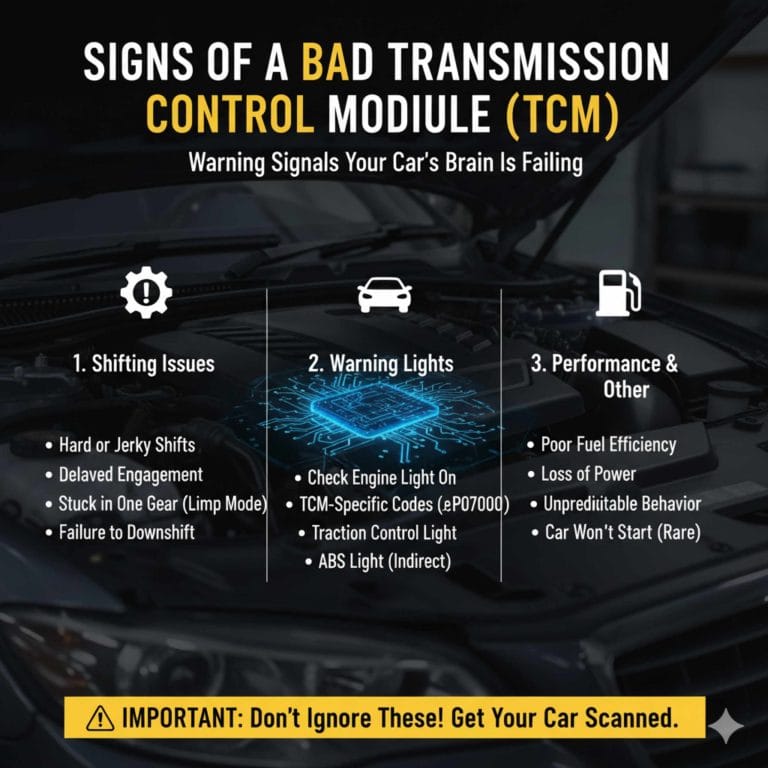
When a TCM starts to go bad, you’ll usually notice some clear signs. One of the most common is a check engine light. This light can mean many things, but it’s often related to transmission issues.
Your car might start shifting gears oddly. You might feel harsh shifts. Shifts can be delayed or skip gears altogether.
This is a major red flag.
Sometimes, your car might go into “limp mode.” This is a safety feature. The car limits its speed and power. This is to prevent further damage to the transmission.
You might also notice that your transmission won’t shift into certain gears. Or it might get stuck in one gear. Slipping gears is another sign.
The engine revs up, but the car doesn’t speed up much. These symptoms all point to a problem with the transmission’s control system.
The Diagnostic Process: Pinpointing the Problem
Before you
They will also do some physical checks. This includes looking at wiring harnesses for damage. They check connections for corrosion.
Sometimes, the TCM itself can be tested. This involves specific electrical tests. A good mechanic will go through a systematic process.
They won’t just guess. This diagnostic phase has its own cost. It’s important to factor this in.
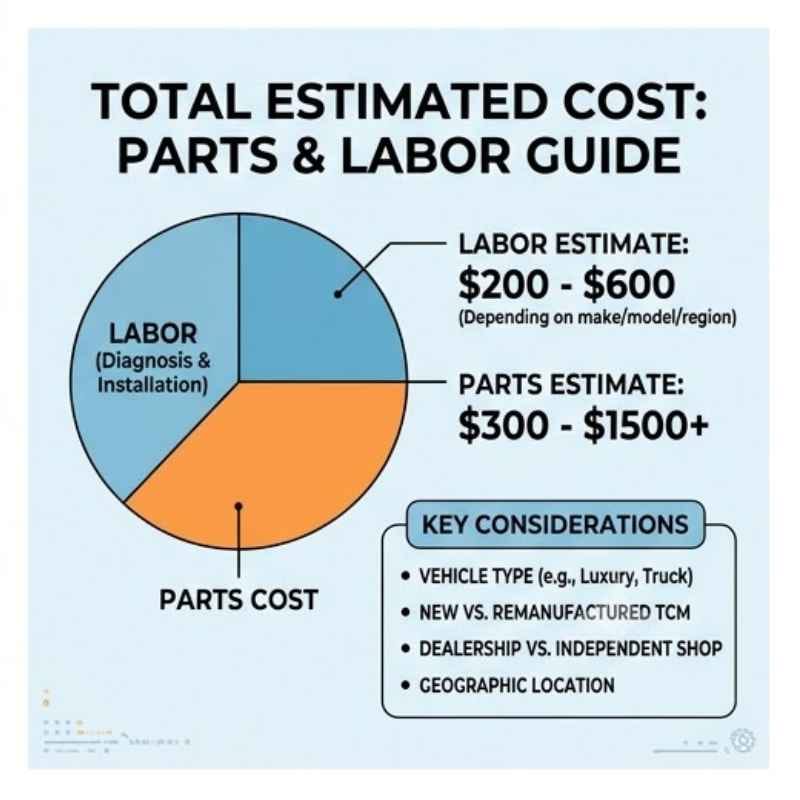
Cost Breakdown: What Influences the Price?
The total cost for a TCM issue isn’t just the part itself. Many things affect the final bill. Let’s break them down.
It’s important to understand these factors to manage your budget.
Factors Affecting TCM Costs
Vehicle Make and Model: Luxury cars or those with complex transmissions often cost more to repair. Parts and labor rates can vary widely between brands.
Type of Problem: Is it a minor sensor issue, a software glitch, or a complete TCM failure? A simple fix costs much less than a full replacement.
Part Quality: You can often choose between OEM (Original Equipment Manufacturer) parts, aftermarket parts, or remanufactured units. OEM parts are usually the most expensive but offer the best fit and quality.
Labor Rates: Mechanics’ hourly rates differ greatly by location and experience. Dealerships generally charge more than independent shops.
Diagnostic Fees: The cost to find the problem adds to the total. This can range from $75 to $200 or more.
Reprogramming or Calibration: New TCMs often need to be programmed to your specific car. This is an extra step and cost.
Understanding these points helps you ask the right questions when you get a quote. It also helps you understand why one quote might be higher than another.
TCM Repair vs. Replacement: Which is Cheaper?
When a TCM has a problem, it might not always need to be
If the internal boards are damaged, repair might not be an option. Or it might be more costly than replacement. If a repair is possible, it could cost anywhere from $300 to $800.
This depends on the complexity of the repair and the shop’s labor rates. Replacement is generally the more common and often more reliable solution for significant TCM issues.
Cost of a New Transmission Control Module
Buying a brand new TCM is often the most expensive option. These parts are made by the car manufacturer. They are designed to perfectly fit your vehicle.
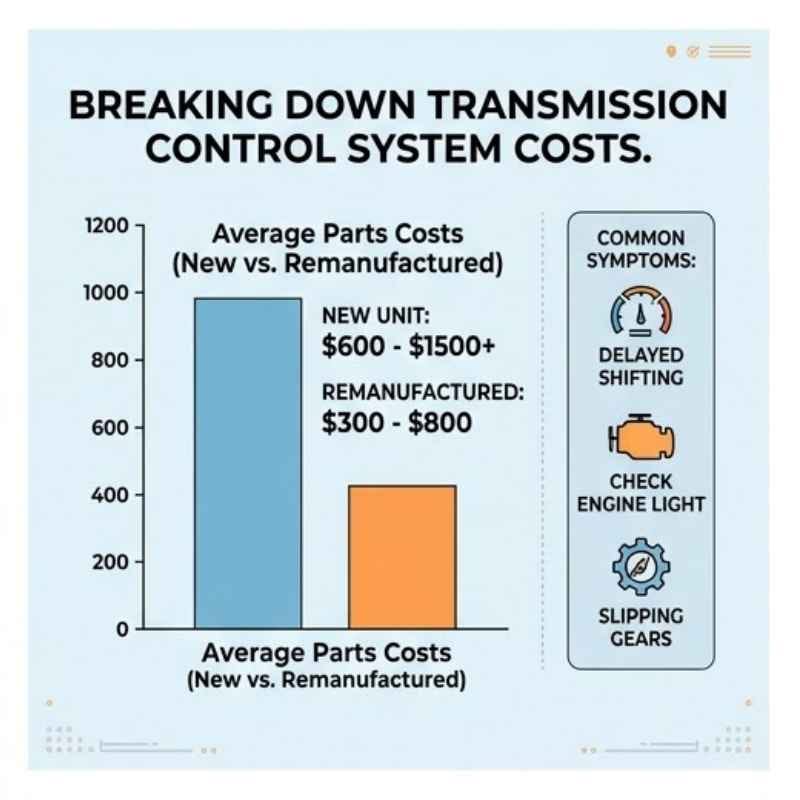
For a new OEM TCM, you could expect to pay anywhere from $400 to $1,000 or even more. This price varies a lot based on the car. A high-end sports car will have a much pricier TCM than a basic sedan.
The part itself is only part of the cost. You also need to pay for installation. And then, most importantly, for programming.
Programming ensures the new TCM can communicate with your car’s other systems. Without it, the car won’t run correctly. This programming step can add another $100 to $400 to the bill.
Cost of a Remanufactured or Used Transmission Control Module
For drivers looking to save money, remanufactured or used TCMs are good alternatives. A remanufactured TCM has been rebuilt by a specialist company. They take an old TCM, fix it up, test it thoroughly, and offer a warranty.
These are usually much cheaper than new. Prices can range from $200 to $600. They are a good balance of cost and reliability.
A used TCM is pulled from another vehicle. This is the cheapest option. You might find one for as little as $50 to $250.
However, used parts come with risks. There’s often no warranty. You don’t know how long it will last.
It could fail soon after installation. It’s generally recommended to stick with remanufactured or new if your budget allows for better peace of mind.
Labor Costs for Installation and Programming
Installing a TCM isn’t usually a very long job. It’s often located in a reasonably accessible spot within the engine bay or under the dash. However, labor costs still add up.
Mechanics typically charge an hourly rate. This can be anywhere from $75 to $150 per hour or more. The actual installation might take 1 to 3 hours.
The biggest labor cost often comes from programming the new TCM. This requires specialized software and tools. It also takes time for the technician to perform the calibration.
This programming process can add another $100 to $400 to the total bill. Some shops might bundle installation and programming into one labor fee, while others will list them separately. Always ask for a clear breakdown of labor charges.
Typical Cost Breakdown Example
Diagnosis Fee: $100
New OEM TCM Part: $700
Installation Labor: $150
Programming Labor: $200
Total Estimated Cost: $1,150
This is just an example. Your actual costs will vary. It’s always best to get a quote specific to your car.
Also, keep in mind taxes and shop fees.
Transmission Fluid and Filter Changes
Sometimes, problems that look like TCM issues are actually related to the transmission fluid. Low fluid levels or old, dirty fluid can cause shifting problems. It’s often recommended to
A transmission fluid and filter change usually costs between $150 and $300. This is a relatively small cost compared to a TCM replacement. But it’s a very important preventative step.
It can help extend the life of your new TCM and your transmission. Ask your mechanic if this service is included or recommended.
When to Worry vs. When It’s Normal
It’s normal for cars to have minor transmission quirks as they age. A slight hesitation or a barely noticeable bump during a shift might not mean much. However, there are clear signs that indicate a problem needing attention.
If your check engine light is on, or if you experience any of the symptoms like harsh shifting, slipping, or limp mode, it’s time to get it checked.
Don’t ignore these signs. A small issue with the TCM can quickly lead to bigger, more expensive transmission damage. If you notice any drastic changes in how your transmission behaves, it’s wise to err on the side of caution.
Get it diagnosed by a trusted mechanic. Early detection often leads to less costly repairs.
Quick Checks You Can Do
Check Transmission Fluid: Make sure the fluid level is correct and the fluid looks clean (not dark or burnt).
Observe Shifting: Pay attention to how your car shifts gears. Are there unusual sounds or sensations?
Note Warning Lights: Any dashboard lights, especially the check engine light, should be investigated.
These simple checks can give you valuable clues about your transmission’s health. They help you communicate better with your mechanic.
What to Ask Your Mechanic
When you take your car in for a transmission issue, asking the right questions is key. This ensures you understand the problem and the proposed solution. You’ll get better quotes and make informed decisions.
Questions for Your Mechanic
What specific codes did you find? Ask for the exact code numbers.
Have you tested the TCM itself? Or are you assuming it’s bad based on the codes?
What is your recommended solution? Repair, reprogram, or replace?
What type of TCM will you use? (OEM, remanufactured, used)
Do you recommend replacing the transmission fluid and filter?
Can you provide a detailed written estimate?
Asking these questions shows you’re engaged in the process. It also helps you get accurate estimates and avoid unexpected charges. A good mechanic will be happy to answer all your questions clearly.
Finding a Reliable Repair Shop
Choosing where to get your car repaired is as important as knowing the costs. A good shop can save you money and hassle. Look for shops that specialize in transmissions.
They often have more experience with complex issues like TCM problems. Check online reviews. Ask friends or family for recommendations.
A reputable shop will be transparent about their pricing. They will provide detailed estimates. They will also offer warranties on their work and parts.
Don’t be afraid to get a second opinion if you’re unsure about a diagnosis or quote. Trustworthy mechanics will explain things in a way you can understand. They will help you make the best choice for your car and your budget.
Real-World Scenario: My Own TCM Scare
I remember a few years back when my old sedan started acting weird. It was a Saturday afternoon, and I was driving home from the grocery store. Suddenly, the transmission felt like it was stuck in molasses.
It wouldn’t shift up, and the engine sounded like it was screaming. Then, that dreaded check engine light blinked on.
Panic set in. I pulled over, heart pounding. I’d heard horror stories about transmission repairs costing thousands.
I called my usual mechanic, who thankfully was still open. He told me to drive slowly and carefully to his shop, about five miles away. When I got there, he hooked up his scanner.
He came back with a grim look. “It’s looking like the TCM,” he said.
My stomach dropped. I asked how much it would be. He explained that for my car, a new OEM TCM with installation and programming would be around $900.
He also mentioned a remanufactured option for about $600. He advised that the remanufactured unit was reliable and came with a good warranty. I decided to go with the remanufactured option to save money.
The whole process took about two days. Thankfully, the repair fixed the problem, and my car has been running smoothly ever since. That scare taught me the importance of getting these issues checked out quickly and understanding the costs involved.
Can You Drive With a Failing TCM?
Driving with a failing transmission control module is generally not recommended. As mentioned earlier, the car might enter “limp mode.” This is a safety feature designed to protect the transmission. Continuing to drive normally in this mode can cause further damage.
The transmission might slip, grind, or overheat.
If the TCM failure is severe, your car might not be able to shift gears at all. This could leave you stranded. It’s best to get the vehicle towed to a mechanic if you experience significant transmission problems.
Trying to push it could turn a moderate repair into a complete transmission overhaul, which is much more expensive. Safety and further damage prevention are key reasons to stop driving.
Preventative Measures to Extend TCM Life
While TCMs can fail due to age or unforeseen issues, some simple practices can help extend their lifespan. One of the most important is regular maintenance of your transmission fluid. This means changing the fluid and filter at recommended intervals, typically every 30,000 to 60,000 miles, depending on your car’s manufacturer.
Clean fluid helps keep the transmission cool and lubricated, reducing stress on all its components, including the TCM.
Avoid harsh driving habits. Rapid acceleration and aggressive braking can put extra strain on the transmission. Ensure your car’s electrical system is in good condition.
A failing alternator or battery can send unstable voltage through the car’s systems, potentially damaging the TCM. If you notice any strange electrical behavior in your car, get it checked out promptly. Also, be cautious when driving through deep water.
Submerging the transmission or its components can lead to electrical damage and corrosion.
TCM Lifespan Tips
Regular Transmission Fluid Service: Follow your car’s maintenance schedule.
Avoid Aggressive Driving: Smooth acceleration and braking are better for the transmission.
Maintain Electrical System: Ensure battery and alternator are in good working order.
Be Cautious in Water: Avoid driving through deep puddles or floodwaters.
Address Other Car Issues Promptly: Small problems can become big ones.
Taking these steps can help protect your investment in your vehicle’s transmission control system.
TCMs and DIY Repairs
For most car owners, replacing a TCM is not a DIY job. While the physical part might be accessible, the critical step of programming the new module requires specialized tools and software. Attempting to install a TCM without proper programming will likely result in the car not running correctly, or not running at all.
Error codes will persist, and the transmission will not function as intended.
Furthermore, misdiagnosing the problem can lead to buying an unnecessary and expensive part. If your car has a transmission issue, it’s best to consult with a qualified mechanic. They have the expertise and equipment to accurately diagnose the problem and perform the necessary repairs, including the complex programming step.
While DIY can save money on some repairs, transmission control modules are generally beyond the scope of most home mechanics.
Transmission control modules are specialized components generally beyond the scope of most home mechanics.
Frequently Asked Questions About Transmission Control System Costs
How long does a transmission control module typically last?
A transmission control module (TCM) can last for many years, often the lifetime of the vehicle. However, their lifespan can be affected by factors like heat, electrical issues, and manufacturing defects. Regular maintenance and proper care of your vehicle can help extend its life.
Can a bad TCM cause poor gas mileage?
Yes, a malfunctioning TCM can definitely impact your car’s gas mileage. When the TCM isn’t controlling gear shifts properly, the engine might not be operating in its most efficient range. This can lead to increased fuel consumption.
The car might also stay in lower gears for too long, revving the engine unnecessarily.
What’s the difference between a TCM and a PCM?
The Powertrain Control Module (PCM) is a larger computer that controls both the engine and the transmission. In some vehicles, the TCM is a separate, smaller module dedicated solely to the transmission. In others, the PCM handles both functions.
Knowing which your car has is important for diagnosis and repair.
Are there any reliable online resources for TCM pricing?
Yes, you can find pricing information from online auto parts retailers. Websites like RockAuto, AutoZone, or specialized TCM sellers often list parts for various makes and models. However, remember that these prices are usually for the part only.
They don’t include diagnostic fees or labor costs for installation and programming, which are significant.
Can a software update fix a TCM problem?
Sometimes, issues with a TCM can be related to its software. Manufacturers sometimes release software updates or re-flashes that can fix bugs or improve performance. This is often less expensive than replacing the module.
It’s a common step a mechanic might try during the diagnostic process.
What is the warranty on a remanufactured TCM?
Warranties on remanufactured TCMs vary by the company that remanufactured it. Most reputable providers offer a warranty that can range from 1 year to a limited lifetime warranty. It’s crucial to ask about the warranty details before purchasing a remanufactured part.
This protects you if the part fails prematurely.
Conclusion
Dealing with transmission control system issues can be stressful. Knowing the potential costs can help you prepare. From diagnosis to parts and labor, the total price can add up.
But understanding the factors involved empowers you. It helps you make smart decisions. Always get a detailed estimate.
Ask questions. And trust your vehicle to qualified professionals. Your car’s smooth ride is worth it.
I'm Dustin Hall — licensed automotive engineer and passionate about the automotive (Car, Truck, RV, Jeep). I want to share my accumulated knowledge with others. So I started a blog (EngineAuditor.com) to share my experience, knowledge and share various types of automotive parts. To know more about me visit the Engine Auditor team. Follow me on Facebook Twitter.
Drive Safely, Drive Slowly